

Heavy-Duty Thick Plastic Stool Injection Mould for Reliable High-Volume Production
Admin 2026-08-17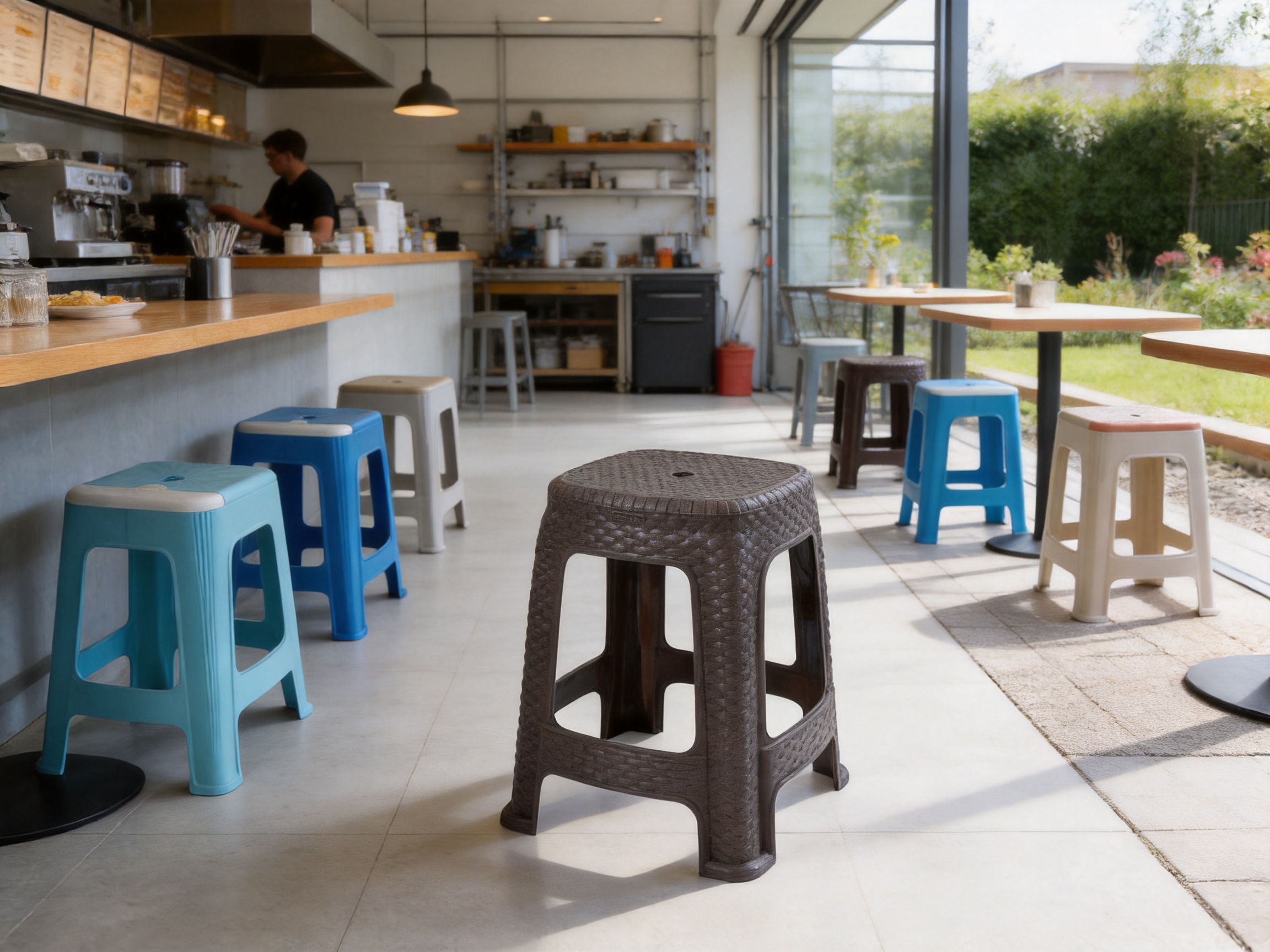
Plastic stools are simple-looking products, but producing a strong, stable, attractive, and economical stool requires carefully engineered tooling. A stool mould must form thick structural areas accurately, maintain consistent wall thickness where possible, support efficient cooling, release the finished product without distortion, and withstand repeated injection cycles. The Heavy Duty Thick Plastic Stool Injection Mould is designed to meet these requirements for household, commercial, restaurant, and outdoor seating applications.
This injection mould is developed for polypropylene stool production and features reinforced leg structures, anti-slip surface textures, balanced cooling channels, and a durable construction based on P20 or H13 mould steel. With a one-cavity configuration and an expected service life of approximately 700,000 shots, it provides a practical solution for manufacturers seeking dependable tooling, stable product quality, and manageable production costs.
Manufactured by Taizhou Huangyan Haiquan Plastic Mold Co., Ltd., the mould benefits from an integrated development process covering product design, mould engineering, machining, assembly, testing, and after-sales support. The company specializes in precision injection moulds for daily necessities, home appliances, automotive parts, and industrial equipment. Its technical capabilities and production management system support customers that require customized stool dimensions, surface patterns, structural details, and production conditions.
Product Overview
The Heavy Duty Thick Plastic Stool Injection Mould is intended to manufacture robust plastic stools with a reinforced load-bearing structure. The design is suitable for stools used in homes, restaurants, workshops, shops, public areas, and outdoor environments. Depending on the customer’s product concept, the mould can be adapted for different stool heights, seat shapes, leg arrangements, surface textures, and branding details.
Unlike lightweight household stools intended only for occasional use, a heavy-duty stool must resist repeated loading and handling. Its legs must remain stable, the seat must retain its shape, and the base must provide reliable contact with the floor. These requirements place greater demands on the injection mould because even small dimensional deviations can affect balance, assembly, appearance, or product strength.
The mould design addresses these production requirements through reinforced leg-forming areas and carefully arranged cooling channels. The reinforced leg structures help create a stool that is more suitable for frequent use. The anti-slip texture can improve user contact with the seat surface and can also contribute to the product’s visual identity. The cooling system is designed to promote more uniform temperature control, helping reduce warping and improve dimensional stability.
For manufacturers, the value of the mould is not limited to the shape it creates. A good mould must also support repeatable production. Consistent cavity dimensions, reliable ejection, appropriate steel selection, effective cooling, and accurate assembly all influence the final cost per part. This mould is therefore designed as a production tool rather than merely a prototype-forming device.
Key Technical Specifications
| Product Type | Heavy-duty plastic stool |
| Mould Category | Chair and stool mould |
| Recommended Product Material | Polypropylene (PP) |
| Mould Steel Options | P20 or H13 |
| Cavity Configuration | 1 cavity |
| Expected Mould Life | Approximately 700,000 shots |
| Structural Features | Reinforced legs and stable load-bearing design |
| Surface Features | Customizable anti-slip textures and seat patterns |
| Cooling System | Balanced cooling channels for improved temperature control |
| Customization | Stool height, surface texture, and selected design details |
The specifications provide a useful starting point for project planning, but final mould details depend on the customer’s product drawings, resin grade, machine parameters, annual production volume, and quality expectations. The gate design, runner layout, ejection system, cooling circuit, and mould base dimensions should be confirmed during the engineering stage.
Why Heavy-Duty Stool Mould Design Matters
A plastic stool is exposed to compressive forces, lateral movement, impact, temperature changes, and repeated use. If the product is used outdoors, it may also encounter sunlight, moisture, dust, and uneven ground. The mould must create a component that can respond to these conditions while remaining economical to manufacture.
One of the most important considerations is the transition between the seat and the legs. This area must carry the user’s weight and transfer force toward the floor. Sharp corners, abrupt thickness changes, or poorly supported ribs can produce stress concentration and increase the risk of cracking. A well-engineered mould allows the product designer to incorporate suitable radii, ribs, support zones, and material flow paths.
Another important consideration is the distribution of material through the seat and legs. A thick plastic stool may have substantial structural sections, but uncontrolled thickness can lead to sink marks, voids, uneven shrinkage, and long cooling times. The mould design must work together with the product geometry and injection parameters to achieve a balanced result.
Cooling is especially important for thick or semi-thick plastic products. The exterior surface may appear solid while the internal material is still hot and flexible. If the product is ejected before sufficient cooling, it may deform under its own weight or from ejection forces. Balanced cooling channels help remove heat more evenly and can reduce the risk of one part of the stool shrinking more than another.
Surface texture also affects mould engineering. An anti-slip texture must be transferred clearly without making demoulding difficult. The draft angle, texture depth, steel finish, and ejection arrangement must be considered together. Correct design helps achieve a consistent surface while minimizing drag marks and damage during release.

Heavy Duty Thick Plastic Stool Injection Mould
Reinforced Leg Structures for Better Stability
The legs are among the most critical features of a stool. They support the seat, transfer the user’s weight to the floor, and determine whether the stool feels stable during use. The Heavy Duty Thick Plastic Stool Injection Mould includes reinforced leg structures intended to support the manufacture of stronger and more stable legs.
Reinforcement can be achieved through suitable wall geometry, ribs, corner radii, and transitions between the upper seat section and the lower legs. These elements help distribute stress rather than allowing it to concentrate in a single thin area. The final arrangement can be modified according to the customer’s product design, intended load, material grade, and appearance requirements.
For commercial utility stools, stability is often more important than extremely low weight. A restaurant stool may be moved many times each day. A workshop stool may be exposed to knocks and uneven handling. An outdoor stool may be placed on surfaces that are not perfectly level. The mould should therefore support a product design that balances weight reduction with structural reliability.
Appropriate leg geometry also improves the manufacturing process. If the legs are designed with suitable draft and consistent transitions, the product can be ejected more smoothly. This can reduce stress during demoulding and support a longer operating life for both the product and the mould. The engineering team can review the customer’s drawings and identify areas that may require additional draft, fillets, ribs, or local reinforcement.
The mould is not intended to replace product testing. Load testing, drop testing, fatigue testing, and environmental testing remain important for confirming the finished stool’s performance. However, a carefully designed tool provides a stronger foundation for achieving those performance targets consistently.
Anti-Slip Surface Textures and Product Appearance
The seat surface of a stool can be smooth, patterned, ribbed, or textured. For many applications, an anti-slip pattern is desirable because it can improve contact between the user and the seat. Texture may also give the product a more distinctive appearance and help conceal minor handling marks or surface variation.
Texture selection must be considered from both a product and mould perspective. A shallow pattern may provide a clean appearance but offer limited grip. A deeper pattern may improve traction but require more careful draft design. The selected texture must also be compatible with the polypropylene material, expected mould release behavior, and desired cycle time.
The stool mould can be customized with different surface textures according to the customer’s requirements. Texture can be applied to all or part of the seat, and selected areas may be left smooth for logos, decorative features, or printing. The moulding team can review the intended pattern and recommend suitable steel preparation and release angles.
Surface consistency is important for commercial products. Variations in texture depth, gloss, or pattern orientation can make parts appear different even when they come from the same mould. Accurate machining, careful polishing, controlled texturing, and proper mould inspection help reduce these variations.
A well-designed surface also supports cleaning. Stools used in restaurants, public facilities, or workshops may need frequent wiping. A texture should improve grip without creating unnecessary recesses that trap dirt. Product designers can select a pattern that reflects the intended environment and cleaning method.
Balanced Cooling for Dimensional Stability
Cooling performance has a direct effect on moulding efficiency and product quality. When molten polypropylene enters the cavity, heat transfers into the mould steel and then into the cooling medium. The cooling circuit must remove heat at a suitable rate and distribute cooling as evenly as possible.
Balanced cooling channels help reduce temperature differences between the seat, legs, corners, ribs, and other structural areas. If one region cools significantly faster than another, uneven shrinkage may occur. This can result in a tilted seat, twisted legs, warpage, sink marks, or difficulty maintaining the intended floor contact.
The mould’s cooling layout should be reviewed using the actual product geometry. Thick areas generally require more attention because they retain heat for longer. Narrow leg sections may cool faster than the central seat. Corners and transitions may also behave differently from broad flat areas. The goal is not simply to add more cooling channels, but to position and size them effectively.
Efficient cooling can also shorten the production cycle. A mould that removes heat effectively may allow the part to reach ejection temperature sooner. Lower cycle times can improve machine utilization and reduce manufacturing costs. However, aggressive cooling must be controlled to avoid excessive thermal gradients, condensation, or other process issues.
During mould trials, the production team can evaluate cooling performance by observing cycle time, part temperature, dimensional results, surface quality, and warpage. Adjustments to water flow, mould temperature, injection speed, holding pressure, or cooling duration may be made to achieve the best balance between productivity and quality.
Material Compatibility with Polypropylene
Polypropylene is widely used for plastic stools because it offers a useful combination of low density, chemical resistance, toughness, processability, and cost efficiency. It is suitable for many household and commercial products and can be produced in a range of colors.
The selected PP grade influences the moulding process. Flow characteristics affect filling behavior, while shrinkage affects final dimensions. Impact-modified grades may be selected where toughness is important. Filled grades may provide increased stiffness but can introduce different wear and shrinkage considerations. The mould design should therefore be confirmed against the actual material specification rather than a generic resin category alone.
Polypropylene also requires suitable attention to gate location, packing, cooling, and ejection. The material must fill the seat and leg sections without excessive weld lines or incomplete areas. Holding pressure should be sufficient to compensate for shrinkage, but excessive pressure can increase stress, flash, or moulding difficulty.
Where recycled content or color masterbatch is used, the customer should consider possible changes in flow, contamination, stiffness, and appearance. These factors may influence process settings and quality inspection. A stable material supply and clearly defined resin specification support more consistent production.
The mould supplier can assist in reviewing material-related considerations during design. Final material approval remains the responsibility of the product manufacturer, who should evaluate mechanical performance, regulatory requirements, color stability, and the intended service environment.
Choice of P20 and H13 Mould Steel
The mould is available with P20 or H13 steel options. Selecting the appropriate steel depends on production volume, expected moulding conditions, required surface finish, material abrasiveness, and maintenance expectations.
P20 is commonly used for general-purpose injection mould components. It offers a practical balance of machinability, strength, polishability, and cost. For many polypropylene stool applications, P20 can provide a suitable service life when the mould is correctly designed, manufactured, maintained, and operated.
H13 is a higher-performance hot-work tool steel often selected when improved thermal fatigue resistance, hardness, or durability is required. It may be advantageous for demanding production environments, repeated thermal cycling, more rigorous service conditions, or projects where a longer maintenance interval is important.
The decision should not be based only on the steel name. Heat treatment, hardness control, machining accuracy, surface preparation, and component design are equally important. A premium steel cannot compensate for poor cooling, inadequate support, incorrect alignment, or insufficient maintenance.
Haiquan’s engineering team can help customers select a practical steel solution according to their target output and budget. A customer producing moderate volumes may prefer a cost-effective P20 construction, while a high-volume operation may benefit from H13 in selected components or wear-sensitive areas.
One-Cavity Configuration and Production Planning
The stool mould uses a one-cavity configuration. A single cavity produces one stool component per injection cycle. Although multi-cavity moulds can increase output per cycle, a one-cavity tool can offer important benefits for large products such as stools.
Large products require substantial mould space, injection capacity, clamping force, and cooling capacity. A one-cavity arrangement can simplify mould balancing and allow the available machine capacity to focus on one complete product. It can also reduce the complexity of runner systems and make process adjustment more straightforward.
One cavity is often suitable for products with moderate production volumes, multiple color options, frequent design changes, or staged market development. It may also be preferred when the customer wants to validate the product before investing in a larger multi-cavity system.
The correct configuration depends on annual demand, target cycle time, machine availability, product size, and investment budget. If demand increases in the future, the customer can evaluate whether a second mould, a revised cavity arrangement, or a different production strategy would be appropriate.
Although a one-cavity mould produces fewer parts per cycle than a multi-cavity mould, its overall economics can still be attractive when it reduces initial investment, simplifies maintenance, and supports stable quality. Production planning should consider the complete cost of ownership rather than output per cycle alone.
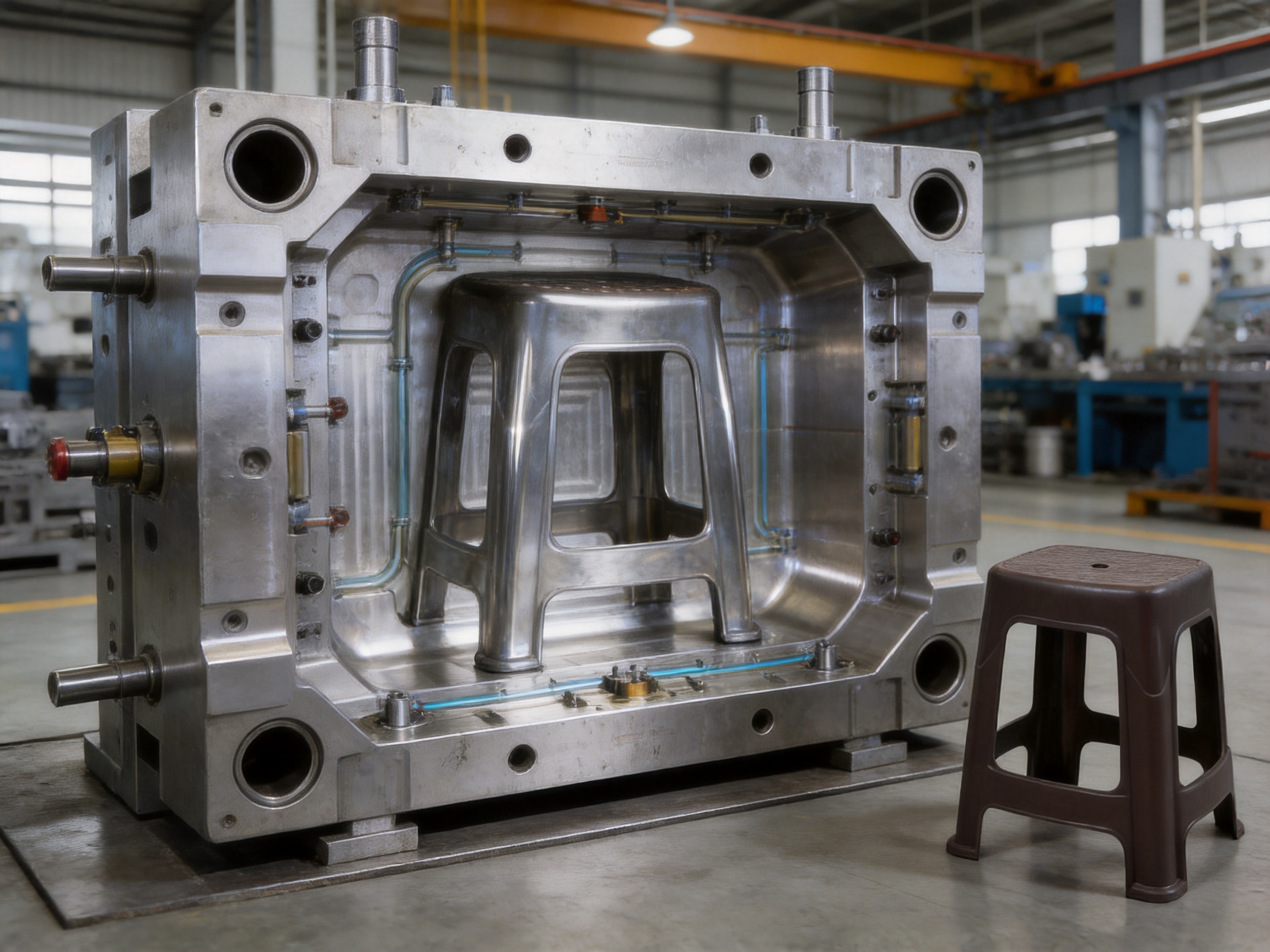
Advantages Compared with Lower-Quality Competitor Tooling
Plastic stool moulds from different suppliers may look similar in photographs, but their performance can vary considerably. Differences in steel, machining accuracy, cooling design, mould assembly, ejection, and trial procedures often become visible only after production begins.
One advantage of this mould is its focus on structural stability. Reinforced leg structures are incorporated into the design rather than treating the legs as simple cosmetic extensions. This approach supports the production of stools intended for regular use and helps customers pursue a stronger product without unnecessary material increases.
A second advantage is the attention to cooling balance. Inexpensive tooling may use a basic or poorly distributed water circuit. Such a design can increase cycle times and create inconsistent shrinkage. Balanced cooling channels provide a more considered approach to temperature control, which can improve dimensional stability and reduce warpage-related rejection.
A third advantage is customization. Some competing moulds may be based on fixed designs with limited options for height, texture, or structural modification. This mould allows stool height and surface textures to be modified, making it easier for customers to create products for different markets and usage conditions.
A fourth advantage is the choice of P20 or H13 steel. This gives customers greater control over the relationship between investment and service life. Instead of accepting one fixed material specification, the buyer can select an option aligned with expected production volume and operating conditions.
The stated service life of approximately 700,000 shots also supports long-term production planning. Actual life depends on material, process conditions, maintenance, moulding frequency, and repair practices, but a defined target gives the customer a useful basis for evaluating tooling value.
Finally, the mould is supported by a company with experience across daily necessities and other injection moulding sectors. Knowledge gained from household products, appliances, automotive components, and industrial parts can contribute to stronger design review and more disciplined production management.
Engineering and Design Development
The manufacturing process begins with a review of the customer’s product concept, drawings, samples, or three-dimensional data. At this stage, the engineering team studies the stool’s overall dimensions, seat profile, leg arrangement, wall thickness, draft angles, ribs, textures, logos, and functional requirements.
Design for manufacturability is essential. The product may be attractive on a screen but difficult to fill, cool, or eject in a real mould. Engineers therefore review potential undercuts, sharp transitions, uneven thickness, trapped air, weld-line locations, and ejection access. Early corrections are less expensive than changes made after steel has been machined.
Gate location is evaluated according to the product geometry and appearance requirements. A suitable gate should support complete filling and reasonable packing while limiting visible marks in important areas. For a stool, the gate strategy must also account for the large seat area and the connection to the legs.
Air evacuation is another important consideration. Entrapped air can cause burn marks, incomplete filling, weld-line weakness, or surface defects. Venting must be arranged in locations that support filling without creating flash or visible marks on critical surfaces.
The ejection system is designed to release the stool without excessive deformation. Large plastic products require carefully distributed ejection forces. If force is concentrated in a small area, the part may show ejector marks, local stress, or distortion. Ejector placement should support the product’s structural geometry and the direction of release.
Where appropriate, computer-aided mould flow analysis may be used to evaluate filling, pressure, cooling, weld lines, air traps, and predicted warpage. Simulation does not replace physical trials, but it can help identify risks before manufacturing and support more informed decisions.
Precision Machining and Component Production
After design approval, the mould components are manufactured using precision machining equipment and controlled production procedures. The mould base, cavity inserts, core components, sliders if required, ejector plates, cooling elements, and auxiliary parts must be produced according to approved drawings and tolerances.
Computer numerical control machining is used to create the basic cavity and core geometry. For complex areas, electrical discharge machining may be applied to achieve details that are difficult to produce through conventional cutting. Fine finishing and polishing then prepare the surfaces for the required appearance and texture.
Machining accuracy influences the final product in several ways. It affects part dimensions, parting-line quality, alignment, draft, texture transfer, and the operation of moving components. Accurate machining also helps reduce flash and improves the repeatability of mould assembly.
Steel preparation is monitored throughout the process. Material certificates, hardness requirements, heat-treatment records, and inspection results provide useful evidence that the mould components meet the agreed specification. The exact inspection plan depends on the mould design and customer requirements.
For a stool mould, large cavity surfaces require particular attention. A small error across a broad seat area may become noticeable in the final part. The machining strategy must maintain surface continuity and minimize visible tool marks. The leg sections must also be checked for symmetry and correct alignment.
Mould Assembly, Fitting, and Testing
Once individual components have been machined, they are assembled and fitted. The assembly stage confirms that the cavity and core close correctly, the parting line is consistent, the ejection system moves smoothly, and the cooling circuits are properly connected.
Fitting is especially important for large moulds because even small alignment errors can affect flash, product dimensions, and mould wear. Guide pillars, guide bushes, inserts, sliders, and other moving components must operate accurately. Contact surfaces are checked to ensure that the mould closes with appropriate support.
Cooling channels are inspected for blockage, leakage, and correct connection. Water flow and pressure should be verified before the mould enters production. A clean and balanced circuit helps maintain stable process conditions and reduces the risk of overheating or uneven cooling.
The mould is then tested through trial injection. Trial production allows the team to evaluate filling behavior, gate performance, surface transfer, ejection, cooling time, part dimensions, and visual quality. The first trial may identify adjustments related to processing conditions or minor mould corrections.
Samples are reviewed against the approved product requirements. Particular attention is given to seat flatness, leg alignment, floor contact, texture consistency, flash, sink marks, weld lines, short shots, ejector marks, and overall appearance. If necessary, the mould is adjusted and tested again.
A disciplined trial process helps ensure that the customer receives more than an unfinished tool. It provides evidence that the mould can produce acceptable parts under defined conditions and allows production teams to prepare their own machine settings and inspection procedures.
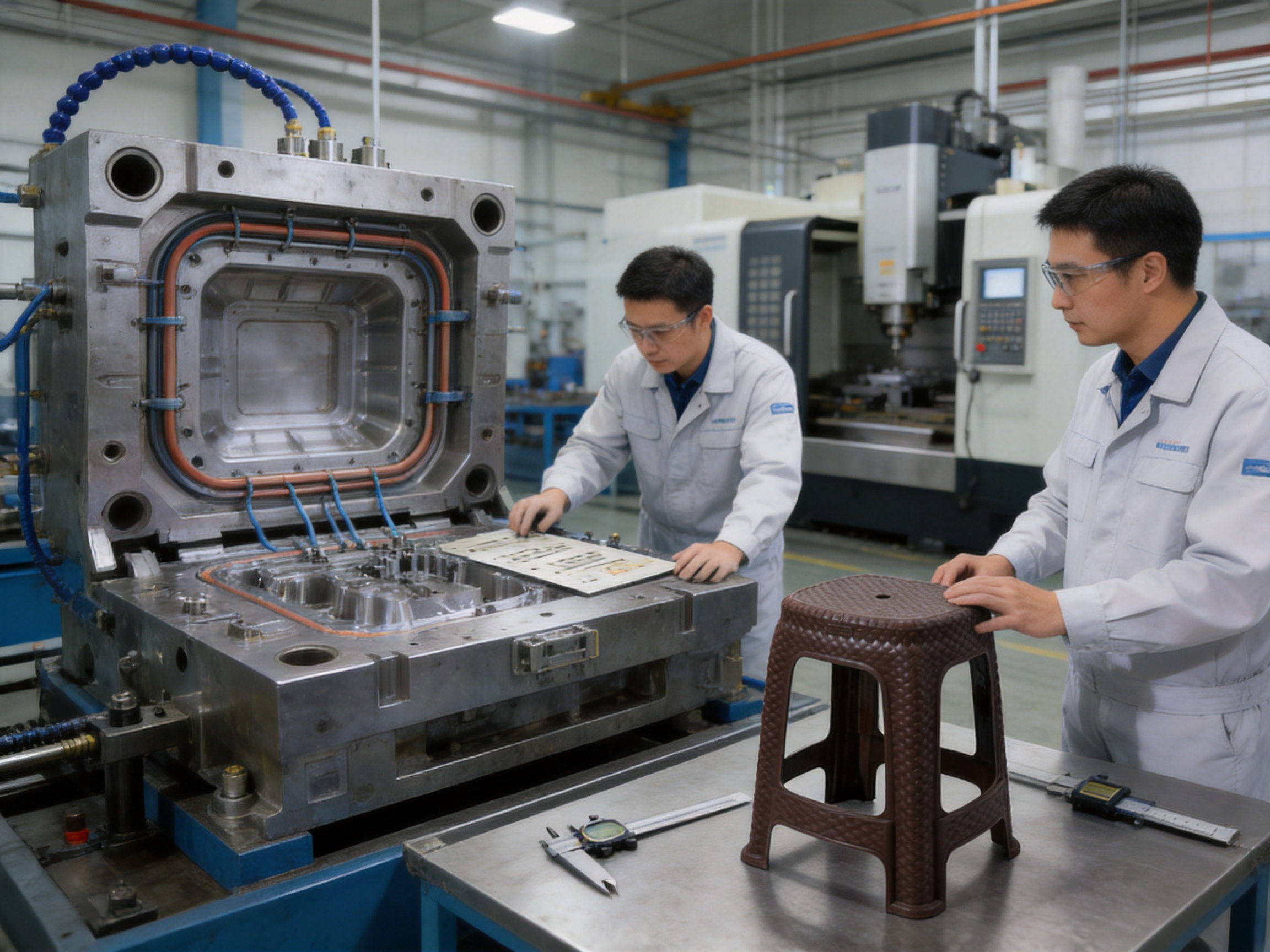
Quality Management and Production Control
Reliable mould manufacturing requires control at every stage rather than a final inspection alone. Haiquan describes its production approach as combining a professional design team with a scientific production management system. This integrated method is valuable because mould quality depends on the relationship between design, material, machining, fitting, trial, and delivery.
Quality control begins with confirming the customer’s technical requirements. Product drawings, resin information, cavity expectations, steel selection, surface finish, mould life, and delivery arrangements should be recorded clearly. This reduces misunderstandings and provides a reference for later inspection.
During machining, production personnel monitor dimensions and component condition. Critical areas may be checked using coordinate measuring equipment, precision gauges, or other inspection tools. The inspection frequency depends on the component’s importance and the agreed quality plan.
During assembly, the mould is checked for smooth movement, correct alignment, proper cooling connections, and suitable ejection. During trial production, the actual moulded parts are examined. This combination of dimensional inspection and functional testing creates a more complete quality evaluation.
Documentation can include steel certificates, hardness information, mould drawings, trial reports, sample records, maintenance instructions, spare-parts lists, and operating recommendations. Clear documentation supports future maintenance and helps the customer transfer the mould between production teams or facilities.
For international customers, communication and delivery coordination are also important elements of quality service. The company exports to Europe, the Middle East, Southeast Asia, and South America, giving it experience in serving customers with different technical expectations, logistics requirements, and business practices.
Customization Options for Different Markets
Stool products vary considerably by market. A household stool may require a compact size and a decorative appearance. A restaurant stool may need a larger seat, a washable texture, and greater resistance to frequent use. An outdoor stool may require a broader base and material specifications suited to changing environmental conditions.
The mould can be customized in stool height and surface texture. Height changes may influence the leg length, balance, mould dimensions, cooling arrangement, and ejection system. These changes should be evaluated during the design phase rather than treated as simple modifications after mould construction.
Surface texture can be selected to support grip, appearance, cleaning, or brand differentiation. Customers may also request a smooth logo area, raised or recessed identification marks, decorative patterns, or specific gloss levels. Each feature must be reviewed for draft, steel preparation, and mould release.
Other possible design considerations include seat shape, leg angle, foot geometry, drainage openings, stacking features, anti-skid feet, and packaging requirements. Not all features are included automatically, and the final mould configuration should be based on approved product data.
Color is normally determined through the polypropylene grade and production process rather than the mould itself. However, the mould surface finish influences how the color appears. A polished surface may produce a different visual effect from a textured surface, even when the same resin color is used.
Applications of the Finished Plastic Stool
Household Seating
Plastic stools are used in kitchens, bedrooms, balconies, utility rooms, bathrooms, and other domestic areas. A household product should be easy to move, simple to clean, and stable during normal use. The reinforced design supports a product concept that can serve everyday seating needs without the weight or maintenance associated with some alternative materials.
Outdoor Stools
Outdoor stools are used on patios, gardens, terraces, camping sites, and recreational areas. They may be exposed to moisture, dust, sunlight, and uneven ground. The mould can support a broad and stable design, while the customer can select a suitable polypropylene grade and additive package for the intended environment.
Commercial Utility Stools
Commercial stools are often used in restaurants, shops, workshops, laboratories, warehouses, and service areas. They may be moved frequently and subjected to repeated loading. A product manufactured from a stable mould with reinforced leg geometry can be better suited to these conditions than a thin, lightly constructed stool.
Maintenance Requirements for Long Mould Life
A mould life target of approximately 700,000 shots depends on correct operation and regular maintenance. Maintenance should begin with basic cleaning after production. Resin residue, dust, moisture, and contaminants should be removed from the cavity, core, parting line, vents, and ejection areas.
Moving components require suitable lubrication at intervals determined by production conditions. Excessive lubricant can contaminate the product or attract dust, while insufficient lubrication can accelerate wear. The maintenance team should follow a documented schedule based on shot count and operating conditions.
Cooling channels should be monitored for reduced flow, scale, corrosion, or leakage. Poor water quality can gradually reduce cooling performance. Water treatment, filtration, and periodic circuit cleaning may be necessary depending on the customer’s facility.
Parting lines should be checked for flash or damage. Repeated flash may indicate misalignment, wear, excessive injection pressure, or foreign material trapped between mould surfaces. Early investigation can prevent more serious damage.
Ejector pins, return pins, guide components, and inserts should be inspected for wear and smooth movement. Any damaged component should be repaired or replaced promptly. Keeping records of repairs and shot counts helps predict future maintenance needs and supports production planning.
When the mould is stored, it should be cleaned, dried, protected against corrosion, and secured in a suitable position. Cooling passages may require appropriate treatment, and exposed steel surfaces should receive corrosion protection. Proper storage is particularly important when the mould will not be used for an extended period.
Production Efficiency and Cost Considerations
The cost of a plastic stool is influenced by material consumption, cycle time, labor, machine utilization, packaging, rejection rate, and mould maintenance. The mould contributes to each of these factors. A tool that fills consistently and cools efficiently can support more predictable production.
Balanced cooling may reduce unnecessary cooling time, although the final cycle must always be established through trials. Good ejection reduces manual intervention and limits the risk of damaged parts. Accurate parting-line control reduces flash and secondary trimming. Stable texture transfer can reduce cosmetic rejection.
Material efficiency should be considered together with product strength. Removing too much material may reduce stool durability or create difficult filling conditions. A better approach is to optimize wall thickness, ribs, transitions, and gate placement while preserving the required performance.
A one-cavity mould can be cost-effective when the product is large or production demand is moderate. It may also be appropriate for customers that need several product versions or want to launch a product in stages. The best mould strategy is the one that matches actual demand rather than simply maximizing theoretical output.
When comparing suppliers, customers should evaluate the complete tooling package. The lowest initial quotation may not represent the lowest long-term cost if it leads to frequent repairs, long cycle times, unstable dimensions, or excessive rejected parts. Steel quality, cooling design, inspection, trial support, and technical communication should all be included in the comparison.
Company Manufacturing Strengths
Taizhou Huangyan Haiquan Plastic Mold Co., Ltd. is a high-tech enterprise specializing in the research, development, and manufacture of precision injection moulds. Its product scope covers daily necessities, home appliances, automotive parts, and industrial equipment.
This range of applications gives the company experience with different product sizes, materials, structures, surface requirements, and production volumes. Daily necessity moulds require practical cost control and attractive surfaces. Automotive and industrial moulds require more demanding dimensional and functional considerations. Experience across these sectors can strengthen the company’s ability to evaluate complex tooling requirements.
The company emphasizes a professional design team and a scientific production management system. This supports a project workflow in which engineering, machining, assembly, quality control, and customer communication are connected. Such coordination is important for stool moulds because product performance depends on decisions made across several disciplines.
Haiquan provides integrated services from product design and mould production to after-sales support. Customers can benefit from discussing product structure and manufacturability before machining begins. Technical feedback at this stage may help reduce later modifications, improve cycle performance, and make the final product more suitable for injection moulding.
The company’s export experience includes Europe, the Middle East, Southeast Asia, and South America. Its international customer base reflects the need for dependable delivery, clear technical documentation, packaging protection, and responsive communication. These factors are particularly important when a mould is shipped across borders and installed at a customer’s factory.
Recommended Project Workflow
A successful stool mould project normally begins with a clear product brief. The customer should provide the intended stool dimensions, product drawings or samples, material information, estimated annual quantity, target moulding machine, appearance requirements, and expected service conditions.
The next stage is design review. Engineers assess draft, wall thickness, ribs, leg geometry, gate position, ejection, cooling, texture, and potential manufacturing risks. Changes are agreed before detailed mould construction begins.
After design approval, the mould steel and major components are prepared. Machining, heat treatment where applicable, surface finishing, fitting, and assembly follow the approved schedule. Critical dimensions and moving mechanisms are inspected during production.
The completed mould is tested using the specified polypropylene or an agreed equivalent. Samples are produced and evaluated for dimensions, appearance, stability, texture, ejection, and general moulding behavior. Corrections are completed if the samples do not meet the approved requirements.
Before shipment, the mould should be cleaned, protected, marked, and packed securely. Documentation should identify water connections, operating considerations, maintenance points, and spare components. The customer can then install the tool with a clearer understanding of its requirements.
After delivery, technical communication remains valuable. Initial production may require optimization of injection speed, holding pressure, mould temperature, cooling time, and ejection settings. Cooperation between the mould supplier and the production team can help establish stable conditions more efficiently.
Inspection Points for Buyers
Buyers evaluating a heavy-duty stool injection mould should first confirm that the product design matches the intended application. The seat dimensions, leg arrangement, base footprint, surface texture, and expected loading should be clearly defined.
The mould steel should be specified in writing, including whether P20 or H13 is used and whether any additional treatment is required. Buyers should also confirm the expected mould life and understand that actual performance depends on maintenance, resin, machine settings, and operating conditions.
Cooling design should be reviewed rather than accepted as an unspecified feature. The buyer may request cooling layouts, water connection details, or trial information. Balanced cooling is particularly important for large products with thick structural sections.
The ejection system should be checked for adequate support. Ejector marks should not appear in unacceptable locations, and the finished stool should release without bending or sticking. Parting-line quality and flash control should also be examined during the trial.
Finally, the buyer should inspect sample parts under realistic conditions. A visually attractive sample is not enough. The stool should be assessed for flatness, stability, leg alignment, texture consistency, load performance, and suitability for the intended environment.
Frequently Asked Questions
What product is this mould designed to manufacture?
It is designed for manufacturing heavy-duty polypropylene plastic stools for household seating, outdoor use, restaurants, workshops, shops, and other commercial utility applications.
What material is recommended?
The listed product material is polypropylene, commonly known as PP. The exact PP grade should be selected according to the required stiffness, impact resistance, color, shrinkage, weather exposure, and regulatory needs.
How many cavities does the mould have?
The standard configuration is one cavity. This arrangement can be suitable for a large stool product, moderate production volumes, staged product launches, or projects where a simpler and more manageable mould structure is preferred.
What steel options are available?
The mould can be manufactured using P20 or H13 steel. P20 is a practical option for many general-purpose applications, while H13 may be selected for more demanding production conditions or durability requirements.
What is the expected mould life?
The stated mould life is approximately 700,000 shots. Actual service life depends on resin grade, processing conditions, maintenance, mould storage, production frequency, and the repair or replacement of wear components.
Can the stool height be changed?
Yes. Stool height can be modified during the product and mould design stage. Because height changes may affect leg geometry, stability, cooling, ejection, and mould dimensions, they should be confirmed before steel machining begins.
Can the seat texture be customized?
Yes. Surface textures, including anti-slip patterns, can be modified according to the customer’s requirements. Texture depth, draft angle, cleaning needs, appearance, and demoulding behavior should be reviewed together.
How does the mould help reduce warping?
The design includes balanced cooling channels intended to promote more uniform heat removal. Cooling balance can help reduce uneven shrinkage and warping, although final results also depend on product geometry, resin, injection settings, and cooling time.
Is the mould suitable for outdoor stools?
It can be used for outdoor stool projects, provided that the customer selects a suitable polypropylene grade and product design. Outdoor performance may require consideration of ultraviolet exposure, temperature changes, moisture, impact, and long-term material aging.
What should be supplied before mould design begins?
The customer should provide product drawings or three-dimensional data, stool dimensions, material information, surface requirements, expected production volume, target machine details, and any load or safety requirements.
How are product samples approved?
Samples are evaluated for dimensions, surface appearance, texture transfer, leg alignment, stability, flash, sink marks, weld lines, short shots, ejector marks, and overall conformity with the approved product requirements.
How can the mould reach its expected service life?
Regular cleaning, lubrication, cooling-system maintenance, inspection of moving components, proper storage, and timely repair are essential. Processing conditions should also remain within suitable limits for the mould and polypropylene material.
What makes this mould different from a basic stool mould?
Its main distinguishing features are the heavy-duty product orientation, reinforced leg structures, anti-slip surface options, balanced cooling channels, P20 or H13 steel choices, customization capability, and a stated target life of approximately 700,000 shots.
Does the supplier provide after-sales support?
The company provides integrated services covering design, mould production, and after-sales support. Customers can discuss installation, trial results, processing conditions, maintenance, and possible technical adjustments with the supplier.
Conclusion
The Heavy Duty Thick Plastic Stool Injection Mould is a production-oriented tooling solution for manufacturers that need stable, durable, and customizable plastic stools. Its reinforced leg structures support a stronger product design, while anti-slip surface textures provide opportunities for improved usability and visual differentiation.
Balanced cooling channels are especially valuable for a large stool because they help manage heat distribution and reduce the risk of uneven shrinkage. The availability of P20 and H13 steel allows customers to select a tooling construction that corresponds with production volume and durability expectations. A one-cavity configuration provides a practical balance between mould complexity, investment, and production control.
Compared with lower-quality tooling, the mould offers advantages in structural design, cooling consideration, customization, steel selection, and long-term production planning. These advantages are strengthened by Haiquan’s integrated manufacturing process, covering engineering review, precision machining, fitting, trial injection, inspection, delivery, and after-sales service.
For customers planning household, outdoor, restaurant, or commercial utility stool production, the most important step is to define the product requirements clearly at the beginning. With suitable polypropylene, accurate product design, correct processing conditions, and regular mould maintenance, this tooling platform can support consistent production and dependable finished products over an extended manufacturing program.
References
1. Product technical information supplied for the Heavy Duty Thick Plastic Stool Injection Mould, including material, cavity, steel, mould life, cooling, structure, and customization data.
2. General principles of thermoplastic injection mould design, including parting-line design, draft, ejection, gating, venting, cooling, and dimensional control.
3. General technical guidance for polypropylene processing, shrinkage control, mould temperature management, and injection moulding quality evaluation.
4. General engineering practices for P20 and H13 tool steel selection, heat treatment, machining, surface finishing, and mould maintenance.
5. General quality-control practices for injection mould inspection, mould trials, dimensional approval, and production documentation.
6. Company information supplied for Taizhou Huangyan Haiquan Plastic Mold Co., Ltd., including its product sectors, manufacturing capabilities, export markets, design resources, production management, and after-sales service.
Product: Heavy Duty Thick Plastic Stool Injection Mould

For exclusive deals and latest offers, sign up by entering your email address below.











 +86-18657672567
 sales@tzhqmould.com
celin@tzhqmould.com
 No. 17 Houshi Road, Beicheng Industrial Zone, Huangyan District, Taizhou City, Zhejiang Province, China
Copyright © Taizhou Huangyan Haiquan Plastic Mold Co., Ltd. All Rights Reserved
Injection Plastic Mould Maker

