

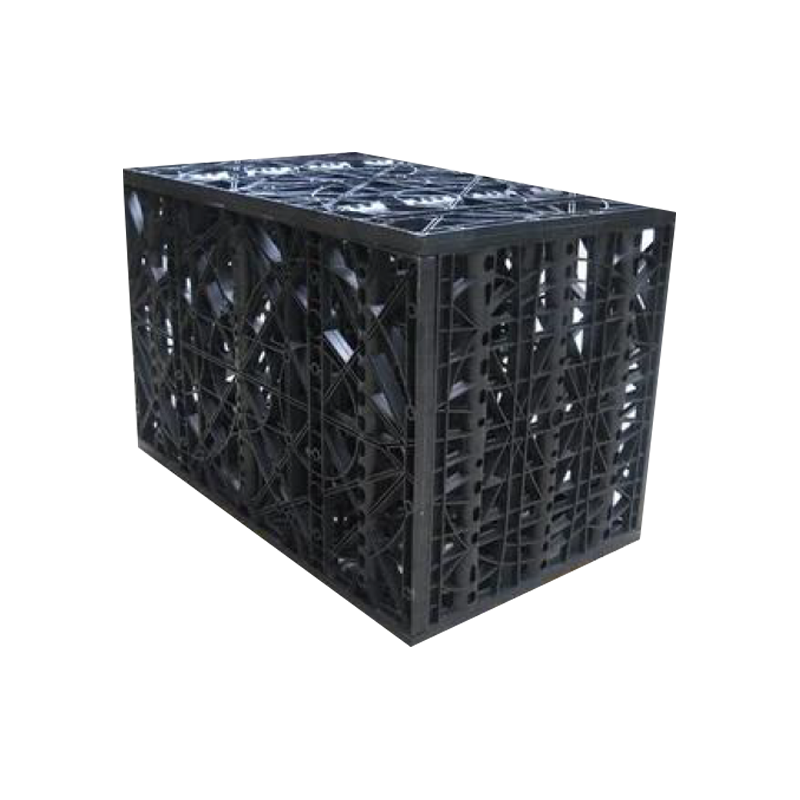
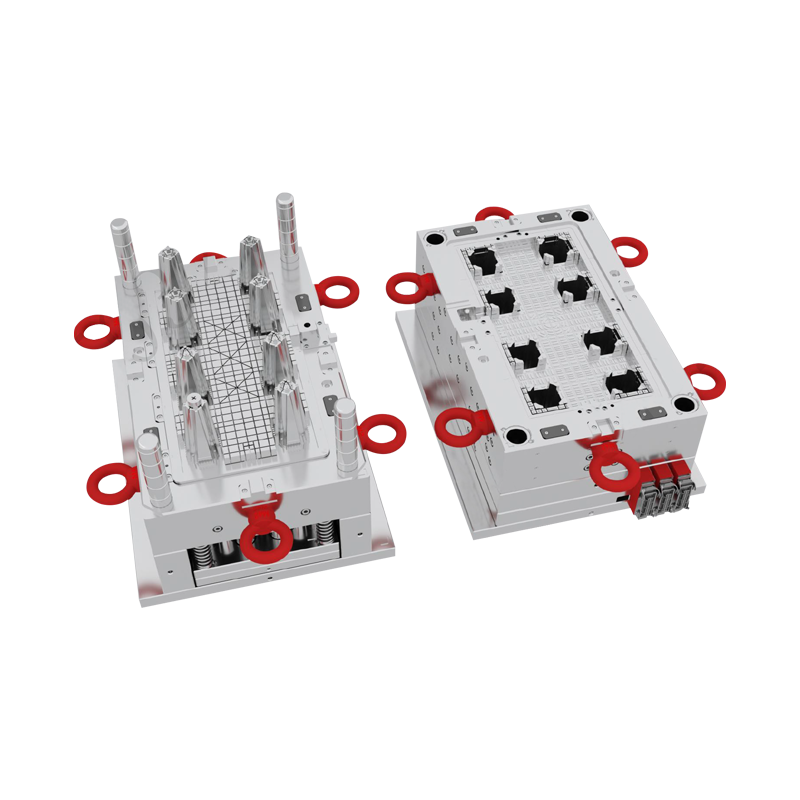
Rainwater Harvest Tank Mould Manufacturer for Large-Volume Water Storage Solutions
Rainwater harvesting tanks and plastic water storage tanks are widely used in residential water collection systems, agricultural irrigation, industrial water storage, and environmental water management projects. These products are typically large hollow structures, which means the quality of the mold directly determines structural strength, sealing performance, wall thickness stability, and long-term durability.
As a professional Rainwater Harvest Tank Mould / Plastic Water Tank Mold manufacturer, we provide custom tooling solutions for large-capacity hollow plastic products used in rotational or injection molding production environments. Our focus is on structural stability, uniform wall thickness control, and long-term production reliability.
Why Water Tank Mold Design Is Critical for Structural Stability
Unlike small injection molded parts, rainwater storage tanks are large-volume containers that must withstand long-term water pressure, environmental temperature changes, and external mechanical stress.
In real production and field usage, poor mold design can lead to:
- Tank deformation after filling water
- Uneven wall thickness causing weak pressure resistance
- Leakage at sealing or joint areas
- Bulging or collapse under long-term storage conditions
- Reduced product lifespan in outdoor environments
These issues are not only material-related—they are directly influenced by Plastic Water Tank Mold design and structural engineering accuracy.
Structural Challenges in Rainwater Harvest Tank Mould Design
1. Large Hollow Structure Requires Uniform Wall Thickness
Water tanks must maintain consistent wall thickness across the entire structure. If thickness distribution is uneven, the final product may experience:
- Stress concentration at weak points
- Deformation during filling or stacking
- Reduced impact resistance
Proper mold design ensures balanced material distribution throughout the cavity to maintain structural integrity.
2. Long Cooling Time and Production Efficiency Issues
Due to the large size of water tanks, cooling time becomes one of the biggest production cost factors.
Without optimized cooling design:
- Cycle time becomes extremely long
- Production efficiency decreases significantly
- Internal stress increases after demolding
An optimized Rainwater Storage Tank Mold includes efficient thermal management strategies to reduce cooling time while maintaining dimensional stability.
3. Sealing and Leak Prevention Requirements
Rainwater tanks often require threaded ports, inlet/outlet connections, and sealing interfaces.
Poor mold precision may result in:
- Leakage at connection points
- Misalignment of pipe interfaces
- Poor assembly compatibility with valves or fittings
Precision machining and accurate cavity control are essential to ensure reliable sealing performance.
Common Production Problems in Plastic Water Tank Mold Manufacturing
In real factory environments, manufacturers often face the following issues:
Tank deformation after filling water
Caused by uneven wall thickness or insufficient structural reinforcement.
Solution: optimize rib design and balance material flow during mold development.
Cracking under long-term outdoor exposure
Caused by stress concentration and material fatigue.
Solution: improve structural distribution and select appropriate mold design for UV-resistant materials.
Excessive cycle time in production
Caused by poor cooling layout in large cavity molds.
Solution: optimize cooling channels and improve heat dissipation efficiency.
Difficulty in demolding large hollow products
Large tanks may stick or deform during ejection.
Solution: design appropriate draft angles and stable demolding systems to ensure smooth release.
How Mold Design Impacts Water Tank Performance
For rainwater harvesting and storage systems, mold design directly determines real-world performance.
A well-designed Rainwater Harvest Tank Mould improves:
- Structural strength under water pressure
- Long-term durability in outdoor environments
- Dimensional stability during temperature changes
- Leak resistance at connection points
- Manufacturing efficiency in mass production
This is why tank molds require both structural engineering and material flow optimization, not just cavity machining.
Material Considerations for Plastic Water Tank Mold Production
Different applications require different plastic materials depending on strength and environmental conditions:
- HDPE: commonly used for large water storage tanks due to chemical resistance and flexibility
- PP: used for medium-duty storage systems
- UV-stabilized plastics: required for outdoor long-term exposure
- Reinforced materials: used in industrial or high-pressure storage applications
Proper mold design must account for material shrinkage, flow behavior, and cooling characteristics to ensure stable production quality.
Application Scenarios of Rainwater Storage Tank Mold
Our Rainwater Harvest Tank Mould / Plastic Water Tank Mold solutions are widely used in:
- Residential rainwater collection systems
- Agricultural irrigation storage tanks
- Industrial water storage containers
- Environmental water recycling systems
- Emergency water supply systems
- Rooftop rainwater harvesting systems
Each application requires different structural strength levels, capacity designs, and environmental resistance requirements.
Custom Plastic Water Tank Mold Development
Standard molds cannot meet all engineering requirements for large water storage systems.
Custom Plastic Water Tank Mold development allows manufacturers to optimize:
- Tank capacity and shape design
- Structural reinforcement distribution
- Inlet/outlet pipe positioning
- Stackability and transportation efficiency
- UV resistance performance
- Compatibility with fittings and valves
For example:
- Agricultural tanks prioritize durability and cost efficiency
- Industrial tanks require higher pressure resistance and chemical stability
- Residential systems focus on compact design and installation flexibility
Custom mold design ensures the final product matches real application requirements.
 +86-18657672567
 sales@tzhqmould.com
 No. 17 Houshi Road, Beicheng Industrial Zone, Huangyan District, Taizhou City, Zhejiang Province, China

