

How to Choose the Right Plastic Crate Mold for High-Volume Production
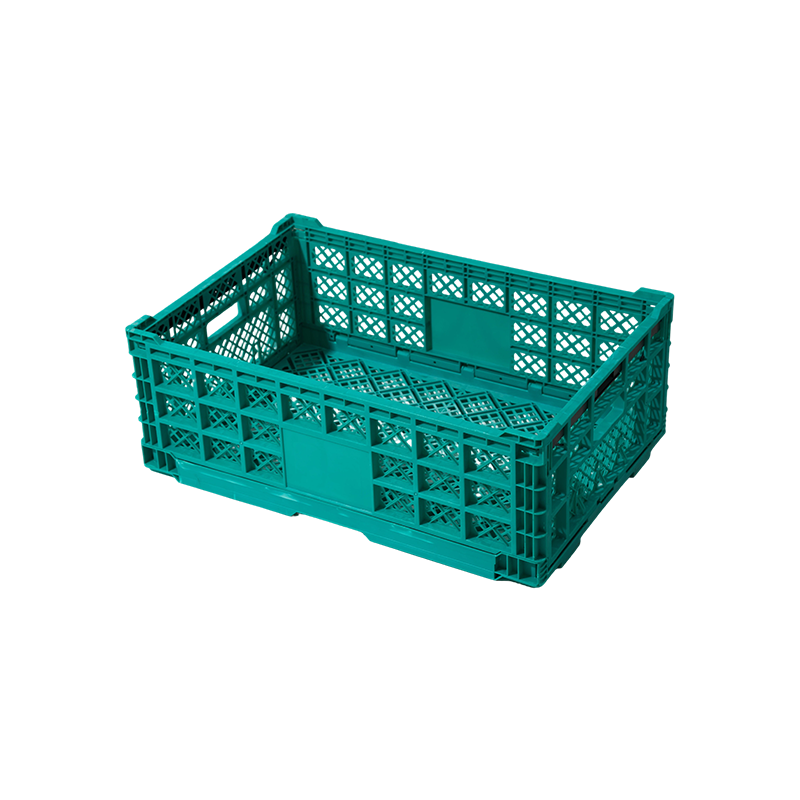
Plastic crates are widely used in logistics, agriculture, beverage distribution, seafood transportation, and warehouse storage. Unlike ordinary household products, plastic crates must withstand repeated loading, stacking, and impact during daily operation. As a result, the mold design directly determines product strength, cycle time, and manufacturing cost.
For manufacturers planning large-volume production, selecting the right crate mold is more important than simply choosing the lowest mold price.
Consider Product Load Requirements Before Mold Design
Different applications require different structural designs.
For example:
- Fruit and vegetable crates prioritize ventilation and lightweight construction.
- Beverage crates must withstand heavy static loads during pallet stacking.
- Industrial logistics crates require higher impact resistance for repeated transportation.
- Foldable crates require more complex slide mechanisms and tighter dimensional control.
Designing the mold according to actual load requirements helps avoid unnecessary material consumption while ensuring sufficient structural strength.
Cycle Time Has a Direct Impact on Production Cost
Many buyers focus only on mold price, but long-term production cost depends much more on molding efficiency.
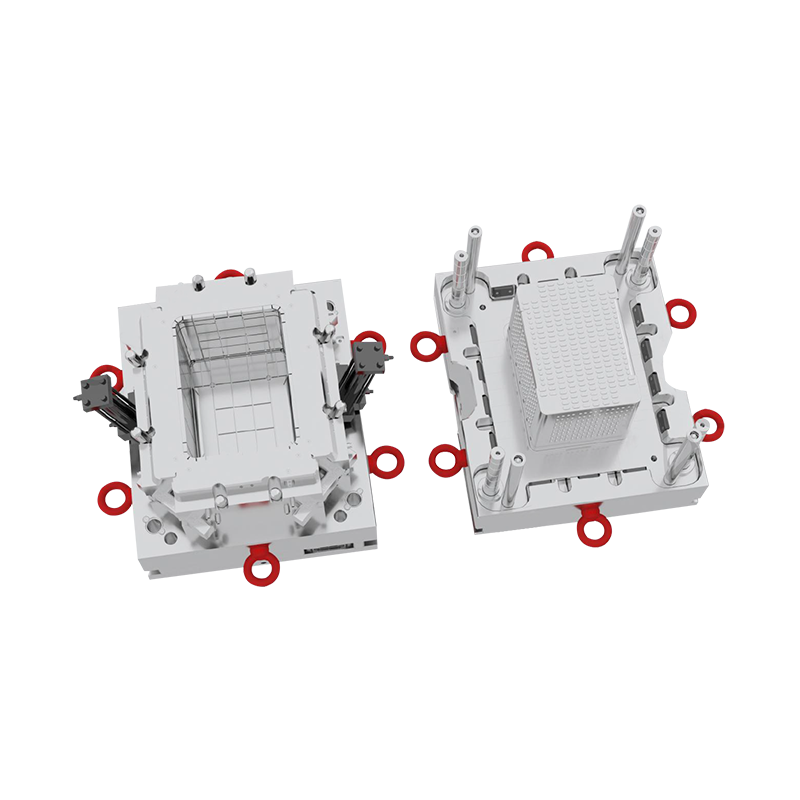
A well-designed plastic crate mold can optimize:
- Cooling channel layout
- Gate position
- Wall thickness balance
- Ejection system
These improvements reduce cooling time, shorten injection cycles, and increase machine output without sacrificing product quality.
For factories producing hundreds of thousands of crates annually, even reducing each cycle by a few seconds can generate significant cost savings.
High-Strength Mold Steel Improves Long-Term Stability
Crate molds typically operate under continuous production schedules.
For long production runs, high-quality mold steel provides:
- Better wear resistance
- Improved polishing performance
- Reduced maintenance frequency
- Longer mold service life
- More consistent product dimensions
Choosing suitable steel becomes especially important when producing glass bottle crates, industrial storage crates, or beverage transportation boxes where mold wear directly affects product quality.
Uniform Cooling Prevents Warpage
Plastic crates usually have large dimensions and complex rib structures.
Uneven cooling often causes:
- Bottom deformation
- Sidewall bending
- Poor stacking performance
- Assembly problems with automated logistics systems
Professional mold design includes balanced cooling circuits to maintain consistent temperature throughout the cavity, helping reduce shrinkage variation and dimensional distortion.
Multi-Cavity Design Is Not Always the Best Choice
Some buyers assume that more cavities always mean higher productivity.
However, crate molds are much larger than common consumer products. Machine tonnage, injection capacity, mold weight, and cooling efficiency must all be considered before selecting cavity numbers.
Depending on crate size and injection machine specifications, manufacturers typically choose between:
- Single cavity molds for large industrial crates
- Two-cavity molds for medium-sized logistics crates
- Specialized multi-cavity designs for smaller storage boxes
Selecting the appropriate cavity configuration ensures stable production rather than simply increasing theoretical output.
Common Problems During Plastic Crate Production and How Mold Design Solves Them
Even with high-quality raw materials and modern injection machines, poor mold design can create production challenges that reduce efficiency and increase rejection rates.
Understanding these common issues helps manufacturers make better tooling decisions before production begins.
Crates Bend After Cooling
Large plastic crates often experience warpage because of uneven cooling or inconsistent wall thickness.
Optimized mold cooling systems and balanced structural design help maintain dimensional stability, ensuring crates remain flat enough for reliable stacking and automated warehouse handling.
Flash Around the Parting Line
As molds wear over time, insufficient locking accuracy may produce flash around crate edges.
Using precision machining, hardened mold components, and proper venting helps maintain clean parting surfaces throughout long production runs.
Sink Marks Near Reinforcing Ribs
Deep ribs improve crate strength but can also create sink marks if wall thickness is not properly balanced.
Experienced mold designers optimize rib dimensions, gate location, and cooling layout to minimize cosmetic defects while preserving mechanical strength.
Difficult Demolding
Plastic crates contain numerous reinforcing ribs, handles, and draft surfaces.
Poor ejection design can lead to:
- White stress marks
- Product deformation
- Sticking inside the cavity
- Longer production cycles
A properly engineered ejection system distributes force evenly and enables smooth part release without damaging the product.
Excessive Maintenance Downtime
High-volume crate production often runs continuously for extended periods.
Easy-to-maintain mold structures, replaceable wear components, and standardized spare parts reduce maintenance time and help factories maximize machine utilization.
Why Manufacturers Choose Custom Plastic Crate Mold Solutions Instead of Standard Molds
Every crate manufacturer has different production goals.
Some focus on lightweight agricultural crates to reduce transportation costs.
Others require heavy-duty logistics containers capable of repeated warehouse circulation.
A custom plastic crate mold allows manufacturers to optimize:
- Product dimensions
- Load capacity
- Wall thickness
- Stackability
- Nesting performance
- Company logo engraving
- Barcode or RFID integration
- Automated production compatibility
Rather than modifying products to fit an existing mold, custom mold development ensures the final crate matches production requirements, market expectations, and long-term operating costs.
 +86-18657672567
 sales@tzhqmould.com
 No. 17 Houshi Road, Beicheng Industrial Zone, Huangyan District, Taizhou City, Zhejiang Province, China

