

Large-Capacity Thick Plastic Water Jug Mold with Lid: Precision Tooling for Durable Container Production
Admin 2026-10-24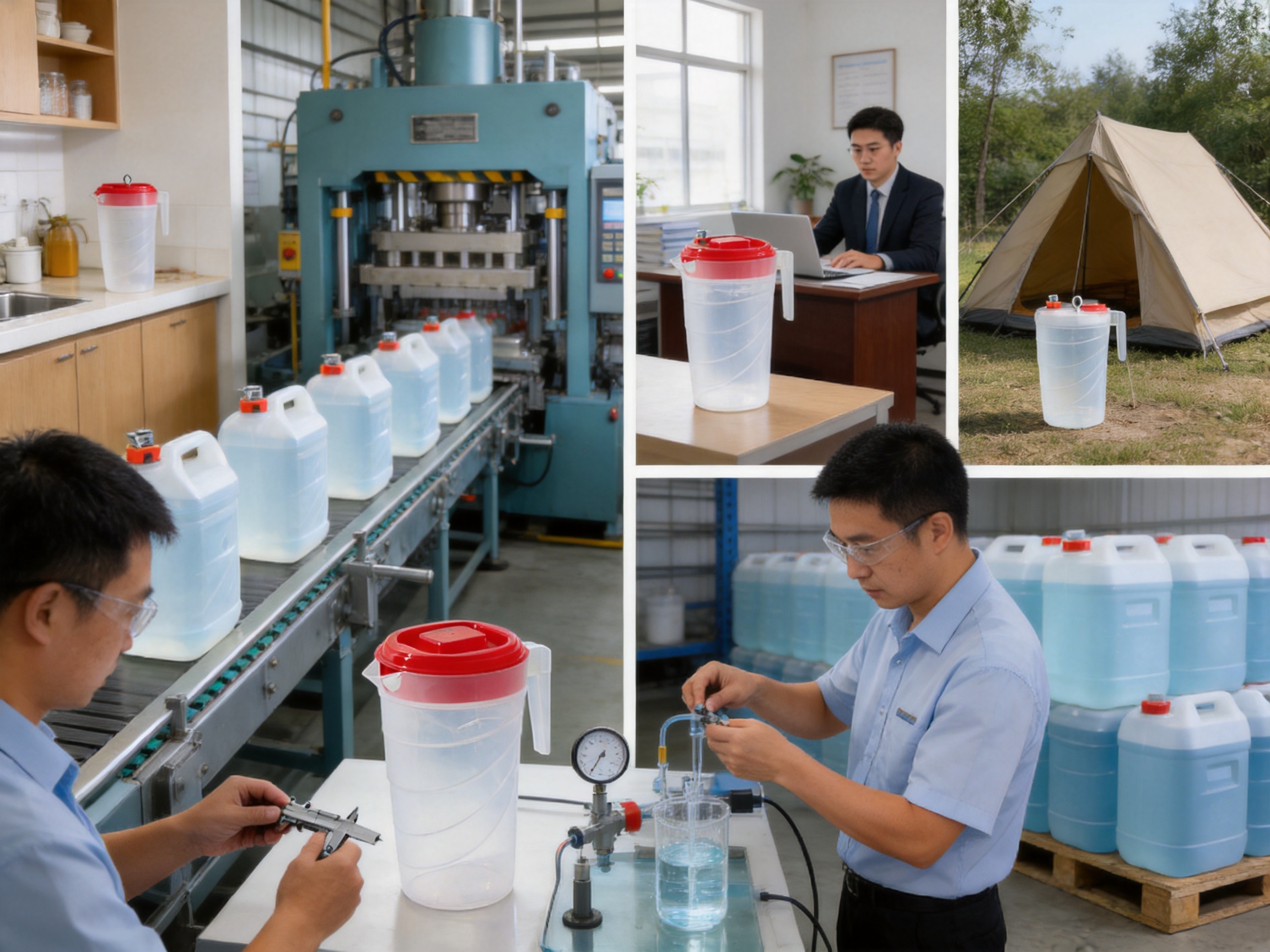
Large-capacity water jugs are essential products for households, offices, outdoor activities, emergency preparedness, beverage storage, and commercial water distribution. Although a water jug may appear simple, producing a reliable container with thick walls, an integrated handle, a secure lid, and a stable base requires carefully engineered tooling. A mold that is not properly designed can lead to uneven wall thickness, sink marks, warpage, short shots, poor lid fit, flash, difficult demolding, and inconsistent production cycles.
The Large Capacity Thick Plastic Water Jug Mold with Lid is developed for manufacturers that need dependable injection molding performance for robust plastic water containers. It is suitable for product capacities ranging from approximately 2 liters to 20 liters, depending on the final product design. The mold can be customized according to product drawings, samples, capacity requirements, handle configurations, branding needs, and surface texture preferences.
This tooling solution is designed around the practical requirements of thick-wall plastic products. It combines balanced material flow, optimized gate positioning, reinforced mold construction, controlled cooling, carefully selected mold steel, and production-oriented engineering. The result is a mold that helps manufacturers produce water jugs with consistent dimensions, strong structural integrity, attractive appearance, and reliable long-term service.
Taizhou Huangyan Haiquan Plastic Mold Co., Ltd. supplies custom injection molds for daily necessities, household appliances, automotive parts, and industrial equipment. Its experience in mold design and manufacturing supports the development of water jug tooling from initial product concept through engineering review, machining, mold assembly, testing, modification, and after-sales service.
Why Thick-Wall Water Jug Production Requires Specialized Tooling
Thin-wall packaging and thick-wall utility containers behave differently during injection molding. A large water jug normally requires a substantial amount of plastic material to create a rigid body that can withstand repeated handling, stacking, transportation, filling, and emptying. The thicker the product wall, the more attention must be given to material flow, cooling, shrinkage, and dimensional stability.
When molten plastic enters a cavity with long flow paths or substantial thickness changes, the material may cool unevenly. If one section freezes before the cavity is filled, incomplete filling or weld lines may appear. If the center of a thick section remains hot while the outside has already solidified, internal shrinkage can produce visible sink marks. If cooling is not balanced around the product, the jug may deform during ejection or after it leaves the mold.
The handle area creates another challenge. A handle must be strong enough to support a filled container, but it must also be comfortable to hold and properly connected to the jug body. Sudden changes in thickness around the handle junction can concentrate stress or cause cosmetic defects. The lid and neck region require precise dimensional control because even a small mismatch can affect sealing performance, user convenience, and product appearance.
For these reasons, a water jug mold should not be treated as a basic hollow-container tool. It is a complete engineering system involving product design, mold structure, gate location, runner configuration, cooling layout, ejection strategy, material selection, and production validation.
Product Overview
The Large Capacity Thick Plastic Water Jug Mold with Lid is intended for the production of durable plastic containers made mainly from polypropylene or high-density polyethylene. These materials are widely used for household and utility products because they offer a combination of impact resistance, chemical resistance, processability, and cost efficiency.
The mold can be developed as a single-cavity or two-cavity solution. A single-cavity design may be appropriate for larger products, lower-volume production, or applications requiring simpler mold construction and easier process control. A two-cavity design can improve output and production efficiency when the machine, material flow, cooling system, and product geometry support balanced operation.
The tooling can accommodate several important product features:
- Large container capacities from approximately 2 liters to 20 liters.
- Thick and durable jug walls.
- Integrated or separately engineered lid structures.
- Built-in carrying handles or reinforced handle connections.
- Anti-slip surface textures.
- Logo engraving and branding details.
- Customized neck, opening, base, and shoulder designs.
- Product-specific ribs and reinforcement features.
Because each water jug has different capacity, wall thickness, neck geometry, handle structure, and appearance requirements, the mold is developed as a customized solution rather than a one-size-fits-all product. Engineering begins with the customer’s drawing, three-dimensional model, or physical sample. The design team then evaluates the product for draft angles, parting lines, wall transitions, filling behavior, ejection requirements, and manufacturability.

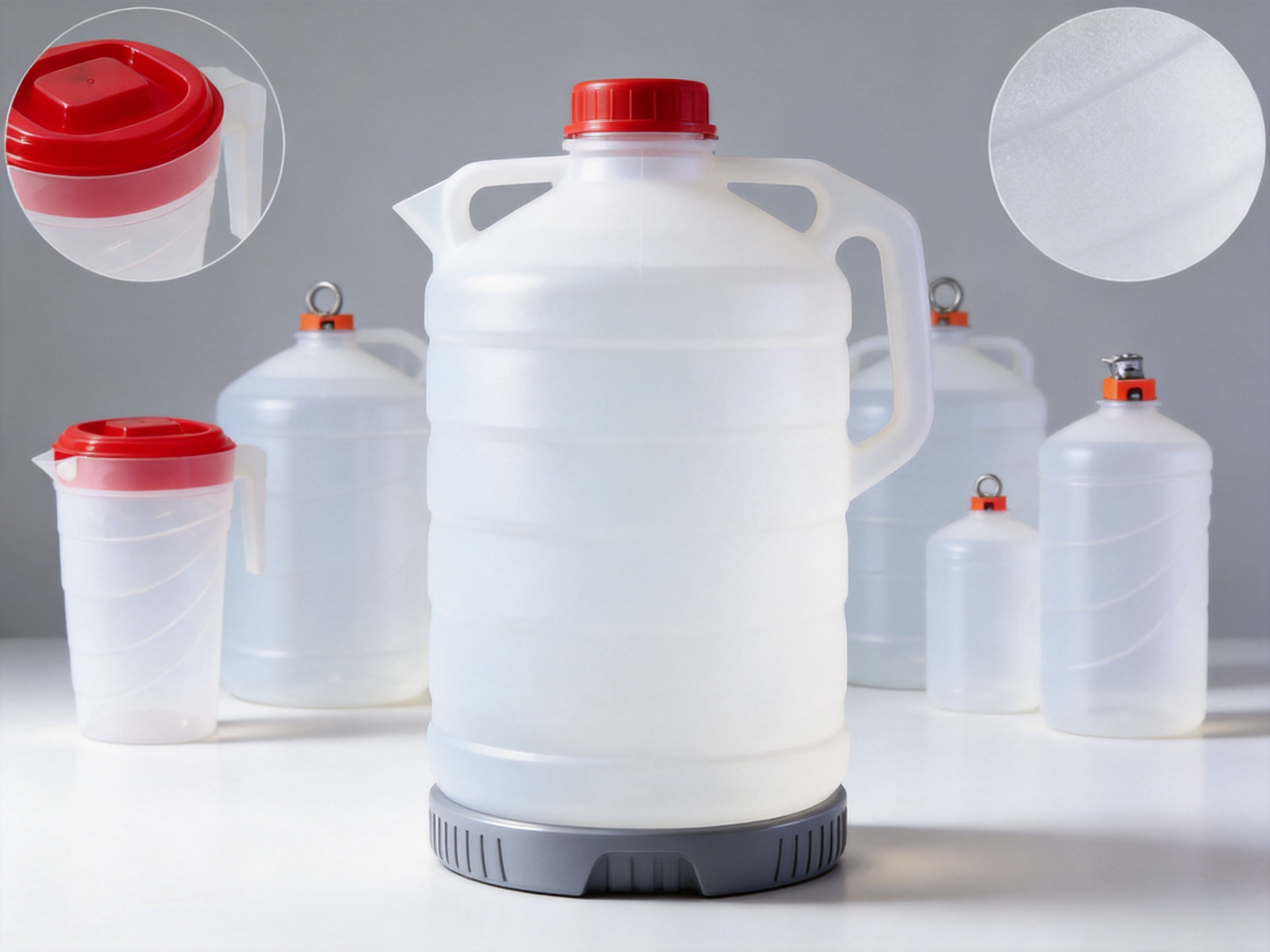
Large Capacity Thick Plastic Water Jug Mould with Lid
Core Advantages of the Water Jug Mold
1. Improved Control of Thick-Wall Appearance
One of the main advantages of this mold is its focus on controlling the appearance and dimensional consistency of thick plastic sections. Thick-wall products are particularly sensitive to sink marks, which occur when internal material shrinkage pulls the outer surface inward. Optimized gate positioning helps deliver material into the cavity in a controlled manner and supports more uniform packing of the product.
The mold design can also reduce abrupt wall-thickness changes wherever possible. A gradual transition allows the molten polymer to move more smoothly and helps reduce local cooling differences. Ribs and reinforcement structures can be positioned to improve strength without creating unnecessarily heavy sections that could increase sink risk.
Although molding conditions must still be adjusted according to the selected material and machine, a well-designed mold gives the processor a stronger foundation for achieving consistent results. This provides a practical advantage over poorly balanced tooling that depends on excessive pressure, extended cooling time, or frequent manual adjustments.
2. Balanced Material Flow
Material flow has a direct influence on product quality, cycle stability, and mold life. The water jug mold uses an optimized filling concept based on product geometry and the selected runner system. Gate location is evaluated according to the longest flow paths, handle connections, base structure, shoulder area, and visible surfaces.
A balanced flow pattern helps reduce incomplete filling, air entrapment, uneven packing, and weld-line concentration. For a two-cavity mold, the runner layout can be designed to distribute material evenly between cavities. Balanced filling reduces differences between products and makes it easier for production personnel to establish repeatable process parameters.
For many large plastic containers, a hot runner system is recommended. Hot runners can reduce cold runner waste, support more direct filling, and improve production efficiency when properly selected and controlled. The final runner design depends on the product material, injection machine, required output, gate appearance, and customer process preferences.
3. Reliable Cooling Performance
Cooling is one of the most important factors in the production of thick plastic jugs. If the mold cools the product unevenly, one side may contract more quickly than another, causing warpage or dimensional variation. If the cooling circuit is too weak, the product may require a longer cycle and still be unstable during ejection.
The mold cooling system is specially arranged to support consistent heat removal around the jug body, base, shoulder, neck, and other critical areas. Cooling channel locations are considered in relation to wall thickness, steel layout, core geometry, and areas with higher thermal loads. The objective is to achieve more uniform product temperature before ejection.
Effective cooling can provide several production benefits:
- Reduced deformation after ejection.
- Lower risk of shrinkage-related dimensional problems.
- More stable cycle times.
- Improved product repeatability.
- Reduced dependence on excessive cooling delays.
- Better suitability for continuous production.
The cooling system must be validated together with the molding machine, water temperature, flow rate, material grade, and process settings. Mold design establishes the necessary channels and connections, while production conditions determine how efficiently the available cooling capacity is used.
4. Reinforced Mold Structure
Large-capacity water jug molds are subjected to considerable injection pressure and clamping force. The cavity and core must remain accurately aligned throughout the molding cycle. A reinforced mold structure helps maintain stability and reduces the risk of deflection, premature wear, or dimensional drift.
The mold base can be manufactured according to LKM or HASCO standards, depending on the customer’s requirements and production preferences. Standardized components can simplify maintenance, replacement, and future service. The mold structure can also include suitable guide systems, support components, locking arrangements, and wear-resistant elements for long-term operation.
A stable mold base is particularly important for products with large projected areas. If the structure is not sufficiently supported, excessive pressure may create parting-line flash or uneven cavity alignment. A reinforced design helps protect product quality and contributes to more predictable mold performance over repeated production cycles.
5. Suitable Material Compatibility
The water jug mold is designed for common container materials such as PP and HDPE. Polypropylene can provide good toughness, chemical resistance, and lightweight performance, while high-density polyethylene is widely valued for impact resistance and durability. The final material selection should be based on the product’s intended use, required flexibility, environmental conditions, regulatory needs, and customer specifications.
Mold steel, surface treatment, gate design, cooling, and ejection must be considered together with the selected resin. Different materials have different shrinkage characteristics and processing windows. The engineering team can review these factors during the mold design stage to support an appropriate product allowance and process strategy.
6. Customizable Product Appearance
Water jugs are often used as visible consumer products, so appearance and brand identity can be important. The mold supports customization such as logo engraving, lettering, textured surfaces, measurement markings, and anti-slip patterns. These features can be integrated into the cavity or core according to the product design.
An anti-slip texture can improve handling, especially when the jug is wet or filled to a high level. Textures can also help conceal minor surface marks and provide a distinctive visual identity. Logo engraving and branding details can be positioned on the front panel, handle, lid, shoulder, or another suitable area.
Before steel processing begins, the customer can review the proposed appearance and confirm the size, depth, location, and finish of the desired markings. This approval step helps reduce the risk of costly changes after machining.
Engineering Design for the Jug Body
Wall Thickness and Structural Balance
The body of a large water jug must balance strength, weight, material consumption, and molding performance. Excessively thin walls may lead to flexing, impact damage, or unstable handling. Excessively thick walls increase material cost, cooling time, and the risk of internal shrinkage.
The engineering process evaluates the expected filling level, handle load, base support, transportation conditions, and use environment. Reinforcing ribs can be added in selected areas to increase stiffness without making the entire body unnecessarily thick. The ribs must have suitable thickness and draft to minimize sink marks and support reliable ejection.
Rounded corners are generally preferable to sharp internal transitions because they promote smoother material flow and reduce stress concentration. The shoulder and base can be designed with controlled radii to improve strength while maintaining an attractive appearance.
Handle Integration
The handle is a critical functional feature because it must support the weight of a filled jug. A poorly designed handle may flex excessively, crack near its connection to the body, or feel uncomfortable during use. The mold can be customized for a solid handle, open handle, contoured grip, or reinforced handle structure.
The junction between the handle and container body requires particular attention. Material flow must reach both connection areas effectively, and the geometry should avoid sharp changes that create weak points. The product design should also provide sufficient draft for demolding while retaining the desired grip shape.
When a handle is integrated into the main jug body, the mold may require complex core and cavity details. Ejection must be planned carefully so that the product can be released without damaging the handle or distorting the opening. The final solution depends on the handle geometry, draft direction, undercut conditions, and product flexibility.
Neck and Lid Design
A secure lid improves the usability of a water jug and helps protect the contents from contamination, spills, and accidental opening. The mold can be developed for a screw-type lid, snap-fit lid, press-fit cover, hinged cover, or other customer-defined structure.
The neck and lid must be designed together. Dimensional relationships, sealing surfaces, thread or snap details, wall thickness, and assembly force should be evaluated as a complete system. Excessively tight tolerances may make assembly difficult, while loose tolerances may result in leakage or poor retention.
If the lid is molded as a separate component, the customer may require an additional mold or a multi-part tooling program. If the product design integrates the lid structure into one molding solution, the mold design must account for the required moving elements, parting lines, and ejection method.
Base Stability
A filled water jug places considerable load on its base. The base should provide stable support on flat surfaces and resist deformation during storage or transport. A properly designed base may include strengthening ribs, a recessed foot ring, or a broader support area.
The mold cooling layout and ejection system are especially important around the base because thick sections and ribs can retain heat. Controlled cooling helps reduce post-molding distortion and supports consistent standing stability.
Precision Mold Manufacturing Process
1. Product Drawing and Requirement Review
The manufacturing process begins with a detailed review of the customer’s product drawings, three-dimensional files, physical samples, or initial concept. The engineering team confirms the product capacity, material, surface finish, lid structure, handle design, number of cavities, expected output, injection machine information, and delivery requirements.
At this stage, potential manufacturing concerns are identified before mold construction begins. These may include insufficient draft, difficult undercuts, uneven wall thickness, excessive corner sharpness, unsuitable parting-line locations, inadequate ejection space, or cooling limitations.
2. Moldflow and Filling Evaluation
For a large and thick product, filling evaluation can help determine an appropriate gate position, runner layout, and packing strategy. The analysis may consider filling time, pressure requirements, weld-line location, air traps, cooling behavior, and shrinkage trends.
Engineering evaluation is not a substitute for physical testing, but it can help identify potential problems at an early stage. Adjustments made during digital design are generally more efficient than modifications made after the mold has been completed.
3. Mold Structure Design
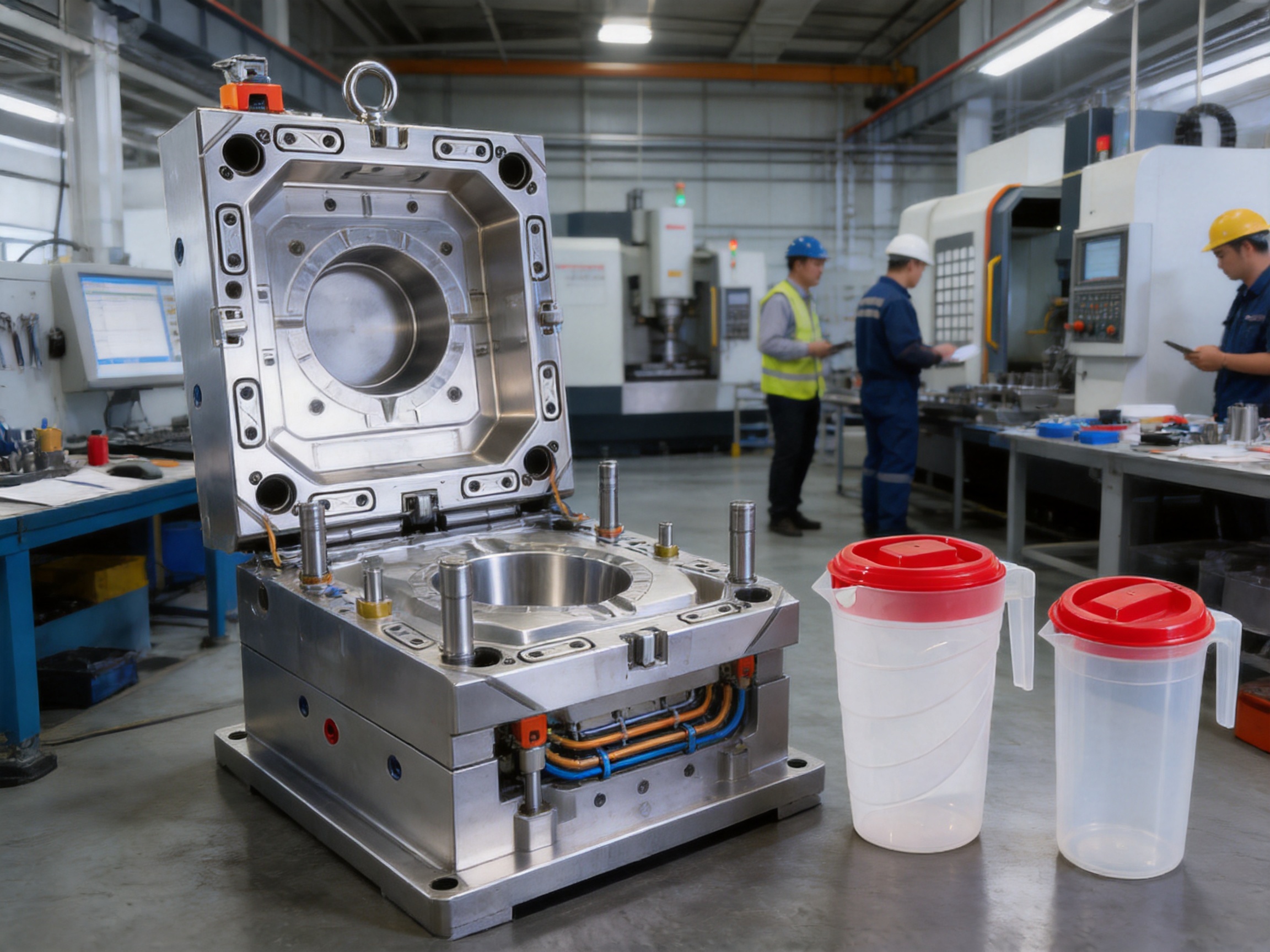
After the product has been reviewed, the mold structure is developed. The design includes the cavity, core, mold base, guide components, ejection system, cooling channels, runner system, gate arrangement, inserts, sliders if needed, and service connections.
The parting line is selected to balance product appearance, mold simplicity, ejection reliability, and flash control. For a water jug with a handle or other complex details, the parting-line decision can strongly influence the mold’s construction and maintenance requirements.
4. Steel Selection
The available mold steel options include P20, 718, and NAK80. The correct selection depends on the required mold life, product surface finish, production volume, corrosion considerations, machining requirements, and customer budget.
P20 is commonly used for general-purpose injection mold applications and offers a practical balance of machinability and performance. 718 may be selected when improved toughness, polishability, or mechanical performance is desired. NAK80 is known for its suitability in applications requiring high-quality surface finishing and stable pre-hardened steel performance.
The final steel specification should be confirmed according to the customer’s production expectations. For a mold intended to operate for up to approximately 1,000,000 shots, steel grade, heat treatment, component design, maintenance, molding conditions, and operating environment must all be considered together.
5. CNC Machining and Precision Processing
Once the design is approved, mold components are produced through precision machining. CNC milling, drilling, electrical discharge machining, grinding, polishing, and other processes may be used according to the geometry and surface requirements.
Large cavity and core surfaces require careful control of dimensions and finish. Areas that form sealing surfaces, lid interfaces, handle connections, or visible exterior panels may require additional machining and polishing attention. Electrode-based electrical discharge machining can be used for complex details that are difficult to produce through conventional cutting.
Machining accuracy is important not only for the first production run but also for future maintenance. Properly documented dimensions and component specifications help support replacement, repair, and mold refurbishment over the service life of the tooling.
6. Mold Assembly
After machining, individual components are inspected and assembled. The assembly process includes installation of guide systems, ejector components, cooling fittings, inserts, runner parts, sliders, and other functional elements. Moving components are checked for smooth operation and adequate clearance.
The mold is inspected for alignment, parting-line contact, cavity and core fit, ejector travel, cooling-channel integrity, and overall structural stability. Any interference or abnormal movement is corrected before trial production.
7. Trial Molding and Optimization
Trial molding is used to verify the mold under actual or representative production conditions. The trial process evaluates filling, packing, cooling, ejection, product dimensions, surface appearance, lid fit, handle strength, and cycle stability.
Trial samples can reveal issues that are not fully visible during design review. Depending on the results, adjustments may involve gate polishing, vent improvement, ejector refinement, cooling optimization, flash correction, texture enhancement, or dimensional modification.
For thick-wall water jugs, trial molding should include sufficient cooling and post-molding observation. Some deformation or shrinkage may become more apparent after the product has cooled to room temperature. Measuring samples after stabilization provides more useful information than relying only on measurements taken immediately after ejection.
8. Final Inspection and Delivery
Before delivery, the mold is checked for operating reliability, product quality, component completeness, and documentation. The customer may receive trial samples, inspection records, mold drawings, spare-part information, and recommended operating guidance according to the project agreement.
A well-organized handover helps the customer install the mold efficiently and establish the initial molding process. It also provides a useful reference for future maintenance and production planning.
Technical Specifications
| Item | Specification or Option | Production Benefit |
|---|---|---|
| Product Type | Large-capacity thick plastic water jug with lid | Suitable for durable household and utility containers |
| Typical Capacity Range | Approximately 2 liters to 20 liters | Supports multiple product sizes and market applications |
| Product Material | PP or HDPE | Provides practical strength, toughness, and processability |
| Mold Steel Options | P20, 718, or NAK80 | Allows selection according to life, finish, and budget requirements |
| Mold Base | LKM or HASCO standard | Supports standardized construction and serviceability |
| Cavity Configuration | One or two cavities | Balances product size, output, machine capacity, and investment |
| Runner System | Hot runner recommended | Can reduce runner waste and support efficient filling |
| Expected Mold Life | Up to approximately 1,000,000 shots | Suitable for long-term production when properly maintained |
| Customization | Capacity, handle, lid, texture, logo, and branding | Supports differentiated product development |
Comparison with Less Advanced Mold Solutions
Not all water jug molds provide the same level of production stability. Basic tooling may be manufactured with limited engineering analysis, insufficient cooling, generic gate locations, or undersized structural components. Such approaches may reduce initial cost but can create higher expenses during production.
A poorly located gate may leave visible marks in an important display area or create an unbalanced flow path. Uneven filling can produce weld lines near the handle, while inadequate packing may increase sink marks around thick sections. These issues can result in higher rejection rates and additional process adjustments.
Insufficient cooling is another common weakness. A mold may technically produce a jug, but the cycle may need to be extended to prevent deformation. Longer cycles reduce hourly output and increase energy consumption. If the product is ejected too hot, it may lose its shape during handling or stacking.
Weak mold construction can also affect long-term performance. Repeated injection pressure may cause alignment changes, parting-line flash, or premature wear. Maintenance becomes more frequent, and the product may gradually move outside acceptable tolerances.
By contrast, the water jug mold described here is developed with attention to filling balance, thick-wall behavior, cooling efficiency, structural reinforcement, material compatibility, and future production requirements. The objective is not simply to make one acceptable sample but to provide a stable tool for repeatable manufacturing.
Advantages of Working with an Experienced Mold Manufacturer
Integrated Engineering Support
Haiquan provides support across product design review, mold engineering, component manufacturing, assembly, trial molding, and after-sales service. An integrated workflow reduces communication gaps between independent suppliers and helps maintain consistency between the approved product concept and the finished tooling.
The company’s professional design team can review customer drawings and samples before production. This is valuable for customers who have a product concept but need assistance converting it into an injection-moldable design. Early technical discussion can prevent unnecessary complexity and improve the balance between product function, appearance, and manufacturing cost.
Multi-Sector Manufacturing Experience
The company specializes in molds for daily necessities, home appliances, automotive parts, and industrial equipment. Experience across these sectors can contribute to a broader understanding of material behavior, structural requirements, surface appearance, dimensional control, and production durability.
Daily-necessity products such as water jugs require attractive surfaces and convenient use. Industrial products may require stronger structural performance and more demanding dimensional accuracy. Automotive and appliance tooling can involve complex geometry and high expectations for repeatability. This combined experience supports a disciplined approach to mold engineering.
Scientific Production Management
Consistent mold quality depends on more than individual machining skill. It also requires organized planning, process control, inspection, documentation, and communication. A scientific production management system helps coordinate design approvals, material purchasing, machining schedules, assembly activities, trial arrangements, and final inspection.
Structured management is especially useful for customized molds because every project may include different steel grades, cavity counts, textures, lid structures, and delivery requirements. Clear records help reduce errors and provide traceability throughout the project.
International Customer Service
Haiquan serves customers in Europe, the Middle East, Southeast Asia, and South America. International project experience requires attention to technical communication, packaging, delivery coordination, documentation, and customer-specific standards.
Export experience can also help the manufacturer understand the importance of clear drawings, approval procedures, spare parts, mold identification, and after-sales response. These factors are important when the mold will be installed and operated far from the manufacturing facility.
Long-Term Production Perspective
A mold should be evaluated according to its complete operating life, not only its purchase price. A lower-cost mold that creates frequent defects, requires long cycles, or needs repeated repairs may be more expensive over time than a properly engineered tool.
Haiquan’s stated quality philosophy emphasizes quality first and sustainable development. In practical terms, this supports an approach focused on stable production, durable components, maintainability, and the customer’s long-term manufacturing objectives.
Applications for the Finished Water Jug
The completed water jug can serve a wide variety of markets and use environments. In households, it can be used to store drinking water or other beverages. In offices, it can support water distribution and pantry use. For camping and outdoor activities, a strong handle and durable body make the product convenient to transport.
Water jugs can also be used for emergency water storage, temporary supply management, agricultural activities, event operations, and commercial beverage handling. The appropriate product material, lid structure, capacity, and labeling should be selected according to the intended application.
- Household water storage.
- Office and workplace beverage storage.
- Outdoor camping and recreational use.
- Emergency preparedness and reserve water storage.
- Commercial beverage and ingredient containers.
- Event, travel, and temporary water distribution.
- Utility storage in non-food applications when appropriate.
When the jug is intended for drinking water or food-related use, the customer should confirm that the selected raw materials, additives, colorants, production environment, cleaning procedures, and finished-product testing comply with the regulations applicable to the target market.
Customization Options for Different Markets
Capacity Customization
Different users require different storage volumes. A compact 2-liter jug may be convenient for personal use, while a 10-liter or 20-liter model may be more appropriate for family storage, outdoor use, or emergency applications. The mold can be developed around the customer’s selected capacity and product dimensions.
Capacity changes affect more than the overall height or width. They may influence wall thickness, handle load, base structure, neck size, mold opening dimensions, machine requirements, cooling performance, and product weight. For this reason, every capacity should receive its own engineering review.
Surface Texture
Surface texture can improve grip and create a recognizable product appearance. Fine textures may provide a subtle matte finish, while deeper patterns can create a stronger anti-slip effect. Texture selection should consider the product’s expected use, cleaning requirements, branding, and visual preferences.
Texture depth and direction must also be compatible with demolding. Adequate draft is important because textured surfaces create more resistance during ejection than polished surfaces. The design team can recommend suitable draft values based on the selected texture and product geometry.
Logo and Identification Features
Logo engraving, capacity markings, recycling symbols, measurement lines, and other identification details can be integrated into the mold. These details reduce the need for secondary labeling and may improve product durability during washing or repeated handling.
The customer should provide clear artwork and confirm the final size, position, orientation, and depth before machining. Fine lettering requires suitable steel processing and polishing control to achieve a clean result.
Color and Material Strategy
Although the mold determines the product shape, the customer can use different PP or HDPE grades and color concentrates to create product variations. Clear, translucent, opaque, bright, neutral, or branded colors may be selected according to market requirements.
Material flow and cooling performance can vary between resin grades and colors. Any significant material change should be evaluated during production trials to ensure that the established process remains stable.
Production and Maintenance Recommendations
Proper operation and maintenance are essential for achieving the expected service life of the mold. Before production, the operator should confirm that the mold is correctly installed, the cooling lines are connected without blockage, the hot runner or runner system is functioning properly, and the injection machine has adequate capacity.
The mold should be cleaned regularly, especially around the parting line, vent areas, cavity surface, ejector system, and lid-forming details. Residual plastic, dust, moisture, and oil contamination can affect product appearance and mold movement.
Cooling channels should be monitored for flow and temperature. Scale or contamination inside the channels can reduce heat transfer and cause longer cycles or uneven cooling. Periodic flushing and inspection may be necessary depending on the quality of the cooling water.
Moving components should be lubricated using suitable products at appropriate intervals. Excessive lubricant should be avoided because it can migrate to the product surface or collect dust. Ejector pins, guide pillars, sliders, and other moving elements should be checked for abnormal wear or resistance.
When the mold is stored, it should be dried, protected against corrosion, and kept in a controlled environment where practical. The parting surfaces should be protected from impact, and the mold should be identified clearly for future production reference.
Quality Control Considerations for Finished Jugs
Finished product inspection should be based on the customer’s approved drawings and quality standards. Typical checks may include overall dimensions, capacity, wall appearance, weight, handle integrity, lid fit, base stability, surface texture, logo clarity, flash, sink marks, short shots, warpage, and leakage performance.
A filled-jug load test may be appropriate for evaluating the handle and body structure. The test method should reflect the intended product use and should be agreed upon before mass production. Drop, stacking, temperature, chemical-resistance, or repeated-opening tests may also be considered depending on the market.
Dimensional inspection should be performed after the product has cooled and stabilized. Measuring immediately after ejection can give misleading results because the plastic may continue to shrink or relax. Consistent sampling procedures allow production teams to identify trends before they become major quality problems.
Visual inspection remains important even when dimensional results are acceptable. Consumers may reject products with visible sink marks, flow lines, weld lines in prominent locations, rough texture, flash, or uneven color. A well-designed mold reduces these risks, while controlled processing and inspection help maintain the final standard.
How to Begin a Custom Mold Project
Customers preparing to order a water jug mold should provide as much technical information as possible. Useful information includes the product drawing or sample, three-dimensional model, target capacity, material preference, expected annual production, injection machine details, cavity requirement, lid concept, handle design, surface finish, logo artwork, and target delivery schedule.
If a complete product drawing is not available, the engineering team can begin with a concept, sketch, or physical sample. However, additional design development may be required before final mold construction. Early communication is beneficial because product modifications are generally easier and less costly before steel machining begins.
The customer should also explain whether the mold will be used for food-related products, drinking water storage, industrial liquid storage, or another purpose. This information can influence material selection, surface requirements, cleaning expectations, testing procedures, and documentation.
After reviewing the requirements, the manufacturer can recommend a cavity configuration, mold steel, runner system, cooling approach, and expected production arrangement. A formal design approval should be completed before manufacturing proceeds.
Frequently Asked Questions
What products can be made with this mold?
The mold is designed for large-capacity plastic water jugs with lids. Depending on the customized design, it can produce household water containers, outdoor storage jugs, beverage containers, emergency water storage products, and other similar thick-wall plastic containers.
What materials are suitable for the water jug?
PP and HDPE are the primary material options identified for this mold. The best choice depends on the required stiffness, impact resistance, flexibility, chemical resistance, appearance, regulatory requirements, and intended use.
Can the jug capacity be changed?
Yes. The mold can be customized for different capacities, generally within an approximate range of 2 liters to 20 liters. Capacity changes require a dedicated review of the product dimensions, wall thickness, handle strength, cooling, machine requirements, and mold structure.
Can the lid and handle be customized?
Yes. The lid and handle can be designed according to the customer’s product concept. Options may include different lid retention methods, opening sizes, handle shapes, grip profiles, and reinforcement structures. The lid and handle must be evaluated together with the body to ensure reliable assembly and use.
Why is a hot runner system recommended?
A hot runner system can support efficient filling and reduce cold runner waste. It may also be beneficial for large containers that require controlled material delivery. The final selection depends on the product design, resin, machine, gate requirements, production volume, and customer preference.
How does the mold reduce sink marks?
Sink marks are addressed through a combination of product design, balanced material flow, optimized gate positioning, suitable packing conditions, controlled wall thickness, rib design, and effective cooling. No mold feature can eliminate every processing risk, but appropriate engineering can significantly improve the production window.
How does the cooling system help prevent deformation?
The cooling system is arranged to remove heat more evenly from important sections of the mold. More uniform cooling helps reduce differences in shrinkage and lowers the risk of warpage after ejection. Actual results also depend on water temperature, flow rate, resin grade, cooling time, and molding parameters.
What mold steel choices are available?
The available options include P20, 718, and NAK80. The appropriate steel depends on the required mold life, surface finish, production volume, machining requirements, and budget. The selected material should be confirmed during technical review.
How many cavities can the mold have?
The mold can be developed with one or two cavities. A single-cavity design may be suitable for large products or moderate output, while a two-cavity design can increase productivity when the machine and flow balance are appropriate.
What is the expected mold life?
The stated mold life can reach up to approximately 1,000,000 shots. Actual service life depends on steel selection, component design, molding conditions, maintenance, material abrasiveness, production frequency, and operating practices.
Can a logo be added to the jug?
Yes. Logo engraving, lettering, measurement marks, and other branding details can be integrated into the cavity or core. Artwork and placement should be approved before machining so that the final result matches the customer’s expectations.
What information should be provided for a quotation?
The customer should provide the product drawing or sample, capacity, material, dimensions, lid and handle requirements, surface finish, logo requirements, expected quantity, machine information, cavity preference, and delivery expectations. More complete information allows the manufacturer to prepare a more accurate technical and commercial proposal.
Does the manufacturer provide after-sales support?
The company provides integrated services from design and production to after-sales support. Specific support arrangements should be confirmed for each project, including installation guidance, technical communication, spare parts, maintenance information, and modification requirements.
Conclusion
The Large Capacity Thick Plastic Water Jug Mold with Lid is a specialized injection tooling solution for manufacturers seeking durable, consistent, and customizable water containers. Its design addresses the main challenges of thick-wall molding, including balanced filling, sink-mark control, dimensional stability, cooling performance, handle strength, lid fit, and long-term mold reliability.
With options for PP or HDPE, one or two cavities, P20, 718, or NAK80 steel, LKM or HASCO mold bases, hot runner systems, customized capacities, anti-slip textures, and engraved branding, the mold can be adapted to a broad range of products and markets.
Taizhou Huangyan Haiquan Plastic Mold Co., Ltd. combines product engineering, precision mold manufacturing, structured production management, trial molding, inspection, and after-sales service. Its focus on daily necessities and additional industrial sectors provides a strong foundation for developing tooling that balances appearance, function, productivity, and service life.
For customers planning a new water jug product, the most effective approach is to begin with a detailed review of the product concept and manufacturing requirements. By selecting the appropriate material, capacity, mold structure, runner system, cooling layout, surface finish, and quality standards at the beginning of the project, manufacturers can reduce production risk and establish a more efficient path toward reliable mass production.
References
1. Injection molding design principles for thick-wall polypropylene and polyethylene containers.
2. General guidance on mold cooling, polymer shrinkage, and dimensional stability in thermoplastic processing.
3. Standard practices for injection mold design, runner balancing, gate selection, and ejection planning.
4. Technical information concerning P20, 718, and NAK80 mold steels and their typical tooling applications.
5. General quality-control procedures for plastic containers, including dimensional inspection, visual inspection, leakage evaluation, and load testing.
6. Product engineering principles for plastic handles, lids, reinforced bases, and reusable storage containers.
Product: Large Capacity Thick Plastic Water Jug Mould with Lid

For exclusive deals and latest offers, sign up by entering your email address below.












 +86-18657672567
 sales@tzhqmould.com
celin@tzhqmould.com
 No. 17 Houshi Road, Beicheng Industrial Zone, Huangyan District, Taizhou City, Zhejiang Province, China
Copyright © Taizhou Huangyan Haiquan Plastic Mold Co., Ltd. All Rights Reserved
Injection Plastic Mould Maker

