

Rainwater Collector and Components Plastic Mould for Durable Water Management Systems
Admin 2026-11-05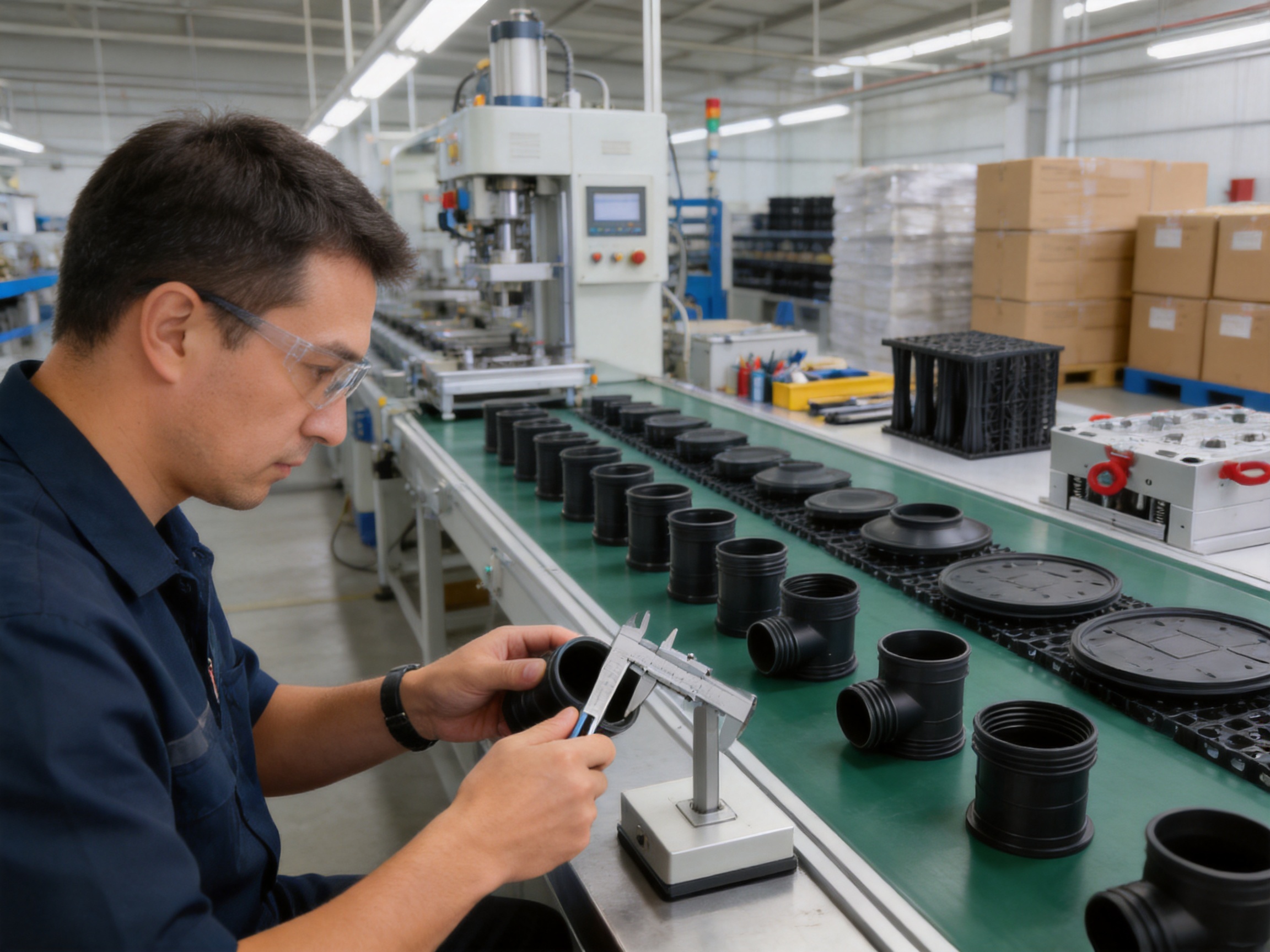
Rainwater collection is becoming an increasingly important part of sustainable water management. Municipal water pressure, irregular rainfall, urban development, and the growing demand for responsible resource use have encouraged homeowners, agricultural operators, commercial facilities, and public infrastructure planners to install systems that capture and reuse rainwater. A reliable rainwater collection system depends not only on the tank or storage vessel itself, but also on the quality of the collector, pipe connectors, covers, adapters, filters, and other plastic components that control the movement and storage of water.
The Rainwater Collector and Components Plastic Mould is developed for manufacturers that require a dependable tooling solution for producing these outdoor plastic parts. It supports the manufacture of rainwater collectors, roof drainage connectors, pipe fittings, storage accessories, and related components made from polypropylene (PP) or high-density polyethylene (HDPE). The mould is intended for repeatable injection moulding production, helping manufacturers achieve stable dimensions, smooth surfaces, reliable assembly, and consistent performance across large production runs.
Unlike basic plastic tooling designed for short-term or low-volume production, this mould is engineered around the practical demands of outdoor water management products. Rainwater components may be exposed to ultraviolet radiation, temperature changes, wind, dust, moisture, impact, and repeated connection or disconnection during maintenance. The mould must therefore support a finished product that combines dimensional accuracy with material efficiency, mechanical strength, and long-term environmental resistance.
Product Overview
The Rainwater Collector and Components Plastic Mould belongs to the rainwater harvest tank mould category. It is designed to manufacture plastic components used in garden rainwater collection systems, roof drainage assemblies, water storage accessories, and related outdoor installations. Depending on the final product design, the tooling can be configured for collector bodies, pipe connectors, diverter components, inspection covers, adapters, outlets, or other injection-moulded parts.
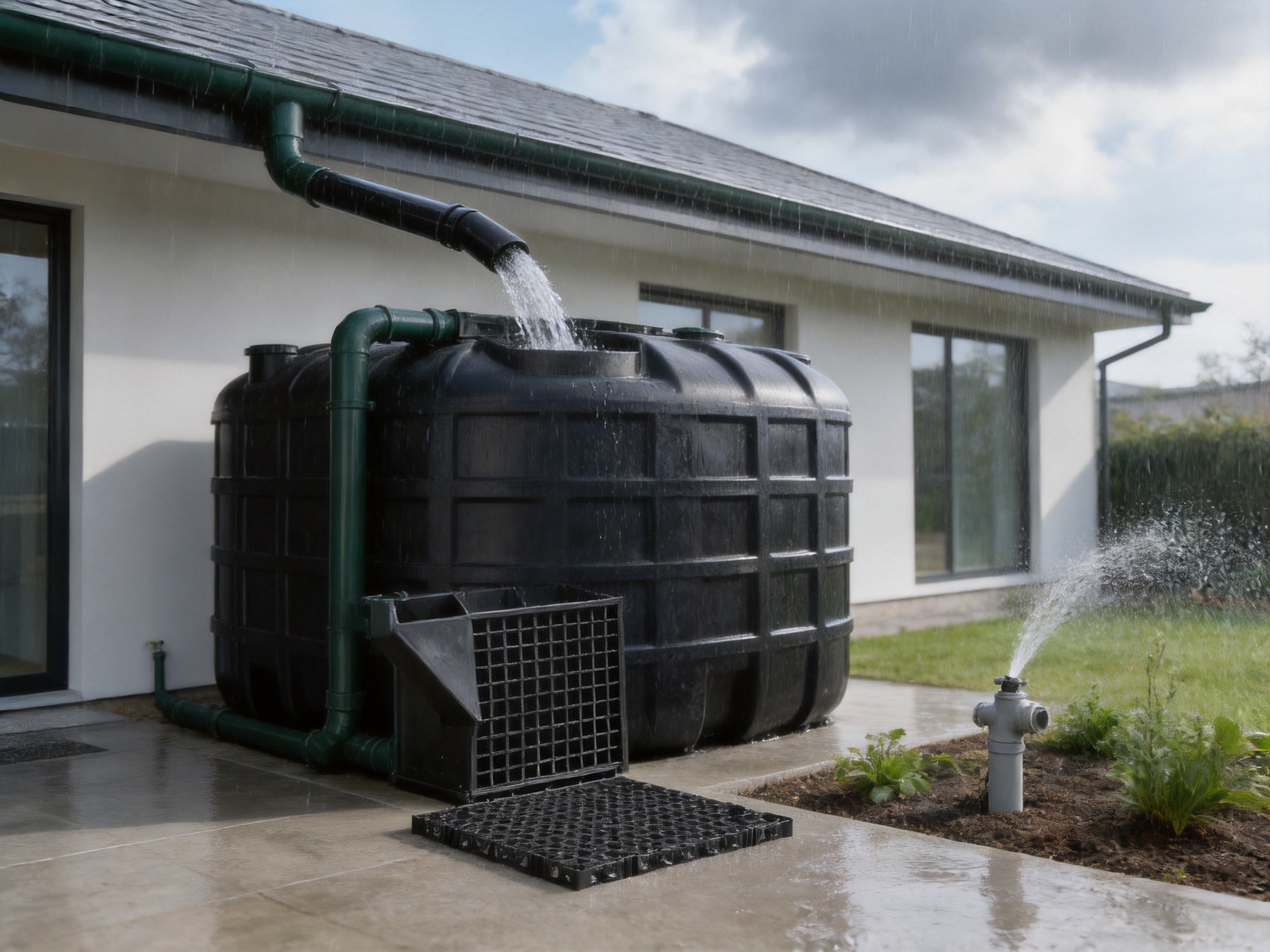
The basic product application is straightforward. Rainwater falling on a roof is guided through gutters and downpipes toward a collection point. A plastic collector or diverter may separate the initial flow, direct water into a storage tank, or connect several parts of the drainage system. The performance of this assembly depends on the accuracy of the moulded parts. A poorly fitted connector can leak, a distorted outlet can restrict flow, and an uneven sealing surface can reduce the reliability of the entire installation.
This mould is therefore more than a cavity for forming plastic. It is a production platform intended to support the complete functional requirements of rainwater system components. Its design can accommodate customer-specific pipe dimensions, connection arrangements, wall thicknesses, mounting details, and surface requirements. This adaptability allows manufacturers to develop products for different regional pipe standards, garden systems, tank sizes, and distribution channels.
| Product Name | Rainwater Collector and Components Plastic Mould |
| Product Category | Rainwater Harvest Tank Mould |
| Recommended Product Materials | PP / HDPE |
| Available Mould Steel | P20 / 718 |
| Designed Mould Life | Approximately 700,000 shots |
| Typical Applications | Garden collection systems, roof drainage connectors, and water storage accessories |
| Customization | Pipe connectors, collector dimensions, and component configurations can be adjusted |
Why Rainwater Components Require Specialized Tooling
Rainwater products are often exposed to conditions that are more demanding than those found in indoor consumer products. A connector installed outside may remain exposed to sunlight for many years. It may experience high summer temperatures, winter freezing, sudden temperature changes, rainwater containing dust or organic matter, and occasional impact from tools or garden equipment. These conditions place significant requirements on the design of the component and the mould used to produce it.
Dimensional stability is especially important. Pipes and fittings must connect accurately without excessive force, looseness, or leakage. The inner diameter must remain open enough to support the required flow rate, while the outer diameter must match the relevant pipe or tank connection. Mounting clips, sealing grooves, lugs, and threaded or push-fit details also need to be formed consistently. Even a small variation can affect assembly efficiency when thousands of units are produced.
Surface quality is another critical factor. A smooth internal surface can help reduce the accumulation of dirt and improve water movement. A controlled external surface provides a professional appearance and can reduce visible moulding defects. For components installed in gardens, on residential buildings, or in commercial projects, appearance may influence purchasing decisions as much as technical performance.
Plastic flow must also be carefully managed. Rainwater collectors may contain curved passages, ribs, sockets, bosses, and variable wall sections. If the injection system is not correctly designed, the finished part may develop weld lines, sink marks, short shots, trapped air, or uneven shrinkage. Advanced mould engineering helps control these risks by balancing gate locations, runner layouts, cooling channels, venting positions, and ejection systems.
Material Compatibility with PP and HDPE
The mould supports polypropylene and high-density polyethylene, two materials frequently selected for outdoor water management components. Both materials offer useful combinations of chemical resistance, low density, toughness, and processing efficiency. The final selection depends on the product design, operating conditions, required rigidity, impact performance, cost target, and customer preference.
Polypropylene is valued for its low weight, good chemical resistance, and relatively high stiffness. It can be suitable for collectors, covers, fittings, and accessories that need a balance between rigidity and ease of processing. PP also supports a wide range of colour options, allowing manufacturers to produce components that blend with garden environments, roof systems, or branded product families.
HDPE is known for toughness, impact resistance, and resistance to moisture and many common chemicals. These characteristics make it suitable for components that may be exposed to outdoor handling, repeated installation, or mechanical stress. HDPE can also perform well in applications where the product must withstand low temperatures or occasional impact.
Material behaviour must be considered during mould design. PP and HDPE have different shrinkage characteristics, flow behaviour, cooling requirements, and ejection responses. A mould designed without proper allowance for these factors may produce parts that warp, contract unevenly, or fail to meet connection tolerances. The tooling process should therefore begin with a clear understanding of the selected resin, expected production conditions, and functional requirements of the finished component.
When outdoor use is expected, the plastic formulation may also include colour masterbatch, UV stabilizers, impact modifiers, or other approved additives. The mould itself does not replace the need for a suitable material formulation, but its controlled cavity geometry and cooling performance help the chosen material achieve a repeatable final shape.

Rainwater Collector and Components Plastic Mould
Key Design Advantages of the Mould
Accurate Connection Geometry
Pipe connectors and rainwater collectors must join with a reliable fit. The tooling can be customized around customer-defined pipe diameters, socket depths, sealing areas, wall thicknesses, and connection types. This makes it possible to produce parts that match existing drainage systems or support the development of a new product platform.
Accurate geometry reduces the need for manual adjustment after moulding. It also helps minimize leakage caused by gaps, excessive ovality, or inconsistent sealing contact. For manufacturers selling complete rainwater systems, consistent connections can reduce installation complaints and improve the reputation of the final product.
Support for Complex Water Flow Paths
Rainwater components may include internal channels that must guide water smoothly from a roof or gutter into a storage tank. The mould can be developed to reproduce curved passages, diversion structures, overflow routes, filter seats, and outlet sections. Careful mould design helps preserve the required flow area while maintaining sufficient structural support around the component.
Where a product includes internal partitions or directional features, the core and cavity must be aligned precisely. The design may also require sliders, lifters, inserts, or other mechanisms for releasing undercuts and side details. A well-planned release system reduces the possibility of deformation during ejection and helps maintain the accuracy of the internal passage.
Controlled Wall Thickness
Wall thickness affects strength, cooling time, material consumption, weight, and dimensional stability. Excessively thick sections can create sink marks and long cycle times, while very thin sections may result in short shots or weak areas. The mould design should support an appropriate balance for the intended product and material.
Uniform or carefully transitioned wall sections are particularly important in collector bodies and fittings. Smooth transitions help reduce localized shrinkage and internal stress. Ribs and reinforcement features can be added where needed to improve rigidity without making the entire part unnecessarily thick. This approach may reduce material usage while maintaining performance.
Reliable Ejection
Outdoor water components often include curved surfaces, sockets, ribs, and deep sections. Ejection must be distributed carefully to prevent distortion, whitening, drag marks, or damage to sealing areas. Properly positioned ejector pins, sleeves, stripper systems, or customized release features can help transfer the ejection force evenly.
Reliable ejection also contributes to cycle consistency. If parts stick in the cavity, operators may need to stop the machine or remove products manually, increasing labour costs and creating a risk of damage. A smooth automated release process supports stable production and helps maintain a predictable cycle time.
Efficient Cooling
Cooling is one of the most important factors influencing injection moulding productivity. A mould with an efficient cooling layout can help reduce cycle time, control shrinkage, and improve part consistency. Cooling channels should be positioned to remove heat from thick sections, connection areas, and other regions that may otherwise cool unevenly.
For PP and HDPE products, balanced cooling is valuable because both materials can experience moulding shrinkage and warpage if temperature distribution is inconsistent. The objective is not simply to cool the mould quickly, but to cool the product in a controlled and uniform manner. This supports stable dimensions and reduces the need for excessive post-moulding correction.
Surface Finish and Appearance
The cavity surface can be prepared according to the visual and functional requirements of the product. A polished finish may be selected for areas where smoothness and easy cleaning are important. A textured finish may be preferred for external surfaces where minor handling marks should be less visible or where a specific appearance is required.
Consistent surface treatment across the cavity also helps create a uniform product appearance. This is useful for manufacturers selling coordinated rainwater collectors, tanks, covers, and fittings as part of one product family.
Comparison with Basic or Low-Cost Competitor Tooling
Price is an important consideration when purchasing a plastic mould, but the initial tooling price does not represent the full cost of ownership. A low-cost mould may appear attractive if the project is evaluated only by purchase price. However, poor dimensional control, difficult ejection, uneven cooling, frequent maintenance, or short service life can increase production costs over time.
The Rainwater Collector and Components Plastic Mould is positioned as a more durable and production-oriented solution. Its stated mould life is approximately 700,000 shots, subject to correct operation, maintenance, material selection, and processing conditions. This target supports long-term manufacturing programs and can reduce the need for early replacement compared with short-run tooling.
| Evaluation Area | Production-Oriented Rainwater Mould | Basic Low-Cost Tooling Risk |
| Dimensional Control | Designed around repeatable pipe and collector geometry | Greater variation may affect assembly and sealing |
| Mould Life | Approximately 700,000 shots under suitable conditions | May be limited by lower-grade materials or simpler construction |
| Cooling Performance | Planned to support balanced cooling and stable cycles | Uneven cooling may increase warpage and cycle time |
| Customization | Pipe sizes and collector dimensions can be adjusted | Limited adaptation may require design compromises |
| Maintenance | Repairable construction using established mould steel options | Replacement or extensive repair may be required sooner |
| Production Consistency | Suitable for repeated injection moulding production | Variation may increase sorting and rework |
Another advantage is design flexibility. Rainwater systems vary between markets. A European garden installation may use different pipe dimensions from a system designed for another region. Some customers may require a compact collector, while others may need a larger water diversion capacity. A mould that can be adapted to these requirements gives manufacturers greater freedom to serve different product segments.
Competitor tooling may also use a generic design that does not fully consider the final material or machine conditions. A more coordinated approach examines the component, mould structure, injection process, cooling system, ejection method, and expected production quantity as one manufacturing project. This integrated approach can improve the relationship between tooling cost and long-term production value.
Selection of Mould Steel
The mould is specified with P20 or 718 steel options. These steels are widely recognized in injection mould manufacturing and can provide a practical balance of machinability, strength, polishability, and service performance for suitable applications.
P20 steel is commonly used for mould bases, cavities, cores, and general injection mould components. It offers good machinability and is often selected for medium- to high-volume moulding projects when the product material and operating conditions are compatible with the steel specification. Its availability and established processing characteristics can also support efficient mould construction and maintenance.
718 steel is a pre-hardened mould steel often selected where improved mechanical performance and surface quality are desired. Depending on the exact grade and heat treatment condition, it can provide useful resistance to wear and deformation. It may be appropriate for components that require a higher level of durability or more demanding surface finishing.
The final steel selection should consider the expected production volume, plastic formulation, presence of additives, surface finish, corrosion exposure, mould complexity, and maintenance plan. Reinforced or modified materials may contain fillers that increase wear, while certain outdoor additives may influence processing behaviour. A technical review before finalizing the steel specification helps align the mould with the actual production environment.
Manufacturing Process and Engineering Capability
The performance of a mould is strongly influenced by the quality of the manufacturing process used to create it. Taizhou Huangyan Haiquan Plastic Mold Co., Ltd. is a high-tech enterprise specializing in the research, development, and manufacture of precision injection moulds. Its capabilities cover design, production, and after-sales support, allowing customers to work with one supplier throughout the tooling cycle.
Product and Mould Design
The process begins with the product concept and technical requirements. Engineers review the collector shape, pipe connections, installation method, expected water flow, material, production volume, and appearance requirements. They also examine potential moulding risks, including undercuts, uneven wall sections, trapped air, difficult ejection, and areas of high shrinkage.
Three-dimensional product design supports the evaluation of parting lines, draft angles, sliders, lifters, inserts, gates, runners, cooling channels, and ejection components. The mould structure should be planned around both product function and manufacturing efficiency. For example, the parting line should avoid creating an unnecessary mark on a sealing surface, while the gate location should support balanced filling without compromising appearance or flow performance.
Mould Flow and Filling Analysis
For complex collector components, filling analysis can help predict how molten plastic will move through the cavity. It may identify potential weld lines, air traps, hesitation areas, pressure peaks, and unbalanced filling. These findings can guide adjustments to the gate, runner, vent, wall thickness, or processing window before steel is cut.
Early analysis can reduce development risk. Correcting a gate location or cooling layout during the design stage is usually more efficient than modifying a completed mould after trial production. It also helps the customer understand how the selected PP or HDPE grade may behave during injection.
Precision Machining
After design approval, mould components are manufactured using precision machining processes. CNC milling can create complex cavity and core surfaces, while electrical discharge machining may be used for detailed features, narrow slots, sharp internal geometries, or areas that are difficult to produce by conventional cutting. Wire cutting can support accurate production of inserts and profiles.
Machining accuracy is especially important for pipe connectors and sealing areas. The cavity and core must maintain the correct relationship throughout the mould. Small errors in alignment can create uneven wall thickness, mismatch marks, or dimensional variation. Precision machining, measurement, and controlled assembly help reduce these problems.
Polishing and Surface Treatment
Where smooth or visually attractive surfaces are required, cavity polishing is performed according to the specified finish. Polishing quality can affect both appearance and release. A suitable surface reduces the chance of drag marks and supports the production of consistent components.
Textured or matte finishes can also be produced when required. The chosen texture should take draft angles and ejection behaviour into account. A detailed texture on a vertical surface may require additional draft to prevent the part from sticking or showing damage during release.
Mould Assembly and Inspection
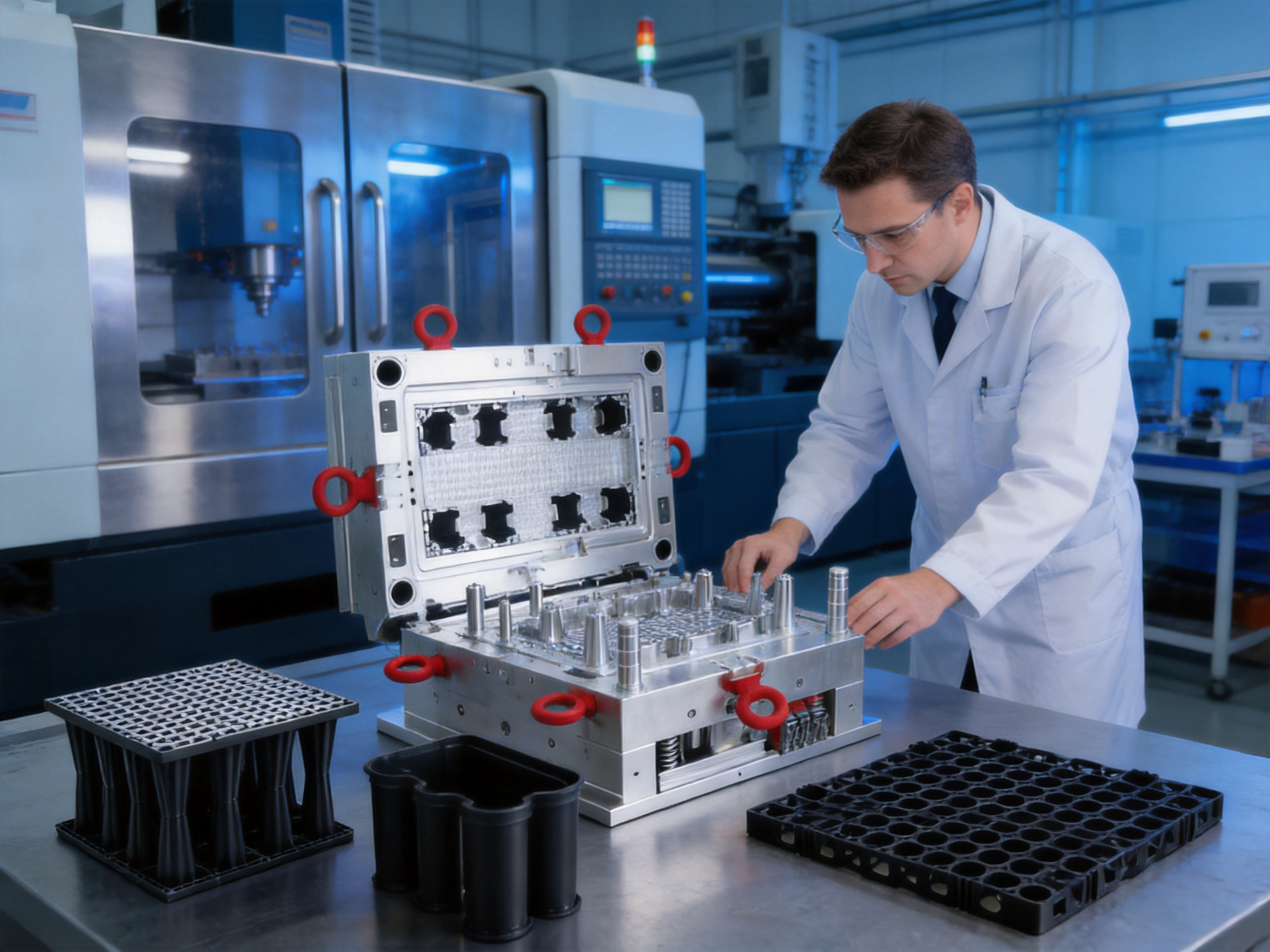
During assembly, the cavity, core, inserts, guide systems, ejection components, cooling circuits, and injection system are fitted and checked. Critical dimensions are verified using appropriate measurement equipment. Moving components are inspected for smooth operation, and cooling passages are checked for obstruction or leakage.
Inspection is not limited to the final external appearance of the mould. Functional checks should confirm that the mould opens and closes correctly, the ejection system returns to position, the sliders or lifters operate safely, and the part can be released without excessive force. These checks help reduce risks during the first production trial.
Trial Moulding and Optimization
A mould trial provides an opportunity to confirm product dimensions, filling behaviour, surface quality, cycle time, and ejection performance. The initial trial may identify areas requiring adjustment, such as venting, gate balance, cooling, or process settings. Trial results can then be compared with the approved product drawings and samples.
For rainwater collectors, inspection should include connection dimensions, internal passage geometry, wall thickness, flatness, appearance, and assembly with the intended pipe or tank components. Functional tests may include water flow checks, leakage checks, connection retention tests, and visual examination after exposure to simulated handling conditions.
Company Strengths Supporting Customer Projects
The supplier’s experience covers four major sectors: daily necessities, home appliances, automotive parts, and industrial equipment. This broad exposure is valuable because it brings experience with different product sizes, materials, mould structures, surface requirements, and production standards.
Daily necessity products often require attractive surfaces, efficient cycle times, and competitive production costs. Home appliance components may require complex geometries and strict appearance control. Automotive and industrial parts generally demand careful attention to strength, dimensional stability, and repeatability. Knowledge gained across these sectors can support the development of durable rainwater system components.
The company emphasizes a professional design team and a scientific production management system. A structured management process helps coordinate design approval, material purchasing, machining, assembly, trial moulding, inspection, and delivery. Clear control of these stages is important when customers operate according to a fixed product launch schedule.
Integrated service from design and production to after-sales support can also simplify communication. Instead of dividing responsibility among separate design, machining, and trial suppliers, the customer can work with one mould manufacturing partner. This may reduce misunderstandings regarding product revisions, steel grades, dimensional tolerances, and production targets.
International experience is another relevant strength. The company exports to Europe, the Middle East, Southeast Asia, and South America. Although rainwater systems differ between markets, international project experience can help the supplier understand the importance of technical documentation, packaging, delivery coordination, inspection requirements, and communication across time zones.
Quality consistency and reliable delivery are particularly important for moulds used in commercial production. Delayed tooling can postpone product launches, while inconsistent tooling can cause material waste, sorting costs, and customer complaints. A disciplined production system helps manage these risks.
Customization Options
The product information identifies pipe connectors and collector sizes as adjustable design elements. This customization capability is important because rainwater infrastructure is not standardized globally. Pipe diameters, wall thicknesses, tank inlets, gutter profiles, and connection methods may vary according to local construction practices and market expectations.
Pipe Connector Dimensions
Connector dimensions can be designed to match the target pipe system. This may include the outside diameter, inside diameter, socket depth, insertion allowance, locking features, and sealing arrangement. Where the component must connect to an existing product, the customer can provide samples or technical drawings for evaluation.
Collector Capacity and Form
The collector size can be adjusted according to the expected water flow and available installation space. Compact products may be suitable for small gardens, balconies, or residential systems. Larger components may be required for commercial roofs, agricultural structures, or installations connected to larger storage tanks.
The external form may also be adapted for different mounting conditions. The design can include brackets, fixing holes, clips, integrated supports, inspection openings, or interfaces for filters and overflow pipes. These details should be considered early because they affect the parting line, mould mechanisms, ejection strategy, and cooling layout.
Colour and Surface Requirements
Outdoor rainwater products are commonly produced in colours that suit buildings, gardens, or landscaping. PP and HDPE can be processed in a range of colours using appropriate masterbatch systems. The cavity finish can be selected to produce a smooth, satin, or textured appearance.
Colour consistency depends on the material supplier, masterbatch dosage, processing conditions, and cleaning of the injection system. The mould contributes by providing stable cavity surfaces and predictable filling, but the full colour-control plan should include resin handling and machine settings.
Multiple Components and Product Families
Manufacturers may require several related parts, such as a collector body, cover, outlet, connector, diverter, filter holder, or tank adapter. A coordinated mould development plan can help maintain consistent dimensions and appearance across the product family. In some cases, interchangeable inserts may offer a practical way to support product variations without producing an entirely new mould for every size.
Any insert-based strategy should be evaluated against production volume, changeover time, dimensional requirements, and maintenance needs. A dedicated mould may be preferable for high-volume products, while interchangeable components may be useful for multiple lower-volume variants.
Production Benefits for Manufacturers
A well-designed rainwater component mould can improve more than part quality. It can influence labour, material consumption, production speed, inventory planning, and customer service.
Stable moulding dimensions reduce the need for manual trimming, sorting, or rework. When connectors fit consistently, assembly workers can complete systems more quickly. Automated or semi-automated production becomes more practical when the part releases reliably and does not require frequent operator intervention.
Controlled wall thickness and efficient cooling can reduce material waste and cycle time. A lighter component may lower shipping costs and make installation easier, provided that the product retains sufficient strength. Shorter and more stable cycles also improve machine utilization and production planning.
Long mould life supports production continuity. A target of approximately 700,000 shots can be valuable for manufacturers supplying large retail networks, construction projects, municipal installations, or international distributors. The actual service life will depend on factors such as resin type, additives, injection pressure, operating speed, maintenance quality, and mould storage conditions.
Production consistency also supports inventory management. If the same collector or connector can be produced reliably over an extended period, the manufacturer can plan raw material purchasing, packaging, assembly, and distribution with greater confidence. Consistent tooling helps reduce the risk that replacement moulds will produce parts with slightly different dimensions or appearance.
Quality and Performance Considerations
Before approving the mould for mass production, customers should establish clear inspection requirements. These may include critical dimensions, allowable tolerances, appearance standards, material specifications, weight range, connection force, water flow, and leakage performance.
Dimensional inspection should focus on features that influence assembly and function. These can include pipe sockets, outlets, sealing grooves, mounting holes, filter seats, and internal flow passages. Measuring only the external appearance may not reveal problems that later cause leakage or restricted flow.
Water testing is also relevant. A collector or connector should be evaluated under a realistic flow condition to confirm that water moves through the intended route without unacceptable leakage, backup, or overflow. If the product includes a diversion or first-flush function, the test should reflect the intended operating sequence.
Outdoor durability depends on more than the mould. The selected PP or HDPE grade, additives, colour system, product geometry, installation method, and maintenance conditions all contribute to performance. Customers may conduct additional tests for impact, temperature cycling, UV exposure, chemical resistance, and long-term dimensional stability according to their market requirements.
Packaging should prevent deformation during transport. Large or curved plastic components can be vulnerable to compression and impact if stacked incorrectly. The production team may need to consider how the moulded parts are removed, cooled, packed, and shipped so that the final products reach customers in their intended shape.
Maintenance and Service Life
Regular mould maintenance is essential for achieving a long production life. After production runs, the mould should be cleaned to remove resin residue, dust, and moisture. Cooling channels should be monitored because scale, rust, or contamination can reduce heat transfer and create uneven temperature distribution.
Moving components such as guide pillars, sliders, lifters, ejector pins, and return systems should be inspected and lubricated according to the mould maintenance plan. Wear in these areas can lead to poor alignment, increased friction, or product damage. Early replacement of worn components is generally less costly than repairing a damaged cavity or core.
Sealing surfaces and connector dimensions should be checked periodically. If the product begins to show flash, mismatch, short shots, or dimensional drift, the mould should be inspected before the problem affects a large quantity of parts. Preventive maintenance helps protect both tooling value and production quality.
When the mould is not in use, it should be cleaned, dried, protected against corrosion where appropriate, and stored in a safe environment. The storage position should prevent unnecessary load on delicate components. Documentation of maintenance, shot count, repairs, and process conditions can help predict future service requirements.
Environmental Value of Rainwater Collection
The environmental benefit of a rainwater system begins with the ability to capture water that would otherwise flow directly into drainage networks or be lost as surface runoff. Collected water can be used for garden irrigation, landscape maintenance, cleaning, toilet flushing, or other suitable non-potable applications, depending on local regulations and treatment arrangements.
Plastic components contribute to this system by providing lightweight, corrosion-resistant, and easily assembled connections. Compared with some metal alternatives, PP and HDPE parts can reduce weight and may offer strong resistance to moisture and many environmental conditions. Their production efficiency can also support economical distribution of rainwater products.
A durable mould supports this environmental purpose by helping manufacturers produce components that remain functional for extended periods. Reliable parts are less likely to require premature replacement, and consistent production can reduce scrap. The mould’s long service target may also reduce the frequency with which new tooling must be manufactured for the same product line.
Sustainable design should nevertheless consider the complete product life cycle. Customers may evaluate recycled content, recyclability, product repair, disassembly, material identification, packaging, and end-of-life collection. The mould can support such initiatives by producing parts with controlled material usage and by accommodating design features that enable assembly and replacement.
Recommended Project Development Procedure
A successful mould project benefits from a clear sequence of technical decisions. The first stage is to define the product’s use environment and performance requirements. The customer should identify the target pipe system, expected rainfall conditions, installation method, operating temperature, material preference, annual production volume, and target market.
The second stage is product design review. Engineers should examine draft angles, wall thickness, ribs, sealing features, mounting points, internal flow passages, and areas that may require side actions or inserts. The design should be evaluated for injection moulding feasibility before tooling construction begins.
The third stage is mould concept development. This includes selecting the parting line, gate position, runner type, cooling layout, ejection method, steel option, and number of cavities. A single-cavity mould may be suitable for large components or moderate demand, while multi-cavity tooling may be considered for smaller connectors with higher volume requirements.
The fourth stage is technical confirmation. The customer and mould supplier should approve product drawings, material information, mould specifications, critical tolerances, surface requirements, and trial standards. Clear approval at this stage reduces the chance of costly changes later.
The fifth stage is manufacturing, assembly, and trial moulding. The supplier should monitor machining quality, component fit, cooling performance, and operation of moving mechanisms. Trial parts should be inspected against the agreed specifications, and any necessary corrections should be recorded and completed.
The final stage is production support. The customer should receive relevant documentation, maintenance guidance, spare-part recommendations, and information about suitable processing conditions. Continued technical communication can help maintain mould performance as production volumes increase.
Applications in Different Market Segments
Residential Gardens
Homeowners increasingly use rain barrels, storage tanks, and garden collection systems to support irrigation and reduce dependence on treated mains water for outdoor use. Compact collectors and connectors must be easy to install, visually acceptable, and compatible with common household drainage systems.
Commercial Landscaping
Hotels, shopping facilities, office campuses, and housing developments may use rainwater collection for landscape irrigation. These systems can require larger flow capacity, stronger fittings, and coordinated connections between roofs, tanks, pumps, and irrigation networks.
Agricultural Installations
Farms, nurseries, and greenhouse operations may collect rainwater for plant production, equipment cleaning, or other non-potable purposes. Components may be exposed to dust, fertilizers, outdoor machinery, and frequent handling. Tough HDPE or reinforced PP products can be selected according to the required conditions.
Construction and Infrastructure Projects
New buildings and infrastructure projects may incorporate rainwater management during the planning stage. Moulded connectors and collector components can be integrated into roof drainage, underground storage, overflow systems, and landscape design. In these projects, dimensional consistency is important because components must fit together across a large installation.
Retail Product Lines
Manufacturers and distributors may offer complete product families through garden centres, hardware stores, online retailers, and professional installation channels. A dependable mould can support consistent production of multiple components while allowing colour, size, and packaging variations for different sales channels.
Frequently Asked Questions
What products can be made with this mould?
The mould is intended for rainwater collectors and related plastic components. Typical products include garden rainwater collection parts, roof drainage connectors, pipe adapters, water storage accessories, outlets, covers, and other components defined by the customer’s design.
Which plastic materials are supported?
The specified product materials are polypropylene and high-density polyethylene. The final material grade should be selected according to the required stiffness, impact resistance, outdoor durability, temperature range, colour, and processing conditions.
Can the mould be customized for different pipe sizes?
Yes. Pipe connectors and collector dimensions can be adjusted. Customers should provide drawings, samples, pipe standards, or installation requirements so that the connection geometry can be developed accurately.
What mould steel options are available?
The listed mould steel options are P20 and 718. The appropriate selection depends on expected production volume, surface finish, material formulation, wear conditions, and the required maintenance strategy.
What is the expected mould life?
The stated mould life is approximately 700,000 shots. Actual service life depends on mould maintenance, injection parameters, resin type, additives, operating frequency, storage, and repair practices.
Can the mould produce outdoor components?
Yes. It is designed for components used in outdoor water collection systems. However, outdoor durability also depends on the chosen plastic formulation, UV stabilization, product design, installation, and environmental exposure.
How can the mould reduce production costs?
Accurate tooling can reduce rework, sorting, leakage-related rejects, manual trimming, and assembly difficulty. Balanced cooling and reliable ejection may also support shorter and more stable production cycles. These benefits should be evaluated together with the planned volume and machine conditions.
Is the mould suitable for a new product design?
Yes. The supplier can support product and mould development from design through manufacturing and trial production. Early review of the product geometry helps identify draft, filling, cooling, ejection, and assembly issues before mould construction.
What information should a customer provide before requesting a quotation?
Useful information includes three-dimensional product files, two-dimensional drawings, material preference, annual quantity, target pipe dimensions, surface requirements, colour, expected mould life, injection machine information, and any special testing standards.
How should the mould be maintained?
The mould should be cleaned after production, protected from corrosion, lubricated at appropriate moving points, and inspected regularly. Cooling channels, ejectors, sliders, guide systems, cavity surfaces, and sealing features should be included in the maintenance plan.
Can several product sizes be developed?
Several sizes may be developed through separate moulds or, where technically practical, interchangeable inserts. The best approach depends on product volume, required changeover time, dimensional tolerances, and the relationship between the different components.
Why is cooling important for PP and HDPE?
Cooling influences cycle time, shrinkage, warpage, surface quality, and dimensional stability. A balanced cooling design helps the moulded component cool more evenly, which is especially important for parts with sockets, thick sections, curved walls, or complex internal passages.
Conclusion
The Rainwater Collector and Components Plastic Mould is a practical tooling solution for manufacturers developing durable outdoor water management products. Designed for PP and HDPE, it supports the production of garden collection components, roof drainage connectors, water storage accessories, and customized fittings. Its adjustable pipe connections and collector dimensions make it suitable for different market standards and installation requirements.
The mould’s advantages extend beyond basic part formation. A production-oriented design can improve connection accuracy, flow performance, ejection reliability, cooling balance, surface consistency, and long-term manufacturing efficiency. The use of P20 or 718 mould steel and a stated service target of approximately 700,000 shots provides a foundation for sustained production when the mould is operated and maintained correctly.
Taizhou Huangyan Haiquan Plastic Mold Co., Ltd. supports these products through precision mould design, structured manufacturing management, professional engineering, trial moulding, and after-sales service. Its experience across daily necessities, home appliances, automotive parts, and industrial equipment provides a broad technical base for complex injection moulding projects. International export experience further supports customers requiring reliable communication and delivery for overseas markets.
As demand for rainwater harvesting continues to grow, manufacturers need components that are accurate, durable, economical, and adaptable. A carefully engineered mould helps meet these requirements while supporting the wider goal of efficient water use. By combining suitable materials, customized geometry, reliable steel options, controlled production processes, and preventive maintenance, this mould can help manufacturers deliver dependable rainwater collection systems for residential, commercial, agricultural, and infrastructure applications.
References
1. Injection Molding Handbook, technical principles of polymer flow, mould design, cooling, and ejection.
2. Plastics Materials and Processing, general characteristics and processing behaviour of polypropylene and high-density polyethylene.
3. Handbook of Molded Part Design, guidance on draft angles, wall thickness, ribs, shrinkage, parting lines, and mould manufacturability.
4. Sustainable Water Management Practices, principles of rainwater harvesting, storage, reuse, and outdoor water conservation.
5. General Engineering Practice for Injection Mould Maintenance, recommendations for cleaning, lubrication, cooling inspection, corrosion prevention, and service records.
6. International guidance on polymer product quality, dimensional inspection, outdoor exposure, and performance evaluation.
Product: Rainwater Collector and Components Plastic Mould

For exclusive deals and latest offers, sign up by entering your email address below.











 +86-18657672567
 sales@tzhqmould.com
celin@tzhqmould.com
 No. 17 Houshi Road, Beicheng Industrial Zone, Huangyan District, Taizhou City, Zhejiang Province, China
Copyright © Taizhou Huangyan Haiquan Plastic Mold Co., Ltd. All Rights Reserved
Injection Plastic Mould Maker

