

Transparent Grain Storage Jar Injection Mould for High-Quality Kitchen Containers
Admin 2026-09-02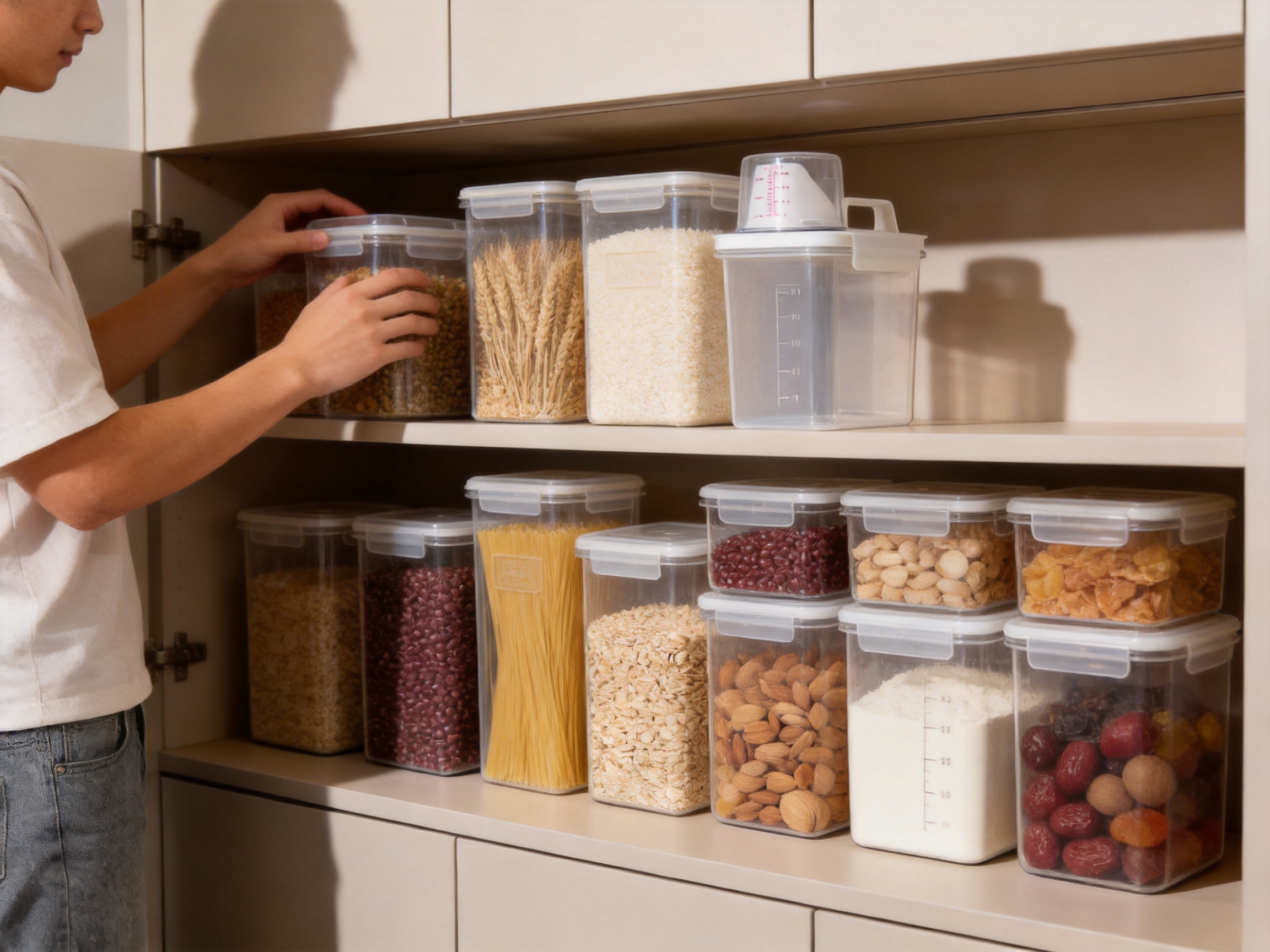
Transparent food storage containers have become an essential part of modern kitchens, pantries, supermarkets, and household organization systems. Consumers expect these containers to be clear, durable, lightweight, hygienic, and easy to use. For manufacturers, however, producing a high-quality transparent grain storage jar requires much more than a basic injection mould. The mould must control appearance, dimensional accuracy, wall thickness, sealing performance, cycle efficiency, and long-term production reliability at the same time.
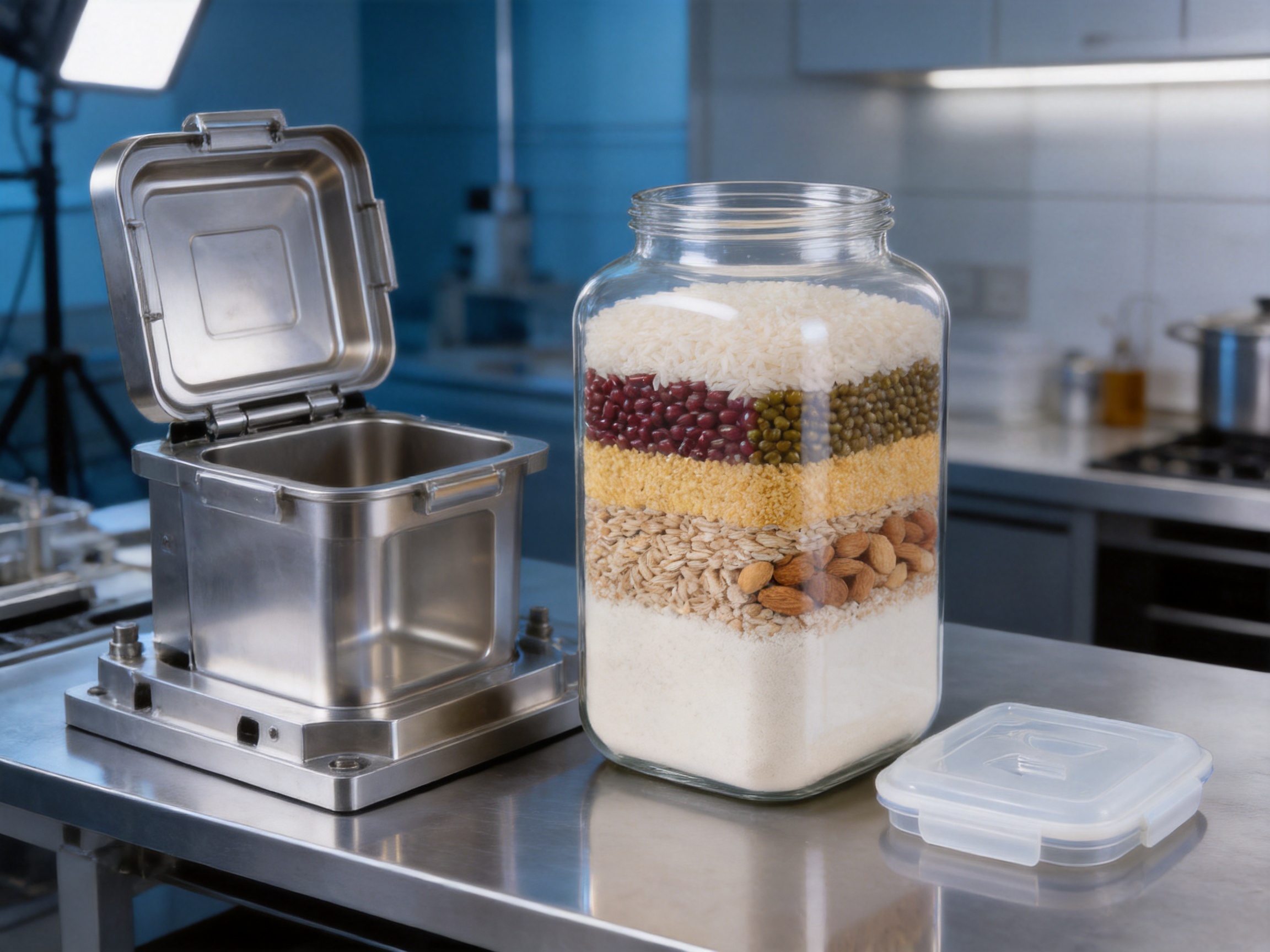
The Transparent Household Grain Storage Jar Injection Mould is specially developed for manufacturers producing clear plastic jars and containers for rice, grains, nuts, cereals, beans, flour, snacks, and other dry foods. Its design combines high-polish mould steel, carefully engineered flow channels, reliable ejection, and precision cavity processing. The result is a production tool capable of creating attractive containers with smooth transparent surfaces and consistent structural strength.
This mould solution is supplied by Taizhou Huangyan Haiquan Plastic Mold Co., Ltd., a high-tech enterprise specializing in the research, design, and manufacture of precision injection moulds. The company serves daily necessities, home appliances, automotive parts, and industrial equipment markets. Its experience in mould design, engineering management, manufacturing, quality control, and after-sales support enables customers to obtain an integrated tooling solution rather than an isolated mould component.
For food storage container manufacturers, the mould is particularly valuable because transparency magnifies every surface defect. Flow marks, weld lines, scratches, uneven gloss, sink marks, and dimensional inconsistencies are easily visible on clear products. A mould designed for opaque plastic may not provide the surface quality required for a transparent jar. This product addresses that challenge through mirror-polished mould surfaces, optimized filling conditions, uniform wall-thickness planning, and material compatibility with PET, PC, and SAN.

Transparent Household Grain Storage Jar Injection Mould
Product Overview
The Transparent Household Grain Storage Jar Injection Mould is designed to produce reusable and attractive plastic storage jars for household and commercial use. The product geometry can be adapted to different capacities, proportions, lid systems, sealing structures, and branding requirements. Depending on customer requirements, the mould can support one or two cavities and can be configured for efficient production with a hot runner system.
The mould focuses on three central performance objectives. The first is visual clarity. A transparent jar must present a clean, smooth, and consistent appearance so that the stored food remains visible. The second is mechanical reliability. The container must withstand handling, stacking, filling, opening, closing, and repeated use without excessive deformation or cracking. The third is production efficiency. The mould must deliver stable cycles, balanced filling, dependable ejection, and a long working life.
These objectives are closely connected. A high-polish cavity surface helps create a clear product, but the polish must be supported by suitable steel, accurate machining, proper venting, and stable processing conditions. Uniform wall thickness improves strength and appearance, but it also requires careful product design and flow analysis. A hot runner can reduce material waste and improve filling stability, but only when the runner layout, gate position, temperature control, and maintenance access are properly engineered.
The mould may be used for jars with transparent bodies and separate lids, transparent bodies with sealing lids, or customized closures designed for household storage. Measurement scales, logos, markings, and other product features can be integrated into the mould according to the required application. This makes the tooling suitable for standard products as well as private-label and customized container programs.
Key Technical Specifications
| Product Type | Transparent household grain storage jar |
| Primary Application | Rice, grain, nut, cereal, flour, snack, and dry food storage |
| Mould Steel | S136 or NAK80 |
| Compatible Product Materials | PET, PC, and SAN |
| Runner System | Hot runner |
| Surface Treatment | Mirror polish |
| Cavity Options | One or two cavities |
| Expected Mould Life | Up to approximately 800,000 shots, depending on operating and maintenance conditions |
| Customization Options | Capacity, lid design, sealing structure, measurement scale, and logo embossing |
The listed specifications provide a practical starting point for project planning. Final steel selection, cavity number, cooling design, gate configuration, and mould dimensions should be confirmed after reviewing the product drawings, selected resin, annual output, injection machine parameters, and target market requirements.
Why Transparency Requires Specialized Mould Design
Transparent containers expose defects that may remain unnoticed on colored or opaque plastic products. A small machining mark inside the cavity can appear as a visible line on the finished jar. Slightly uneven cooling can create haze or optical distortion. An unstable melt front can produce flow marks, weld lines, or local differences in gloss. Even minor variations in wall thickness may affect both appearance and strength.
For this reason, a transparent food storage jar mould must be designed around the optical and mechanical behavior of the selected plastic material. PET, PC, and SAN each have different processing characteristics, shrinkage behavior, temperature requirements, and sensitivity to moisture or stress. The mould manufacturer must consider these differences when designing the gate, runner, vents, cooling circuits, parting line, and ejection system.
High-polish steel is an important part of the solution. S136 is widely valued for corrosion resistance, hardness, and its ability to achieve a fine polished finish. This is useful when mould surfaces must remain stable through repeated production and cleaning operations. NAK80 is known for good machinability, dimensional stability, and suitability for polished mould components. The final choice can be based on product requirements, expected production volume, resin characteristics, surface expectations, and budget.
Polishing is not simply a cosmetic finishing step. It influences the release behavior of the part, the uniformity of surface gloss, and the ability to maintain a clear appearance over the mould's service life. A properly prepared and polished cavity reduces the risk of visible tooling marks and supports a more consistent transparent finish from shot to shot.
Venting is equally important. Air trapped between the advancing melt and the cavity wall can cause burn marks, incomplete filling, silver streaks, or localized optical defects. Transparent products require effective but carefully positioned vents because excessive or poorly finished venting can also create visible marks. The mould design must therefore balance air evacuation, surface quality, and maintenance accessibility.
Advanced Mould Manufacturing Process
The performance of a transparent grain storage jar mould depends on the complete manufacturing process. High-quality steel alone cannot guarantee a successful tool. Consistent results require coordinated work from initial product review through design, machining, polishing, assembly, testing, and final approval.
Product Analysis and DFM Review
The manufacturing process begins with an analysis of the jar design. Engineers review the product dimensions, draft angles, wall thickness, corner radii, lid interface, sealing areas, handle features, stacking requirements, and branding details. They also examine how the container will be filled, closed, transported, displayed, and used by consumers.
A design-for-manufacturing review helps identify potential risks before steel is cut. For example, a sharp internal corner may increase stress concentration and make polishing difficult. An area with insufficient draft may cause ejection problems or scratches. A sudden wall-thickness transition may create uneven filling or sink marks. A logo placed too close to a parting line may become difficult to process and inspect. Early engineering review allows these issues to be corrected while changes are still economical.
The DFM process also considers the selected resin. PET may require specific attention to drying and crystallization behavior, while PC can be sensitive to moisture and residual stress. SAN may offer attractive clarity and dimensional stability for certain applications. The mould design must work together with the customer’s injection process rather than treating the mould as an independent item.
3D Mould Design and Flow Planning
After product analysis, engineers develop the three-dimensional mould design. The design includes the core, cavity, inserts, parting surfaces, runner system, gate, cooling channels, ejector components, guide systems, and mould base. For a transparent jar, the cavity layout is planned to minimize weld lines and promote balanced filling.
Gate location has a strong influence on product appearance. A gate positioned in an appropriate area can help the melt advance evenly through the container while keeping visible marks away from important display surfaces. The best position depends on the product geometry, resin, wall thickness, lid or base structure, and expected injection conditions.
Flow planning also aims to control the melt front. An unstable or excessively long flow path may lead to hesitation, premature cooling, or visible flow patterns. Balanced filling is especially important in multi-cavity moulds because each cavity must receive a similar volume of material under comparable pressure and temperature conditions.
Where appropriate, digital analysis can be used to evaluate filling behavior, cooling balance, pressure requirements, and potential weak areas. Engineering analysis does not replace practical experience, but it helps identify risk areas and supports more informed decisions before machining begins.
Precision Steel Processing
Once the design is approved, the mould components are produced using precision machining processes. These may include computer numerical control milling, high-speed machining, electrical discharge machining, wire cutting, drilling, grinding, and manual finishing. Each process is selected according to the geometry, tolerance, steel type, and surface requirement of the component.
Complex jar shapes may include curved walls, recessed areas, snap-fit features, sealing grooves, ribs, and custom markings. These details require accurate machining and careful control of transitions. Poorly matched inserts or inconsistent dimensions can affect both appearance and assembly performance. Precision processing helps ensure that the core and cavity produce a stable product geometry over repeated cycles.
The mould base and guide components are also important. A rigid mould base reduces deflection during injection, while accurate guide pillars and bushes support proper alignment between the moving and stationary halves. Reliable alignment protects polished surfaces, reduces wear, and supports consistent parting-line quality.
Mirror Polishing and Surface Preparation
Transparent products require a higher level of surface preparation than many ordinary household moulds. After machining, the cavity and core surfaces are progressively refined to remove tool marks and achieve the required polish. The process may involve several grades of abrasive treatment, inspection under controlled lighting, and careful correction of local imperfections.
Mirror polishing supports the bright and smooth appearance expected from a clear storage jar. It can also reduce the likelihood of drag marks during ejection when the product has sufficient draft and the mould is correctly designed. Polishing must be performed evenly because variations in texture can create differences in gloss or transparency across the same product.
Some product areas may intentionally use a different texture or finish, particularly for grip zones, measurement markings, or branding features. Such areas must be separated clearly from the transparent display surfaces. A professional mould process allows these requirements to coexist without compromising the overall appearance of the jar.
Hot Runner Integration
The mould uses a hot runner system to support efficient material delivery. A hot runner can reduce cold runner waste, shorten the material path, and help maintain a consistent melt temperature. These advantages are useful for transparent resins, where unstable flow or excessive regrind may negatively influence appearance.
Hot runner design must be matched to the resin and product geometry. Nozzle selection, gate type, temperature zones, heater control, and maintenance access all affect performance. The system should deliver material evenly while minimizing gate vestige and avoiding thermal degradation. Temperature control must remain stable during the production cycle so that the melt does not become too cold to fill properly or too hot for the selected material.
A well-designed hot runner also contributes to production economics. Reduced runner waste can lower material consumption, which is especially valuable when using engineering plastics or high-clarity resins. Faster and more stable filling may help reduce cycle variation and improve output consistency. The customer should still follow the recommended processing window and maintenance schedule because a hot runner system requires proper temperature management and cleaning procedures.
Cooling Circuit Design
Cooling is one of the most important factors affecting the quality of an injection-moulded jar. Uneven cooling can cause warpage, dimensional variation, residual stress, optical distortion, and inconsistent wall thickness. The mould therefore requires cooling channels positioned to remove heat from the product as evenly as possible.
Cooling design must take into account the container’s side walls, bottom, corners, neck, and sealing areas. Thick sections retain heat longer than thin sections and may require additional attention. If one side of the jar cools more rapidly than another, the finished product may deform or lose its intended shape. Balanced cooling supports stable dimensions and improves the repeatability of the moulding process.
Efficient cooling can also shorten the production cycle. However, cycle reduction must not be pursued at the expense of clarity or mechanical performance. The correct objective is a stable cycle that achieves the required cooling level while protecting the product from stress and deformation.
Ejection and Part Release
Clear jars must be ejected without scratches, whitening, distortion, or stress marks. The ejection system is designed according to the product geometry and the areas that can safely accept ejector force. Ejector pins, sleeves, stripper structures, or other mechanisms may be selected depending on the shape of the container and the available non-cosmetic surfaces.
Uniform ejection is essential. If force is concentrated in one small area, the jar may deform or become marked. If the product remains attached to the core because of insufficient draft or vacuum, the mould may experience excessive stress. Engineers therefore consider draft angles, air assistance, core surface condition, ejection timing, and product shrinkage during the design stage.
Proper ejection also protects production efficiency. A mould that releases the part reliably can operate with fewer interruptions, less manual intervention, and lower risk of damage. This is particularly important for manufacturers producing large quantities of household containers for retail distribution.
Advantages Compared with Conventional Jar Moulds
Improved Surface Clarity
The most visible advantage of this mould is its focus on transparent product quality. High-polish S136 or NAK80 steel, carefully prepared cavity surfaces, and optimized flow design help reduce visible flow marks and surface irregularities. Compared with a conventional mould designed without special attention to optical appearance, this solution gives manufacturers a stronger foundation for producing bright and attractive containers.
Clear products are often purchased because consumers can see the contents. A smooth and uniform jar communicates cleanliness and quality. It also allows users to identify remaining quantities without opening the container. These benefits can be weakened if the container has haze, streaks, uneven gloss, or noticeable mould marks. By prioritizing the visible surface during mould development, the product helps manufacturers meet higher presentation expectations.
More Consistent Wall Thickness
Uniform wall thickness supports both appearance and strength. Excessively thin areas may become weak or deform during handling, while overly thick areas can increase cooling time, material consumption, and sink-mark risk. A balanced design helps the jar remain lightweight without sacrificing practical durability.
Compared with simple moulds that may rely on less controlled geometry, the specialized jar mould is developed with greater attention to wall transitions, corner radii, flow length, and cooling behavior. This improves the possibility of producing containers with stable dimensions and consistent performance across the entire batch.
Reduced Material Waste
The hot runner system can reduce the amount of solidified runner material produced during each cycle. This is beneficial for manufacturers seeking to control resin consumption and improve production efficiency. Reduced runner waste may also simplify material handling and lower the amount of scrap requiring reprocessing.
For transparent products, minimizing unnecessary regrind can be especially useful because recycled material may affect visual consistency depending on the resin, contamination level, drying process, and processing history. The customer must determine the appropriate material policy for the specific product and food-contact requirements, but an efficient runner system provides a positive starting point.
Flexible Product Customization
Household storage products are sold in many capacities and styles. A manufacturer may need a compact jar for spices or nuts, a medium container for cereal and beans, or a larger product for rice and flour. The mould concept supports customization of jar capacity and overall dimensions according to market demand.
Customization can also include transparent lids, sealing lids, measuring scales, embossed logos, and special closure structures. These features allow customers to develop products for different retail channels, brands, and consumer preferences. Compared with a fixed, non-adaptable mould, a customizable tooling approach can help manufacturers expand their product range more efficiently.
Long Service Life
With suitable steel selection, accurate machining, proper heat treatment where applicable, reliable guide systems, and regular maintenance, the mould is designed for a long production life. The stated service expectation is up to approximately 800,000 shots, although actual results depend on resin abrasiveness, moulding pressure, cycle conditions, maintenance, cleaning, and storage.
A long-life mould can reduce the cost per container over the duration of a production program. It also provides more stable product quality because the customer can continue using a familiar tool rather than replacing it frequently. Wear components should be monitored and replaced when required to preserve dimensional accuracy and surface quality.
Suitable for Multiple Clear Resins
The mould is compatible with PET, PC, and SAN, subject to final process validation. This material flexibility gives manufacturers more options when balancing clarity, impact resistance, stiffness, chemical resistance, temperature performance, and cost.
PET may be selected for its clarity and common use in packaging applications. PC may be appropriate where higher impact resistance and heat performance are desired. SAN can provide a clear appearance and useful dimensional characteristics for certain household products. The correct choice should consider food-contact regulations, product use conditions, closure performance, recycling policy, and local market requirements.
Application Areas
Grain storage jars produced from this mould are suitable for many household and commercial applications. Their transparent construction allows users to identify contents quickly and organize stored products efficiently.
Kitchen Grain Storage
Rice, wheat, corn, beans, lentils, and other grains are commonly stored in containers that protect them from dust, moisture, and accidental spillage. A transparent jar makes it easier to recognize the product and estimate the remaining quantity. A stable lid and suitable sealing structure can help maintain an orderly storage environment when the container is used correctly.
Dry Food Storage
The mould can support containers for nuts, cereals, pasta, flour, sugar, dried fruit, biscuits, and other dry foods. Different foods may require different jar capacities and closure arrangements. Some products may need wide openings for easy filling, while others may prioritize compact shapes for efficient cabinet storage.
Pantry Organization
Uniform transparent containers help consumers create a coordinated pantry system. Manufacturers can offer multiple sizes with matching visual features, measurement markings, or stackable proportions. This creates opportunities for product sets and organized storage collections.
Supermarket Packaging
Clear jars can also be used as retail packaging for dry food products. The visible contents may help attract customers and communicate freshness, quantity, and product identity. Depending on the application, the final product may use a tamper-evident closure, sealing lid, label area, printed marking, or embossed brand feature.
Household and Institutional Use
In addition to domestic kitchens, similar containers may be used in restaurants, bakeries, cafés, small food stores, laboratories, and other environments where dry materials require organized storage. The product design can be adapted to meet different handling frequencies, storage capacities, and cleaning requirements.
Customization Capabilities
Customization is an important part of modern plastic product development. Retailers and brand owners increasingly seek containers that are recognizable, differentiated, and aligned with their packaging identity. The mould can be developed around a customer’s product drawings or adapted from an approved sample.
Capacity and Dimension Customization
Capacity may be modified by changing the height, diameter, corner radius, base structure, or overall proportion of the jar. Engineers must evaluate how these changes affect filling balance, cooling, shrinkage, ejection, and stability. A larger container may require a stronger base or additional structural support, while a compact jar may need special attention to opening size and usability.
Lid and Sealing Design
The lid may be transparent, colored, hinged, threaded, snap-fit, or combined with a sealing ring. Each closure type creates different moulding and assembly requirements. Snap-fit features require accurate control of undercuts and flexibility. Threaded lids require careful pitch and dimensional coordination. Sealing surfaces need smooth, stable geometry to support reliable closure performance.
The jar and lid should be developed as a coordinated system. A visually attractive body is not sufficient if the lid is difficult to fit, too loose, or vulnerable to distortion. The mould manufacturer can review the interface between the two components and help establish appropriate tolerances for the selected material and production process.
Measurement Scale Engraving
Measurement marks can help users estimate the quantity of stored contents or measure ingredients. These markings may be embossed or recessed into the product and can include milliliter values, level indicators, or simple graduated lines. Their depth, location, and orientation should be planned to remain readable without creating unnecessary stress concentration or cleaning difficulties.
Custom Logo Embossing
Logo embossing is a practical way to add brand identity without applying a separate label. The logo can be placed on a front panel, lid, base, or other suitable area. For transparent products, the size, depth, edge radius, and polish of the logo feature require careful attention because uneven detailing may be highly visible.
Custom inserts can sometimes make future updates easier. If a brand identity or measurement scale changes, a replaceable insert may reduce the need to rebuild the entire mould. This possibility should be discussed during the initial design stage.

Company Manufacturing Strengths
Taizhou Huangyan Haiquan Plastic Mold Co., Ltd. specializes in precision injection moulds for several major industries, including daily necessities, home appliances, automotive parts, and industrial equipment. This broad sector experience supports the development of moulds that combine attractive product appearance with practical engineering performance.
The company follows a quality-oriented and sustainable development philosophy. Its production approach covers product review, mould design, precision machining, polishing, assembly, trial moulding, inspection, delivery, and after-sales support. This integrated process helps reduce communication gaps between separate suppliers and gives customers a clearer path from concept to mass production.
Professional Design Team
A capable design team is essential for products with transparent surfaces and detailed closure structures. Engineers must understand plastic flow, shrinkage, draft, ejection, cooling, parting lines, and assembly tolerances. They must also communicate effectively with the customer to clarify intended use, target output, available injection equipment, and preferred material.
By reviewing these factors before production, the team can help customers avoid avoidable tooling changes. Design decisions made early in the project often have a direct effect on mould cost, delivery time, production stability, and final product appearance.
Scientific Production Management
Systematic production management supports consistency. Work instructions, process sequencing, inspection points, component identification, and assembly records help ensure that the mould is built according to the approved design. Organized management is particularly valuable when the mould includes polished optical surfaces, interchangeable inserts, hot runner components, and multiple precision interfaces.
Production planning also helps coordinate machining, polishing, fitting, testing, and customer approval. A mould may contain hundreds of components, and the quality of the final tool depends on how those components work together. Controlled processes reduce the risk that a small dimensional error or overlooked finishing issue will affect the finished product.
Export Experience
The company exports moulds to Europe, the Middle East, Southeast Asia, South America, and other international markets. Serving customers in different regions requires attention to communication, documentation, machine compatibility, packaging, delivery coordination, and local expectations regarding product quality.
International project experience can be useful for customers developing products for export. It helps the mould supplier understand that a successful delivery includes more than the physical tool. Technical drawings, spare parts, mould data, trial reports, operating guidance, and responsive support all contribute to a reliable project outcome.
Integrated After-Sales Support
Injection moulds are long-term production assets. Customers may need technical assistance during installation, trial moulding, process adjustment, maintenance, or product updates. An integrated supplier can provide guidance on mould operation, lubrication, cleaning, cooling connections, hot runner use, and replacement parts.
After-sales support is also important when the customer changes material, modifies the injection machine, or introduces a new production requirement. Although major changes may require engineering review, a supplier familiar with the original mould can help determine the appropriate next step.
Quality Control and Validation
Quality control should continue through every stage of the mould project. Incoming steel and component checks help confirm that the selected materials and purchased parts meet the project requirements. In-process inspection verifies critical dimensions during machining and fitting. Final inspection reviews assembly, movement, cooling, ejection, hot runner connections, and surface condition.
Trial moulding is an essential validation step. The mould is tested on a suitable injection machine using the intended or representative resin. Engineers observe filling, packing, cooling, ejection, cycle stability, and product appearance. Samples are checked for dimensions, wall thickness, weight, transparency, surface finish, flash, weld lines, sink marks, warpage, and closure fit.
Trial results can reveal issues that are difficult to identify through drawings alone. For example, a gate may produce an unexpected vestige, a sealing surface may require a tolerance adjustment, or a cooling circuit may need balancing. Addressing such issues before shipment helps the customer begin production with greater confidence.
For a clear jar, visual inspection should be performed under suitable lighting. Inspectors should look for flow marks, haze, scratches, black spots, weld lines, air traps, uneven gloss, and other defects. Dimensional inspection should focus on the mouth, base, side walls, sealing features, lid interface, and any stacking or locating geometry.
Documentation may include dimensional reports, mould trial records, product samples, material information, maintenance recommendations, and spare-part lists. Clear documentation makes it easier for the customer’s production team to operate and maintain the mould correctly.
Production Efficiency and Cost Considerations
Tooling cost should be evaluated together with the total production cost rather than considered in isolation. A lower initial mould price may not provide the best long-term value if the tool generates excessive waste, requires frequent repairs, produces inconsistent parts, or limits future customization.
The Transparent Household Grain Storage Jar Injection Mould is designed to support a balanced cost structure. The hot runner system can reduce runner waste, while one- or two-cavity options allow the customer to select a configuration suitable for current output requirements. A single-cavity tool may be appropriate for lower-volume production, product validation, or larger containers. A two-cavity configuration may improve output when the product size, machine capacity, and market demand justify it.
Cycle time depends on the material, product thickness, cooling capacity, injection machine, mould temperature, and quality target. It should be optimized through testing rather than reduced blindly. A stable cycle that produces acceptable parts with low rejection is generally more valuable than an unstable cycle that appears fast but creates excessive scrap.
Material selection also affects cost. PET, PC, and SAN have different resin prices, processing requirements, drying needs, and performance characteristics. The most economical option depends on the intended market and product function. The mould supplier can help assess design compatibility, but the customer should also confirm food-contact compliance and applicable regulations with its material supplier and regulatory advisors.
Installation, Operation, and Maintenance
Proper mould care is essential for achieving a long service life. Before installation, the customer should inspect the mould for transport damage, confirm that lifting equipment is suitable, and verify that the mould dimensions match the injection machine. Cooling connections, hot runner wiring, ejector coupling, and safety clearances should be checked before operation.
The mould should be installed by trained personnel. Clamping force, nozzle alignment, ejector stroke, and machine settings must be appropriate for the tool. Incorrect alignment can damage the gate, nozzle, guide system, or parting surfaces. Excessive clamping force may also accelerate wear and create unnecessary stress.
During production, operators should monitor product appearance, cycle stability, cooling temperature, hot runner temperature, injection pressure, and ejection behavior. Changes in these conditions may indicate contamination, blocked cooling channels, heater problems, venting issues, or developing wear.
After production, the mould should be cleaned and dried according to the resin and operating environment. Transparent product moulds require special care because residue, dust, rust, or abrasive particles can damage polished surfaces. The parting surfaces should be cleaned without using tools or materials that may scratch the steel.
Moving components should be lubricated with a suitable mould lubricant at recommended intervals. Ejector pins, guide pillars, guide bushes, slides, lifters, and other moving elements should be inspected for wear or abnormal movement. Cooling channels should be checked periodically for scale or blockage, especially where water quality is poor.
When the mould is stored, it should be protected from humidity and contamination. The cavity and core should be cleaned, dried, and treated with an appropriate rust-prevention product when necessary. The mould should be closed or secured according to the supplier’s storage guidance, with spare components clearly identified for future use.
Design Recommendations for Better Results
Customers can improve the performance of the final container by involving the mould manufacturer at the earliest design stage. The jar should be designed with suitable draft angles, smooth transitions, adequate corner radii, and realistic wall-thickness targets. These features improve filling, cooling, polishing, ejection, and product durability.
The container should not be made unnecessarily thin simply to reduce material consumption. Excessive thinness can increase sensitivity to processing variation, reduce impact resistance, and make the jar more difficult to fill consistently. A balanced structure usually provides better overall value.
The base requires particular attention because it supports the container during storage and handling. A stable base can reduce rocking and improve stacking. If the product is intended for a retail shelf, the base should also support a neat upright appearance.
The mouth and lid interface should be tested as a complete assembly. The closure must be easy enough for the intended user to operate but secure enough to prevent accidental opening. If an airtight or moisture-resistant function is required, the sealing structure should be validated under realistic use conditions rather than assumed from geometry alone.
Branding and measurement marks should be placed where they remain readable but do not interfere with the stored contents or cleaning process. Sharp corners, deep recesses, and narrow grooves may collect residue and should be considered carefully in food storage applications.
The customer should also provide accurate information about the injection machine, including maximum mould dimensions, tie-bar spacing, injection volume, nozzle radius, clamping force, ejector arrangement, and available temperature-control connections. This information allows the mould to be designed for direct installation and reduces adaptation work later.
Environmental and Sustainability Considerations
Household storage containers can support waste reduction by enabling consumers to purchase dry foods in larger quantities and store them for organized use. Reusable jars may also reduce dependence on disposable packaging when they are designed for repeated service and cleaned appropriately.
The mould itself contributes to sustainability through efficient material delivery, long service life, and repairable components. A hot runner can reduce process waste, while a durable mould can remain in production for many years. Replaceable inserts and serviceable wear parts may extend the useful life of the tool and reduce the need for complete replacement.
Material selection should be made with the complete product life cycle in mind. Customers may consider recyclability, resin identification, colorants, additives, food-contact requirements, and compatibility with local waste systems. Transparent products are often valued for their clean appearance, but sustainability performance also depends on the resin, product lifespan, collection infrastructure, and consumer behavior.
Energy use can be influenced by cycle time, cooling efficiency, machine settings, and mould temperature. A balanced mould that fills and cools consistently may help reduce rejected parts and unnecessary machine operation. Process optimization should therefore consider quality, productivity, material efficiency, and energy consumption together.
Project Development Procedure
Step One: Requirement Confirmation
The customer provides the product drawing, three-dimensional file, target material, capacity, annual output, machine information, lid requirements, surface expectations, and customization details. If a sample is available, it can also be reviewed for dimensions and functional features.
Step Two: Engineering Evaluation
The design team evaluates draft, wall thickness, parting line, gate location, cooling, ejection, shrinkage, and potential appearance risks. Recommendations are submitted for confirmation before the final mould design is released.
Step Three: Mould Design Approval
The approved three-dimensional mould design defines the core, cavity, mould base, hot runner, cooling, ejection, and custom inserts. Critical dimensions and product interfaces should be reviewed carefully at this stage.
Step Four: Precision Manufacturing
Steel components are machined, heat-treated or stabilized when required, polished, fitted, and assembled according to the approved design. Inspection is performed throughout production to maintain dimensional and surface accuracy.
Step Five: Trial Moulding
The completed mould is tested using an appropriate injection machine and resin. Samples are evaluated for appearance, dimensions, weight, wall thickness, ejection, lid fit, and general function.
Step Six: Modification and Final Approval
If the trial reveals a necessary adjustment, the mould is corrected and tested again. Final approval is based on agreed product standards, samples, and inspection results.
Step Seven: Delivery and Technical Support
The mould is prepared for shipment with suitable protection, documentation, accessories, and maintenance information. Technical communication continues during installation and initial production when required.
Frequently Asked Questions
What products can be made with this injection mould?
The mould is intended for transparent household grain storage jars and similar containers used for rice, grains, nuts, cereals, flour, snacks, dry foods, pantry organization, and retail packaging. Final suitability depends on the approved product design and selected resin.
Which plastics are compatible with the mould?
The stated compatible materials are PET, PC, and SAN. Each material has different processing requirements, so the final moulding parameters should be established through trial production and confirmed with the resin supplier.
Why is mirror polishing important for a transparent jar?
Mirror polishing helps create a smooth, bright, and consistent cavity surface. Because transparent products reveal surface imperfections clearly, high-quality polishing helps reduce visible tooling marks, uneven gloss, and other appearance problems.
Can the jar capacity be customized?
Yes. Capacity and dimensions can be customized according to the customer’s product concept. Changes may affect cooling, filling balance, ejection, wall thickness, and machine requirements, so they should be reviewed during the engineering stage.
Can the mould produce a sealing lid?
The mould project can include a transparent lid, sealing lid, or other closure concept. The jar and lid should be designed as a coordinated set to ensure suitable fit, tolerance, opening force, and sealing performance.
Can a measurement scale be added to the jar?
Yes. Measurement scale engraving can be integrated into an appropriate product surface. The scale design should be evaluated for readability, cleaning, mould processing, and resistance to wear during production.
Can a customer logo be embossed?
Custom logo embossing is available as part of the mould customization service. Logo size, depth, location, polish, and draft should be confirmed before the mould is manufactured.
How many cavities are available?
The standard information indicates one- to two-cavity options. The best choice depends on product size, annual demand, injection machine capacity, target cycle time, and investment plan.
What is the expected service life?
The stated mould life is approximately 800,000 shots under suitable operating and maintenance conditions. Actual service life may vary according to resin, pressure, cycle frequency, cleaning, lubrication, cooling-water quality, and replacement of wear components.
Does the hot runner reduce production waste?
A hot runner can reduce or eliminate the solidified cold runner generated in each cycle. It may also support more stable material delivery. Correct temperature control and regular maintenance are essential for reliable operation.
How can manufacturers maintain product clarity?
Product clarity depends on the mould surface, resin quality, drying, melt temperature, injection speed, cooling, venting, cleanliness, and overall process control. The mould provides a high-quality foundation, but the injection process must also be operated within the material supplier’s recommended range.
Is the mould suitable for export production?
Yes. The mould can be developed for manufacturers serving domestic or international markets. Customers should confirm local requirements for food-contact materials, labeling, recycling, packaging, and product safety separately from the tooling specification.
What information is needed for a quotation?
Useful information includes the product drawing or three-dimensional file, jar capacity, material, cavity preference, annual output, lid design, surface finish, logo or scale requirements, injection machine details, and expected delivery schedule. More complete information allows a more accurate technical and commercial evaluation.
Conclusion
The Transparent Household Grain Storage Jar Injection Mould is a specialized tooling solution for manufacturers seeking clear, durable, and attractive food storage containers. Its use of S136 or NAK80 steel, mirror-polished surfaces, hot runner technology, one- or two-cavity configurations, and compatibility with PET, PC, and SAN provides a practical foundation for efficient production.
The mould’s main advantages include improved transparency, reduced flow-mark risk, more consistent wall thickness, lower runner waste, flexible customization, and an expected service life of up to approximately 800,000 shots under suitable conditions. These features help manufacturers respond to demand for organized kitchen storage, reusable pantry containers, dry-food packaging, and branded household products.
Successful results depend on the complete engineering process. Product design, resin selection, gate location, cooling, venting, ejection, polishing, trial moulding, and maintenance must work together. A supplier with experience in precision mould manufacturing can help reduce technical risk and guide the project from initial concept to reliable mass production.
With its focus on daily necessities, advanced mould development capabilities, scientific production management, export experience, and integrated after-sales service, Taizhou Huangyan Haiquan Plastic Mold Co., Ltd. provides a comprehensive manufacturing partner for transparent grain storage jar projects. The resulting tooling can help customers achieve attractive product quality while maintaining the durability and efficiency required for competitive household container production.
References
1. Injection Mould Design Principles for Thin-Wall and Transparent Plastic Products, technical manufacturing reference material.
2. General Guidelines for Engineering Thermoplastics Including PET, PC, and SAN, polymer processing reference material.
3. Practical Considerations for Hot Runner Systems in Injection Moulding, injection tooling engineering reference.
4. Principles of Cooling Channel Design for Plastic Injection Moulds, mould thermal management reference.
5. Quality Control Methods for Precision Injection Mould Components, industrial tooling inspection reference.
6. General Product Design Guidelines for Reusable Household Food Storage Containers, packaging and consumer product development reference.
7. Mould Maintenance, Storage, and Service-Life Management Practices, injection mould maintenance reference.
Product: Transparent Household Grain Storage Jar Injection Mould

For exclusive deals and latest offers, sign up by entering your email address below.












 +86-18657672567
 sales@tzhqmould.com
celin@tzhqmould.com
 No. 17 Houshi Road, Beicheng Industrial Zone, Huangyan District, Taizhou City, Zhejiang Province, China
Copyright © Taizhou Huangyan Haiquan Plastic Mold Co., Ltd. All Rights Reserved
Injection Plastic Mould Maker

