

Desktop Drawer File Organizer Box Injection Mould for Efficient Storage Product Manufacturing
Admin 2026-10-18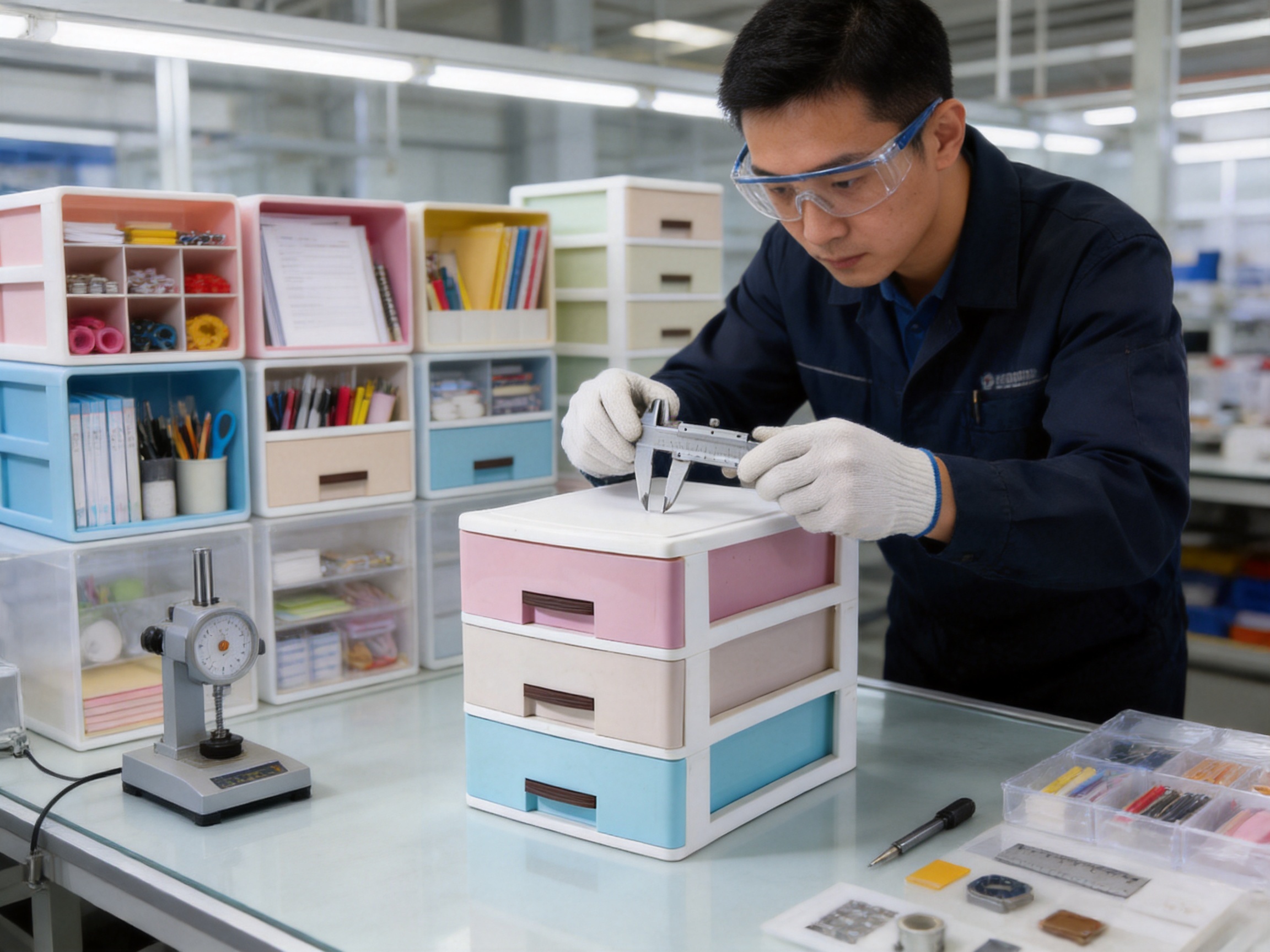
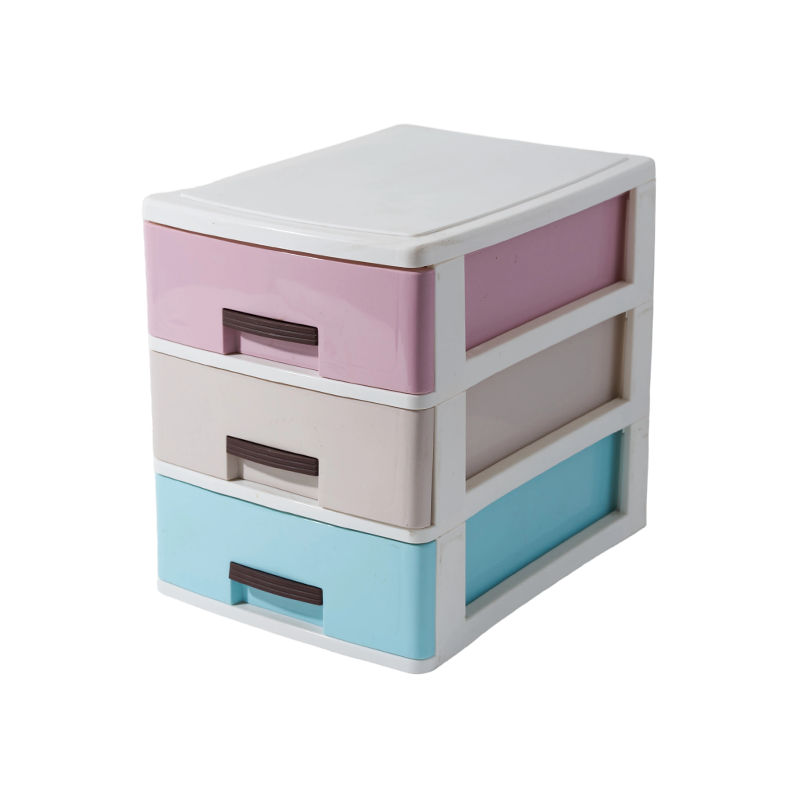
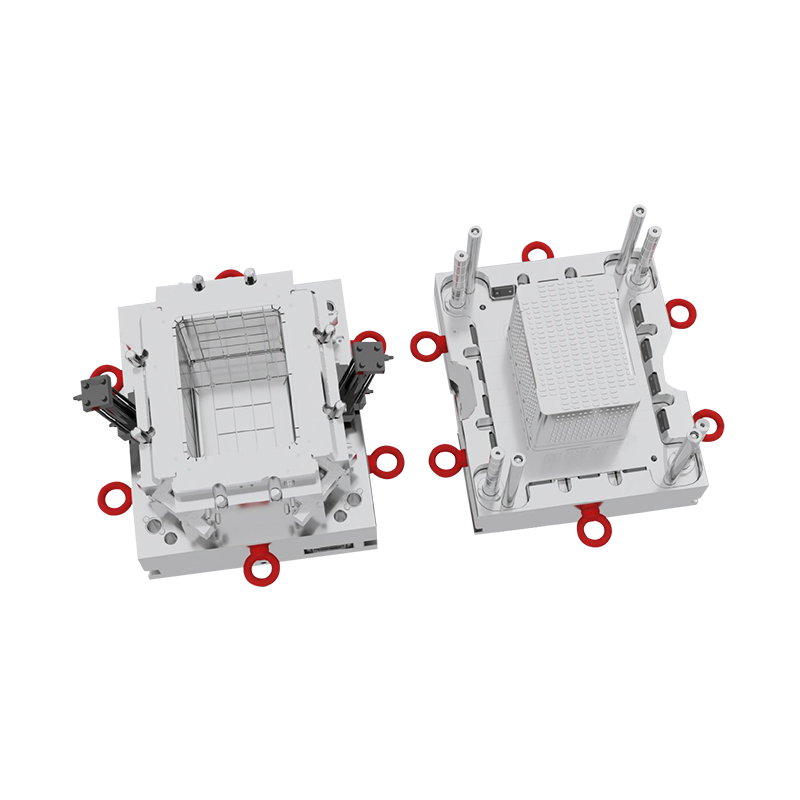
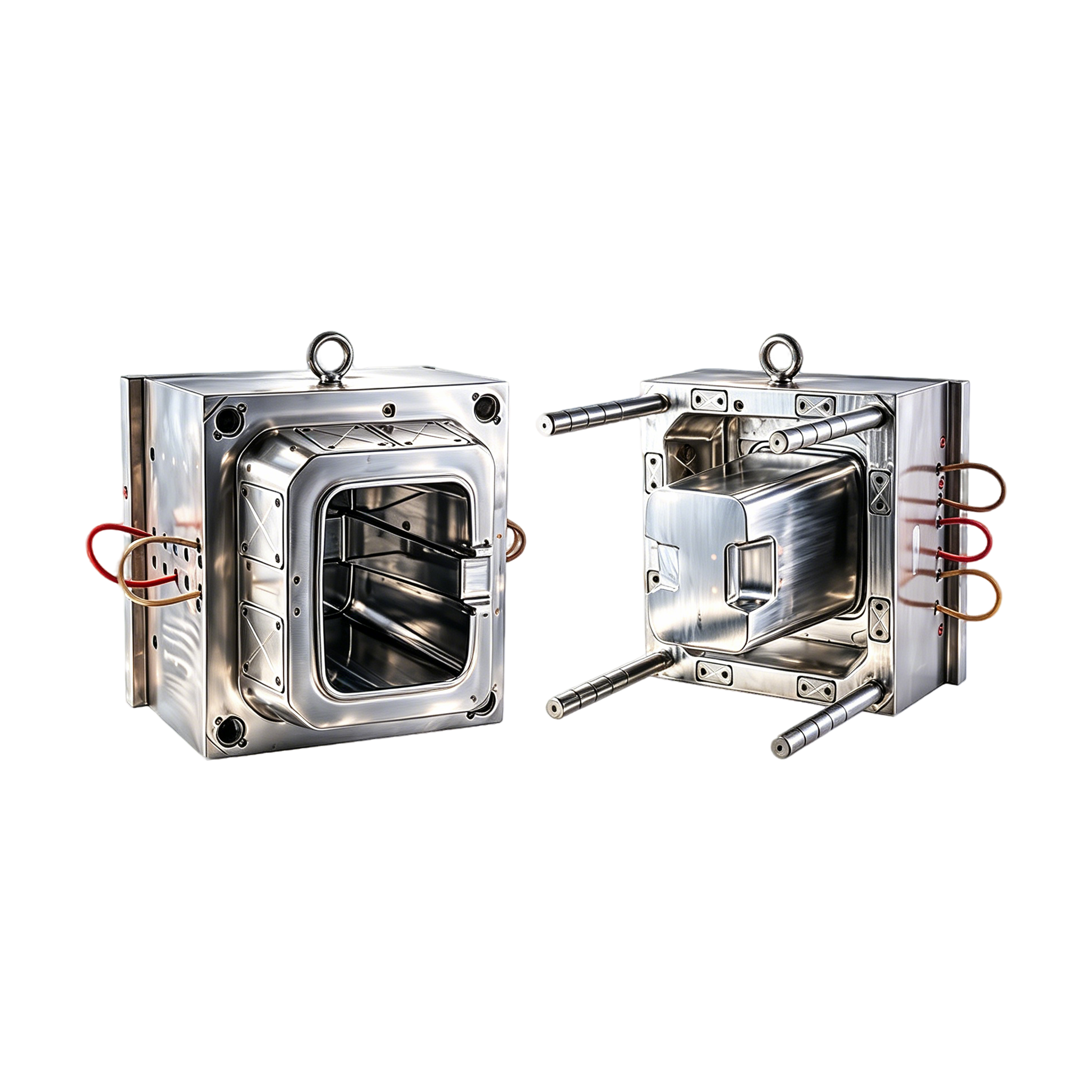
The desktop drawer file organizer box is a practical storage product designed to improve the way documents, stationery, office accessories, and household items are arranged. As workspaces become more compact and users increasingly demand flexible organization solutions, manufacturers require injection molds that can produce storage boxes with accurate dimensions, smooth drawer movement, attractive surfaces, and dependable long-term performance. The Desktop Drawer File Organizer Box Injection Mould is developed to meet these requirements through a combination of precision tooling, stable mold construction, carefully designed sliding structures, and production-oriented engineering.
This type of mold is suitable for manufacturing plastic desktop organizer boxes with one or more drawers. It can be used for office storage, stationery organization, school supply management, household drawer storage, and many other applications where small products must be kept accessible and orderly. The mold supports commonly used materials such as polypropylene and acrylonitrile butadiene styrene, while its configuration can be adjusted according to the product’s dimensions, appearance, mechanical requirements, and target market.
Compared with basic storage box molds, this solution places greater emphasis on the accuracy of drawer guide rails, the strength of reinforcement ribs, the consistency of the product surface, and the reliability of repeated production. These details directly affect the user experience of the finished product. A drawer that opens unevenly, a box that deforms under normal use, or a surface that shows visible molding defects can reduce product value. A well-engineered mold helps manufacturers avoid these problems before they reach the assembly and sales stages.
Taizhou Huangyan Haiquan Plastic Mold Co., Ltd. provides mold development and manufacturing services for daily necessities, home appliances, automotive parts, and industrial equipment. Its capabilities cover product analysis, mold design, steel preparation, precision machining, mold assembly, trial molding, inspection, and after-sales support. By combining technical design with a scientific production management system, the company supports customers that require stable tooling for domestic and international markets.
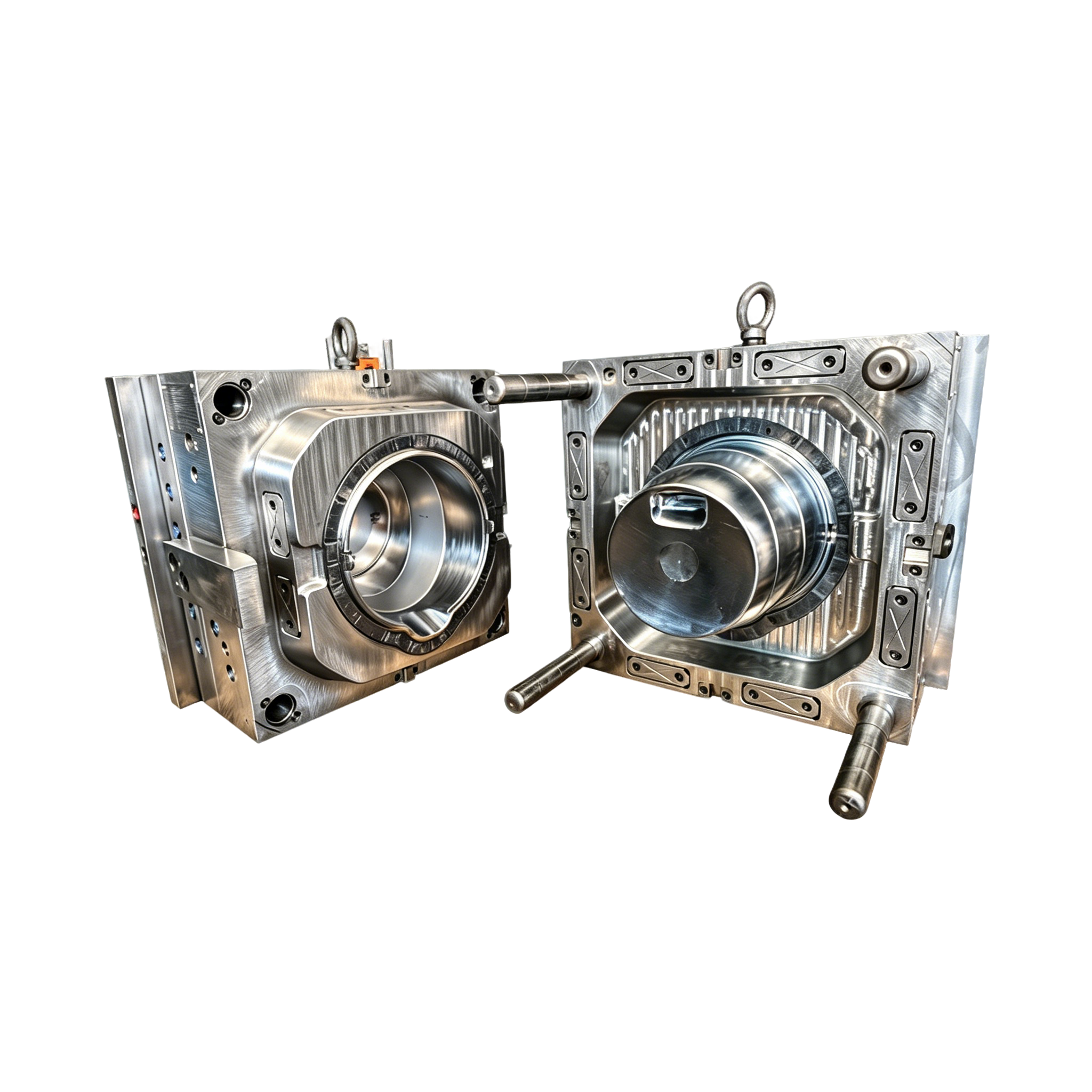
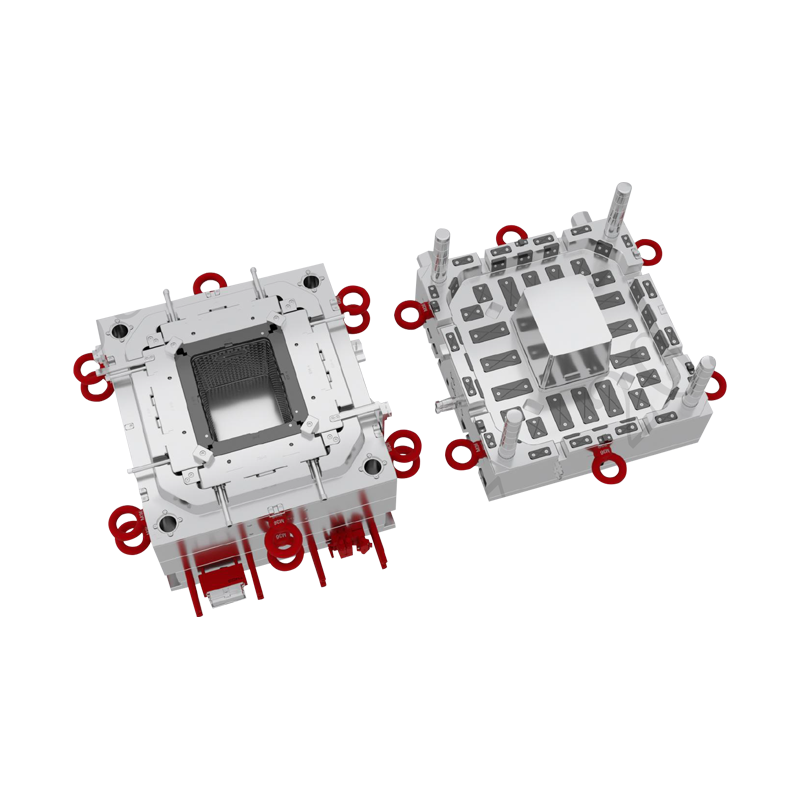
Desktop Drawer File Organizer Box Injection Mould
Product Overview and Manufacturing Purpose
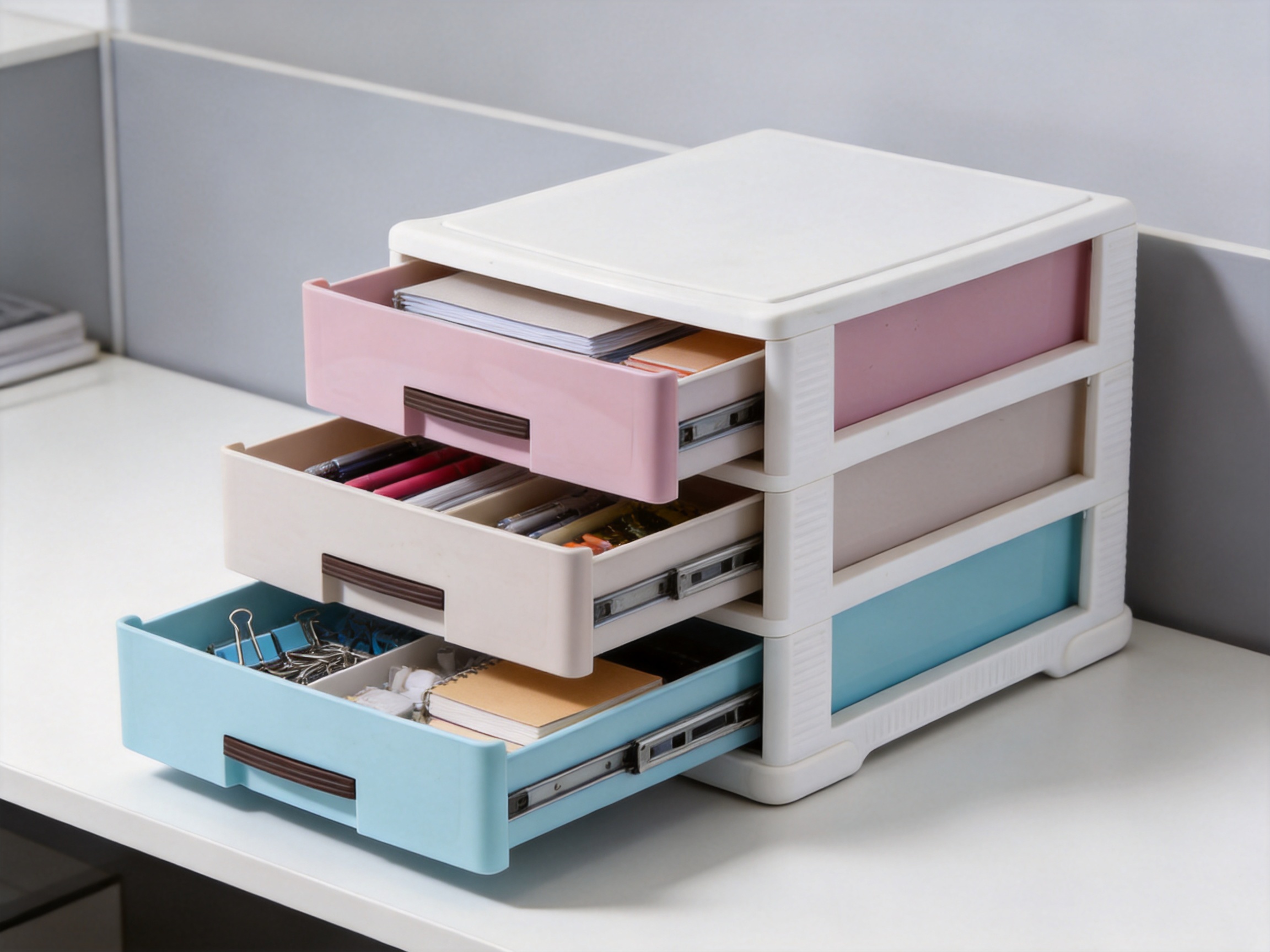
The Desktop Drawer File Organizer Box Injection Mould is designed for the injection molding production of compact storage boxes. The finished product normally consists of a main cabinet or outer box and one or more sliding drawers. Depending on the customer’s design, the organizer may include open upper compartments, label areas, side handles, recessed grips, stacking features, anti-slip surfaces, or modular combinations of different drawer sizes.
The mold is developed around the product’s functional requirements rather than only its external appearance. The outer walls must maintain accurate thickness and flatness. The inner cavity must provide enough clearance for the drawer components. The guide rails need to be formed with sufficient precision so that the drawers move smoothly without excessive looseness. At the same time, the box must have adequate rigidity to resist bending when filled with documents, pens, notebooks, tools, or household accessories.
Injection molding makes it possible to manufacture these products in high volumes with repeatable dimensions. Once the mold is correctly designed and qualified, each production cycle can deliver a consistent product with controlled material distribution and reliable surface quality. This is particularly important for organizers that are sold as sets or placed side by side, because dimensional differences between units can be easily noticed by end users.
The mold can be adapted to different product sizes, drawer quantities, wall structures, and appearance requirements. Basic customization options include box size, number of drawers, product color, logo engraving, surface texture, and local reinforcement. More advanced customization may involve changes to the runner system, cooling layout, ejection method, mold base, cavity count, or material grade.
Functional Design of the Organizer Box Mold
Accurate Drawer Guide Rails
One of the most important features of a drawer organizer mold is the formation of accurate guide rails. These rails determine how the finished drawer travels inside the outer box. If the rails are too tight, the drawer may stick or require excessive force. If they are too loose, the drawer may wobble, tilt, or become misaligned during use.
The mold incorporates precision sliding structures to form these guide components. The design process considers the required clearance between the drawer and the cabinet, the shrinkage behavior of the selected plastic, the expected load, and the dimensional tolerance of the assembly. By analyzing these factors in advance, the mold maker can create a more stable relationship between the moving parts.
Accurate guide rail formation also reduces the need for extensive post-molding correction. In a poorly designed mold, manufacturers may need to trim, file, or manually adjust the drawers after production. Such operations increase labor costs and make product quality dependent on individual workers. A precision mold transfers more of the quality responsibility to the tooling itself, creating a more repeatable manufacturing process.
Reinforcement Ribs for Structural Strength
Storage boxes are often expected to carry more weight than their compact size suggests. Documents, stationery, cosmetics, craft supplies, and small tools can place continuous loads on the bottom and side walls. To address this requirement, reinforcement ribs can be incorporated into the product and supported by corresponding mold features.
Ribs increase stiffness without requiring the entire product wall to be made substantially thicker. This approach can help reduce material consumption while improving resistance to bending and deformation. The rib layout must be carefully balanced, because excessive or improperly positioned ribs can create sink marks, uneven cooling, difficult ejection, or visible surface distortion.
During mold design, the rib thickness, height, draft angle, spacing, and connection to surrounding walls are evaluated together. Proper draft allows the product to release from the cavity without damage. Rounded transitions can reduce stress concentration and improve the appearance of the molded part. When the rib pattern is designed with the overall flow and cooling system in mind, the organizer can achieve a better balance between strength, weight, appearance, and cycle time.
Anti-Slip and Decorative Surface Textures
The organizer box can be produced with matte or textured surfaces to improve visual quality and practical performance. A textured surface may reduce the visibility of minor handling marks, fingerprints, and light scratches. It can also create a more refined appearance than a completely glossy surface.
Anti-slip texture can be applied to areas that contact a desktop, shelf, or another organizer. This feature helps reduce unwanted movement during drawer operation. Surface texture can also improve grip around recessed handles or drawer fronts, making the product more comfortable to use.
Texture selection must be considered together with draft angle, steel processing, release behavior, and product material. Deeper textures generally require more attention to demolding and may need increased draft. A qualified mold manufacturer can recommend a suitable texture level according to the customer’s appearance target and the selected plastic material.
Material Compatibility and Product Performance
Polypropylene
Polypropylene is a widely used material for household and office storage products. It offers low density, good chemical resistance, useful impact performance, and favorable processing characteristics. Products made from PP can be lightweight while still providing enough flexibility for normal drawer operation.
PP is often selected when manufacturers want to control product weight and material cost. It can also be produced in a broad range of colors. However, because PP has its own shrinkage and warpage characteristics, the mold must be designed with suitable compensation and cooling balance. Uneven wall thickness, unbalanced filling, or insufficient cooling can cause dimensional variation in large flat areas.
ABS
ABS is suitable for organizer products that require a more rigid feel, higher surface quality, or improved impact resistance. It can provide a firm drawer front and a stable outer structure. ABS is also frequently used when the finished product requires a smooth appearance, a specific color, or a more substantial hand feel.
Processing conditions for ABS differ from those of PP. Mold temperature, injection speed, packing pressure, cooling time, and venting must be adjusted according to the material grade and product geometry. The mold should be designed to support stable filling and efficient heat removal. Proper processing control helps reduce defects such as weld lines, burn marks, short shots, sink marks, and uneven gloss.
Material Selection and Mold Engineering
The mold design cannot be separated from material selection. The same cavity may behave differently when used with PP, ABS, recycled material blends, or reinforced grades. Material flow, shrinkage, cooling behavior, and ejection performance all affect the final dimensions of the organizer.
Before manufacturing, the customer’s target material and expected product performance should be confirmed. Important considerations include load requirements, impact conditions, surface appearance, color, recycling content, operating temperature, and estimated annual production. This information helps determine cavity design, runner dimensions, cooling layout, ejection strategy, and the appropriate mold steel.
| Design Item | Typical Configuration | Manufacturing Significance |
| Mold steel | P20 or 718 | Provides a suitable balance of machinability, strength, polishability, and service life |
| Product material | PP or ABS | Supports lightweight or rigid organizer product designs |
| Cavity quantity | 1–2 cavities | Balances tooling investment, output, and production flexibility |
| Runner system | Cold runner | Offers a practical and economical configuration for many product programs |
| Expected mold life | Approximately 500,000 shots | Supports long-term production planning and repeat orders |
| Surface finish | Matte texture | Improves appearance and helps reduce the visibility of handling marks |
Advantages Over Basic Competitor Tooling
More Reliable Drawer Movement
Many low-cost storage box molds concentrate mainly on producing the outer profile. They may not provide sufficient attention to the drawer guide rails, internal clearances, or alignment between moving parts. As a result, the finished product may look acceptable but operate poorly.
The Desktop Drawer File Organizer Box Injection Mould is designed around the complete user experience. The sliding structures are treated as functional mold elements rather than secondary details. Their dimensions, draft, transitions, and relationship with the drawer are considered during the engineering stage. This approach increases the likelihood of smooth opening and closing over repeated use.
Improved Structural Durability
A competitor mold with insufficient support for reinforcement ribs may produce a box that twists, sags, or cracks more easily. By integrating appropriate rib structures into the design, this mold supports products with greater load-bearing capacity. The result is a storage box that is better suited to daily office use, household organization, and school applications.
Durability is also influenced by corner radii, wall transitions, ejection layout, and material distribution. The mold design can be optimized to reduce sharp stress concentrations and prevent damage during demolding. These improvements help manufacturers reduce product returns and strengthen customer confidence in the finished organizer.
Stable Long-Term Production
A mold is a production asset, not merely a one-time forming tool. Its value is measured by how consistently it performs over thousands of cycles. Stable mold construction, suitable steel, reliable guide components, accurate fitting, and efficient cooling all contribute to dependable operation.
The specified P20 or 718 steel options provide practical choices for this class of product. They are widely used in injection mold manufacturing and can be processed to provide appropriate wear resistance, dimensional stability, and surface quality. For an organizer product intended for high-volume production, these steel choices offer a balance between initial tooling investment and expected service life.
Reduced Maintenance Requirements
Unstable molds may require frequent polishing, adjustment, replacement of components, or correction of flash and dimensional problems. Every maintenance stoppage can interrupt production and increase operating costs. A carefully manufactured mold reduces the likelihood of these disruptions.
Maintenance-friendly design includes accessible components, properly selected wear parts, suitable lubrication points, effective cooling channels, and a clear assembly structure. When mold components are manufactured accurately and inspected before assembly, maintenance teams can identify wear and perform service more efficiently.
Flexible Customization
Product markets differ in size, storage capacity, appearance, and price positioning. A single organizer box design may not meet every customer requirement. The mold can therefore be customized for different box dimensions, drawer quantities, logo locations, textures, colors, and structural features.
Logo engraving can be added to the drawer front, side wall, upper compartment, or another visible position. The location and depth of the engraving should be evaluated in relation to product appearance, demolding, and cleaning. Customized surface treatments can help a manufacturer create a distinct product line without completely changing the basic functional concept.
Advanced Mold Manufacturing Process
Product and Design Analysis
The manufacturing process begins with a review of the customer’s product drawings, three-dimensional data, samples, or functional requirements. The design team examines the organizer’s overall dimensions, wall thickness, drawer clearance, rib arrangement, surface texture, logo position, assembly relationship, and expected material.
At this stage, potential risks are identified before steel is cut. These risks may include uneven filling, insufficient draft, trapped air, difficult ejection, excessive shrinkage, sink marks, warpage, or interference between the drawer and cabinet. Early analysis helps the customer make design adjustments while changes are still economical.
The mold design also considers the intended injection machine. Mold size, maximum projected area, injection volume, ejector stroke, clamping force, and mold opening direction should be compatible with the customer’s equipment. Matching the tool to the production machine helps prevent unnecessary restrictions after delivery.
Three-Dimensional Mold Design
After product analysis, the mold structure is developed using three-dimensional design methods. The design normally includes the mold base, cavity, core, inserts, sliders, lifters if required, guide components, ejector system, runner system, cooling channels, and standard mechanical components.
Three-dimensional design makes it possible to evaluate parting lines, moving clearances, assembly relationships, and service access before machining. It also allows the engineering team to review how the product will be released from the mold. For products with drawers or side features, this step is especially important because the mold may require sliding structures or carefully arranged inserts.
The parting line should be placed in a way that minimizes visible marks and simplifies ejection. A well-selected parting line can also reduce flash risk and improve the appearance of the organizer. If the product includes textured surfaces, the design must preserve the texture across the parting area as consistently as possible.
Flow and Filling Considerations
Injection molding quality depends on how molten plastic enters, fills, packs, and cools inside the cavity. The runner system and gate locations must support balanced filling, particularly when the product includes broad panels, drawer fronts, thin walls, and internal ribs.
The cold runner configuration offers a practical solution for many organizer box projects. It is relatively simple to manufacture, easy to inspect, and suitable for production programs where tooling cost and maintenance simplicity are important. Runner size and gate design must still be selected carefully to support stable filling and to minimize visible gate marks.
For a two-cavity mold, the layout should be balanced so that each cavity receives comparable material flow. Balanced filling helps reduce differences in weight, dimensions, packing, and shrinkage between products. If the product design or mold layout creates unequal flow lengths, the runner system may need additional adjustment to compensate.
Cooling System Development
Cooling is one of the most important factors influencing cycle time and product stability. A storage box with flat walls and internal ribs may cool unevenly if the cooling channels are too far from some areas or if water flow is restricted. Uneven cooling can lead to warpage, shrinkage variation, and longer production cycles.
The cooling layout is designed to remove heat from the cavity and core as evenly as practical. Special attention is given to drawer fronts, bottom panels, thick rib intersections, corners, and areas near the gate. Water channel connections should be arranged for convenient operation and maintenance.
Efficient cooling can produce several benefits. It may shorten the molding cycle, increase output, reduce deformation, improve dimensional stability, and limit thermal stress. For high-volume manufacturing, even a small cycle-time improvement can produce substantial annual capacity gains.
Precision CNC Machining and Electrical Discharge Machining
After the design is approved, mold components are machined using suitable manufacturing equipment. CNC machining is used for many cavity, core, insert, and mold base features. It provides controlled cutting accuracy and repeatable surface preparation.
Electrical discharge machining can be applied to deep, narrow, complex, or difficult-to-cut features. It is useful for certain rib details, sharp internal profiles, and areas that cannot be reached effectively with conventional milling tools. The combination of CNC machining and EDM allows the mold maker to handle a wider range of product geometries.
Machining strategy is selected according to the required accuracy, surface finish, steel condition, and feature complexity. Rough machining removes the majority of material, while semi-finishing and finishing operations bring the component closer to its final dimensions. Careful machining allowances help reduce distortion and support efficient polishing or texturing.
Wire Cutting and Component Fitting
Wire electrical discharge machining may be used for precise profiles, inserts, slots, and components requiring accurate geometric relationships. It can produce clean and repeatable profiles in hardened or difficult-to-machine steel.
Following machining, individual parts are measured and fitted. Core and cavity alignment, slider movement, ejector operation, guide pillar performance, and insert seating are checked before final assembly. Proper fitting is essential for reducing flash, protecting parting surfaces, and ensuring that the mold opens and closes smoothly.
Surface Finishing and Texture Processing
The organizer box is specified with a matte texture, although customers may request alternative finishes. Surface processing can include fine polishing, texture etching, EDM texture, or other approved methods.
A consistent texture requires careful preparation of the steel surface. Scratches, machining marks, or inconsistent polishing may become visible after texturing. The desired appearance should be confirmed through sample panels or approved reference standards whenever possible.
Surface finish also affects product release. Highly textured surfaces may require additional draft, while polished areas may demand precise control of machining and polishing direction. The design team must balance visual requirements with reliable production performance.
Mold Assembly and Trial Molding
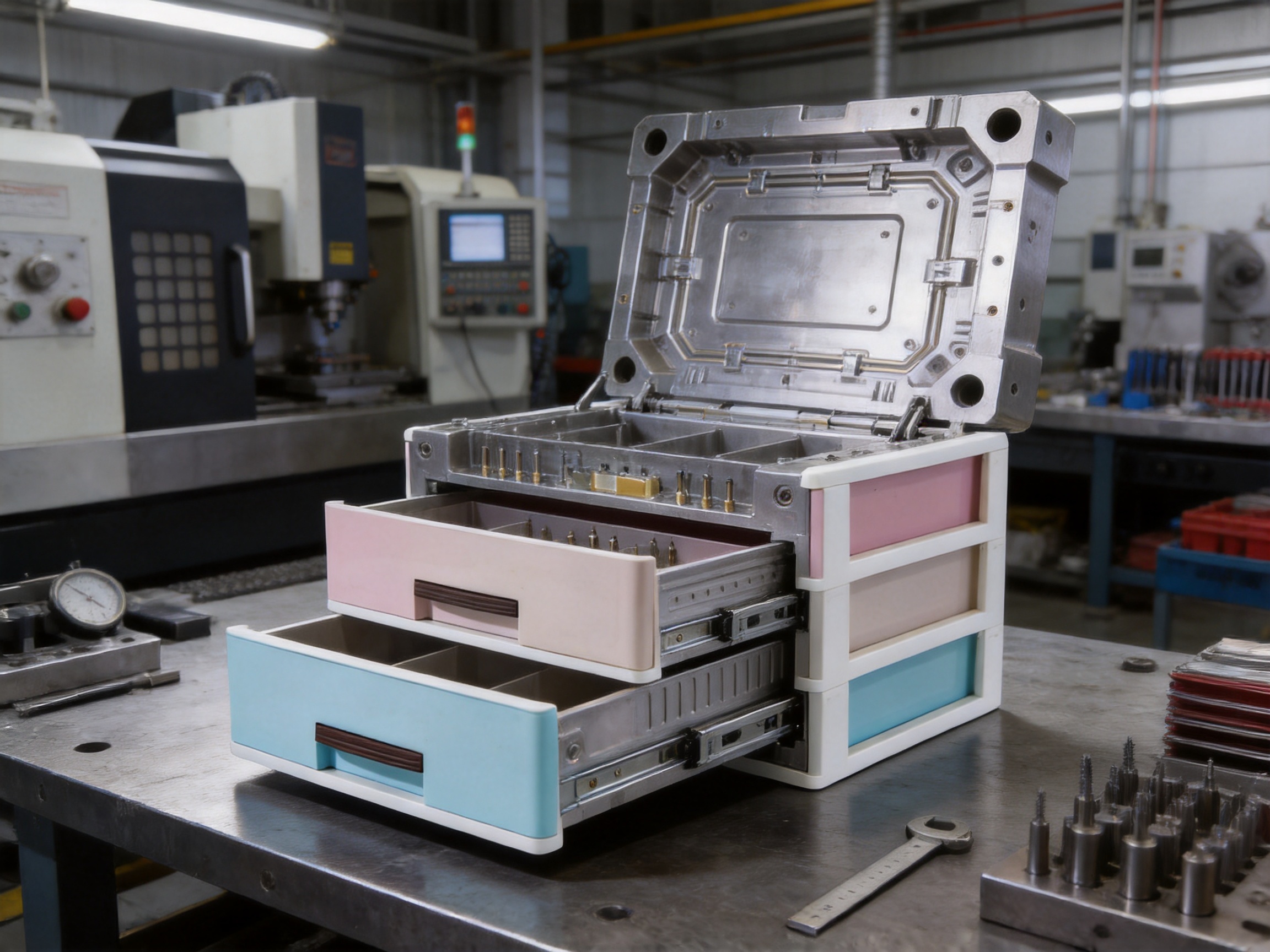
After the components are completed, the mold is assembled and tested mechanically. The team checks mold opening, closing, sliding structures, ejector movement, cooling connections, and safety clearances. Any interference or abnormal resistance must be corrected before injection trials.
Trial molding is then performed using the intended or representative material. The sample products are inspected for dimensions, appearance, drawer movement, surface texture, gate condition, flash, weld lines, sink marks, and warpage. Process parameters are adjusted to determine a stable production window.
Trial molding is not limited to confirming whether the product can be formed. It also validates whether the tool can produce the required quality efficiently. If a trial reveals an issue, the engineering team can evaluate whether the cause is related to mold geometry, processing conditions, material behavior, or machine capability.
Quality Control and Inspection Standards
Incoming Material Control
Reliable mold manufacturing begins with controlled raw materials. Mold steel should be identified and verified before machining. Material certificates, hardness information, and physical condition can be reviewed according to the project’s quality requirements.
Other components, including guide pillars, bushings, ejector pins, springs, cooling fittings, and standard mold parts, should also be checked for specification and quality. Using suitable components reduces the risk of premature wear and assembly problems.
Dimensional Inspection
Critical mold components require dimensional inspection after machining. Important features may include cavity dimensions, core dimensions, drawer rail profiles, insert locations, slider travel, ejector hole positions, and cooling channel connections.
Inspection methods can include coordinate measurement, precision gauges, height measurement, visual examination, and comparison with three-dimensional design data. The appropriate inspection method depends on the feature and the required tolerance.
Finished organizer samples are inspected as complete products. Their external dimensions, drawer clearances, wall thickness, rib locations, logo positions, and surface texture are compared with the approved requirements. Functional testing confirms that the drawer can be repeatedly opened and closed without sticking or excessive looseness.
Appearance and Functional Testing
Visual inspection is essential for products intended for office, household, and retail environments. Inspectors look for short shots, flash, burn marks, flow marks, weld lines, sink marks, scratches, discoloration, and uneven texture.
Functional testing may include repeated drawer movement, load testing, stacking checks, desktop stability checks, and assembly verification. The exact test method depends on the customer’s product specification. Testing under practical conditions provides more useful information than visual inspection alone.
Documentation and Traceability
Professional mold manufacturing benefits from organized documentation. Design revisions, steel information, machining records, inspection results, trial parameters, correction history, and final approval data should be retained where appropriate. Traceability makes future maintenance and repeat production more efficient.
When a customer orders additional molds or requests replacement components, historical records can help the manufacturer reproduce the original specifications. This is particularly valuable for international customers who may need consistent products across multiple production periods.
Applications of the Finished Organizer Box
Office Desk Storage
The organizer is suitable for storing documents, envelopes, notebooks, pens, staplers, clips, cables, and other office accessories. Its drawers keep frequently used items accessible while reducing visual clutter on the desktop.
Stationery Organization
Schools, libraries, offices, and retail stores can use the product for pencils, markers, erasers, rulers, labels, and craft materials. Different drawer sizes can be assigned to different categories, improving retrieval speed and inventory visibility.
Household Drawer Storage
At home, the organizer can be used for cosmetics, sewing materials, batteries, remote controls, hardware, medicine packaging, or small personal items. Its compact form makes it suitable for desks, shelves, dressing tables, study areas, and work benches.
School Supply Storage
Students can use the product to separate art supplies, writing tools, study accessories, and small project materials. A durable PP or ABS structure can support regular handling in educational environments.
Commercial and Promotional Products
With customized colors and logo engraving, the organizer may also serve as a promotional item or branded office accessory. A company can use a practical storage product to increase repeated brand exposure in the workplace or home office.
Customization Options
Customization begins with the product’s overall length, width, and height. These dimensions determine storage capacity, desktop footprint, mold size, and injection machine requirements. The manufacturer can develop the mold around a customer’s existing product design or assist with design adjustments for injection molding.
The number of drawers can be changed according to the intended market. A single-drawer box may be suitable for compact personal storage, while a multi-drawer configuration may serve offices, classrooms, or retail displays. Drawer depth and height can also be varied to accommodate different product categories.
Logo engraving is another common option. The logo can be molded directly into the product, reducing the need for secondary labeling. Depending on the design, the engraving may be raised or recessed. The mold maker evaluates the logo size, line thickness, location, draft, and texture compatibility to ensure that it can be produced clearly.
Color can be managed through the selected plastic grade and masterbatch. Transparent, translucent, opaque, neutral, or bright colors may be considered according to the customer’s market strategy. For multi-color products, the mold and molding process may require additional development.
Surface texture can be customized from a fine matte effect to a more pronounced anti-slip pattern. The final texture should support the product’s visual identity while remaining compatible with demolding and mold maintenance.
Production Efficiency and Cost Control
A well-designed mold contributes to cost control throughout the product life cycle. The first benefit is stable cycle performance. A balanced runner and cooling system can reduce unnecessary molding time and lower energy consumption per part.
The second benefit is reduced rejection. Accurate guide rails, appropriate draft, balanced filling, and controlled shrinkage reduce the possibility of producing parts that cannot be assembled or sold. Lower scrap rates improve the effective yield of each production batch.
The third benefit is reduced manual finishing. If the gate, parting line, rib design, and surface quality are properly controlled, operators may spend less time trimming, polishing, or correcting the finished products. This is particularly important when labor costs are significant or production volumes are high.
The fourth benefit is longer tooling service life. A mold designed for approximately 500,000 shots can support repeated production programs and reduce the need for early replacement. Actual service life depends on material, processing conditions, maintenance, cycle frequency, and operating discipline, but suitable steel and accurate assembly establish a strong foundation.
Manufacturing Strengths of the Mold Supplier
Taizhou Huangyan Haiquan Plastic Mold Co., Ltd. is a high-tech enterprise specializing in the research, development, and manufacturing of precision injection molds. Its product scope covers daily necessities, home appliances, automotive parts, and industrial equipment. This broad sector experience allows the company to apply knowledge from different product categories to storage box mold development.
The company’s professional design team supports the early stages of product review and mold planning. Instead of treating the customer’s drawing as an isolated file, the team can evaluate product function, manufacturability, material behavior, structural strength, and production requirements together.
Its scientific production management system helps connect design, machining, assembly, trial molding, inspection, and delivery. Clear coordination between these stages reduces communication gaps and helps maintain consistency from the initial concept to the final mold.
The company emphasizes quality-first and sustainable-development principles. For customers, this means the project is evaluated not only by initial tooling price but also by service life, production stability, maintenance requirements, material efficiency, and long-term cooperation potential.
Haiquan serves customers in Europe, the Middle East, Southeast Asia, South America, and other international markets. Export experience requires attention to communication, packaging, documentation, delivery coordination, technical support, and after-sales service. These factors are important because a mold may be installed and operated far from the manufacturing site.
Integrated service from design and production to after-sales support can simplify project management. Customers can communicate their product goals to one technical partner rather than coordinating separate companies for design, machining, assembly, and troubleshooting.
Installation, Operation, and Maintenance Recommendations
Before installation, the mold should be inspected for transport damage, rust protection condition, loose components, and connection requirements. The injection machine should be checked for suitable clamping force, injection capacity, mold opening dimensions, ejector position, and cooling connections.
During initial setup, the mold should be opened and closed at low speed to confirm that sliders, ejectors, and guide components move correctly. Cooling circuits should be checked for leakage and adequate flow. The operator should confirm that the mold is properly secured before injection begins.
Processing parameters should be developed according to the selected material and product design. Injection speed, pressure, holding time, melt temperature, mold temperature, cooling time, and back pressure all influence product quality. Operators should avoid making large parameter changes without recording the results.
Routine maintenance includes cleaning the parting surface, removing plastic residue, checking guide components, lubricating suitable moving parts, inspecting ejector pins, and confirming cooling flow. The mold should be protected against corrosion during storage, especially in humid environments.
If the organizer is produced with textured surfaces, abrasive cleaning materials should be avoided. Damage to the texture can change the appearance of later products. Any abnormal flash, drawer interference, ejector marks, or dimensional drift should be reported promptly so that the cause can be investigated before it becomes more serious.
Frequently Asked Questions
What products can this mold manufacture?
The mold is designed to produce desktop drawer file organizer boxes and similar plastic storage products. Depending on the customized design, it can form organizers for office documents, stationery, household items, school supplies, cosmetics, craft materials, and other small products.
Which plastic materials are supported?
The standard material options are PP and ABS. PP is suitable for lightweight and flexible storage products, while ABS can provide a more rigid structure and refined surface appearance. The final material should be confirmed before mold design is completed because material shrinkage and processing behavior affect tooling decisions.
How many cavities does the mold have?
The standard configuration is one to two cavities. A single-cavity mold may be appropriate for lower-volume production, larger products, or projects requiring a lower initial tooling investment. A two-cavity mold can increase output when the product size and injection machine allow balanced production.
Why are precision sliding structures important?
Sliding structures form the drawer guide rails and other side features that may not be removable directly from the mold. Their accuracy affects drawer alignment, opening force, stability, and long-term user experience. Properly designed sliders also help reduce manual correction after molding.
Can the box size and drawer quantity be customized?
Yes. Basic customization includes product size and drawer quantity. The mold can also be adapted for different drawer depths, handles, compartments, logo locations, textures, and reinforcement layouts, subject to a technical review of the product design.
What is the expected mold life?
The stated target is approximately 500,000 shots. Actual service life depends on mold maintenance, material selection, processing conditions, production frequency, and operating procedures. Regular cleaning, lubrication, inspection, and corrosion protection help preserve mold performance.
Does the mold use a hot runner system?
The specified configuration uses a cold runner system. Cold runners are practical for many organizer box projects because they offer a straightforward structure, accessible maintenance, and controlled tooling cost. The runner and gate design should be optimized according to the product geometry and material.
What surface finish is available?
The standard surface finish is matte texture. This finish can improve visual quality and reduce the visibility of minor handling marks. Other surface finishes may be considered according to the customer’s product concept, mold steel condition, draft angle, and material requirements.
Can a company logo be molded into the organizer?
Yes. Logo engraving is included among the basic customization options. The logo may be placed on a drawer front, outer panel, or another suitable location. The size, depth, draft, and surface texture should be reviewed to ensure clear molding and reliable demolding.
How is product quality verified?
Quality verification may include steel and component inspection, dimensional measurement, mold movement checks, trial molding, appearance evaluation, drawer movement testing, and comparison with approved product data. The exact inspection plan can be adjusted according to the customer’s technical requirements.
What support is available after mold delivery?
After-sales support may include installation guidance, molding parameter recommendations, maintenance advice, troubleshooting assistance, and communication regarding replacement or repair components. International customers benefit from clear technical documentation and organized project records.
Conclusion
The Desktop Drawer File Organizer Box Injection Mould is a production-focused solution for manufacturers seeking reliable, attractive, and functional plastic storage products. Its design emphasizes the details that most directly affect customer satisfaction: smooth drawer movement, accurate guide rails, structural reinforcement, stable dimensions, practical surface texture, and long-term molding consistency.
Compared with basic competitor tooling, the mold provides a more complete approach to product performance. It considers the relationship between product design, material behavior, mold movement, cooling, ejection, surface quality, and production efficiency. The use of P20 or 718 steel, one to two cavities, a cold runner system, and a target life of approximately 500,000 shots creates a practical configuration for many mass-production programs.
Taizhou Huangyan Haiquan Plastic Mold Co., Ltd. strengthens this product solution through professional mold design, precision machining, structured assembly, trial molding, inspection, and international customer support. Its experience across daily necessities, home appliances, automotive components, and industrial equipment supports a disciplined approach to tooling development.
For manufacturers producing office organizers, stationery boxes, household storage products, or customized drawer systems, this mold offers a combination of flexibility, durability, and production stability. With appropriate material selection, process control, and regular maintenance, it can support efficient manufacturing and consistent product quality across long-term production cycles.
References
1. Injection Molding Handbook, principles of plastic part design, mold construction, cooling, ejection, and process control.
2. Plastics Engineering Reference Materials, guidance on polypropylene and acrylonitrile butadiene styrene processing behavior.
3. Mold Design and Manufacturing Practice, recommendations for sliders, guide rails, runners, cooling channels, and injection mold maintenance.
4. Standard Practices for Plastic Product Inspection, dimensional measurement, visual inspection, functional testing, and production approval.
5. Internal product and manufacturing specifications for the Desktop Drawer File Organizer Box Injection Mould.
Product: Desktop Drawer File Organizer Box Injection Mould

For exclusive deals and latest offers, sign up by entering your email address below.

 +86-18657672567
 sales@tzhqmould.com
celin@tzhqmould.com
 No. 17 Houshi Road, Beicheng Industrial Zone, Huangyan District, Taizhou City, Zhejiang Province, China
Copyright © Taizhou Huangyan Haiquan Plastic Mold Co., Ltd. All Rights Reserved
Injection Plastic Mould Maker

