

Thickened Plastic Mop Bucket Cleaning Tool Mould for Durable Injection-Molded Products
Admin 2026-11-03
Modern cleaning equipment must combine durability, practical operation, manufacturing efficiency, and attractive product design. Mop buckets are used in homes, offices, hotels, hospitals, factories, schools, restaurants, and professional janitorial environments. Because these products are repeatedly filled with water, moved across floors, exposed to detergents, and subjected to squeezing forces from wringer assemblies, their quality depends heavily on the performance of the injection mold used to produce them.
The Thickened Plastic Mop Bucket Cleaning Tool Mould is developed for manufacturing heavy-duty plastic mop buckets and related cleaning tools. It is designed around the requirements of reinforced bucket structures, integrated wringer components, practical handle slots, and reliable high-volume production. Using PP as the recommended product material, the mold supports the production of cleaning buckets that are lightweight compared with metal alternatives while still offering useful strength, chemical resistance, and convenient handling.
Produced by Taizhou Huangyan Haiquan Plastic Mold Co., Ltd., this cleaning products mold reflects experience in precision injection mold development for daily necessities, home appliances, automotive parts, and industrial equipment. The company combines product design support, mold engineering, manufacturing management, quality control, and after-sales service in one integrated process. This approach helps customers move from an initial product concept to a finished mold and stable production solution.
Purpose of a Specialized Mop Bucket Injection Mold
A mop bucket may appear simple, but its structure contains many functional details. The bucket body must resist deformation when filled with water. The base must remain stable when the bucket is pulled or pushed across the floor. The rim must provide sufficient rigidity and a comfortable edge. Handle slots must support repeated lifting, while the wringer area must accommodate pressure from wet mop heads. Each of these requirements must be considered during mold design.
A general-purpose container mold may not provide the structural performance required for a professional cleaning bucket. A specialized mop bucket mold is developed around the complete product, including its wall thickness, reinforcement ribs, corners, drainage features, wringer mounting points, handle structure, and appearance surfaces. This coordinated approach helps reduce design conflicts and improves the consistency of the finished product.
The Thickened Plastic Mop Bucket Cleaning Tool Mould is intended for customers who need a more robust cleaning bucket than a thin household container. The design concept supports reinforced structures that can handle heavy water loads and regular use. Depending on the final product specification, the mold can be adapted to accommodate different capacities, handle arrangements, and wringer structures.
For manufacturers, the value of the mold is not limited to forming the external shape. A well-engineered tool also influences cycle stability, part release, dimensional consistency, surface quality, assembly accuracy, and long-term production reliability. These factors directly affect the cost and performance of the finished cleaning product.
Product Structure and Functional Design
The bucket body is the primary component formed by the mold. It can be designed with a thickened or reinforced wall structure to improve resistance to impact and deformation. Reinforcement does not necessarily mean making every section excessively thick. Instead, the structure can be balanced through carefully positioned ribs, corner transitions, base reinforcement, and support areas around handles or wringer assemblies.
A controlled wall design is important because uncontrolled thickness can cause molding defects, uneven cooling, sink marks, warpage, and unnecessary material consumption. Mold engineers evaluate the product geometry to determine where additional support is useful and where material can be reduced without compromising performance. This balance helps create a practical product with a strong appearance and reasonable production efficiency.
The base of a mop bucket requires special attention. It must support the weight of the bucket, water, and mop while also tolerating contact with different floor surfaces. A stable bottom structure helps reduce tipping during use. Depending on the product concept, the mold can support a flat base, reinforced foot structure, or other stabilizing features.
Handle slots can be integrated into the mold design. These openings must be positioned for comfortable lifting and must have enough surrounding strength to withstand repeated loading. If a separate handle is used, the mold can be designed to support accurate assembly points. If the handle is formed as part of the main bucket body, the transition between the handle area and the bucket wall must be engineered to reduce stress concentration.
Wringer components represent another important design area. A mop bucket may use a fixed wringer, removable wringer, press plate, basket, or other squeezing structure. The exact configuration can be adjusted according to the customer's requirements. The mold can be developed with suitable mounting surfaces, locating features, fastening areas, and clearances for the selected wringer design.
The upper rim of the bucket also affects both usability and appearance. A clean, stable rim improves the product's visual quality and can help users pour water, carry the bucket, or attach accessories. The mold design must provide appropriate draft angles and parting-line control so that the rim can be formed accurately and released efficiently.
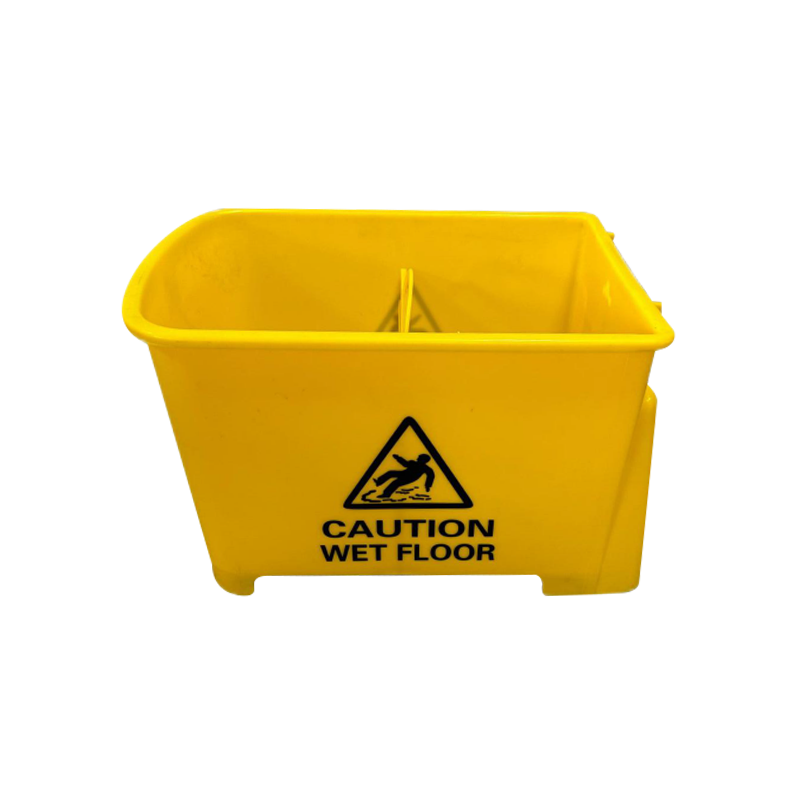
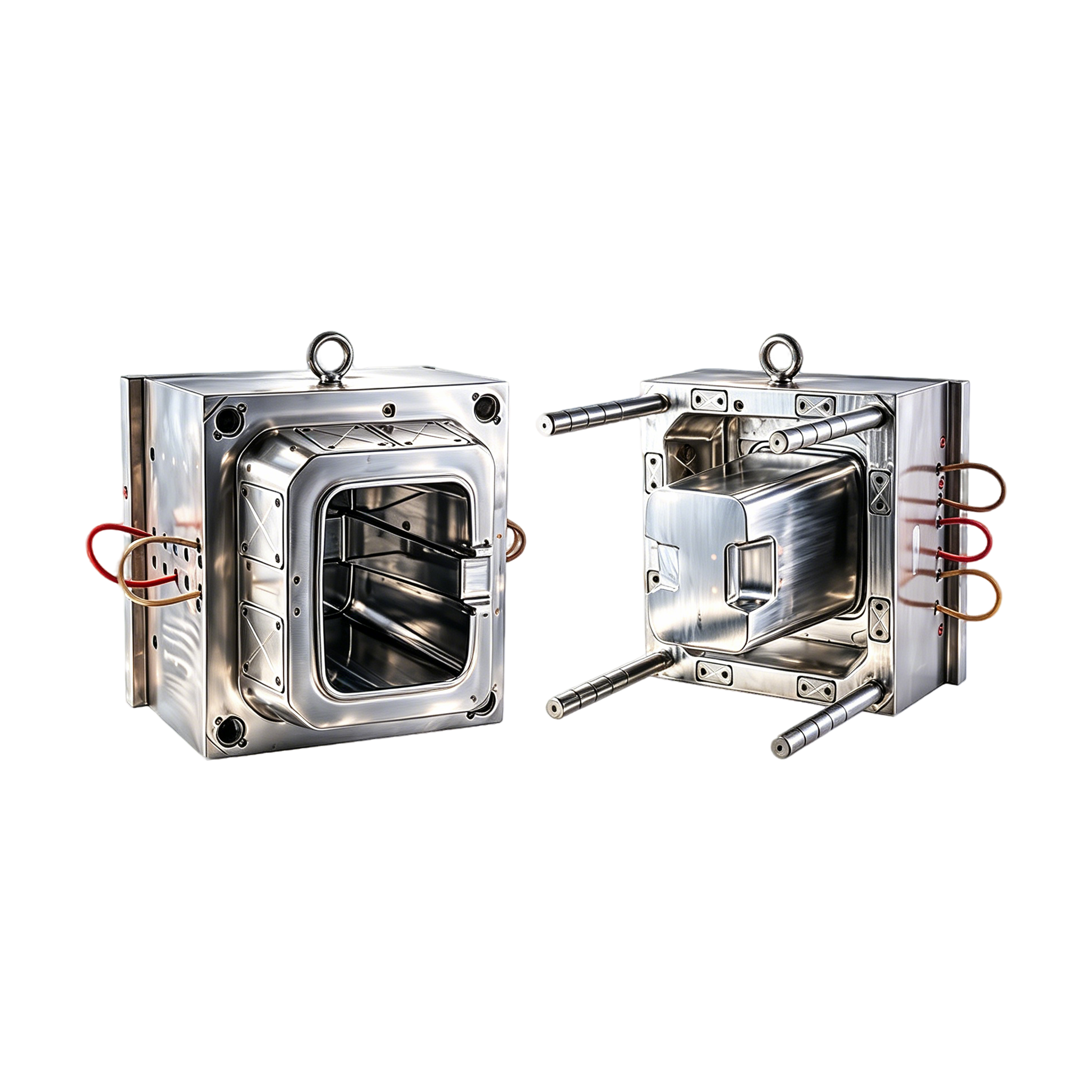
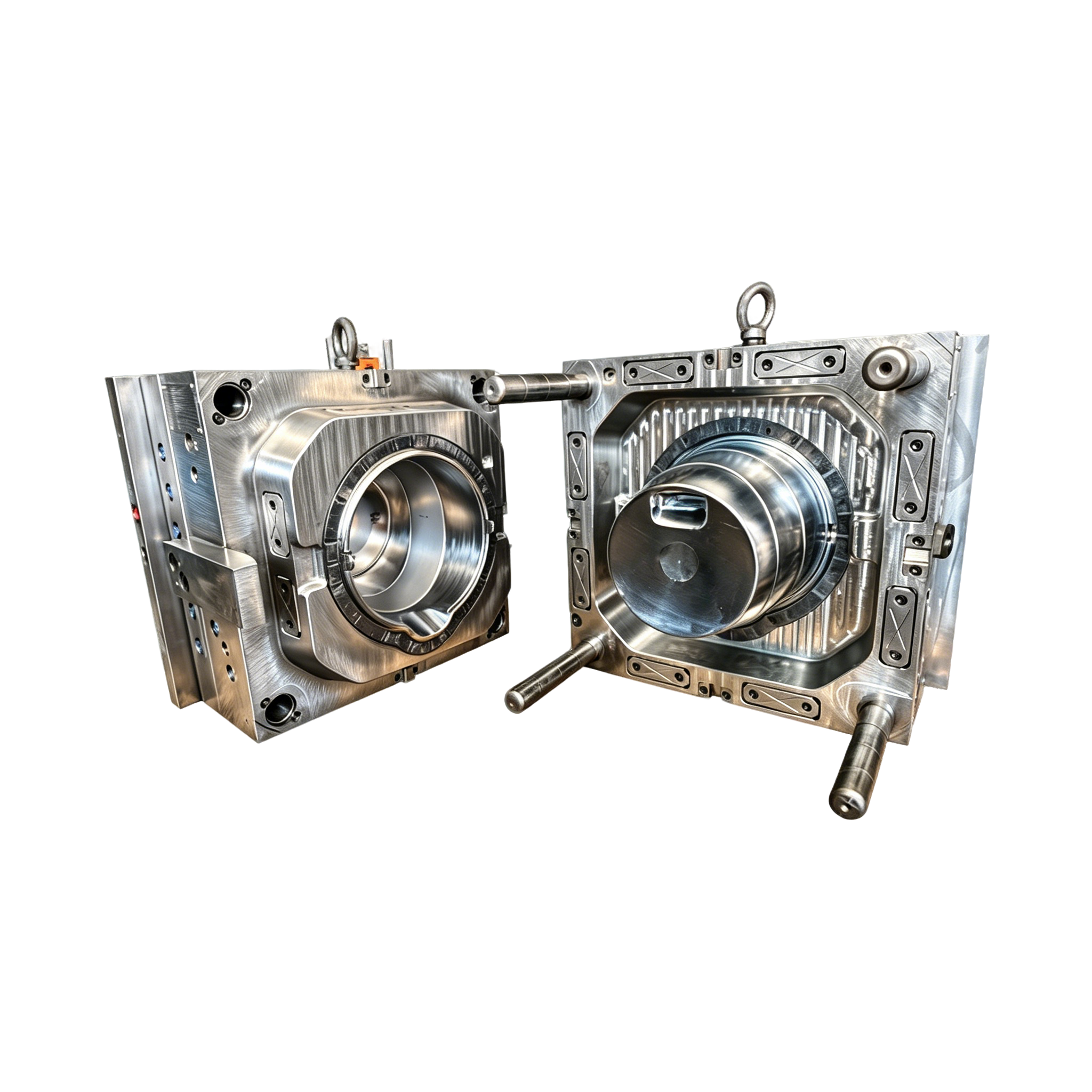
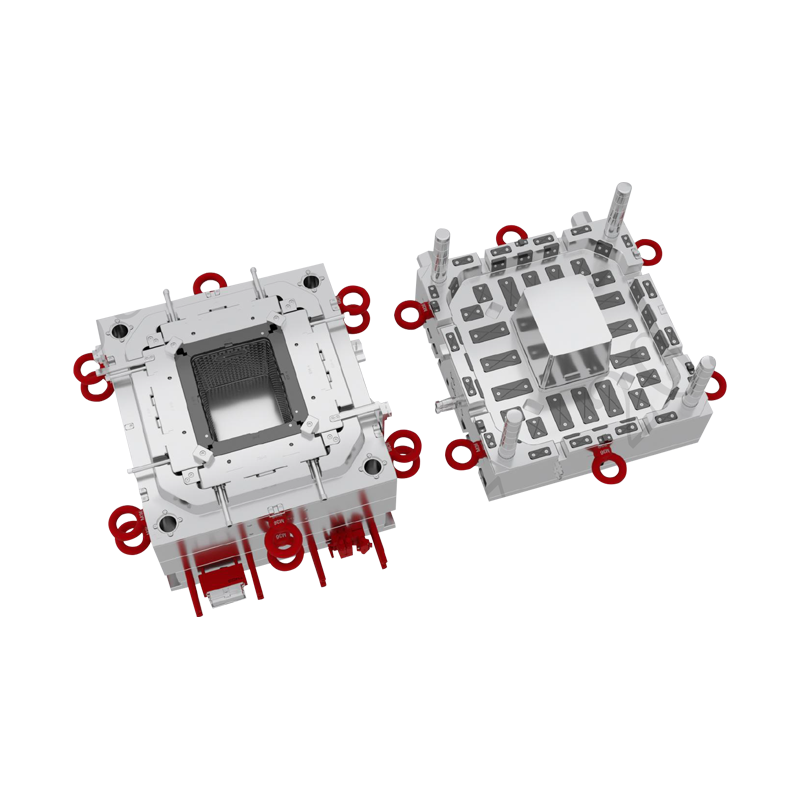
Thickened Plastic Mop Bucket Cleaning Tool Mould
Advantages of PP for Mop Bucket Production
Polypropylene, commonly known as PP, is specified as the product material for this mold. PP is widely used in household and commercial products because it offers a useful combination of low density, impact performance, chemical resistance, moisture resistance, and processing flexibility.
For mop buckets, the relatively low density of PP helps reduce product weight. A lighter bucket is easier to carry when empty and easier to move during daily cleaning operations. At the same time, the product can be designed with reinforced sections to support the expected water load and handling conditions.
PP also performs well in environments where the product may come into contact with common cleaning liquids. Detergents, diluted disinfectants, and other cleaning solutions can place demands on plastic materials. Material selection should always match the chemical conditions expected by the customer, but PP is a practical choice for many general cleaning applications.
The material is suitable for injection molding and can support repeatable production when the mold, processing parameters, and raw material quality are properly controlled. It can also be produced in a range of colors, allowing manufacturers to create product families for different markets, brands, professional cleaning teams, or retail channels.
Surface texture can also be considered during mold development. A lightly textured exterior may help reduce the visibility of minor handling marks and provide a more practical grip. Smooth areas may be used where easy cleaning or a polished visual effect is preferred. The final texture must be coordinated with draft angles, parting lines, and the customer's appearance requirements.
Reinforced Construction for Heavy-Duty Cleaning
The defining characteristic of this product concept is its thickened and reinforced construction. Household buckets may be exposed to occasional use, while commercial cleaning equipment may be used repeatedly throughout the day. A heavy-duty mop bucket must be prepared for frequent filling, emptying, pushing, pulling, lifting, and wringing.
Reinforced construction can be achieved through several coordinated design methods. These may include carefully calculated wall sections, internal ribs, strengthened corners, a rigid top rim, a reinforced base, and stronger areas around handle slots. Each feature contributes to the overall performance of the bucket, but the features must work together rather than being added independently.
Corner geometry is particularly important. Sharp internal corners can create stress concentration and may make material flow more difficult during injection. Rounded transitions can improve stress distribution and support smoother filling. Appropriate radii also help the molded part release from the core and reduce the risk of damage during ejection.
Ribs can improve stiffness without requiring the entire bucket wall to become excessively thick. However, ribs must be designed with appropriate height, width, spacing, and connection details. Poorly designed ribs may cause sink marks on visible surfaces or make ejection more difficult. The mold engineering process therefore considers both structural function and molding behavior.
The base area may require additional support because it carries the combined weight of the bucket and its contents. A properly designed base can help maintain dimensional stability and reduce unwanted flexing. This is especially useful when the bucket is moved over uneven surfaces or placed on hard floors.
By combining these design principles, the mold supports a product that is more suitable for demanding cleaning environments than a lightweight, minimally reinforced container. The result is a practical balance between product strength, material consumption, handling convenience, and manufacturing cost.
Wringer and Handle Integration
A mop bucket is often purchased as a complete cleaning tool rather than as a simple water container. The wringer is therefore a major part of the product's value. It enables users to remove excess water from a mop without manually twisting or pressing the mop head. A stable relationship between the bucket body and wringer improves the overall user experience.
The mold design can support integrated wringer components or mounting structures for separately produced components. The best arrangement depends on the customer's product concept, target market, assembly process, and required cleaning performance. Some customers may prefer a removable wringer for easier maintenance, while others may require a fixed structure for professional use.
When a wringer is integrated into the bucket design, the supporting areas must be sufficiently rigid. Repeated pressing force can place stress on the upper rim, side walls, and attachment points. Molded reinforcement can be added to these zones to improve stability. Locating features can also help control the position of the wringer during assembly.
Handle slots are designed with similar attention to repeated use. A commercial cleaning worker may lift or reposition the bucket many times in one day. The opening must be comfortable enough for practical handling while retaining enough surrounding material to resist cracking or distortion. The transition from the handle slot to the bucket wall should be smooth and appropriately reinforced.
Because wringer and handle requirements vary between markets, customization is an important part of the development process. Capacity and wringer structure can be adjusted to suit different products. The customer may also request changes to the handle position, bucket proportions, accessory arrangement, or visual styling.
Technical Specification Overview
| Product Type | Plastic mop bucket and cleaning tool mold |
| Product Category | Cleaning Products Mold |
| Recommended Product Material | PP |
| Mold Steel Options | P20 / H13 |
| Cavity Configuration | 1 cavity |
| Specified Mold Life | 700,000 shots |
| Typical Applications | Household cleaning buckets, commercial janitorial equipment, and floor cleaning tools |
| Customization Options | Capacity, wringer structure, handle arrangement, and product details |
The one-cavity configuration is suitable for customers who prioritize a large product format, controlled tooling investment, and straightforward mold operation. A large mop bucket often requires substantial mold dimensions and careful management of filling and cooling. A single-cavity arrangement can simplify balancing and may provide a practical route for new product development or specialized production.
The specified mold life is 700,000 shots. Actual service life depends on many factors, including steel selection, processing conditions, maintenance, material formulation, cooling-water quality, operating pressure, cleaning practices, and production frequency. Regular maintenance remains important even when a mold is designed for extended service.
P20 and H13 are listed as mold steel options. The most suitable selection depends on the customer's production requirements and the areas of the tool that require additional thermal or wear resistance. Steel choice can influence machining behavior, polishing, toughness, heat resistance, maintenance requirements, and expected service performance.
P20 and H13 Mold Steel Considerations
P20 is commonly used for injection mold components because it provides a practical combination of machinability, toughness, and general mold performance. It can be suitable for many standard production applications and is often selected when balanced tooling cost and dependable service are important considerations.
H13 is a hot-work tool steel known for its ability to maintain performance under demanding thermal conditions. It can be considered for applications where higher heat resistance, toughness, or wear performance is required. The appropriate treatment and application of H13 must be determined according to the mold structure and production conditions.
Offering P20 and H13 gives customers flexibility when selecting a tooling solution. A customer producing a standard household bucket may have different priorities from a customer supplying professional janitorial equipment. The mold manufacturer can evaluate the expected production volume, material, cycle conditions, surface requirements, and maintenance plan before recommending a steel configuration.
Steel selection should not be viewed separately from the rest of the tool. Cooling channels, cavity and core geometry, ejection components, guide systems, sliders, inserts, and surface treatment all influence mold performance. A well-matched combination of materials and mechanisms supports more reliable operation than a single focus on steel grade alone.
Advanced Mold Manufacturing Process
The manufacturing process begins with product and application analysis. Before detailed mold construction, engineers review the bucket capacity, wall design, wringer arrangement, handle structure, appearance requirements, material, expected production volume, and target use environment. This stage helps identify potential molding risks before steel is cut.
Three-dimensional product modeling is used to establish the final geometry. The design team studies parting lines, draft angles, wall transitions, rib structures, handle openings, wringer mounting locations, and ejection requirements. A thoughtful parting-line strategy can improve appearance, reduce flash risk, simplify mold construction, and make future maintenance more manageable.
Flow and filling considerations are also important for a large plastic bucket. The injection location, gate arrangement, runner design, and venting strategy influence how molten PP fills the cavity. The objective is to support balanced filling, minimize weld-line risks in critical areas, and reduce the possibility of trapped air or incomplete molding.
Cooling design directly affects cycle time and product stability. A large bucket has a relatively broad surface area, and uneven cooling can contribute to warpage or dimensional variation. Cooling channels must be planned around the cavity and core geometry so that heat can be removed as consistently as possible. The cooling system must also remain accessible for cleaning and maintenance.
The ejection system must release the molded bucket without damaging its walls, rim, ribs, handle slots, or wringer support areas. Engineers consider the shrinkage behavior of PP, the available ejection surfaces, and the required release direction. Proper draft angles and balanced ejection help reduce stress on the molded part.
After design review, mold components are machined using suitable manufacturing equipment and controlled production procedures. Rough machining creates the main cavity and core forms, while precision machining establishes critical surfaces and dimensions. Depending on the geometry, additional processes may include high-speed machining, electrical discharge machining, grinding, polishing, and fitting.
Component fitting is an important part of mold quality. The cavity, core, inserts, sliders, guide pillars, bushings, ejector components, and cooling elements must work together accurately. Careful fitting helps reduce flash, unexpected movement, premature wear, and alignment problems during production.
Before delivery, the mold is tested through trial molding. Trial production allows engineers to evaluate filling behavior, product dimensions, surface condition, ejection, cooling performance, parting-line quality, and cycle stability. Adjustments can then be made to gates, vents, cooling, ejection, or local geometry when required.
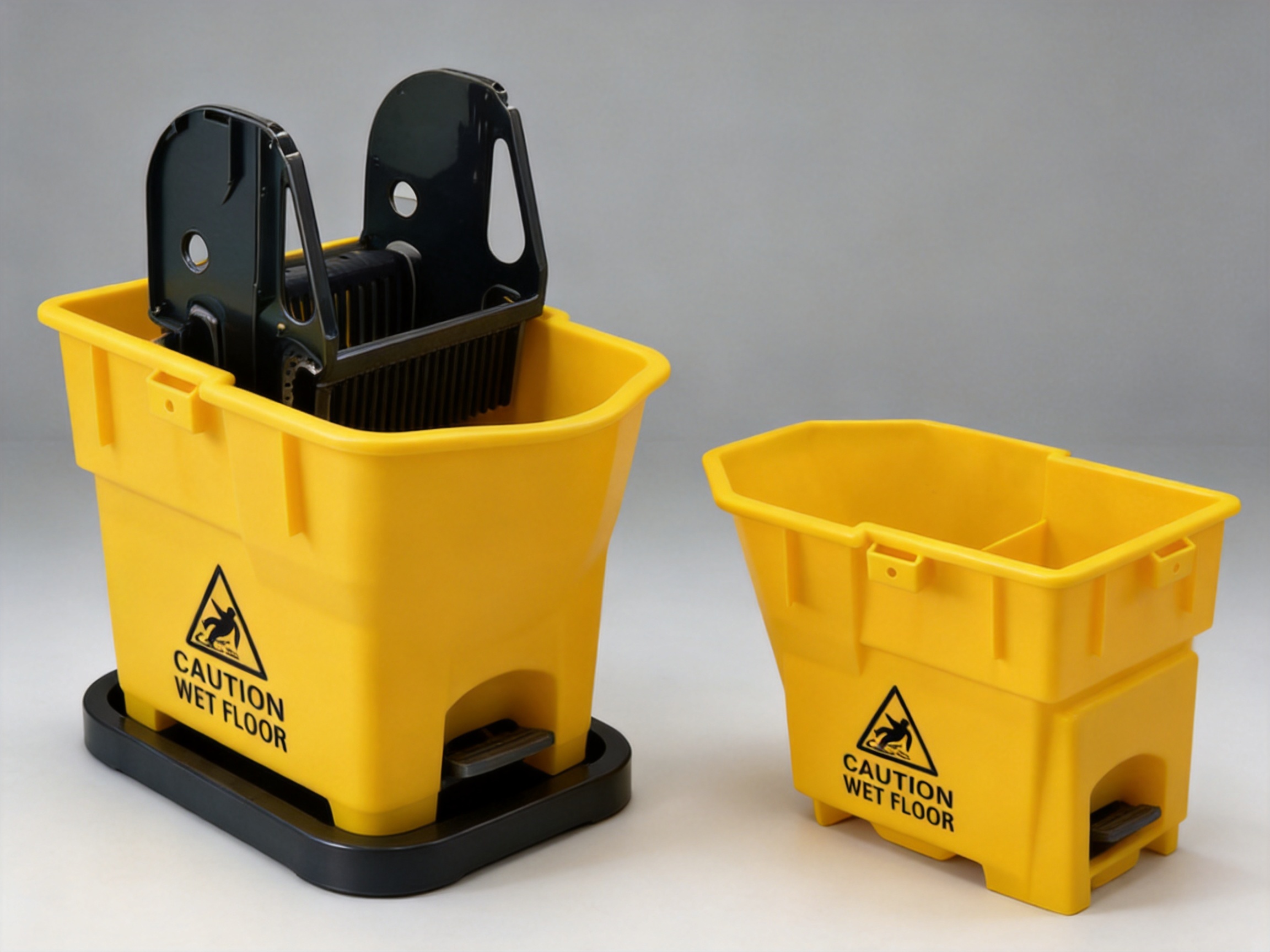
Quality Control and Production Reliability
Quality control begins with the design review and continues through material purchasing, machining, assembly, trial production, and final inspection. A professional mold manufacturing company must control both the technical details of the tool and the management processes that coordinate those details.
Incoming material control helps verify that the selected steel and purchased components are suitable for the intended mold. Machined components are checked against drawings and three-dimensional data. Critical dimensions may require additional inspection to confirm that the cavity and core will produce the required product geometry.
During assembly, technicians check the movement of the mold, the fit of inserts, the alignment of guide systems, and the operation of the ejection mechanism. Cooling lines are checked for leakage and flow continuity. The mold should open and close smoothly before it enters the final trial stage.
Trial parts are evaluated for visual and functional quality. Typical checks may include wall consistency, dimensions, warpage, sink marks, weld lines, flash, short shots, surface defects, handle-slot accuracy, and wringer assembly fit. The exact inspection plan can be adapted to the customer's quality standards.
Reliable documentation also supports production control. Mold drawings, component records, inspection information, trial results, and maintenance recommendations can help customers operate the tool more consistently. Clear technical communication is particularly important when the mold is exported and installed at a production facility in another country.
The company serves customers in Europe, the Middle East, Southeast Asia, and South America. Experience with international customers requires attention to different product standards, communication practices, packaging expectations, shipping arrangements, and installation conditions. Export capability is therefore not only a matter of transportation; it also requires coordinated technical and commercial support.
Advantages Compared with Basic or General-Purpose Molds
The principal advantage of a specialized mop bucket mold is its connection between product function and tooling design. A basic container mold may create a usable shape, but it may not address the repeated loads associated with wringing, carrying, pushing, and commercial cleaning.
The reinforced design supports a more durable product concept. Strengthened walls, stable corners, a supportive base, and suitable handle areas can help the finished bucket perform better under heavy water loads. The mold is designed around these functions from the beginning rather than treating reinforcement as an afterthought.
A second advantage is the ability to integrate or accommodate wringer structures. The bucket can be developed as part of a complete cleaning tool, which may reduce later design compromises. Properly planned attachment points and clearances can simplify assembly and improve the relationship between the bucket and wringer.
A third advantage is customization. Capacity and wringer structure can be adjusted according to customer requirements. This gives product developers greater flexibility when serving different markets. A compact household model, a medium commercial model, and a larger janitorial model may share a design philosophy while using different dimensions and accessories.
A fourth advantage is the choice of P20 or H13 mold steel. This allows the tooling solution to be aligned with production expectations and budget considerations. Customers can discuss expected output, product material, cycle conditions, and maintenance goals before the final steel plan is confirmed.
The one-cavity design may also provide practical benefits for large products. It can simplify mold filling analysis, reduce balancing complexity, and allow focused optimization of one product. For companies launching a new bucket design or producing a specialized item, this can be a suitable alternative to investing immediately in a multi-cavity arrangement.
Finally, the company provides integrated service from design and production to after-sales support. Customers do not need to coordinate every stage with separate suppliers. A unified technical team can maintain continuity between product geometry, mold construction, trial molding, and later service discussions.
Applications in Household and Commercial Cleaning
For household users, the mop bucket can support routine floor cleaning in kitchens, living areas, bathrooms, balconies, and other spaces. A practical handle, stable base, and suitable wringer can make cleaning tasks easier and less physically demanding. The PP construction also supports a lightweight product that can be stored and carried conveniently.
Commercial janitorial teams require products that can withstand frequent use. Office buildings, hotels, shopping centers, schools, medical facilities, restaurants, and public venues may use cleaning buckets throughout the day. A reinforced bucket design is better suited to repeated filling, movement, wringing, and emptying than a fragile container.
Floor cleaning tools often need to work with different mop types. The wringer structure can be adjusted to match the intended mop head, handle length, and water-removal method. Customers can define the desired configuration during the product development stage so that the mold supports the complete cleaning system.
The product may also be adapted for distribution through hardware stores, supermarkets, professional cleaning suppliers, e-commerce channels, and facility-management companies. Appearance, color, capacity, accessories, and packaging can be planned according to the target sales channel.
Because the mold supports customization, it can serve both branded and unbranded product programs. A manufacturer may use the same basic engineering approach for several product variations while changing selected dimensions, surface details, or wringer components. This can help create a coherent product family.
Customization and Product Development Support
Customization begins with a clear product brief. The customer should provide the expected capacity, overall dimensions, target weight, preferred material, color, wringer type, handle arrangement, packaging constraints, and intended use. More information at the beginning allows engineers to identify design conflicts earlier.
Capacity is one of the most important variables. Increasing capacity changes the bucket's height, width, wall loading, center of gravity, and handling requirements. A larger product may require stronger ribs, a more stable base, a redesigned handle, or changes to the wringer support. These effects should be evaluated together rather than separately.
The wringer can also be customized. Its size, position, drainage openings, connection method, and operating angle may vary. If the wringer is removable, the attachment and removal process should be considered. If it is permanently integrated, the surrounding structure should be designed for repeated pressure and cleaning.
Surface details can be adapted to support a specific visual identity. Customers may request smooth polished areas, textured surfaces, embossed markings, molded logos, or other appearance features. Such details should be included in the mold design before machining begins.
Product development may include design-for-manufacturing recommendations. Engineers can advise on draft angles, uniform wall transitions, rib proportions, gate positions, ejection areas, and tolerance expectations. These recommendations can improve moldability and reduce the risk of costly changes after production begins.
The company can support the project through design, mold manufacturing, testing, and after-sales communication. This integrated process is valuable for customers who require technical guidance or who are developing a new cleaning product without an existing mold design.
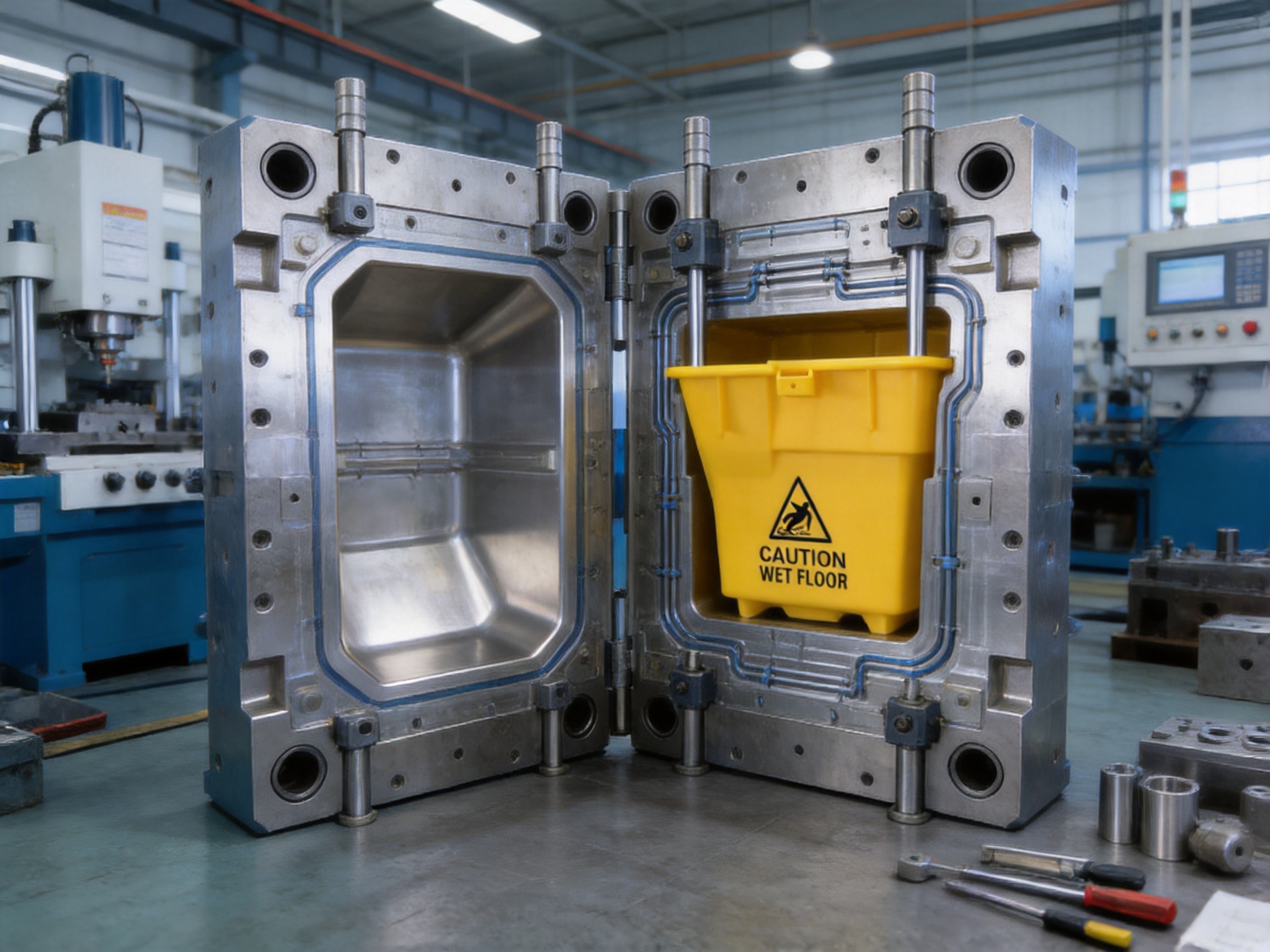
Maintenance Recommendations for Long Mold Life
A mold designed for 700,000 shots still requires regular maintenance. Preventive maintenance can help preserve product quality, reduce unplanned downtime, and extend the useful life of mold components.
After production, the mold should be cleaned to remove residual PP, dust, grease contamination, and deposits from vents or parting surfaces. Cooling channels should be monitored because scale or corrosion can reduce heat-transfer performance. The mold should be dried and protected properly when it will remain unused for an extended period.
Moving components such as guide pillars, bushings, sliders, ejector pins, and lifters should be inspected according to the operating schedule. Lubrication must be compatible with the mold environment and applied in the correct quantity. Excess lubricant can contaminate the product or collect dust.
The parting line should be checked for flash, dents, or foreign material. Even a small obstruction can prevent the mold from closing correctly and may damage the cavity or core. Operators should avoid using hard tools that could scratch precision surfaces.
Cooling hoses, connectors, and seals should be checked for leakage. Changes in cycle time, product warpage, or surface condition may indicate a cooling problem. Early investigation can prevent a minor issue from becoming a major production interruption.
Maintenance records should include shot count, cleaning dates, replaced components, observed wear, trial results, and corrective actions. These records provide useful information for predicting service needs and evaluating the remaining condition of the mold.
Why Choose an Experienced Plastic Mould Maker
Choosing a plastic mould maker involves more than comparing the initial tooling price. The quality of communication, design review, engineering judgment, machining control, testing procedure, and after-sales support can strongly influence the total cost of a project.
An experienced Plastic Molding Die Maker understands that the mold must be matched to the product, material, machine, production volume, and operating environment. The company must be able to identify risks before they become production problems. This is particularly important for large injection-molded parts with complex functional areas.
A reliable Plastic Moulding Die Maker should also understand the importance of dimensional control and repeatable production. The mold must be built accurately enough to maintain consistent product quality over its operating life. This requires coordinated design, machining, fitting, inspection, and trial molding.
As a Plastic Mould Maker and Molding Manufacturer, Haiquan focuses on precision injection molds for several major sectors. Its daily necessities experience is directly relevant to mop buckets and other household products, while its work in home appliances, automotive parts, and industrial equipment supports broader engineering capability.
The company's stated philosophy of “Quality First, Sustainable Development” emphasizes long-term product value rather than short-term production alone. Its professional design team and scientific production management system support the goal of providing integrated services from design and manufacturing to after-sales assistance.
For customers seeking injection plastic parts and custom tooling, this integrated approach can simplify supplier coordination. It also creates a clearer chain of responsibility when design changes, trial adjustments, or technical questions arise.
Environmental and Operational Considerations
Material efficiency is an important consideration in plastic product development. A reinforced design should provide the necessary strength without adding unnecessary material to every area of the bucket. Proper wall distribution, ribs, and local reinforcement can contribute to a more balanced product.
PP products can be designed for long service, and a durable bucket may reduce the need for frequent replacement. Longer product use can support better resource efficiency over the service life of the cleaning tool. Customers should select material grades and product structures according to the actual conditions of use.
Manufacturing efficiency also depends on cycle time, cooling performance, stable ejection, and reduced rejection rates. A well-designed mold can help reduce defects and improve the consistency of production. These benefits can contribute to lower material waste and more predictable manufacturing costs.
At the factory level, responsible production management includes maintaining equipment, controlling process parameters, organizing inspection procedures, and reducing avoidable rework. A scientific production system supports not only product quality but also more efficient use of energy, labor, and materials.
Environmental requirements differ between markets, so customers should confirm applicable regulations for the finished product, material additives, colorants, packaging, and recycling claims. The mold manufacturer can support tooling decisions, while the product manufacturer remains responsible for selecting compliant materials and managing finished-product requirements.
Ordering and Project Cooperation Process
A typical project starts with an inquiry and product brief. Customers can provide drawings, three-dimensional files, physical samples, sketches, or a description of the intended cleaning tool. If the product is still at the concept stage, the design team can review the proposed structure and identify areas requiring development.
The next step is technical evaluation. Engineers consider product dimensions, capacity, wall thickness, draft, parting line, gates, cooling, ejection, mold steel, cavity number, and expected output. They may recommend changes to improve moldability, product strength, or assembly performance.
After the design is confirmed, the mold structure and manufacturing plan are prepared. The customer can review key details before machining begins. This stage is important because late changes to the product may affect cavity construction, steel preparation, inserts, cooling channels, and delivery timing.
During production, machining and fitting are coordinated through the company's management system. Inspection is conducted at appropriate stages, and the tool is assembled before trial molding. Trial results are reviewed to determine whether further adjustments are required.
After approval, the mold is prepared for shipment and installation. Operating guidance, maintenance recommendations, and technical communication can help the customer begin production more smoothly. Continued after-sales support is useful when the mold is transferred to a new machine, used with a different PP grade, or operated under different cycle conditions.
Customers should discuss all major requirements early, including target output, machine specifications, product tolerance, color, packaging, testing standards, spare parts, and delivery expectations. Clear communication improves the likelihood that the finished mold will meet both technical and commercial objectives.
Questions and Answers
What product is this mold designed to manufacture?
The mold is designed for producing thickened plastic mop buckets and related cleaning tools. It is suitable for household cleaning buckets, commercial janitorial equipment, and floor cleaning applications.
Which plastic material is recommended?
PP, or polypropylene, is the specified product material. It is commonly used for cleaning products because it is lightweight, moisture-resistant, chemically resistant in many general-use conditions, and suitable for injection molding.
Can the mold include a wringer?
Yes. Wringer components and suitable support or mounting structures can be integrated into the mold design. The wringer structure can be adjusted according to the customer's product concept and intended application.
Can the bucket capacity be changed?
Yes. Capacity is listed as a customization option. Changing capacity may also require adjustments to the bucket dimensions, wall structure, base, handle, wringer, cooling system, and ejection design.
How many cavities does the mold have?
The listed configuration is one cavity. This arrangement is suitable for a large product format and allows focused optimization of filling, cooling, ejection, and dimensional stability.
What mold steels are available?
The listed mold steel options are P20 and H13. The appropriate selection depends on production volume, processing conditions, product requirements, maintenance expectations, and tooling budget.
What is the expected mold life?
The specified mold life is 700,000 shots. Actual performance depends on material, machine settings, maintenance, cooling-water quality, production conditions, and correct operation.
Can the handle slots be customized?
Handle slots and surrounding support structures can be reviewed during product development. Their position, size, shape, and reinforcement should be matched to the desired lifting method and expected load.
What makes this mold suitable for commercial cleaning?
The mold supports a reinforced bucket structure designed for heavy water loads, frequent handling, and the integration of wringer components. Its structure can be developed for more demanding use than a basic lightweight container.
Does the manufacturer provide design support?
Yes. The company provides integrated services covering design, mold production, testing, and after-sales support. Customers can discuss product geometry, capacity, wringer structure, material, and manufacturing requirements with the technical team.
Where does the manufacturer export its products?
The company serves customers in Europe, the Middle East, Southeast Asia, and South America. Its export experience supports communication and delivery for international mold projects.
Conclusion
The Thickened Plastic Mop Bucket Cleaning Tool Mould is a specialized solution for manufacturing durable PP cleaning buckets used in household and commercial environments. Its design supports reinforced bucket structures, stable bases, practical handle slots, and integrated or adjustable wringer components. These features help distinguish it from basic container tooling and make it more appropriate for demanding floor-cleaning applications.
The mold offers P20 and H13 steel options, a one-cavity configuration, and a specified service life of 700,000 shots. Its capacity and wringer structure can be customized, allowing customers to develop products for different markets and operating conditions. The combination of product-focused design and controlled mold manufacturing supports consistent production and practical long-term use.
Taizhou Huangyan Haiquan Plastic Mold Co., Ltd. strengthens the tooling solution through precision injection mold expertise, a professional design team, scientific production management, export experience, and integrated after-sales service. Its capabilities across daily necessities, home appliances, automotive parts, and industrial equipment provide a broad technical foundation for custom mold projects.
For buyers seeking a Plastic Molding Die Maker, Plastic Moulding Die Maker, Plastic Mould Maker, or experienced Molding Manufacturer, this mop bucket mold provides a practical starting point for reliable injection plastic parts. By combining suitable PP material, reinforced product geometry, appropriate steel selection, careful cooling and ejection design, and professional manufacturing support, the mold can help create cleaning equipment that is durable, functional, and ready for repeated use.
References
1. Injection Molding Design Guidelines, general principles for plastic part design, draft angles, wall thickness, ribs, gates, cooling, and ejection.
2. Plastics Materials Engineering References, information concerning polypropylene properties, processing behavior, chemical resistance, and product applications.
3. Mold Steel Selection Manuals, comparative guidance for P20, H13, and other injection mold steel options.
4. Industrial Mold Maintenance Practices, recommendations for cleaning, lubrication, cooling-system inspection, wear monitoring, and preventive maintenance.
5. Product Development and Design-for-Manufacturing Principles, methods for improving moldability, dimensional stability, production efficiency, and finished-product reliability.
Product: Thickened Plastic Mop Bucket Cleaning Tool Mould

For exclusive deals and latest offers, sign up by entering your email address below.
 +86-18657672567
 sales@tzhqmould.com
celin@tzhqmould.com
 No. 17 Houshi Road, Beicheng Industrial Zone, Huangyan District, Taizhou City, Zhejiang Province, China
Copyright © Taizhou Huangyan Haiquan Plastic Mold Co., Ltd. All Rights Reserved
Injection Plastic Mould Maker

