

Why Are More Global Buyers Reassessing Air Cooler Mould Suppliers Before Their Next Project?
Admin 2026-07-31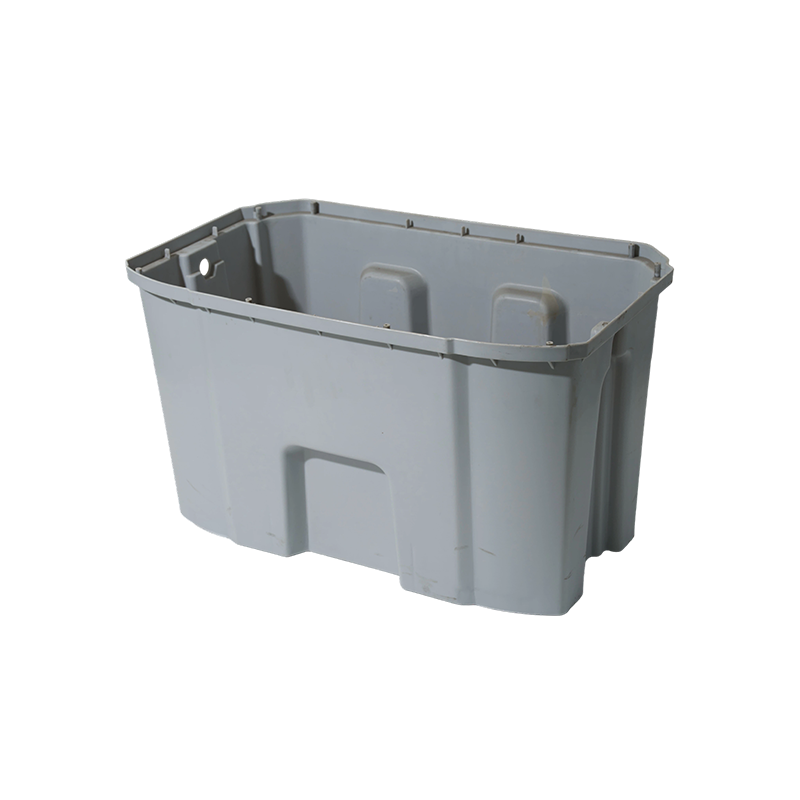
Today's Procurement Challenge Is No Longer About Tooling Cost Alone
Many injection mould projects begin with a competitive quotation but later encounter unexpected issues during production. Common concerns include inconsistent wall thickness, poor cooling efficiency, flashing, shrinkage, or lengthy maintenance intervals. These problems increase manufacturing costs far beyond the initial mould investment.
For air cooler components, dimensional consistency is especially important because housings, fan covers, water tanks, and structural frames often require accurate assembly. A well-designed mould helps reduce production interruptions while maintaining stable product quality throughout mass production.
As a manufacturer, we believe successful tooling starts with understanding the customer's production environment rather than simply manufacturing according to a CAD file.
Better Cooling Design Leads to Better Plastic Parts
Cooling system design has become one of the most discussed topics among product engineers and mould buyers. Faster cooling shortens cycle time, but balanced cooling is equally important for minimizing deformation.
When developing an air cooler mould, experienced engineering teams usually focus on:
- Optimizing cooling channel layout for uniform temperature distribution
- Reducing warpage on large plastic panels
- Improving gate position to achieve balanced material flow
- Designing efficient venting to minimize trapped gas
- Selecting suitable mould steel according to expected production volume
These engineering decisions directly influence mould longevity, production efficiency, and the appearance of finished plastic components.
Manufacturers Are Investing Earlier in Design Validation
One noticeable trend among international buyers is requesting Design for Manufacturing (DFM) reviews before tool production begins.
Rather than discovering issues during mould trials, buyers increasingly prefer to validate product structure, gate locations, draft angles, cooling layout, and potential sink marks during the engineering stage.
This collaborative process helps reduce design revisions later while shortening the overall project timeline. Early technical discussions also make communication between product designers and mould engineers much more efficient.
Material Selection Matters More Than Many Buyers Expect
Different air cooler components operate under different environmental conditions. Some require higher impact resistance, while others demand UV stability or improved dimensional stability in warm climates.
Selecting the appropriate mould steel and understanding the processing characteristics of PP, ABS, PC, or modified engineering plastics allows manufacturers to recommend practical tooling solutions instead of generic designs.
From our manufacturing experience, matching the mould design with the intended plastic material often produces more reliable long-term performance than simply increasing mould complexity.
Why Engineering Support Is Becoming a Key Supplier Advantage
Today's overseas buyers are looking beyond machining capacity. They expect mould suppliers to participate throughout the entire project lifecycle.
A dependable manufacturing partner typically provides:
- Product structure evaluation before tooling
- DFM analysis and mould flow recommendations
- Precision CNC machining and EDM processing
- Assembly and trial mould testing
- Dimensional inspection reports
- Technical support for mould maintenance and future modifications
This integrated approach helps customers reduce communication costs while improving project transparency from development through mass production.
Building Long-Term Value Instead of Short-Term Savings
In international manufacturing, replacing an underperforming mould often costs significantly more than investing in proper engineering at the beginning. Stable production, predictable maintenance schedules, and consistent part quality all contribute to lower total manufacturing costs over time.
As an experienced tooling manufacturer, we work closely with customers from initial design review through mould testing and production optimization. Every project is approached with practical engineering solutions, transparent communication, and manufacturing processes tailored to real production requirements. If your business is searching for dependable Molding Manufacturers capable of developing a precision Air Cooler Mould for long-term production, partnering with an experienced engineering team can help reduce project risk while supporting consistent manufacturing performance.
For exclusive deals and latest offers, sign up by entering your email address below.

 +86-18657672567
 sales@tzhqmould.com
celin@tzhqmould.com
 No. 17 Houshi Road, Beicheng Industrial Zone, Huangyan District, Taizhou City, Zhejiang Province, China
Copyright © Taizhou Huangyan Haiquan Plastic Mold Co., Ltd. All Rights Reserved
Injection Plastic Mould Maker

