

Custom PC Plastic Cup Injection Moulds in Various Sizes
Admin 2026-10-28
Plastic cups are simple-looking products, but producing them consistently at commercial scale requires carefully engineered tooling. A cup must be transparent or visually clean, dimensionally accurate, comfortable to hold, resistant to cracking, easy to stack, and efficient to manufacture. These requirements become even more demanding when the product uses polycarbonate (PC), Tritan, thin-wall construction, multiple capacities, or customized branding.
The Custom PC Plastic Cup Injection Mould in Various Sizes is designed to address these production challenges. Developed for reusable drinkware, catering products, restaurant beverage cups, juice containers, smoothie cups, outdoor drinkware, and travel applications, this mould combines high-polish steel, optimized hot-runner technology, balanced cooling, and precision cavity construction. The result is a tooling solution that supports stable injection manufacturing while helping producers achieve attractive surface quality and reliable part dimensions.
Manufactured by Taizhou Huangyan Haiquan Plastic Mold Co., Ltd., the mould is intended for customers that require more than a basic cavity and core set. It is a production-oriented system developed around optical clarity, repeatability, long service life, and practical customization. Cavity numbers, cup capacities, logos, wall thicknesses, and other product details can be adjusted according to the requirements of the finished cup and the available injection molding machine.
Why Plastic Cup Tooling Requires Precision Engineering
Plastic cup production is often associated with high output and straightforward geometry. However, the open-mouth structure, cylindrical or tapered walls, thin sections, rim design, base stability, and stacking requirements all influence mould performance. A small variation in wall thickness may affect transparency, strength, cooling time, shrinkage, and the ability of cups to nest correctly.
For transparent cups, visual defects are especially important. Flow marks, weld lines, air bubbles, hesitation marks, gate blush, sink marks, and uneven gloss can make an otherwise functional product unacceptable for the market. These defects may be caused by material behavior, mould temperature, injection speed, venting, runner balance, gate location, or cooling imbalance. The tooling must therefore be designed as an integrated system rather than as a simple negative shape of the product.
PC and Tritan also require appropriate processing conditions. PC provides high impact resistance and a clear appearance, while Tritan is frequently selected when a manufacturer wants a transparent, durable material with a different performance profile. Both materials benefit from controlled filling, suitable hot-runner management, proper venting, and consistent mould temperature. A mould that performs well with a thick commodity cup may not be suitable for a thin-wall transparent design.
The Custom PC Plastic Cup Injection Mould is developed with these factors in mind. Its construction focuses on controlled filling, smooth product surfaces, even heat transfer, dimensional consistency, and a long operating life. This allows the manufacturer to pursue both aesthetic quality and manufacturing efficiency.
Core Advantages of the Custom Plastic Cup Mould
High-Polish Steel for Optical Surface Quality
The mould uses S136 or NAK80 steel, depending on the project requirements. These steels are widely used in precision plastic tooling where surface finish, dimensional stability, machinability, and service performance are important. For a clear cup, the mould surface has a direct influence on the appearance of the final product. A well-prepared and highly polished cavity can help produce a glossy, clean surface that allows the transparency of PC or Tritan to be fully appreciated.
Mirror polishing is particularly valuable on the inner and outer surfaces of a reusable cup. A smooth surface reduces the visibility of tooling marks and supports a premium appearance. It can also simplify cleaning of the finished drinkware because fewer surface irregularities are present to retain residue. Depending on the customer’s product concept, selected areas may also receive a texture, logo treatment, or other finish instead of a completely polished surface.
Compared with basic mould steels or poorly finished tooling, S136 and NAK80 provide a stronger foundation for repeated production and controlled surface quality. The specific material selection can be reviewed according to the number of cavities, expected production volume, product resin, polishing requirements, and maintenance plan.
Hot Runner Design for Stable Material Distribution
The mould uses a hot-runner system to support efficient and balanced injection. In a multi-cavity cup mould, the runner system must deliver the molten plastic to each cavity with similar pressure and temperature conditions. If one cavity fills earlier than another, the resulting cups may differ in weight, clarity, dimensions, or internal stress.
A hot runner can reduce or eliminate the need for a large cold runner, helping to lower material waste and reduce the amount of runner separation required after molding. This is particularly useful in high-volume production where small savings per cycle can become significant over time. Hot-runner technology also supports a more direct approach to gate placement and can contribute to improved cycle consistency.
For transparent products, gate design requires special attention. The gate must support adequate filling without creating excessive marks, localized stress, or visible flow disturbances. The mould’s special gating design is intended to help prevent flow marks and air bubbles during injection. Final gate configuration remains dependent on cup geometry, material grade, wall thickness, machine conditions, and customer expectations.
Uniform Cooling for Dimensional Consistency
Cooling is one of the most important factors in plastic cup moulding. After injection, the hot material must solidify in a controlled manner. If one area cools much faster than another, the product may warp, shrink unevenly, lose roundness, or develop inconsistent wall dimensions. These issues can become especially problematic when cups must stack tightly and release smoothly from one another.
The mould incorporates uniform cooling channels to promote balanced heat removal across the cavities. Proper cooling-channel placement helps the mould reach a stable thermal condition and supports repeatable dimensions from shot to shot. It can also improve cycle predictability by reducing temperature differences between the core and cavity sides.
For stackable cups, dimensional consistency is not only a matter of appearance. The rim diameter, taper, base diameter, and sidewall angle must work together so that cups nest without excessive friction. If the cup is too tight, operators may have difficulty separating products. If it is too loose, the stack may become unstable during packaging and transport. Consistent cooling contributes to the dimensional control needed for dependable stacking.
Support for Thin-Wall Injection
Many modern cup products aim to use less material without sacrificing strength or user comfort. Thin-wall injection can reduce resin consumption, lower product weight, and shorten cooling time. However, it also reduces the flow margin available during filling. The plastic must travel through a narrow section before it freezes, making injection speed, pressure, melt temperature, venting, and gate design more critical.
The mould is designed to support thin-wall cup production while maintaining structural performance. Its filling and cooling features help manufacturers pursue a lighter product without treating material reduction as the only objective. A successful thin-wall design must retain a stable rim, sufficient base strength, resistance to handling loads, and an acceptable tactile feel.
Thin-wall capability also provides flexibility for different market segments. A manufacturer may produce lightweight disposable-style reusable cups, stronger restaurant tumblers, travel cups, or promotional drinkware using different wall thicknesses and resin specifications. The final result depends on product design and processing conditions, but the mould platform is suited to this range of production goals.
Materials and Performance Considerations
Polycarbonate Applications
PC is commonly selected for reusable drinkware where toughness, transparency, and resistance to everyday handling are important. It can be used for cups supplied to restaurants, beverage service businesses, catering operations, outdoor events, and household consumers. Its strength makes it suitable for products that may be washed, transported, stacked, and reused repeatedly.
PC processing requires appropriate drying and controlled molding conditions. Moisture in the resin can contribute to splay, bubbles, reduced appearance, or other defects. The injection molding machine, material dryer, mould temperature, and holding profile should therefore be managed as part of the complete production system.
The polished cavity surfaces and controlled filling approach of the mould are intended to support the clear appearance associated with PC drinkware. Product designers should still validate the selected resin grade, colorant, wall thickness, and processing window before full-scale production.
Tritan and Alternative Transparent Resins
The mould also supports Tritan applications. Tritan is used in a range of reusable products where manufacturers want a transparent appearance and durable everyday performance. It may be selected for travel drinkware, family cups, sports-related products, and premium reusable containers.
Different grades of Tritan may have different processing recommendations. Mold temperature, drying conditions, injection speed, holding pressure, and cooling time should be established through trials with the selected resin. The same mould can be adapted to different materials, but process parameters should never be transferred without validation.
Material Choice and Product Design
Material selection should be evaluated together with the product’s intended use. A cup for cold beverages may have different performance requirements from a cup used in outdoor environments, commercial catering, or repeated washing. The design team should consider impact resistance, transparency, temperature exposure, chemical contact, cleaning conditions, and regulatory requirements applicable to the destination market.
Haiquan’s tooling service can support customers during the design and production stages. By reviewing product geometry, cavity layout, gating, cooling, and material requirements together, the project can avoid common problems caused by treating product design and mould design as separate activities.
| Item | Specification or Capability | Production Value |
| Mould steel | S136 / NAK80 | Supports precision, polishing, and repeated production |
| Product material | PC / Tritan | Suitable for transparent and durable drinkware |
| Runner system | Hot runner | Supports balanced filling and reduced runner waste |
| Cavity range | 2–8 cavities | Allows output to match demand and machine capacity |
| Surface finish | Mirror polish | Promotes glossy and visually clean cup surfaces |
| Service life | Up to 1,000,000 shots | Supports long-term high-volume manufacturing |
| Customization | Capacity, logos, cavity count, geometry | Adapts the tooling to customer product plans |
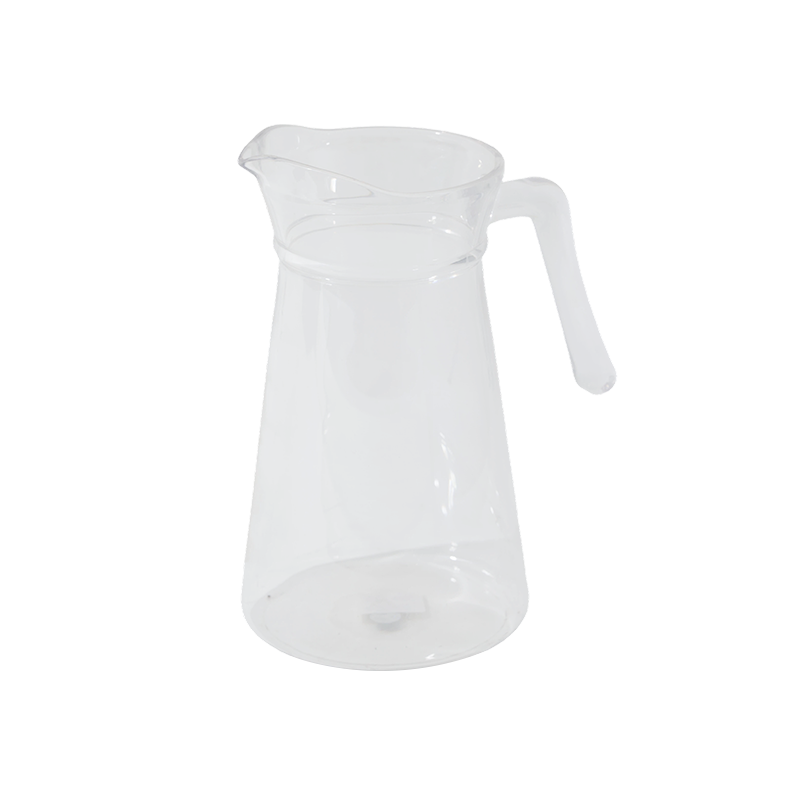
Custom PC Plastic Cup Injection Mould in Various Sizes
Flexible Cavity Configurations for Different Production Volumes
The mould can be configured with two to eight cavities. This range gives manufacturers flexibility when balancing initial tooling investment, output requirements, machine capacity, and product variety. A two-cavity configuration may be suitable for a developing product line, moderate demand, or a production site with a smaller injection molding machine. Higher cavity counts can support larger orders and reduce the number of cycles required to reach a daily production target.
Multi-cavity tooling must be carefully balanced. Each cavity should receive a stable and comparable material flow, and each product should maintain the same wall thickness and visual appearance. A mould that has a high cavity count but poor balance may create more quality problems than a lower-cavity tool with better control. The objective is therefore not simply to maximize the number of cavities; it is to achieve a practical combination of output, consistency, maintainability, and cost efficiency.
The cavity configuration may also be reviewed in relation to cup size. A large-capacity cup can require more filling volume, greater clamping force, and different cooling behavior than a smaller cup. Machine selection and mould design should be evaluated together to ensure that the production line can operate within a stable process window.
Customization Options for Commercial Drinkware
Different Cup Capacities
Customers can adjust the cup capacity according to their target market. Small cups may be used for samples, children’s beverages, espresso-based drinks, desserts, or promotional applications. Medium and large cups may be intended for water, juice, smoothies, soft drinks, iced beverages, or outdoor use.
Capacity changes affect the cup height, diameter, taper, base structure, wall thickness, and total shot volume. These changes must be incorporated into the mould design rather than treated as a minor dimensional adjustment. A well-engineered customization process helps preserve release performance, stacking behavior, appearance, and structural strength.
Surface Logos and Branding Features
Logos can be integrated into the mould through engraved or raised details, depending on the product concept. A logo may be placed on the sidewall, base, or another visible area. The size, depth, orientation, and location should be selected carefully, especially for transparent cups where visual distortion or localized stress could affect the appearance.
A surface logo can provide a permanent identification method without requiring a separate label. It may be used for restaurant branding, promotional campaigns, event merchandise, retail packaging, or product differentiation. The mould design team can review the artwork and recommend suitable dimensions for clear reproduction in the selected material.
Product Geometry and Functional Details
Other customizable features may include grip contours, reinforced rims, base rings, stacking ribs, measurement marks, texture zones, and special release angles. Each feature influences filling, cooling, shrinkage, ejection, and surface quality. Functional details should be designed with enough draft and suitable transitions to avoid unnecessary stress during demolding.
For a reusable cup, the rim deserves particular attention. It must be comfortable to drink from, sufficiently strong for repeated handling, and dimensionally stable after molding. The base should provide stability on a table while remaining compatible with nesting or packaging requirements. These details can be refined during the design review before steel machining begins.
Advanced Manufacturing Process at Haiquan Mould
Taizhou Huangyan Haiquan Plastic Mold Co., Ltd. specializes in the research, development, and manufacture of precision injection moulds. The company serves daily necessities, home appliances, automotive parts, and industrial equipment. This sector experience provides a broad understanding of tooling structures, material behavior, production requirements, and quality control.
The company’s manufacturing approach covers design, production, testing, and after-sales support. A professional design team and a scientific production management system are used to organize the project from the initial product concept through to the completed mould. This integrated structure helps maintain communication between product development, engineering, machining, assembly, and trial production.
Product and Mould Design Review
The process begins with a review of the cup design and production objectives. Engineers consider product dimensions, material, capacity, wall thickness, draft angles, logo features, expected output, injection machine information, cavity requirements, and surface finish. For a transparent cup, the review also considers how the gate, weld lines, parting line, and ejection marks may appear on the finished product.
Design review is an important stage because changes are generally easier and less expensive before steel is cut. The engineering team can identify areas that may cause filling hesitation, difficult ejection, uneven cooling, or deformation. The result is a mould concept that is better aligned with the product’s functional and commercial requirements.
Flow, Gating, and Cooling Planning
The filling system is planned around material flow and cavity balance. The location and type of gate can influence the direction of flow, the position of weld lines, the appearance of the cup, and the effort required for trimming or finishing. Hot-runner layout and cavity arrangement are considered together to help provide consistent filling across all cavities.
Cooling-channel planning is similarly important. The channels must remove heat from the core and cavity in a balanced manner without interfering with ejector components, inserts, or structural elements. For cup moulds, thermal management around the sidewall, rim, base, and core can have a direct effect on roundness and cycle time.
Precision Machining and Polishing
After design approval, the mould components are machined according to the required tolerances. Core and cavity surfaces are prepared for the selected finish, with special attention given to the areas that form the visible cup surfaces. The polishing process is carried out to achieve the mirror finish required for clear, glossy products.
Precision machining also supports accurate alignment between mould halves and consistent product dimensions. Proper fitting of inserts, slides where required, ejector components, and cooling elements helps reduce the risk of leakage, flash, uneven wear, or difficult operation.
Mould Assembly and Trial Validation
During assembly, individual components are fitted and checked as a complete system. The team verifies cavity alignment, movement, cooling connections, hot-runner components, ejection action, and safety-related operating details. Trial molding is then used to evaluate filling, appearance, dimensions, demolding, and cycle behavior.
Sampling is especially valuable for transparent cup tooling. A sample can reveal flow lines, air traps, gate marks, uneven gloss, warpage, or differences between cavities that may not be obvious from drawings alone. Adjustments can then be made to the mould or process parameters before final production approval.
Final validation should include measurements of critical dimensions, visual inspection under suitable lighting, stackability tests, weight comparison between cavities, and practical ejection checks. Depending on the customer’s requirements, additional tests may be performed for leakage, impact resistance, repeated washing, or other application-specific conditions.
After-Sales Support and Production Assistance
A mould is a long-term production asset, so support after delivery is an important part of the tooling relationship. Operating parameters, maintenance procedures, spare-part requirements, and troubleshooting information can help the customer keep the mould in stable condition.
Haiquan provides integrated services from design and manufacturing to after-sales support. Its export experience in Europe, the Middle East, Southeast Asia, and South America has helped the company work with customers who have different technical specifications, packaging expectations, production volumes, and communication requirements.
Advantages Compared with Basic Competitor Tooling
Designed Around Transparency Rather Than Only Shape
A basic cup mould may reproduce the external shape of the product but fail to address the optical requirements of PC or Tritan. The tooling described here places stronger emphasis on polished surfaces, controlled gating, and stable cooling. These features are important when customers judge the product by clarity, gloss, and the absence of visible molding defects.
This focus gives the mould an advantage over tooling that is designed primarily for low initial cost. A lower-cost mould may appear attractive during quotation, but inconsistent surfaces, difficult processing, and high rejection rates can increase the total cost of ownership. Tooling should be evaluated according to its production performance, maintenance requirements, and expected service life rather than purchase price alone.
Balanced Production Efficiency
The hot-runner system, multi-cavity options, and cooling layout are designed to support efficient production. Material waste can be reduced when a cold runner is minimized, while higher cavity counts can increase output per cycle. At the same time, the design retains flexibility for customers who do not yet require a high-output configuration.
Competitor tooling may offer only a fixed cavity count or a standard gate arrangement. A configurable approach gives the customer more control over output planning. The right solution can be matched to demand instead of forcing every project into the same mould structure.
Long-Term Tooling Value
With a stated service life of up to 1,000,000 shots, the mould is positioned for sustained production. Actual life depends on resin type, processing conditions, maintenance, cycle settings, cooling-water quality, cleaning procedures, and operating discipline. Nevertheless, the use of suitable mould steel and robust construction supports a long-term manufacturing strategy.
For a high-volume beverage product, mould life has a direct influence on production continuity. A mould that requires frequent major repairs can cause delivery delays, emergency tooling costs, and product inconsistency. Long-life construction helps manufacturers plan production with greater confidence.
Practical Customization Instead of One-Size-Fits-All Design
The ability to customize capacity, cavity number, and logo features allows the mould to be aligned with a specific product program. This is particularly valuable for customers serving multiple beverage categories or selling drinkware under different brands and distribution channels.
A customized mould can also support future product development. Once the engineering team understands the customer’s preferred machine, material, cycle targets, and quality standards, later projects may be developed more efficiently. This creates a stronger basis for a continuing tooling partnership.
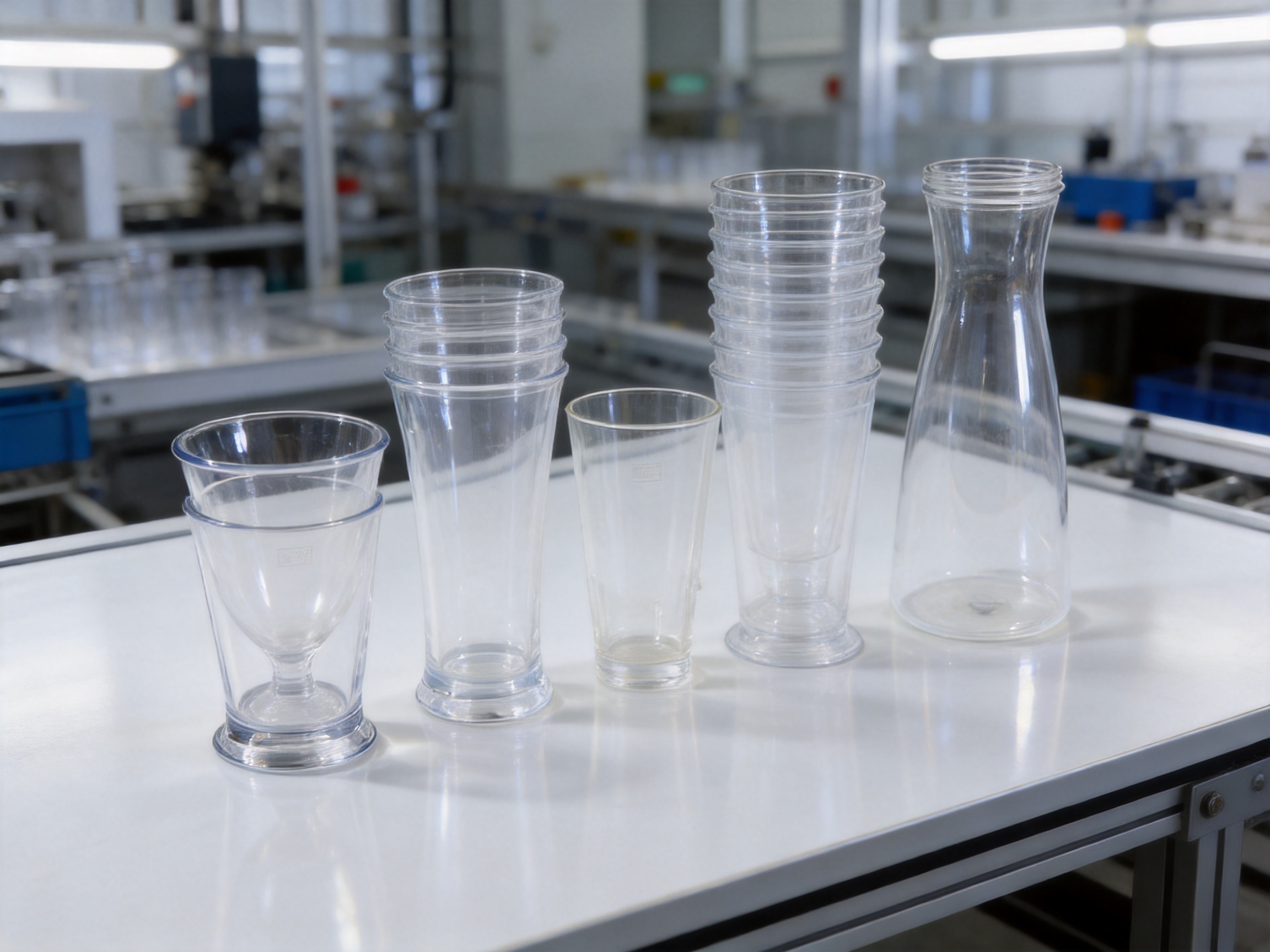
Production Workflow for High-Quality Plastic Cups
Successful production depends on the interaction between the mould, injection machine, resin, and operating parameters. Even a well-designed mould must be used with an appropriate process window. The following workflow can help manufacturers organize production trials and routine operation.
Material Preparation
PC and other transparent engineering resins should be stored and dried according to the material supplier’s recommendations. Moisture control is critical because wet resin can produce bubbles, splay, haze, and reduced mechanical performance. The drying system should be checked regularly, and operators should avoid leaving dried material exposed to humid air for extended periods.
Machine and Mould Setup
The injection molding machine must provide adequate clamping force, injection pressure, shot capacity, and control precision. The mould should be installed with secure connections for cooling water, hot-runner power, temperature control, and ejection. Before production begins, the operator should verify that all circuits are correctly identified and that the mould opens and closes smoothly at low speed.
Filling and Holding Control
Injection speed should be set to fill the cup effectively without creating excessive shear, air entrapment, or visible flow disturbances. The holding stage must provide enough pressure to compensate for material shrinkage while avoiding overpacking, deformation, or excessive internal stress.
Transparent products often require a balanced approach. An overly slow fill may allow the front to freeze prematurely and create hesitation marks, while an overly aggressive fill may increase stress or make air evacuation more difficult. Process trials should evaluate the entire filling profile rather than relying on one fixed speed setting.
Cooling and Demolding
Cooling time should be long enough for the cup to maintain its shape after ejection. Removing the part too early can cause distortion, ovality, or stacking problems. Excessive cooling time, however, can reduce productivity without providing a meaningful quality benefit.
The mould’s uniform cooling channels are intended to support a stable and repeatable thermal cycle. Operators should monitor cooling-water temperature, flow rate, and circuit performance. If one circuit becomes blocked or restricted, the resulting temperature imbalance may appear as inconsistent dimensions or warpage in only some cavities.
Inspection and Process Feedback
Routine inspection should include visual checks for transparency, gloss, flow marks, bubbles, gate appearance, flash, and scratches. Dimensional checks may include rim diameter, height, base diameter, wall thickness, and nesting performance. Product weight should also be compared between cavities to identify filling imbalance.
Inspection data should be used as process feedback rather than only as a final acceptance step. If a defect begins to appear, identifying its relationship to material drying, mould temperature, cooling balance, or injection settings can prevent large batches of nonconforming products.
Maintenance Recommendations for Long Service Life
Regular maintenance protects both product quality and mould investment. After production, the mould should be cleaned according to the material and surface-finish requirements. Transparent-product tooling requires care because scratches, corrosion, and residue can become visible on the cup surface.
Cooling channels should be monitored for scale, rust, contamination, or reduced flow. Water quality has a direct effect on thermal performance. Where appropriate, the production team should establish a schedule for flushing or treating cooling circuits.
Hot-runner components should be checked for temperature stability, leakage, electrical connection condition, and gate performance. Unusual temperature deviations or changes in pressure may indicate a developing problem that should be investigated before it affects multiple cavities.
Ejector pins, guide components, sliders, and moving mechanisms should be inspected and lubricated with suitable products. Excessive or incorrect lubrication can contaminate visible surfaces, so maintenance materials should be selected carefully. The mould should be stored in a dry and protected environment when not in use.
Keeping production and maintenance records can help estimate wear and plan replacement parts. Shot counts, repair history, polishing work, dimensional measurements, and process changes should be recorded. A preventative approach is generally more economical than waiting for a failure during a critical production order.
Applications for the Finished Plastic Cups
Reusable Drink Cups
Reusable cups can be supplied for homes, offices, schools, events, travel, and hospitality environments. PC and Tritan provide options for products that need to combine attractive transparency with resistance to everyday handling. Customized logos and capacities can help manufacturers position the cups for retail or institutional use.
Restaurant and Catering Beverage Cups
Restaurants, cafés, catering businesses, and food-service operators often need cups that are stackable, easy to handle, visually appealing, and capable of surviving repeated use. Consistent dimensions help with storage and service efficiency, while a polished surface supports a clean and professional presentation.
Juice and Smoothie Cups
Clear cups are useful for displaying the color and texture of juices, smoothies, shakes, and other beverages. A glossy transparent surface can enhance product presentation. Capacity and rim design can be adjusted according to serving size and lid compatibility.
Outdoor and Travel Drinkware
Outdoor and travel products may require a balance of strength, light weight, stackability, and portability. Thin-wall capability can help reduce product weight, while suitable geometry can improve grip and storage. Product designers can include logos, measurement marks, or reinforced areas for specific use cases.
Quality and Commercial Benefits
The main commercial benefit of a reliable cup mould is production consistency. When every cavity produces cups with similar weight, dimensions, clarity, and gloss, downstream operations become easier. Packaging, stacking, labeling, lid fitting, and customer inspection can all be performed with fewer interruptions.
Material efficiency is another important benefit. Thin-wall injection and hot-runner technology can reduce resin consumption and runner waste when the process is properly optimized. Lower material usage can improve the economics of large production runs, although the final savings must be verified through actual product trials and cycle data.
Reduced rejection is equally important. A visually defective clear cup may be difficult to rework or recycle within the same production process. Stable gating, polished surfaces, and uniform cooling can help manufacturers control the causes of common appearance defects. Better first-pass yield supports more predictable delivery schedules.
Long service life also contributes to return on investment. The cost of a mould should be considered over its planned production volume. A mould that produces acceptable cups for hundreds of thousands of cycles can offer greater value than a cheaper tool that requires early replacement or repeated corrective work.
Project Planning and Customer Cooperation
Customers preparing a new cup mould project should provide as much information as possible at the beginning. Useful information includes the 3D product file, 2D drawings, material grade, target capacity, annual volume, injection machine model, preferred cavity count, logo artwork, surface-finish requirements, and packaging method.
It is also helpful to identify quality priorities clearly. Some projects may place the highest importance on optical clarity, while others may focus on weight reduction, cycle time, impact performance, or a special visual texture. Defining these priorities allows the mould structure and trial process to be organized around measurable objectives.
Communication during sampling is especially important. Feedback should distinguish between mould-related issues and processing-related issues. For example, a flow mark may result from gate design, injection speed, resin moisture, or mould temperature. A cooperative review between the customer and mould maker can identify the most effective corrective action.
Haiquan’s integrated approach is intended to support this type of cooperation. From design and manufacturing to after-sales service, the company can help customers develop tooling that reflects the product’s commercial purpose rather than simply reproducing a drawing.
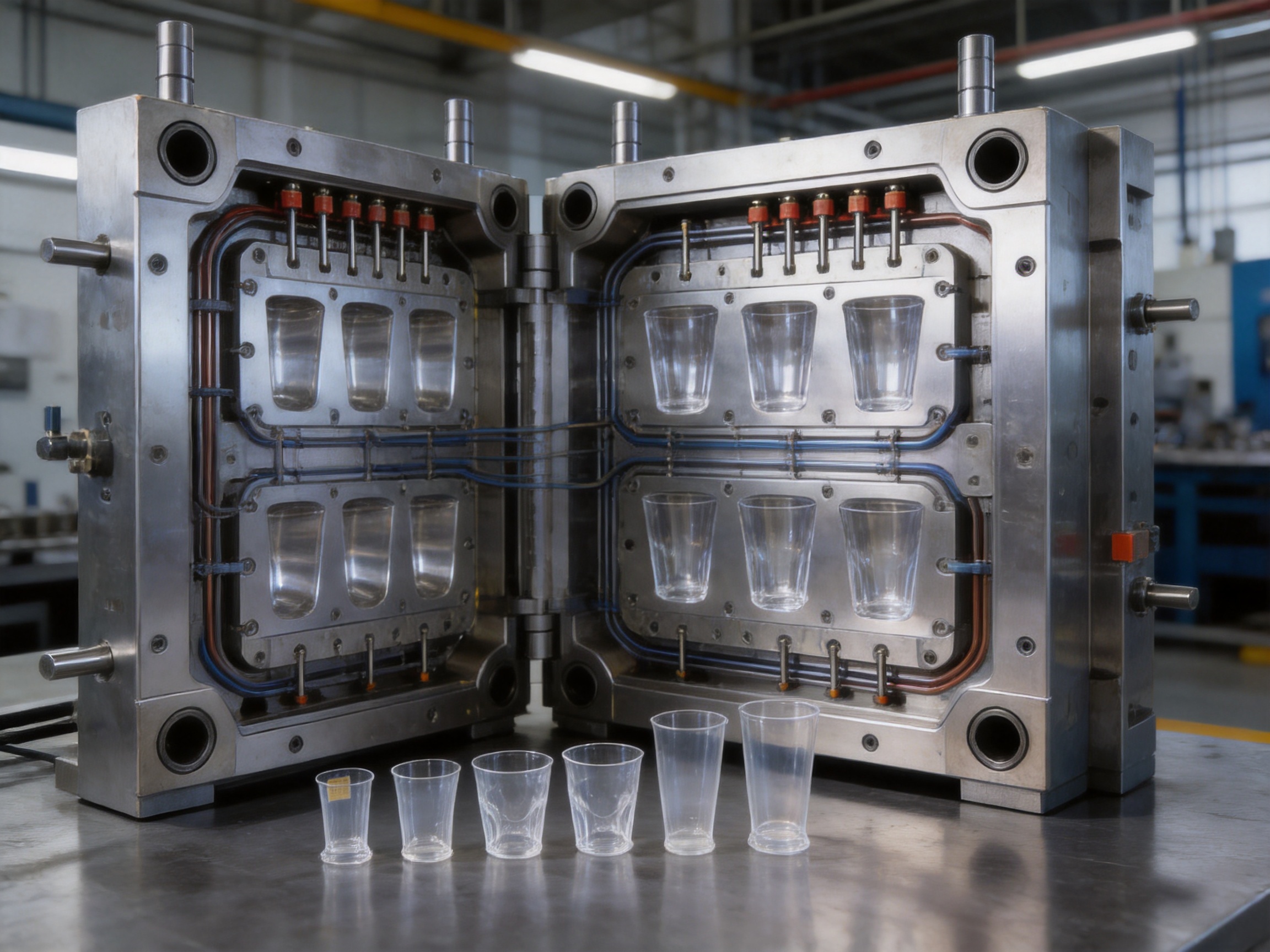
Frequently Asked Questions
What materials can be used with this plastic cup mould?
The mould is specified for PC and Tritan. The exact grade should be selected according to the required transparency, impact performance, temperature exposure, cleaning conditions, and application requirements. Processing parameters must be established for the chosen material.
How many cavities are available?
The mould supports configurations from two to eight cavities. The appropriate number depends on the required output, cup size, injection machine capacity, production budget, and desired balance between investment and productivity.
Can the cup capacity be customized?
Yes. Cup capacity, height, diameter, taper, wall thickness, rim structure, and base details can be developed according to customer specifications. Changes should be reviewed during the design stage because they affect filling, cooling, ejection, and stacking behavior.
Can a company logo be added to the mould?
Yes. Surface logos and other identification features can be incorporated into the product design. The final logo size, depth, location, and orientation should be reviewed to ensure suitable appearance and reliable molding.
Is the mould suitable for thin-wall cups?
The mould is designed to support thin-wall injection. Thin-wall production requires suitable resin preparation, machine capability, injection speed, pressure, mould temperature, venting, and cooling conditions. Product trials are necessary to confirm the final wall thickness and performance.
What surface finish is available?
The standard surface finish is mirror polish. This finish is intended to support glossy and visually clean surfaces for transparent cups. Other localized finishes may be considered if the product design requires texture, grip areas, or special visual effects.
What is the expected mould life?
The stated mould life is up to 1,000,000 shots. Actual service life depends on material selection, production conditions, maintenance, cooling-water quality, operating practices, and repair history.
Why is a hot runner useful for cup production?
A hot runner can support balanced filling, reduce cold-runner material waste, and provide more direct control of gate locations. These benefits are valuable in multi-cavity production and in applications where appearance and material efficiency are important.
How does cooling affect cup quality?
Cooling affects shrinkage, roundness, wall dimensions, cycle time, and stacking performance. Uniform cooling helps reduce differences between cavities and supports more stable product dimensions.
What information should be supplied for a quotation?
Customers should provide the product drawing or 3D file, material, cup capacity, expected production volume, cavity preference, injection machine details, logo requirements, surface finish, and delivery expectations. More complete information allows the mould design and quotation to be prepared more accurately.
Does the company provide support after mould delivery?
Haiquan provides integrated services covering design, production, and after-sales support. Customers can discuss operating conditions, maintenance, sampling results, and production-related issues with the technical team.
Conclusion
The Custom PC Plastic Cup Injection Mould in Various Sizes is developed for manufacturers that need dependable, attractive, and efficient tooling for transparent reusable drinkware. Its combination of S136 or NAK80 steel, mirror-polished surfaces, hot-runner injection, balanced cooling, two-to-eight cavity flexibility, and thin-wall capability provides a strong foundation for commercial cup production.
Compared with basic tooling that focuses only on reproducing product geometry, this mould is designed around the complete manufacturing process. Filling behavior, optical appearance, heat management, dimensional control, stacking, maintenance, and long-term production value are considered together. The ability to customize capacity, cavity count, logos, and other design details further enables the mould to match specific market requirements.
Taizhou Huangyan Haiquan Plastic Mold Co., Ltd. brings experience in precision injection mould development across daily necessities, home appliances, automotive parts, and industrial equipment. Its design, machining, assembly, trial, and after-sales capabilities support customers from the early product concept through to repeat production. For businesses seeking a reliable mould manufacturing partner for PC or Tritan cups, this tooling solution offers a practical combination of quality, flexibility, efficiency, and long-term value.
References
1. Product specification information supplied for the Custom PC Plastic Cup Injection Mould in Various Sizes.
2. Injection Molding Handbook, general principles of thermoplastic processing, mould design, cooling, and process control.
3. Engineering Plastics Processing Guidelines, general recommendations for polycarbonate and transparent copolyester molding.
4. Practical Mould Engineering Reference, guidance on hot runners, cavity balancing, polishing, ejection, and preventive maintenance.
5. General manufacturing quality principles for precision plastic injection moulds and reusable drinkware production.
Product: Custom PC Plastic Cup Injection Mould in Various Sizes

For exclusive deals and latest offers, sign up by entering your email address below.












 +86-18657672567
 sales@tzhqmould.com
celin@tzhqmould.com
 No. 17 Houshi Road, Beicheng Industrial Zone, Huangyan District, Taizhou City, Zhejiang Province, China
Copyright © Taizhou Huangyan Haiquan Plastic Mold Co., Ltd. All Rights Reserved
Injection Plastic Mould Maker

