

Round Airtight Plastic Lunch Bowl Injection Mould for Reliable Food Container Production
Admin 2026-10-26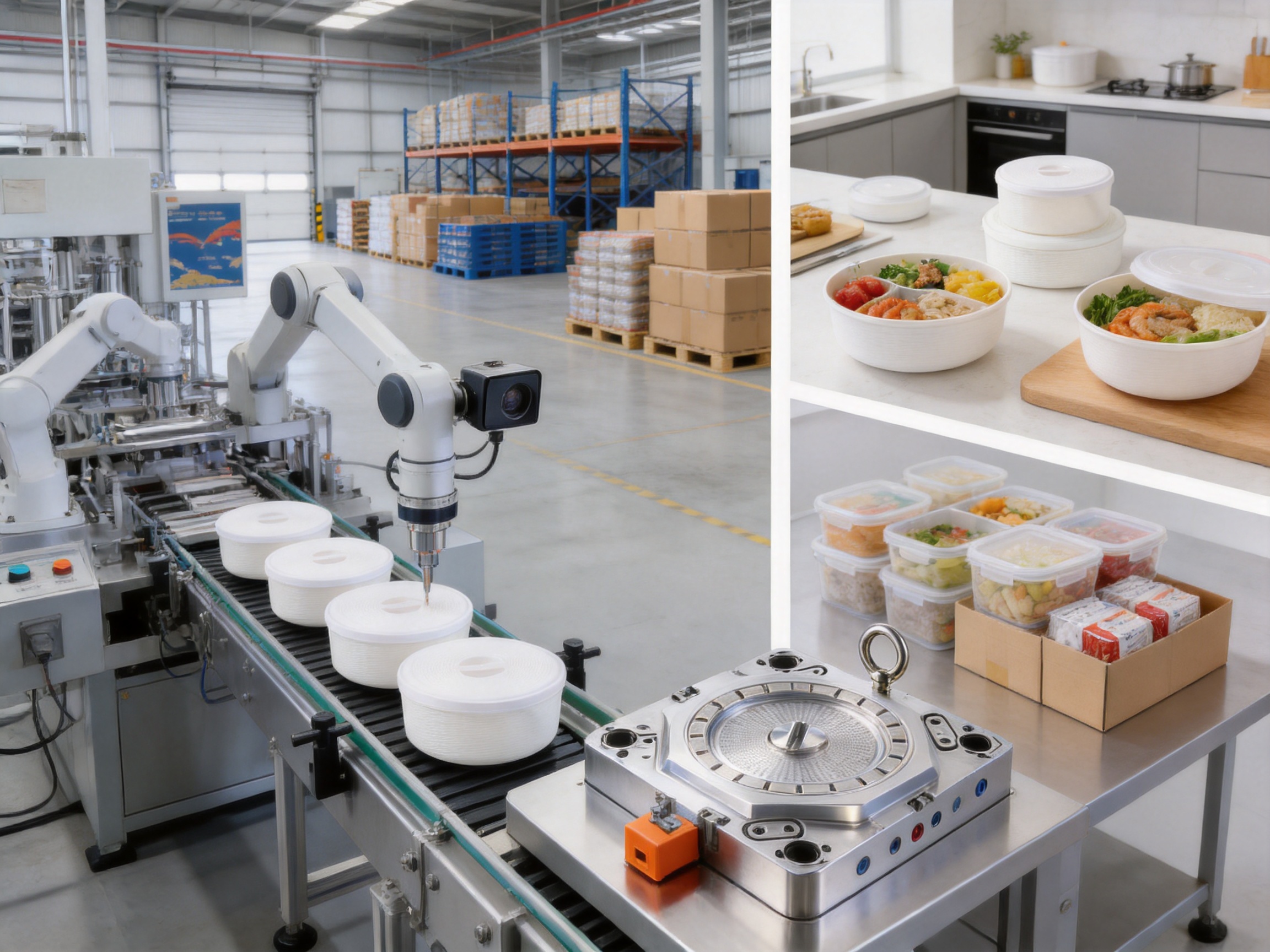
The Round Airtight Plastic Lunch Bowl Injection Mould is engineered for manufacturers that require consistent, hygienic, and high-performance food container production. It is designed to produce round plastic lunch bowls with accurately matched lids, dependable sealing performance, attractive surface quality, and stable dimensional control. The mould is suitable for meal preparation containers, takeaway packaging, lunch storage products, reusable food bowls, and other daily-use plastic containers.
As consumer demand for convenient food storage continues to grow, manufacturers are under increasing pressure to produce containers that are lightweight, durable, attractive, and easy to seal. A lunch bowl is not simply a round plastic article. Its commercial value depends on the relationship between the bowl rim, lid, locking structure, wall thickness, cooling behavior, material selection, and production cycle. Any dimensional error can cause leakage, loose lids, difficult opening, deformation, or inconsistent assembly.
This injection mould addresses those challenges through precision machining, optimized cooling, carefully planned parting lines, suitable runner technology, and a design approach centered on bowl-and-lid compatibility. It supports PP, Tritan, PET, and other appropriate thermoplastic materials, allowing manufacturers to develop products for different price levels, performance requirements, and market applications.
The mould is manufactured by Taizhou Huangyan Haiquan Plastic Mold Co., Ltd., a high-tech enterprise specializing in precision injection moulds for daily necessities, home appliances, automotive components, and industrial equipment. With capabilities covering product development, mould design, machining, assembly, testing, and after-sales support, the company provides an integrated tooling solution for customers seeking stable mass production.

Round Airtight Plastic Lunch Bowl Injection Mould
1. Product Overview
The Round Airtight Plastic Lunch Bowl Injection Mould is developed for the production of sealed circular food containers. The product design can include a bowl body, a separate lid, an edge-sealing structure, and optional locking features. Depending on the customer’s product concept, the lid may use a snap-fit, press-fit, interlocking, or customized sealing mechanism.
The central design objective is accurate cooperation between the bowl rim and the lid. The rim must maintain a consistent circular profile, while the lid must match the rim within carefully controlled tolerances. The sealing area may include one or more contact surfaces, a raised lip, a recessed channel, or an elastic interference structure. These features must be produced repeatedly across every cavity and every production cycle.
The mould can be configured as a single product solution or as part of a complete bowl-and-lid tooling project. For higher output requirements, the design can support two to four cavities. Multi-cavity construction improves productivity while maintaining a common production standard across all parts. Proper cavity balancing is essential, especially for thin-wall bowls, because uneven filling can create differences in wall thickness, shrinkage, and sealing performance.
In addition to airtight performance, the mould is designed for a clean and attractive appearance. Mirror polishing can be applied to visible surfaces to create a smooth finish suitable for food packaging and consumer products. Textures, matte surfaces, logo engraving, measurement marks, or decorative patterns can also be incorporated according to the product specification.
2. Why Airtight Bowl Mould Design Matters
Food containers are exposed to demanding practical conditions. They may hold soups, sauces, cooked meals, snacks, fruit, prepared ingredients, or liquids. During transportation, the container can experience vibration, stacking pressure, temperature variation, and repeated handling. If the bowl and lid do not match accurately, the user may experience leakage or accidental opening.
Airtight performance begins with the product design but depends heavily on mould precision. The sealing rim must be dimensionally stable. The lid must reproduce its intended geometry without distortion. The mould must also allow the selected plastic material to flow evenly into narrow sealing features. Even a small variation in the sealing edge can affect closing force and leak resistance.
Round products are often assumed to be simple because they do not contain complex corners. In practice, large circular parts can be sensitive to ovality, uneven cooling, shrinkage, and ejection stress. The mould therefore requires carefully arranged cooling channels, uniform steel support, balanced filling, and an ejection system that removes the product without damaging the rim.
The Round Airtight Plastic Lunch Bowl Injection Mould is designed around these production realities. Its engineering focuses on dimensional consistency, stable cooling, smooth demoulding, and repeatable assembly between the bowl and lid. This makes it suitable for manufacturers that need more than an ordinary container mould.
3. Main Advantages Compared with Conventional Bowl Moulds
3.1 More Accurate Bowl-and-Lid Matching
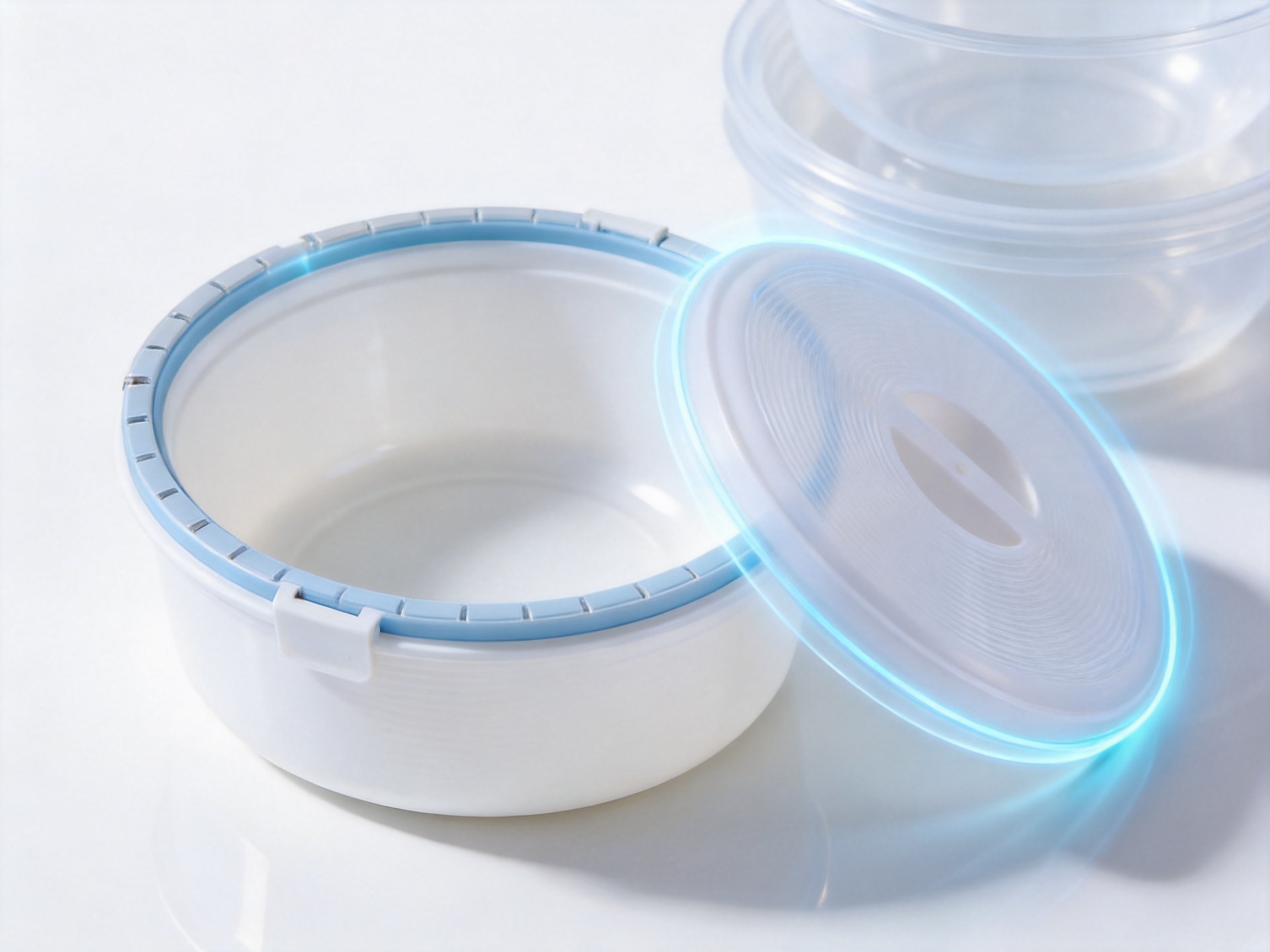
A major advantage of this mould is its focus on the complete sealing system rather than only the bowl body. The rim, lid contact area, locking structure, and guiding features are designed together. This integrated approach helps reduce the risk of loose, excessively tight, or unevenly closing lids.
Conventional bowl moulds may concentrate mainly on external shape and visual appearance. However, a container can look acceptable while still failing to provide effective sealing. By considering the full assembly relationship during the design stage, this mould can provide more reliable closure performance and better product consistency.
3.2 Improved Roundness and Reduced Warping
Round thin-wall products can deform if cooling is uneven. One section may contract faster than another, causing ovality, rim distortion, or a lid that no longer fits correctly. Optimized cooling channels help control the temperature of the cavity and core, supporting more uniform shrinkage.
Stable cooling also contributes to shorter and more predictable cycles. When the product reaches a suitable ejection temperature more evenly, the risk of deformation during demoulding is reduced. This is especially important for large bowls, lightweight containers, and products with relatively thin walls.
3.3 Support for Lightweight Thin-Wall Design
Many food container manufacturers are seeking ways to reduce material consumption without compromising strength. Thin-wall production can lower product weight, reduce resin usage, and improve transportation efficiency. At the same time, thin walls make filling and cooling more demanding.
The mould can be engineered for thin-wall bowl structures by optimizing gate location, runner balance, wall transitions, venting, cooling, and ejection. This gives manufacturers greater flexibility when developing lightweight products. The final result can combine a lower material cost with sufficient rigidity for normal storage and handling.
3.4 High-Quality Surface Finish
Food containers are highly visible consumer products. A smooth, clean, and attractive appearance can influence purchasing decisions and brand perception. Mirror polishing is available for the mould surface, producing bowls and lids with a bright, refined finish.
Polished surfaces can also support easier cleaning of the mould and reduce the likelihood of visible machining marks on the plastic part. Where a different appearance is desired, the mould may incorporate a controlled texture or customized surface treatment. The finishing method is selected according to the product’s visual and functional requirements.
3.5 Multi-Cavity Production Capability
The standard configuration supports two to four cavities. This gives customers a practical balance between initial tooling investment, production output, mould size, and machine requirements. A two-cavity mould may be appropriate for medium-volume production or a new product launch, while a four-cavity design can support larger orders and more competitive unit costs.
Multi-cavity performance depends on balanced filling and consistent cooling. The mould design therefore considers runner arrangement, cavity layout, pressure distribution, and synchronized ejection. Proper balancing helps each cavity produce parts with similar dimensions and appearance, reducing sorting and quality-control work.
3.6 Longer Service Life
The mould can use 718 or S136 steel, depending on the intended application, production volume, product material, and surface requirements. These steels are widely used in precision injection moulding because they offer a combination of strength, machinability, polishability, and resistance to wear or corrosion when properly processed.
With appropriate maintenance and operating conditions, the mould is designed for a service life of more than 800,000 shots. Actual service life depends on resin type, additives, moulding pressure, cycle conditions, cleaning practices, water quality, and maintenance frequency. Nevertheless, the projected life supports long-term commercial production and helps spread tooling costs over a large number of parts.
4. Material and Steel Selection
4.1 718 Mould Steel
718 steel is frequently selected for mould components that require reliable mechanical performance and good polishing capability. It can be suitable for general food container production where the product design requires a durable cavity and core with a clean surface finish.
The steel selection process takes into account expected production volume, product geometry, resin behavior, polishing requirements, and the customer’s maintenance plan. For standard bowl applications, 718 can provide an effective combination of performance and cost control.
4.2 S136 Mould Steel
S136 is a stainless mould steel that can be selected for applications requiring enhanced corrosion resistance and high surface quality. It is particularly useful where polished surfaces, humid production environments, or demanding cleaning conditions are important considerations.
When food container moulds are exposed to moisture, condensation, cleaning agents, or insufficiently controlled cooling water, corrosion can affect the cavity surface and product appearance. S136 can provide an additional level of protection when its properties are matched with appropriate heat treatment, polishing, and maintenance.
4.3 Product Materials
The mould supports PP, Tritan, PET, and other thermoplastic materials suitable for the intended product design and processing conditions. The final material selection should consider food-contact compliance, temperature resistance, transparency, toughness, chemical resistance, flexibility, recycling goals, and the customer’s regional regulations.
PP is widely used for reusable food containers because of its balance of light weight, toughness, chemical resistance, and cost effectiveness. Tritan can be selected when a clearer appearance and higher premium positioning are desired. PET may be suitable for specific transparent packaging applications, provided the product design and moulding process are matched to the material’s processing behavior.
Material shrinkage varies between polymers and grades. For this reason, the mould is designed using the selected resin data whenever possible. Shrinkage compensation, gate design, cooling layout, and dimensional tolerances must be evaluated together rather than treated as separate decisions.
5. Engineering Features of the Injection Mould
5.1 Sealing Edge Precision
The bowl sealing edge is one of the most important areas of the mould. It must be machined accurately and protected during assembly, polishing, testing, and maintenance. A damaged or incorrectly polished sealing edge can affect the finished product even if the rest of the bowl appears acceptable.
Precision machining helps maintain consistent edge dimensions across the complete circumference. This supports a more uniform contact relationship between the bowl and lid. Depending on the product concept, the edge may include a lip, groove, step, locking ring, or flexible sealing surface.
5.2 Balanced Runner System
The mould uses a hot runner system to support efficient material delivery and stable multi-cavity production. A properly designed hot runner can reduce cold runner waste, improve filling control, and help maintain more consistent pressure between cavities.
Runner balancing is particularly important for round thin-wall products. If one cavity fills earlier or receives a different pressure profile, variations may occur in wall thickness, rim dimensions, weight, and shrinkage. The hot runner layout is therefore planned according to the cavity arrangement, gate location, product material, and target cycle time.
5.3 Gate Position Optimization
Gate position affects filling pattern, weld line location, packing pressure, residual stress, and cosmetic quality. For a circular bowl, a central gate, edge gate, valve gate, or another arrangement may be considered depending on the product geometry and injection machine.
The gate design must also account for the visible surface, the sealing edge, and the desired post-moulding appearance. In a food container, the gate mark should be positioned where it does not interfere with stacking, sealing, labeling, or consumer use. Gate dimensions and opening behavior are matched to the selected material and production requirements.
5.4 Cooling Channel Design
Cooling is a decisive factor in bowl mould performance. The mould incorporates optimized cooling channels to help remove heat from the cavity and core in a controlled manner. The goal is not only to cool the product quickly but to cool it uniformly.
Uniform cooling supports roundness, dimensional stability, and repeatable cycle times. It can also reduce internal stress that might later cause warping or cracking. Cooling channel layout is developed around the bowl diameter, wall thickness, rim geometry, core structure, and expected material temperature.
Water flow should be monitored during production. Blockages, scale, restricted connections, or temperature differences between circuits can reduce cooling effectiveness. A clear maintenance plan is therefore essential for preserving the original mould performance.
5.5 Venting
Air trapped at the end of the filling path can cause short shots, burn marks, splay, or surface defects. Venting is especially important around the rim, corners, locking features, and thin-wall sections. Proper venting allows displaced air and gases to escape while preventing excessive flash.
The venting arrangement is designed according to the filling direction and product geometry. During mould trials, the engineering team can evaluate burn marks, incomplete filling, weld lines, and pressure behavior to determine whether venting adjustments are required.
5.6 Ejection System
The ejection system must remove the bowl without damaging the sealing rim or creating visible deformation. Ejector pins, stripper structures, sleeves, or other mechanisms can be selected according to the product shape and available space.
For circular bowls, balanced ejection is important. Uneven force may tilt the product, stress the rim, or cause the part to remain partially attached to the core. A carefully arranged ejection system helps maintain consistent release and supports automated production where required.
5.7 Surface Treatment and Polishing
Visible cavity surfaces can receive mirror polishing to create a smooth and premium appearance. Polishing is carried out progressively, beginning with suitable machining preparation and continuing through finer finishing stages. The quality of the final surface depends on steel condition, heat treatment, machining accuracy, polishing technique, and inspection.
For products requiring a textured appearance, controlled etching or other surface finishing methods can be applied. Logo engraving, raised markings, capacity indicators, and customized identification features can also be incorporated into the mould design.
6. Manufacturing Process and Quality Control
6.1 Product and Mould Design Review
The manufacturing process begins with a review of the customer’s product concept. The engineering team evaluates the bowl capacity, overall diameter, height, wall thickness, lid design, sealing method, material, machine parameters, expected production volume, and appearance requirements.
At this stage, potential risks are identified before steel cutting. These may include excessive wall variation, difficult demoulding, insufficient draft, weak locking features, uneven cooling, undercuts, poor gate placement, or interference between the bowl and lid. Early design review helps avoid costly changes later in the project.
6.2 Three-Dimensional Mould Design
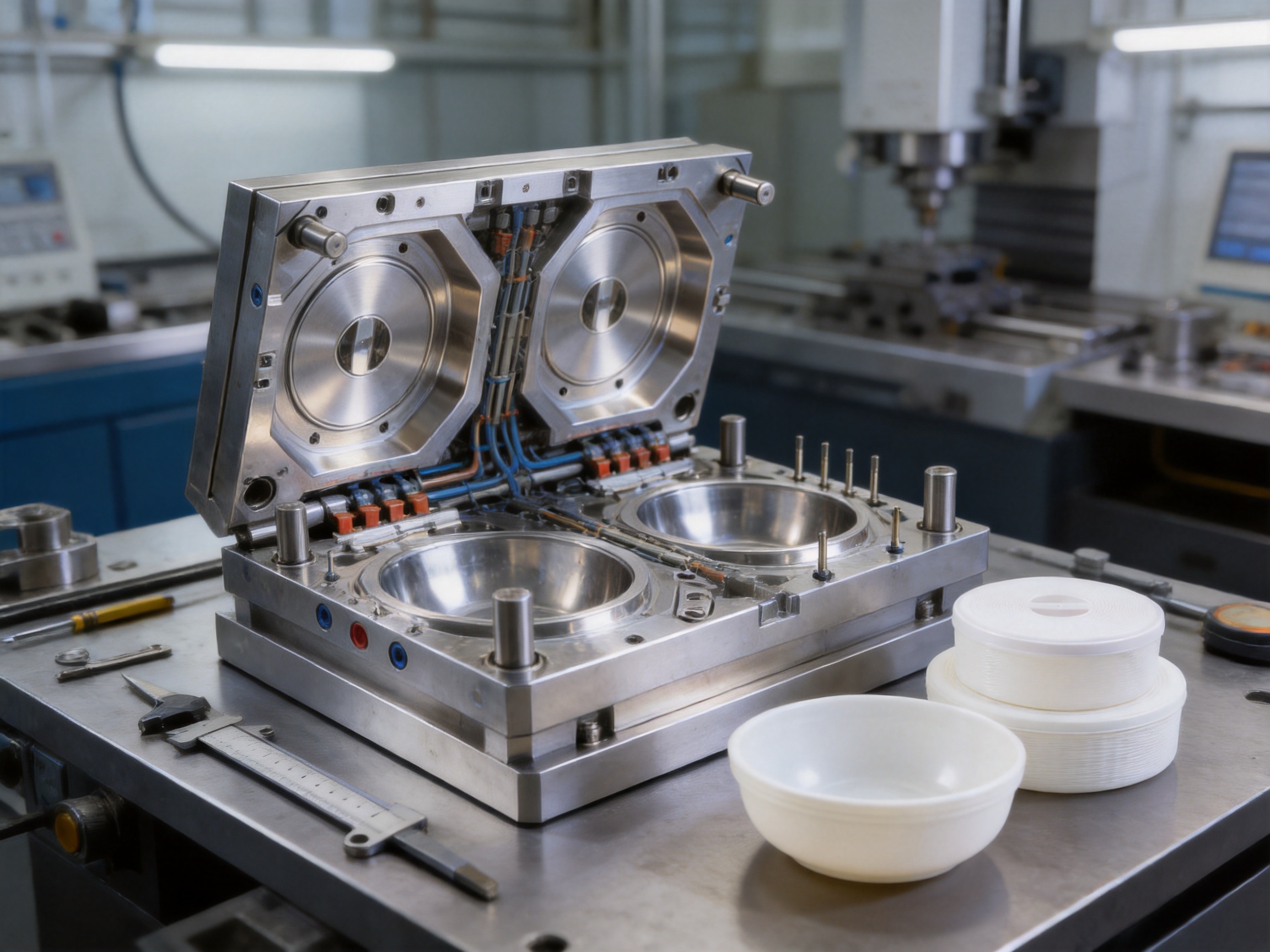
Three-dimensional mould design is used to develop the cavity, core, sliders where necessary, inserts, cooling channels, runner system, ejector structure, guide components, and mould base. The design must maintain a practical relationship between precision, serviceability, manufacturing cost, and production performance.
The mould designer also considers how the tool will be cleaned, inspected, repaired, and modified in the future. Replaceable inserts may be used in areas that are subject to wear or that may require product changes. Accessible components help reduce maintenance time and support long-term production continuity.
6.3 Flow and Cooling Analysis
Engineering analysis can be used to study filling behavior, pressure distribution, weld lines, air traps, cooling balance, and expected shrinkage. Although simulation results must be confirmed through physical trials, they provide valuable guidance for gate selection, runner balance, cooling channel design, and product wall thickness.
For a thin-wall bowl, analysis is particularly useful because the available filling time may be limited. The study can help determine whether the selected injection point will fill the bowl uniformly and whether the sealing rim will receive sufficient packing pressure.
6.4 Precision Machining
After design approval, mould components are machined using suitable CNC equipment, electrical discharge machining, drilling equipment, grinding processes, and other precision manufacturing methods. The machining sequence is planned to control dimensional accuracy and minimize distortion.
Critical components such as the cavity, core, rim inserts, lid-forming surfaces, and locking structures receive special attention. Dimensional inspection is performed throughout the process rather than only at the end. This helps identify deviations early and reduces the risk of assembling incompatible components.
6.5 Heat Treatment and Surface Finishing
Steel components may undergo heat treatment or conditioning processes selected according to the steel grade and performance requirements. The objective is to achieve appropriate hardness, strength, stability, and polishability while limiting dimensional changes.
After machining and treatment, the mould surfaces are finished according to the product specification. Mirror polishing, texture preparation, edge refinement, and inspection are carried out on the areas that affect appearance or sealing performance.
6.6 Mould Assembly
During assembly, the cavity, core, inserts, guide pillars, bushings, ejector components, cooling circuits, hot runner components, and mould base are fitted together. Assembly quality has a direct effect on product accuracy. Small alignment errors can create flash, uneven parting lines, or excessive wear.
The bowl and lid components are checked as a complete system when the project includes both tools. The objective is to confirm that the finished parts close correctly and that the sealing structures remain compatible across the expected production range.
6.7 Trial Moulding and Correction
Trial moulding is conducted using the specified or representative production material. The engineering team evaluates filling, cycle time, part weight, dimensions, surface finish, ejection, flash, warpage, and bowl-and-lid assembly.
Sample parts may be tested for closure consistency, leakage resistance, stacking behavior, and practical handling. If necessary, adjustments are made to process parameters or mould components. Corrections may include polishing, venting improvement, gate adjustment, dimensional refinement, cooling modification, or ejection optimization.
6.8 Final Inspection and Documentation
Before delivery, the mould is inspected for component completeness, cooling circuit condition, runner performance, cavity and core quality, ejection movement, parting-line fit, and operating safety. Trial samples and inspection records can be supplied according to the customer’s requirements.
Documentation may include mould drawings, component information, recommended processing data, maintenance guidance, spare-part recommendations, and trial reports. Clear documentation helps production teams operate the tool correctly and supports future servicing.
7. Customization Options
7.1 Bowl Capacity and Dimensions
The mould can be customized for different bowl capacities, diameters, heights, and proportions. Common applications may require compact lunch bowls, larger meal preparation containers, family-size storage products, or stackable catering bowls.
Capacity customization should be considered together with wall thickness, material usage, lid strength, stacking height, machine size, and transportation requirements. A larger bowl may require a stronger core, higher injection pressure, improved cooling, or a different cavity arrangement.
7.2 Lid Locking Structure
The lid can be designed with a snap-fit ring, press-fit edge, clip, tab, or customized locking geometry. The selected structure should offer an appropriate balance between sealing reliability and opening convenience.
A lid that is too difficult to open may create a poor user experience, while a lid that is too loose may fail during transportation. The locking structure is therefore evaluated for assembly force, retention, repeated use, material flexibility, and tolerance variation.
7.3 Brand Logo and Product Markings
Custom brand logos, capacity marks, recycling symbols, measurement lines, product identification codes, and decorative patterns can be engraved into the mould. The position and depth of the engraving are selected according to the appearance of the finished part and the selected production process.
Engraving can improve product recognition and support a consistent brand presentation. It may also help identify different bowl sizes or material grades in a product series.
7.4 Number of Cavities
The standard project range is two to four cavities, but cavity selection is based on production volume, machine capacity, target cycle time, part size, and investment plan. More cavities can increase output but may also require a larger machine, higher mould cost, more complex balancing, and greater maintenance responsibility.
A properly selected cavity count allows the customer to achieve efficient production without paying for capacity that is not immediately needed. The tooling plan may also allow future expansion through a staged product strategy.
7.5 Surface Appearance
Mirror polishing is available for smooth and glossy products. Other options may include fine matte finishes, textured surfaces, localized polishing, or decorative patterns. Appearance requirements should be defined before machining because surface treatment affects processing time and finishing methods.
8. Applications
The mould is suitable for producing meal preparation bowls used by households, restaurants, food delivery companies, catering businesses, and commercial kitchens. These products can be used to portion meals, organize ingredients, store leftovers, or transport prepared food.
Lunch storage containers are another important application. Consumers increasingly prefer reusable containers that can be taken to offices, schools, factories, outdoor locations, or travel destinations. An accurately sealed bowl can help protect food during transportation while reducing dependence on disposable packaging.
The mould can also produce takeaway packaging for food-service applications. Depending on the selected material and product design, the container may be developed for hot or cold foods, dry meals, sauces, salads, snacks, and prepared dishes. The customer remains responsible for confirming material suitability and regulatory compliance for the intended use.
Microwave-oriented bowl designs may also be considered when the selected plastic material, lid structure, venting concept, and temperature requirements are appropriate. A lid intended for microwave use may require a controlled vent, removable section, or special opening design. This functionality must be incorporated into the product and mould from the beginning.
Other possible uses include reusable snack containers, ingredient preparation bowls, compact food organizers, catering portion containers, and customized kitchen storage products. The circular geometry allows efficient stacking and can provide a familiar, practical shape for consumers.
9. Production Efficiency and Cost Advantages
A high-quality mould contributes to production economics in several ways. First, stable dimensions reduce rejected parts and minimize the need for manual sorting. Second, optimized cooling supports predictable cycle times. Third, a hot runner system can reduce runner waste compared with a conventional cold runner arrangement. Fourth, multi-cavity production increases output per machine cycle.
Material savings are also possible through thin-wall design. When the mould is engineered correctly, a lighter bowl can maintain adequate rigidity and functional performance. Lower part weight can reduce resin consumption across hundreds of thousands of shots, creating a meaningful long-term cost benefit.
Reliable ejection reduces interruptions caused by stuck parts or manual removal. Consistent product release also supports automation, conveyor handling, visual inspection, and packing operations. These benefits can improve overall equipment utilization and reduce labor requirements.
Long service life helps protect the customer’s tooling investment. A mould designed for more than 800,000 shots can support sustained production without frequent replacement. Replaceable wear components and practical maintenance access can further reduce downtime over the lifetime of the tool.
10. Company Manufacturing Strengths
Taizhou Huangyan Haiquan Plastic Mold Co., Ltd. specializes in the research, development, and manufacture of precision injection moulds. Its product coverage includes daily necessities, cleaning products, crates, chairs and stools, air coolers, rainwater harvesting tanks, pet dryers, home appliances, automotive parts, and industrial equipment.
The company’s daily necessities mould experience is relevant to food containers because these products require a combination of practical design, attractive appearance, stable output, and high-volume manufacturing capability. A lunch bowl mould must be designed not only to form plastic but also to support the customer’s complete commercial production plan.
The company provides services covering design, manufacturing, testing, delivery, and after-sales support. This integrated approach reduces communication gaps between product development and mould production. It also enables technical decisions to be reviewed from both a design and manufacturing perspective.
A professional design team supports product structure development, mould layout, cavity balancing, cooling planning, and customization. Scientific production management helps coordinate machining, assembly, quality control, project scheduling, and delivery. These capabilities are important for customers that require clear project control and consistent tooling quality.
The company exports moulds to Europe, the Middle East, Southeast Asia, and South America. International project experience requires attention to different machine standards, product specifications, communication practices, packaging requirements, and delivery expectations. Export experience can help the engineering team prepare moulds for a wider range of production environments.
Haiquan follows the philosophy of “Quality First, Sustainable Development.” In practical terms, this involves emphasizing dependable tooling, responsible resource use, long-term customer relationships, and continuous improvement in production methods. The company’s goal is to provide mould solutions rather than isolated steel components.
11. Installation, Operation, and Maintenance Recommendations
11.1 Installation
Before installation, the injection machine should be checked to confirm that its clamping force, platen dimensions, injection capacity, nozzle configuration, and hydraulic or electrical connections are compatible with the mould. Cooling lines, hot runner connections, sensors, and ejector arrangements should be identified clearly.
The mould should be lifted using suitable equipment and approved lifting points. Improper handling can damage guide components, connectors, or polished surfaces. Before the first production cycle, moving parts should be lubricated with an appropriate product and all cooling channels should be flushed or checked for blockage.
11.2 Start-Up Procedure
Initial mould trials should begin with moderate process settings and gradual adjustment. The operator should confirm that the mould opens and closes smoothly, the ejector system functions correctly, and the hot runner reaches the intended temperature before injection begins.
Cooling water flow should be verified in every circuit. A blocked or incorrectly connected circuit can cause uneven cooling and unexpected product deformation. The first parts should be inspected carefully before the machine is moved to full production speed.
11.3 Routine Cleaning
After production, residual plastic should be removed from the parting line, sealing areas, vents, gate region, and ejector components. Polished surfaces should be cleaned using methods that do not scratch or chemically damage the steel.
Moisture should not be allowed to remain on mould surfaces for extended periods. When the mould is stored, an appropriate rust-prevention treatment should be applied, particularly to non-stainless components and exposed precision surfaces.
11.4 Preventive Maintenance
Maintenance intervals should be established according to shot count and production conditions. Guide pillars, bushings, ejectors, locks, slides, hot runner components, cooling channels, and sealing inserts should be checked periodically.
Water quality should be controlled because scale and corrosion can reduce cooling performance. If the cooling system becomes restricted, the product may show increased cycle times, warping, dimensional drift, or inconsistent sealing. Preventive cleaning is generally more economical than emergency repair.
Maintenance records should include production shots, repairs, component replacement, polishing work, dimensional adjustments, and observed product defects. These records help identify wear trends and support better planning for spare parts.
12. Technical Specification
| Product Type | Round airtight plastic lunch bowl and food container |
| Application Category | Daily necessities and food packaging |
| Mould Steel | 718 or S136 |
| Cavity Options | 2–4 cavities |
| Compatible Product Materials | PP, Tritan, PET, and other approved thermoplastics |
| Runner Type | Hot runner system |
| Target Mould Life | More than 800,000 shots under suitable operating and maintenance conditions |
| Surface Finish | Mirror polishing or customized texture |
| Customization Options | Capacity, dimensions, lid lock, logo engraving, cavity count, and surface design |
| Primary Performance Focus | Sealing accuracy, roundness, cooling balance, efficient production, and consistent appearance |
13. Quality Considerations for Buyers
When purchasing a lunch bowl injection mould, buyers should evaluate more than the initial quotation. Important factors include the supplier’s experience with similar products, steel selection, machining capability, polishing quality, cavity balance, cooling design, trial procedures, documentation, and after-sales service.
The sealing structure should be reviewed carefully in the product design stage. Buyers should confirm how the lid closes, how much force is required, whether the seal is intended for liquids, and whether the container is designed for single use or repeated opening and closing. These decisions influence material selection and mould tolerances.
The expected annual volume should be used to determine cavity count and mould steel. A low-volume product may not require the same tooling configuration as a high-volume retail item. However, selecting a mould solely on initial price can result in higher long-term costs if the tool generates excessive waste, requires frequent repair, or cannot maintain dimensions.
Buyers should also request samples from all cavities during the trial stage. A sample from one cavity cannot demonstrate full multi-cavity consistency. Bowl and lid samples should be assembled together and evaluated for fit, closure, appearance, and leakage resistance under the intended use conditions.
14. Sustainability and Resource Efficiency
Plastic food containers are increasingly evaluated according to material consumption, product lifespan, recyclability, and manufacturing efficiency. A well-designed mould can contribute to sustainability by producing lightweight parts with reduced scrap and stable repeatability.
Thin-wall design can lower resin usage, while a hot runner can reduce cold runner waste. A durable mould with a long service life also avoids the environmental and financial cost of frequent tooling replacement. When the product is designed for repeated use, its functional lifespan may further improve resource efficiency compared with disposable alternatives.
Material selection should be made with the complete product lifecycle in mind. Manufacturers should confirm whether the selected resin is recyclable in the target market and whether additives, colorants, labels, or multi-material components affect recycling. The mould itself can support different material strategies when the gate, cooling, shrinkage, and processing requirements are properly reviewed.
15. Project Development Workflow
A successful custom mould project normally begins with the customer providing a product drawing, three-dimensional model, sample, or initial concept. The engineering team then reviews the bowl dimensions, lid structure, material, production quantity, machine information, surface requirements, and delivery expectations.
After technical discussion, the supplier prepares a mould design and confirms the cavity arrangement, steel, runner system, cooling concept, ejection method, and customization details. Any potential production risks should be discussed before design approval.
Once the design is approved, the mould enters machining and assembly. Progress can be monitored through manufacturing records, dimensional inspection, and project communication. Trial moulding is then used to validate the tool and identify any necessary corrections.
After final approval, the mould is prepared for shipment with suitable protection for polished surfaces, electrical parts, cooling connections, and moving components. Operating and maintenance information should accompany the mould so that the production team can begin operation efficiently.
16. Frequently Asked Questions
Q1: What products can this mould produce?
The mould is designed for round airtight plastic lunch bowls, meal preparation containers, takeaway food bowls, lunch storage containers, reusable kitchen bowls, and similar sealed food packaging products. The exact product range depends on the approved bowl and lid design.
Q2: Can the bowl and lid be produced with matching moulds?
Yes. The project can be developed around the complete bowl-and-lid assembly. Designing the two components together helps improve dimensional compatibility, closure performance, and sealing reliability.
Q3: Which materials are supported?
The listed material options include PP, Tritan, and PET. Other thermoplastics may also be considered after reviewing shrinkage, flow behavior, temperature resistance, food-contact requirements, and the intended product application.
Q4: How many cavities are available?
The standard cavity range is two to four cavities. The appropriate number depends on the required production volume, product size, machine capacity, target cycle time, and tooling budget.
Q5: Why is a hot runner system used?
A hot runner system can improve material delivery, reduce cold runner waste, support multi-cavity balance, and contribute to stable production. Its configuration is selected according to the product material, gate position, cavity layout, and production requirements.
Q6: Can the mould produce thin-wall bowls?
Yes. The mould can be engineered for thin-wall designs by considering filling speed, gate placement, runner balance, venting, cooling, wall transitions, and ejection. Final thin-wall capability depends on the selected material and injection machine.
Q7: Can a company logo be added to the bowl?
Yes. Custom logo engraving, product markings, capacity indicators, recycling symbols, and decorative details can be incorporated into the cavity or core according to the approved design.
Q8: What surface finishes are available?
Mirror polishing is available for smooth and glossy surfaces. Customized textures, matte finishes, localized polishing, and other appearance treatments may also be considered.
Q9: How long can the mould last?
The target mould life is more than 800,000 shots under suitable operating conditions. Actual service life depends on material, processing parameters, production environment, water quality, cleaning, lubrication, and preventive maintenance.
Q10: What steel should be selected, 718 or S136?
Both options can be suitable, but the best selection depends on production volume, corrosion exposure, polishing requirements, resin characteristics, and budget. S136 may be preferred where corrosion resistance and premium polishing are especially important, while 718 can provide a practical balance for many general applications.
Q11: How can bowl roundness be maintained?
Roundness is supported through accurate machining, balanced filling, optimized cooling, suitable ejection, and correct processing parameters. Regular maintenance of cooling channels is also important because restricted water flow can cause uneven shrinkage and warping.
Q12: Can the mould be used for microwave-oriented containers?
It can be considered for such products when the selected plastic material, bowl design, lid structure, venting, and temperature requirements are appropriate. Microwave suitability must be validated through product testing and applicable regulatory evaluation.
Q13: What information is needed for a quotation?
Useful information includes the product drawing or three-dimensional model, bowl capacity, dimensions, material, lid design, expected annual quantity, cavity preference, machine information, surface finish, logo requirements, and target delivery schedule.
Q14: Does the supplier provide after-sales support?
Yes. The company provides integrated services covering design, manufacturing, testing, delivery, and after-sales support. Technical communication can continue after delivery to assist with installation, adjustment, maintenance, and production questions.
17. Conclusion
The Round Airtight Plastic Lunch Bowl Injection Mould is a specialized tooling solution for manufacturers seeking reliable, attractive, and efficient food container production. Its principal strengths are accurate bowl-and-lid matching, optimized cooling, support for thin-wall structures, hot runner efficiency, multi-cavity capability, high-quality surface finishing, and a projected service life exceeding 800,000 shots.
Compared with a basic bowl mould, this solution places greater emphasis on sealing performance and complete product functionality. The mould is designed to help manufacturers reduce dimensional variation, minimize warping, improve production stability, and create containers suitable for modern meal preparation and food packaging markets.
Taizhou Huangyan Haiquan Plastic Mold Co., Ltd. combines precision mould design, professional machining, controlled assembly, trial moulding, quality inspection, and international project experience. Its capabilities across daily necessities, home appliances, automotive components, and industrial equipment provide a broad technical foundation for customized tooling projects.
For customers developing a new airtight lunch bowl or upgrading an existing production program, the mould can be customized according to capacity, material, locking structure, cavity number, surface appearance, and output requirements. A carefully engineered tool creates value not only at the moment of delivery but throughout the product’s production life.
References
1. General principles of thermoplastic injection mould design and cavity balancing.
2. Technical guidance for mould steel selection, polishing, corrosion resistance, and preventive maintenance.
3. Industrial practices for hot runner systems, gate optimization, venting, and cooling channel design.
4. Polymer processing considerations for polypropylene, Tritan, PET, and related food-container materials.
5. Quality-control principles for dimensional inspection, trial moulding, sealing evaluation, and multi-cavity consistency.
6. Product and manufacturing information supplied for the Round Airtight Plastic Lunch Bowl Injection Mould.
Product: Round Airtight Plastic Lunch Bowl Injection Mould

For exclusive deals and latest offers, sign up by entering your email address below.












 +86-18657672567
 sales@tzhqmould.com
celin@tzhqmould.com
 No. 17 Houshi Road, Beicheng Industrial Zone, Huangyan District, Taizhou City, Zhejiang Province, China
Copyright © Taizhou Huangyan Haiquan Plastic Mold Co., Ltd. All Rights Reserved
Injection Plastic Mould Maker

