

Rainwater Collector and Components Plastic Mould for Durable Water Management Products
Admin 2026-08-11Rainwater harvesting is becoming an increasingly practical method for reducing pressure on municipal water supplies, controlling stormwater, and supporting sustainable landscape management. At the center of many rainwater collection systems are plastic collectors, roof drainage connectors, pipe adapters, tank fittings, and storage accessories. Although these components may appear simple, their performance depends heavily on the precision, durability, and consistency of the molds used to manufacture them.
The Rainwater Collector and Components Plastic Mould is designed for producing outdoor water collection components used in residential, commercial, agricultural, and municipal applications. It supports the manufacture of products made from polypropylene (PP) and high-density polyethylene (HDPE), two materials widely selected for their strength, chemical resistance, low moisture absorption, and suitability for outdoor use.
Developed for dependable injection molding production, this tooling solution is suitable for rainwater collectors, roof drainage connectors, tank accessories, and related plastic parts. It combines practical product design, durable mold construction, adaptable component dimensions, and long service life. With appropriate maintenance and controlled molding conditions, the mold is designed to support a mold life of up to 700,000 shots.
Taizhou Huangyan Haiquan Plastic Mold Co., Ltd. provides the tooling design and manufacturing capabilities behind this product. The company specializes in precision injection molds for daily necessities, home appliances, automotive parts, and industrial equipment. Its experience across several product sectors supports a disciplined approach to mold design, material selection, machining, assembly, testing, and after-sales service.
This article examines the product structure, applications, manufacturing advantages, production process, material compatibility, customization possibilities, quality considerations, and selection value of the Rainwater Collector and Components Plastic Mould.
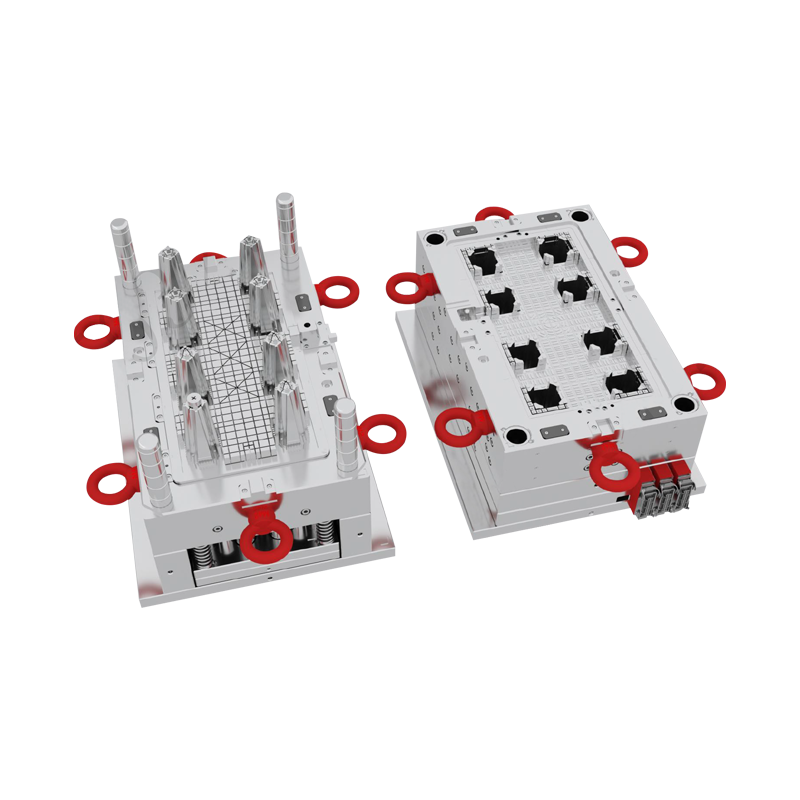
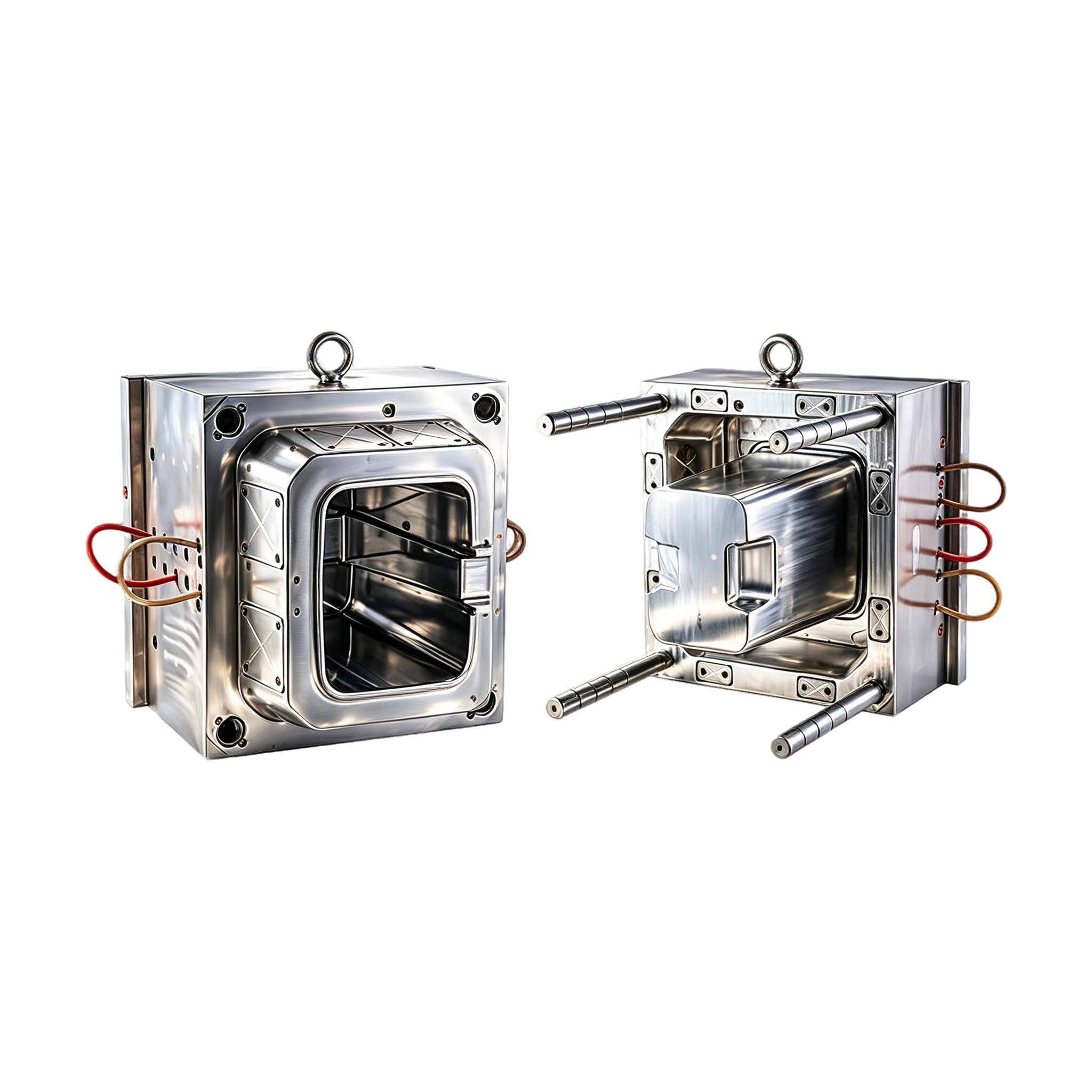
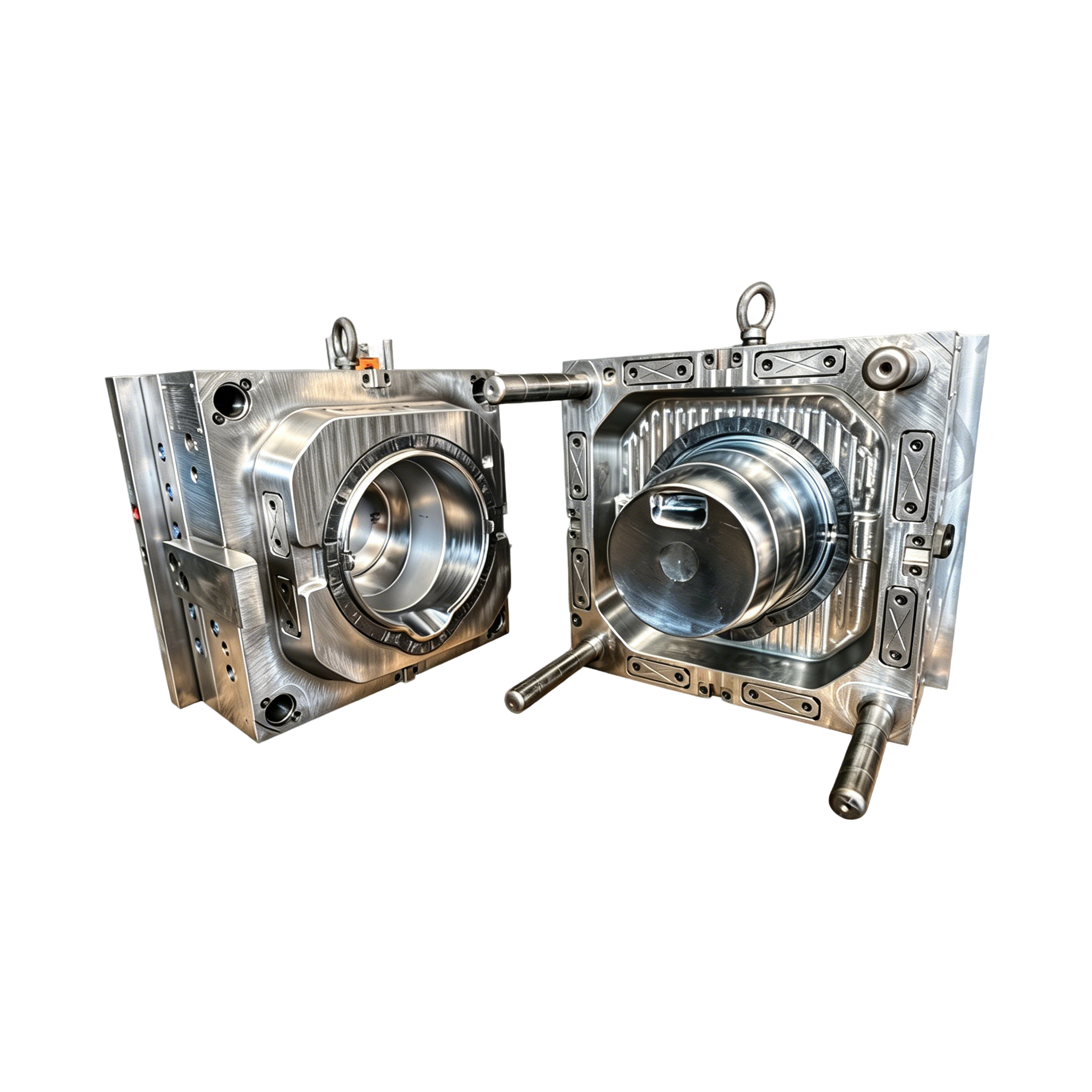
Rainwater Collector and Components Plastic Mould
1. The Role of Plastic Molds in Rainwater Harvesting Systems
Rainwater collection products are exposed to demanding conditions. They may be installed on roofs, along exterior walls, in gardens, beside storage tanks, or in underground and above-ground drainage systems. During service, the finished plastic parts may encounter ultraviolet radiation, seasonal temperature changes, rainwater containing dust and organic matter, impact from installation, and continuous contact with moisture.
A mold must therefore do more than create the basic shape of a collector or connector. It must support accurate dimensions, stable wall thickness, reliable assembly interfaces, smooth water flow, and repeatable production over many cycles. Any dimensional inconsistency in a pipe connector can cause leakage, installation difficulty, or misalignment. Any weakness in a collector body can reduce its service life when exposed to weather or mechanical stress.
Injection molding is well suited to the production of these components because it can produce complex shapes in large quantities with consistent repeatability. However, the quality of the finished products is directly influenced by the mold. A well-designed mold helps control filling, cooling, shrinkage, ejection, parting lines, and surface quality.
The Rainwater Collector and Components Plastic Mould is intended to provide a production platform for outdoor water management components. It can be adapted to different collector sizes and pipe connection requirements, allowing manufacturers to develop product families rather than relying on a single fixed part design.
1.1 Product Scope
The tooling can be used for components such as rainwater collectors, roof drainage connectors, water storage accessories, pipe transition fittings, tank inlets, tank outlets, covers, junction components, and other molded parts associated with rainwater harvesting systems.
Depending on the final product design, the tooling may incorporate features such as circular or rectangular flow passages, snap-fit elements, mounting points, threaded or non-threaded interfaces, sealing grooves, reinforcing ribs, handles, covers, and drainage channels. These features must be integrated carefully so that the part can be filled evenly and removed from the mold without deformation.
1.2 Importance of Dimensional Accuracy
Rainwater harvesting components are frequently connected to pipes, gutters, tanks, screens, filters, or valves manufactured to standardized dimensions. Dimensional accuracy is therefore essential for compatibility. A connector that is slightly undersized may not form a secure joint, while an oversized connector may require excessive force or additional sealing materials.
Accurate mold construction helps maintain the intended outer dimensions, internal diameter, wall thickness, connection geometry, and mounting positions. It also helps reduce variation from one production batch to another. This consistency is especially valuable for distributors and system installers who need reliable interchangeability across multiple projects.
2. Key Product Specifications
The Rainwater Collector and Components Plastic Mould uses P20 or 718 mold steel and is compatible with PP or HDPE product materials. The stated design life is up to 700,000 shots, subject to product geometry, molding conditions, maintenance, and the actual production environment.
| Specification | Available Information |
| Product type | Rainwater collector and components plastic mold |
| Primary application | Outdoor water collection and rainwater harvesting systems |
| Typical molded materials | Polypropylene (PP) and high-density polyethylene (HDPE) |
| Mold steel options | P20 / 718 |
| Stated mold life | Up to 700,000 shots |
| Customization | Collector sizes and pipe connector dimensions can be adjusted |
| Typical components | Collectors, roof drainage connectors, tank fittings, and water storage accessories |
P20 steel is widely used for injection molds because it offers a practical balance between machinability, toughness, polishability, and cost. It is suitable for many medium- and high-volume applications. 718 steel, commonly associated with pre-hardened mold steel grades, can provide stable machining performance and useful wear resistance for production tooling.
The final steel selection should be confirmed according to the product design, expected production volume, material additives, surface requirements, and customer specifications. For example, heavily filled polymers, abrasive additives, or highly polished surfaces may require additional consideration during mold design and material selection.
2.1 Compatibility with PP and HDPE
PP and HDPE are common materials for outdoor water management products because both offer good resistance to moisture and many household or environmental chemicals. They are also lightweight, relatively economical, and suitable for mass production by injection molding.
PP can provide a useful combination of low density, chemical resistance, fatigue performance, and processing flexibility. It is often selected for connectors, covers, housings, and other components that require a balance between stiffness and weight.
HDPE is known for toughness, impact resistance, moisture resistance, and durability in demanding environments. It can be appropriate for parts that may experience handling, impact, or outdoor exposure. The final material grade should be selected according to the required stiffness, impact performance, temperature range, color, UV stabilization, and regulatory requirements.
Material behavior affects mold design. PP and HDPE both exhibit shrinkage during cooling, and their shrinkage rates can vary according to grade, wall thickness, flow direction, processing temperature, packing pressure, and cooling conditions. Mold engineers must account for these factors when designing cavity dimensions and balancing the filling system.
3. Advantages Compared with Basic or Low-Quality Tooling
The performance of a rainwater harvesting component is not determined solely by the polymer used. A low-quality mold can create flash, short shots, sink marks, warpage, uneven walls, poor surface finish, difficult ejection, or inconsistent connection dimensions. These defects can lead to higher scrap rates and additional finishing work.
The Rainwater Collector and Components Plastic Mould is positioned as a production-oriented tooling solution with several advantages over basic molds designed without sufficient attention to product function or long-term manufacturing stability.
3.1 Product-Specific Design
A product-specific mold is designed around the actual flow path, connection interfaces, wall thickness, mounting features, and service conditions of the rainwater component. This approach is more effective than using a generic mold concept and making extensive modifications after machining has begun.
For rainwater collectors, the internal flow path is particularly important. The part should guide water efficiently while avoiding unnecessary obstructions. The mold design must preserve the intended passage and prevent features such as ejector marks, parting lines, or gate locations from interfering with water flow or sealing areas.
3.2 Improved Repeatability
Consistent production is one of the most important advantages of precision tooling. When a mold is accurately machined and properly assembled, each cycle can reproduce the same product geometry. This reduces dimensional variation and helps customers maintain stable assembly operations.
Repeatability is especially valuable when a rainwater harvesting system uses several connected parts. A collector, connector, tank inlet, and pipe adapter must work together as a system. Consistent dimensions reduce the risk of leakage and simplify installation.
3.3 Long Production Life
A stated life of up to 700,000 shots gives the mold a strong production orientation. Long mold life can reduce the effective tooling cost per part when the tool is used for medium- or high-volume production. It can also reduce the disruption associated with frequent mold replacement.
Actual service life depends on many factors, including the selected steel, resin grade, additives, injection pressure, cycle time, mold temperature, cooling water quality, lubrication, cleaning, storage, and maintenance. A long-life design must therefore be supported by correct operating procedures and regular inspections.
3.4 Adaptability for Different Sizes
Rainwater systems are not all designed to the same scale. A small garden collector may have different flow requirements from a large commercial or agricultural system. Pipe diameters, outlet geometry, tank connections, screens, and mounting features may also vary by market.
The tooling concept allows pipe connectors and collector sizes to be adjusted. This customization capability helps manufacturers create versions for different installation conditions without abandoning the underlying product concept. It can support the development of a product family with shared design principles and differentiated dimensions.
3.5 Suitable for Outdoor Product Development
Outdoor products need a practical balance between appearance, durability, manufacturability, and cost. A mold designed for outdoor water management products can address these requirements from the beginning. It can support suitable draft angles, robust wall transitions, reinforced mounting areas, and surfaces that are appropriate for the intended product finish.
When the final polymer includes UV stabilizers or weather-resistant additives, the product can be better prepared for exposure to sunlight and changing environmental conditions. The mold itself must also be manufactured and maintained to withstand repeated production without losing critical dimensions.
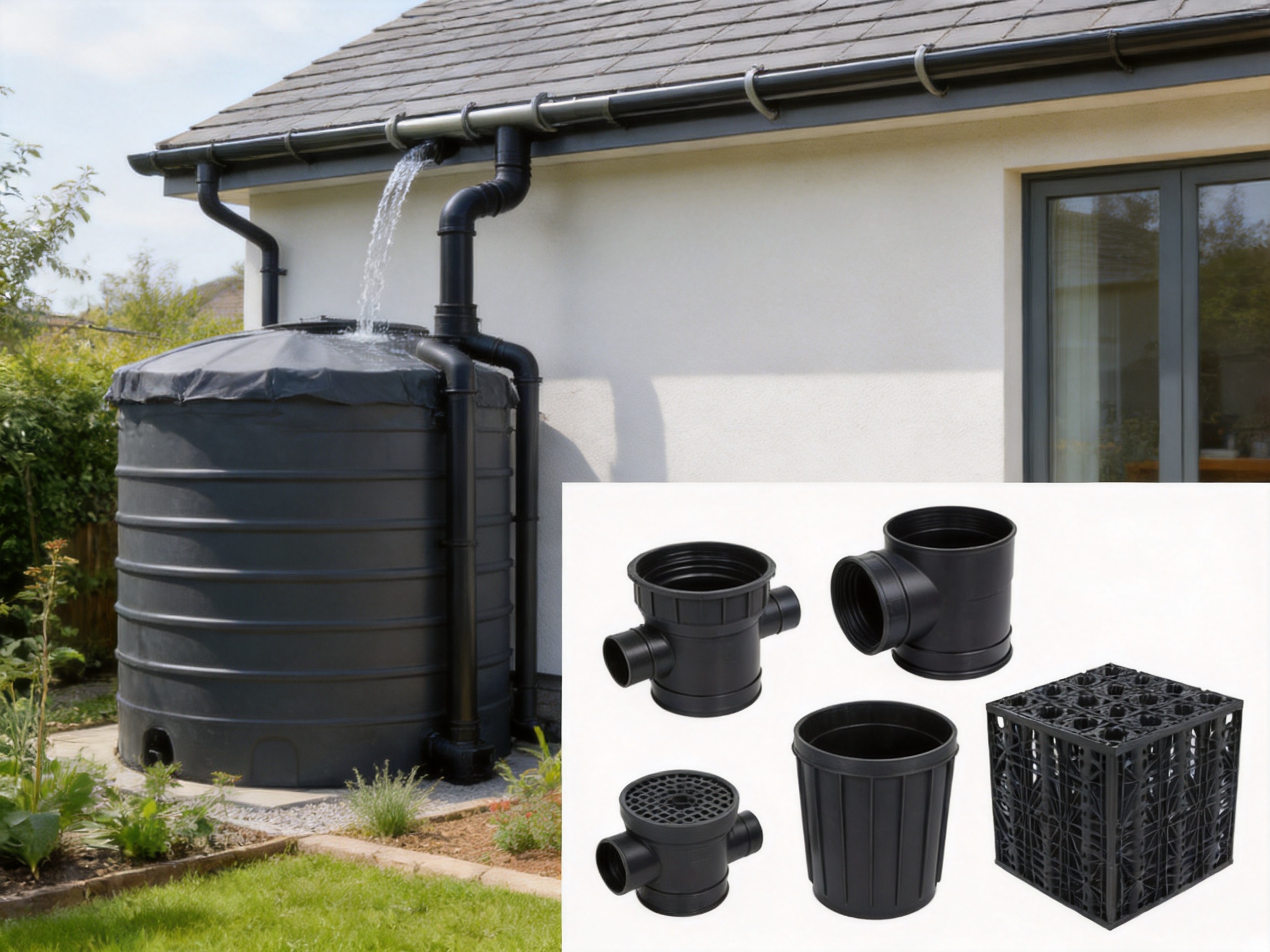
4. Mold Design Considerations for Rainwater Collectors
Rainwater collectors and related fittings can include a variety of functional features. Successful mold design requires an understanding of both the product’s intended use and the injection molding process.
4.1 Wall Thickness and Structural Balance
Uniform wall thickness generally helps reduce uneven cooling, sink marks, warpage, and internal stress. However, rainwater components may require local reinforcement around pipe connections, mounting holes, handles, clips, or tank interfaces. These areas should be designed with controlled transitions rather than abrupt changes in thickness.
Ribs can increase stiffness without adding excessive material, but they must be positioned and sized carefully. Thick rib intersections may cause sink marks or extended cooling times. A balanced design can improve structural performance while maintaining reasonable cycle efficiency.
4.2 Draft Angles
Draft angles allow the molded part to separate from the cavity and core surfaces. Insufficient draft can cause drag marks, ejection damage, deformation, or sticking. The appropriate draft depends on the surface texture, depth, polymer, shrinkage, and product geometry.
For rainwater collectors with internal channels or deep sections, draft planning is particularly important. The mold must allow the part to be ejected cleanly while preserving the dimensions of the water passage and connection points.
4.3 Gate Position
Gate location influences filling balance, weld lines, packing, surface appearance, and residual stress. A gate should be positioned to encourage efficient filling and to minimize defects in sealing areas or visible surfaces.
For larger collectors, the mold designer may need to study the flow path carefully to avoid premature freezing or unbalanced filling. For connectors and smaller accessories, a gate can often be positioned to support short flow lengths and stable production. The final choice depends on the product’s shape, material grade, appearance requirements, and molding machine.
4.4 Cooling System
Cooling is central to cycle time and dimensional stability. A well-planned cooling layout helps remove heat uniformly from the cavity and core. Uneven cooling can lead to warpage, shrinkage differences, or deformation of pipe interfaces.
Cooling channels should be positioned to address thick sections, connection areas, and zones that are likely to retain heat. The designer must also consider drilling access, baffle or bubbler arrangements, sealing, water flow, and ease of maintenance.
4.5 Ejection System
The ejection system must remove the part without damaging its functional areas. Ejector pins, sleeves, stripper plates, or other ejection methods may be selected according to the product shape. Ejector marks should be placed in areas where they will not interfere with sealing, appearance, assembly, or water flow.
For components with deep internal features, controlled ejection is important because the molded part may grip the core as it shrinks. Proper draft, surface finish, venting, and ejection balance work together to prevent sticking and deformation.
4.6 Venting
Venting allows trapped air and gases to escape during filling. Poor venting can cause burns, short shots, weld line weakness, or incomplete filling. Collectors and fittings with long flow paths or enclosed sections require particular attention to vent locations.
Vents should be designed to release air without creating excessive flash. Their condition should be checked during mold maintenance because contamination or wear can reduce venting performance over time.
5. Advanced Manufacturing Process
The manufacturing quality of a mold depends on the complete production process rather than on a single machining operation. Haiquan Mould applies an integrated workflow that covers design, material preparation, precision machining, electrical discharge machining, polishing, assembly, trial molding, inspection, and after-sales support.
5.1 Product Analysis and Design Review
The process begins with an analysis of the customer’s product data and production requirements. Engineers review the product geometry, material, expected output, appearance, connection interfaces, parting direction, ejection method, and likely molding conditions.
For rainwater components, the review should also consider the direction of water flow, sealing locations, pipe compatibility, installation method, outdoor exposure, and cleaning requirements. These details can affect the parting line, gate position, core structure, cooling arrangement, and ejection layout.
A design review helps identify potential issues before steel is cut. It can reveal undercuts, excessive wall thickness, sharp transitions, difficult ejection areas, inadequate draft, or connection dimensions that require clarification.
5.2 Moldflow and Filling Assessment
Where appropriate, filling analysis can be used to evaluate flow balance, weld line positions, air traps, pressure requirements, and cooling behavior. Such analysis is useful for products with long flow paths, multiple outlets, complex ribs, or demanding appearance requirements.
The results can guide gate selection, runner layout, venting, cooling, and product modifications. Even when a project does not require extensive simulation, experienced mold engineers can use practical design rules developed through previous injection molding projects.
5.3 Steel Preparation
After the design is approved, the selected steel is prepared for machining. P20 or 718 steel may be used according to the project specification. Steel blocks should be checked for dimensions and condition before entering the machining process.
Material traceability and correct preparation help reduce the risk of using the wrong grade or machining an unsuitable block. The mold base, cavity inserts, core inserts, slides, lifters, and other components may use different materials depending on their function and expected wear.
5.4 CNC Machining
CNC machining creates the main geometry of the mold components. High-speed milling and precision machining can produce cavity surfaces, core profiles, parting surfaces, pockets, locating features, and mounting interfaces.
Machining accuracy is important for maintaining alignment and dimensional control. The mold components must fit together correctly, with suitable clearances for moving sections and precise contact at the parting line. Poor machining can cause flash, mismatch, uneven wear, or difficulty during assembly.
5.5 EDM Processing
Electrical discharge machining is useful for producing deep, narrow, sharp, or complex features that are difficult to create through conventional milling. It may be used for ribs, corners, slots, small details, and areas with restricted tool access.
EDM parameters must be controlled to achieve the required geometry and surface condition. Excessive electrical discharge damage or an unsuitable surface layer can affect polishing, wear, or product release. Proper finishing and inspection are therefore important after EDM operations.
5.6 Wire Cutting
Wire EDM can be applied to precise inserts, openings, profiles, and components requiring accurate two-dimensional or through-cut geometry. It supports the production of detailed mold elements and helps maintain dimensional consistency in critical areas.
5.7 Polishing and Surface Treatment
The cavity and core surfaces are finished according to the product’s appearance and release requirements. A smooth surface can improve product appearance and reduce friction during ejection. Textured surfaces may be used where a specific visual or functional finish is required.
Polishing must be carried out carefully around corners, ribs, parting edges, and sealing features. Over-polishing can alter dimensions or soften important details. Controlled finishing helps preserve the intended product design.
5.8 Mold Assembly
During assembly, the mold base, cavity, core, guide components, ejector system, cooling circuits, slides, inserts, and other parts are fitted together. Engineers check alignment, movement, contact, and clearance.
Moving components must operate smoothly without excessive looseness. Cooling circuits must be checked for leakage. Ejector systems must return correctly and remain synchronized with the mold opening sequence. These checks help prevent problems during the first trial.
5.9 Trial Molding and Optimization
A mold trial allows the production team to evaluate filling, ejection, cooling, parting line performance, surface quality, and dimensional stability. Trial parts can be compared with the approved product drawings or samples.
If adjustments are needed, the mold may be modified through polishing, fitting, venting improvements, gate changes, process optimization, or dimensional correction. Trial molding is an important step because it validates the practical interaction between the mold, material, machine, and processing conditions.
5.10 Final Inspection and Delivery
Before delivery, the mold is checked for function, appearance, dimensions, cooling performance, ejector movement, and labeling. The customer may receive trial samples, inspection information, operating recommendations, spare parts, and maintenance guidance according to the project agreement.
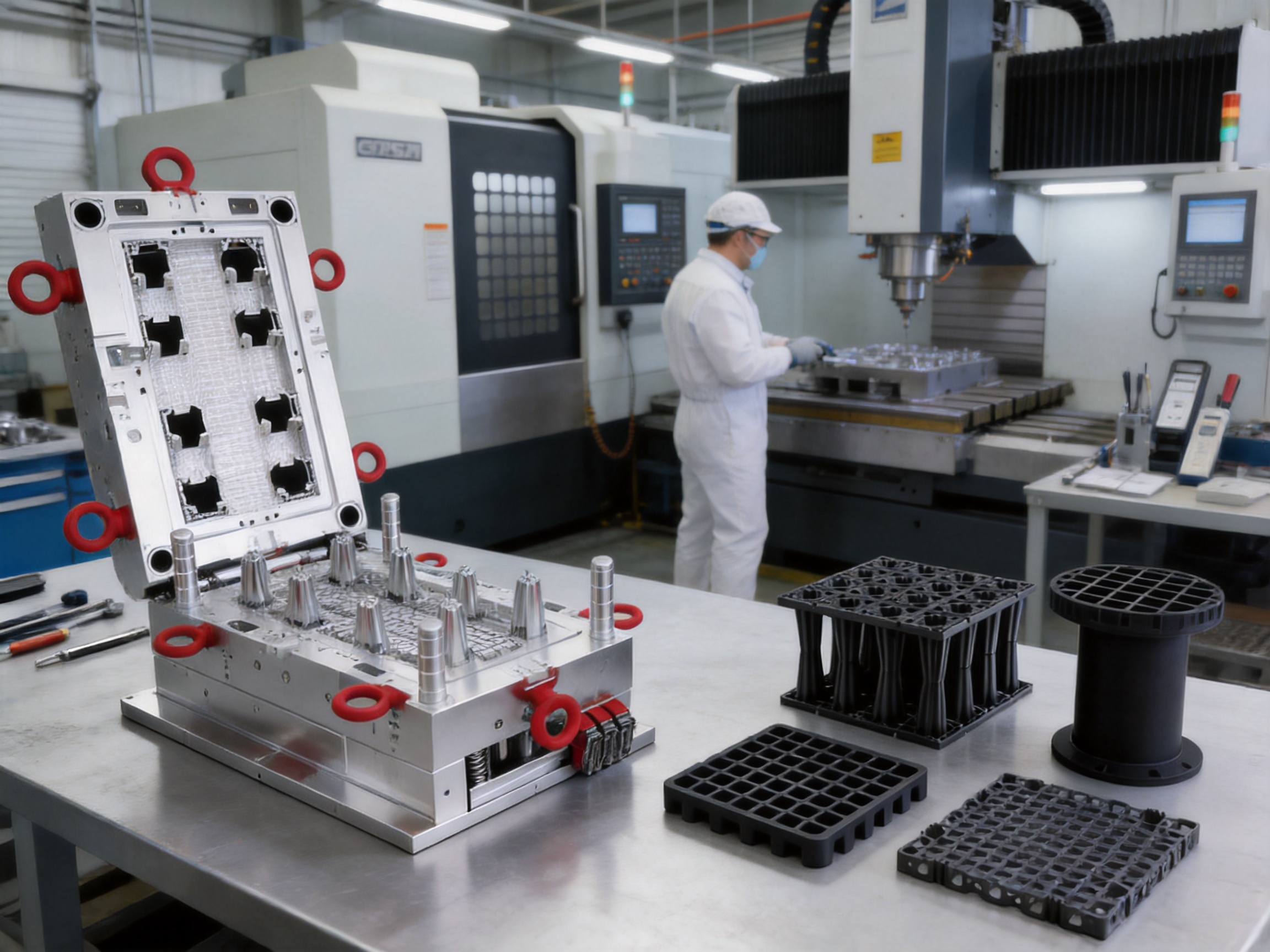
6. Manufacturing Strengths of Haiquan Mould
Taizhou Huangyan Haiquan Plastic Mold Co., Ltd. is a high-tech enterprise focused on the research, development, and manufacturing of precision injection molds. Its service scope covers daily necessities, home appliances, automotive parts, and industrial equipment.
This cross-sector experience is valuable for rainwater harvesting tooling because the product combines several engineering requirements. It needs the practical cost control associated with daily-use products, the durability expected from outdoor equipment, the dimensional discipline required for fittings, and the production reliability associated with industrial components.
6.1 Integrated Service
The company provides integrated services from product design and mold production to after-sales support. This type of workflow can simplify communication because design questions, mold construction decisions, trial results, and production concerns are handled within a connected project process.
Integrated service is particularly useful when a customer is developing a new rainwater collection product rather than simply duplicating an existing component. Product concepts may need refinement before tooling begins. The mold supplier can help identify features that may affect cost, cycle time, ejection, assembly, or long-term reliability.
6.2 Professional Design Team
A professional design team contributes to the evaluation of parting lines, draft, wall thickness, gate positions, cooling channels, ejection, inserts, and mold maintenance. These decisions affect both the initial tooling investment and the cost of producing each molded part.
For adjustable collector sizes and pipe connectors, design expertise is also important for preserving the original functional concept while modifying dimensions. A good design revision should maintain smooth water flow, adequate strength, proper assembly, and manufacturability.
6.3 Scientific Production Management
Scientific production management helps organize the stages of procurement, machining, fitting, inspection, trial molding, correction, and delivery. Clear process management can reduce delays and improve visibility throughout the project.
Stable production management is also important for export orders. Customers in Europe, the Middle East, Southeast Asia, and South America may have different technical requirements, delivery expectations, packaging standards, and communication needs. A structured workflow supports more reliable coordination across international projects.
6.4 Quality-First Philosophy
The company follows a quality-first and sustainable development philosophy. In mold manufacturing, quality is reflected in more than the final appearance of the tool. It includes correct material selection, dimensional accuracy, stable movement, effective cooling, proper ejection, accessible maintenance points, and the ability to produce acceptable parts consistently.
A quality-oriented approach can reduce the total cost of ownership. Although a low-cost mold may appear attractive at the quotation stage, frequent repairs, high scrap rates, unstable cycle times, and difficult maintenance can make it more expensive during production. A properly engineered mold aims to provide value throughout its working life.
7. Applications of the Rainwater Collector Mold
7.1 Garden Rainwater Collection Systems
Garden systems often collect water from small roofs, sheds, greenhouses, balconies, or other structures. The collected water may be used for irrigation, cleaning, or other non-potable purposes.
Components for these systems should be easy to install and compatible with commonly used pipes or flexible hoses. The mold can support compact collectors, diverters, connectors, covers, and storage accessories designed for residential or garden use.
7.2 Roof Drainage Connectors
Roof drainage connectors guide water from gutters or downpipes into storage tanks, filtration units, or drainage channels. They may need to accommodate different pipe diameters, directional changes, or mounting arrangements.
Accurate connection geometry is essential because roof drainage systems may operate during periods of intense rainfall. Secure interfaces help reduce leakage and support efficient transfer of water from the roof to the collection or storage location.
7.3 Water Storage Accessories
Water storage accessories can include tank inlets, outlets, covers, overflow fittings, screens, filter housings, pipe adapters, and inspection components. These parts may be produced in different sizes and shapes depending on the tank design.
The ability to adjust connector sizes and collector dimensions makes the mold concept suitable for customized accessory programs. A manufacturer can use the tooling platform to serve different tank capacities, pipe systems, and regional product standards.
7.4 Residential and Commercial Systems
In residential applications, appearance, ease of installation, and compact size may be major considerations. In commercial or agricultural installations, flow capacity, impact resistance, service life, and compatibility with larger pipes may be more important.
A mold developed with adjustable dimensions can support multiple market segments. However, each product version should be reviewed independently to confirm that the mold structure, cooling system, ejection method, and material selection are appropriate for the new geometry.
8. Product Quality and Outdoor Durability
The mold supports the production of durable outdoor components resistant to UV exposure and environmental conditions. The final level of resistance depends on the selected polymer grade, additives, color system, wall design, installation conditions, and exposure duration.
UV resistance should be considered during material selection. Standard PP or HDPE may require UV stabilizers or a formulation specifically intended for outdoor use. The mold supplier can manufacture the tooling for the selected material, while the product manufacturer remains responsible for choosing a resin grade that meets the intended environmental requirements.
Environmental durability also depends on mechanical design. Rounded corners, suitable wall thickness, reinforced mounting points, and smooth transitions can reduce stress concentration. A strong mold allows these features to be reproduced accurately across production cycles.
Surface quality is another consideration. A smooth or controlled surface can reduce dirt accumulation and make cleaning easier. For collectors and tank accessories, the surface should be appropriate for the product’s appearance, handling, and maintenance requirements.
8.1 Leakage Prevention
Leakage can occur when a connector is out of tolerance, when sealing surfaces are distorted, or when flash interferes with assembly. Mold accuracy helps control the dimensions of critical interfaces.
Product designers should identify gasket seats, threaded sections, pipe sockets, weld areas, and compression joints at the beginning of the project. These features can then be protected during mold design, machining, polishing, and inspection.
8.2 Impact and Handling Resistance
Rainwater products may be transported, installed, removed, cleaned, or exposed to accidental impact. HDPE and suitable PP grades can provide useful toughness, but the molded geometry must also support the intended handling conditions.
Sharp corners and thin unsupported walls may be vulnerable to damage. Reinforcing ribs and carefully designed transitions can improve strength without creating excessive material concentration or molding defects.
9. Customization Options
Customization is a central advantage of this tooling solution. Pipe connectors and collector sizes can be adjusted according to the customer’s product drawings, target market, installation environment, and required flow capacity.
9.1 Connector Dimensions
Connector dimensions may include pipe diameter, socket depth, outer diameter, wall thickness, sealing groove size, thread dimensions, and mounting geometry. These details should be established using verified drawings or physical samples.
When a connector must connect with parts from another supplier, dimensional compatibility should be confirmed before mold construction. Tolerances may need to account for polymer shrinkage, assembly clearance, temperature variation, and the use of seals or adhesives.
9.2 Collector Capacity and Shape
Collector size affects water flow, filling time, product weight, mold dimensions, cooling requirements, and machine selection. A larger collector may require a larger mold base, additional support, a different gate arrangement, or a more carefully balanced cooling system.
Shape customization can include outlet position, screen area, cover design, mounting brackets, overflow features, and product branding areas. Any modification should be evaluated for draft, ejection, wall thickness, and filling behavior.
9.3 Surface and Appearance Requirements
Customers may choose a polished, matte, textured, or functional surface finish. Color can be determined by the selected polymer compound or masterbatch. The mold surface should match the required appearance and support consistent release.
Visible product areas should be reviewed carefully when deciding the location of gates, ejector marks, parting lines, and weld lines. For technical outdoor components, function may be more important than decorative appearance, but a clean and consistent finish still contributes to customer confidence.
9.4 Branding and Identification
Product identification features such as logos, recycling marks, material codes, flow direction indicators, installation symbols, and date or batch areas can be integrated into the mold when required. These features should be designed with appropriate depth, draft, and readability.
10. Mold Maintenance and Production Management
Even a durable mold requires correct maintenance. Regular cleaning helps prevent residue from building up around the parting line, vents, ejector system, and cooling connections. Mold surfaces should be protected from corrosion during storage and periods of inactivity.
Moving components should be inspected and lubricated according to the recommended maintenance schedule. Ejector pins, guide pillars, slides, lifters, and return mechanisms should be checked for wear or abnormal movement.
Cooling channels should be monitored because deposits or restricted water flow can reduce cooling efficiency. Changes in cycle time, product dimensions, or warpage may indicate a cooling problem. Keeping cooling water clean and maintaining appropriate flow can support stable production.
Operators should also monitor processing conditions. Excessive injection pressure, unusually high mold temperature, poor clamping, or incorrect material drying can create defects that may be incorrectly attributed to the mold. A stable molding process protects both the tooling and the product quality.
10.1 Recommended Maintenance Records
A maintenance record can include the production shot count, cleaning dates, lubricant application, cooling inspections, repairs, replaced components, trial results, and dimensional checks. These records help identify trends before they become serious problems.
Because the mold is designed for up to 700,000 shots, planned maintenance becomes increasingly important as production volume grows. Preventive maintenance is generally more economical than waiting for a failure that interrupts delivery.
10.2 Spare Parts
Common spare parts may include ejector pins, springs, seals, wear plates, guide components, inserts, and other replaceable elements. Keeping suitable spares available can reduce downtime during high-volume production.
The exact spare parts list should be prepared according to the mold structure. Customers can discuss recommended spare parts and maintenance procedures with the mold manufacturer before shipment.
11. Production Economics and Total Value
Tooling cost should be evaluated together with production volume, product quality, cycle time, maintenance, scrap, and delivery reliability. A well-designed rainwater component mold can help reduce production costs through repeatable cycles, stable dimensions, efficient cooling, and reduced manual finishing.
The potential value of a long-life mold increases when the product is sold in large quantities or when several related components are produced over an extended period. A mold life of up to 700,000 shots can support substantial output, although the actual economic result depends on the number of cavities, cycle time, machine efficiency, material cost, and market demand.
High-quality tooling can also support inventory planning. When parts are produced consistently, manufacturers can reduce the need for excessive safety stock caused by uncertain production results. Reliable molds help make production schedules more predictable.
For export-oriented manufacturers, dependable tooling can contribute to customer satisfaction in multiple regions. Products made with stable molds are easier to standardize, package, inspect, and distribute. This is especially important when the same rainwater harvesting product is supplied to different countries with similar but not identical installation requirements.
12. Selecting a Supplier for Rainwater Harvesting Tooling
When selecting a plastic mold supplier, buyers should review more than the quoted price. Important questions include whether the supplier understands the product application, whether the design process is clearly organized, what steel options are available, how trial molding is managed, and what support is provided after delivery.
12.1 Engineering Communication
Good communication helps convert a product concept into manufacturable tooling. The supplier should be able to discuss draft, parting lines, wall thickness, gates, cooling, ejection, material shrinkage, and expected production conditions.
For customized collector and connector sizes, engineering communication is especially important. The customer should provide accurate drawings, material information, installation requirements, target output, and inspection standards whenever possible.
12.2 Production Capability
A supplier should have the equipment and personnel needed for machining, EDM, fitting, polishing, assembly, and testing. An integrated manufacturing capability can reduce dependence on multiple external suppliers and simplify project coordination.
12.3 Quality Control
Quality control should cover incoming steel, machining dimensions, cavity and core alignment, cooling channels, ejection movement, surface finish, trial parts, and final mold operation. Inspection methods may include dimensional measurement, visual inspection, functional testing, and comparison with approved samples.
12.4 International Service
International customers may require clear documentation, careful packaging, shipment coordination, technical communication, and after-sales assistance. Haiquan Mould has exported to Europe, the Middle East, Southeast Asia, and South America, giving it experience in serving customers across different markets.
13. Why This Mold Is Suitable for Sustainable Water Management
Rainwater harvesting supports more responsible water use by capturing precipitation for later non-potable applications. The effectiveness of a collection system depends on the reliability of its components. Collectors, connectors, and tank fittings must remain functional through repeated exposure to water and outdoor conditions.
The Rainwater Collector and Components Plastic Mould supports this objective by enabling the production of lightweight, durable, repeatable, and adaptable components. PP and HDPE can reduce product weight compared with some traditional materials, while injection molding supports efficient high-volume manufacturing.
Plastic components can also be designed for easy replacement or modular installation. Standardized connectors and accessories allow systems to be repaired, expanded, or adapted as user needs change.
Sustainability should be considered throughout the product life cycle. This includes selecting suitable materials, reducing unnecessary wall thickness, controlling production scrap, extending mold life, designing for repair, and choosing product formulations that meet environmental requirements. Durable tooling can contribute to this goal by supporting consistent production and reducing waste caused by defective parts.
14. Practical Project Workflow for Customers
A customer planning a rainwater collection component project can improve efficiency by preparing complete technical information before requesting a final mold quotation.
Step 1: Define the Application
Identify whether the component will be used in a garden system, residential tank, commercial building, agricultural installation, or another application. Define the expected water flow, installation position, pipe standard, exposure conditions, and required service life.
Step 2: Confirm the Product Geometry
Prepare three-dimensional data, two-dimensional drawings, physical samples, or concept sketches. Clearly identify sealing surfaces, connection interfaces, visible surfaces, mounting points, screens, overflow areas, and cleaning access.
Step 3: Select the Material
Confirm whether PP or HDPE will be used and specify the grade if available. Consider UV stabilization, color, impact resistance, stiffness, chemical exposure, temperature conditions, and any regulatory requirements.
Step 4: Establish the Production Target
Estimate annual demand, expected order volume, machine availability, cycle time, and preferred number of cavities. The production target influences the mold structure, cooling strategy, automation options, and economic evaluation.
Step 5: Review the Mold Design
Work with the mold supplier to review draft, wall thickness, parting line, gates, runners, vents, cooling, ejection, inserts, and maintenance access. Resolve design questions before manufacturing begins.
Step 6: Approve Trial Samples
Inspect trial parts for dimensions, appearance, assembly, water flow, sealing, and installation performance. Any required correction should be documented and completed before final acceptance.
Step 7: Establish Maintenance Procedures
Before production starts, prepare guidelines for cleaning, lubrication, cooling inspection, storage, shot-count tracking, and spare-part replacement. This helps protect the mold and maintain consistent production.
15. Quality Questions and Answers
Q1: What type of product can be made with this mold?
The mold is designed for rainwater collectors and related plastic components, including garden rainwater collection parts, roof drainage connectors, pipe adapters, water storage accessories, and similar outdoor water management products.
Q2: Which materials are supported?
The specified product materials are PP and HDPE. The final resin grade should be selected according to the required strength, UV resistance, impact performance, color, temperature range, and application requirements.
Q3: What mold steel is available?
The listed mold steel options are P20 and 718. The most appropriate grade depends on production volume, product geometry, surface requirements, polymer characteristics, and customer specifications.
Q4: How long can the mold operate?
The stated mold life is up to 700,000 shots. Actual service life depends on molding conditions, material additives, maintenance, cleaning, cooling, lubrication, and the design of the specific mold.
Q5: Can the collector size be customized?
Yes. Collector sizes and pipe connector dimensions can be adjusted according to the customer’s product design, pipe standards, installation requirements, and target water flow.
Q6: Is the mold suitable for outdoor products?
Yes. It is designed to support outdoor water collection components. However, the final outdoor durability depends on the selected PP or HDPE grade, UV stabilizers, product wall design, color, installation conditions, and exposure time.
Q7: What should be considered for pipe connectors?
Important factors include pipe diameter, socket depth, sealing method, tolerance, wall thickness, connection strength, assembly clearance, and compatibility with existing pipes or fittings.
Q8: Can the mold produce several related accessories?
The tooling concept can be adapted for related accessories, but each different product may require its own cavity, core, insert, or complete mold structure. A technical review is necessary to determine the most economical solution.
Q9: Why is cooling important for this type of mold?
Cooling affects cycle time, shrinkage, warpage, and dimensional stability. Even cooling is particularly important around pipe connections, thick sections, and areas that must remain accurately aligned during installation.
Q10: What information should be provided when requesting a quotation?
Customers should provide product drawings or samples, material information, annual volume, desired mold life, machine details, dimensional requirements, surface finish, color, pipe standards, packaging needs, and any special inspection requirements.
Q11: Does the supplier provide support after delivery?
Haiquan Mould provides integrated services extending from design and production to after-sales support. The exact scope of technical assistance, spare parts, documentation, and troubleshooting should be confirmed for each project.
Q12: Where does the company serve customers?
The company has exported products to Europe, the Middle East, Southeast Asia, and South America, in addition to serving other international customers according to project requirements.
16. Conclusion
The Rainwater Collector and Components Plastic Mould is a practical tooling solution for manufacturers developing outdoor water collection and storage products. It supports the production of rainwater collectors, roof drainage connectors, tank fittings, and related accessories made from PP or HDPE.
Its principal advantages include product-specific engineering, compatibility with common outdoor polymers, P20 or 718 mold steel options, a stated service life of up to 700,000 shots, and the ability to customize collector and connector dimensions. These features make it suitable for garden systems, residential installations, commercial projects, agricultural applications, and broader sustainable water management programs.
The mold’s value also depends on the manufacturing process behind it. Product analysis, design review, precision CNC machining, EDM, surface finishing, careful assembly, trial molding, inspection, and after-sales support all contribute to reliable tooling performance. Haiquan Mould combines these capabilities with experience in daily necessities, home appliances, automotive parts, and industrial equipment.
For customers seeking dependable rainwater harvesting tooling, the most important decision is to select a mold design that supports both immediate production and long-term product development. With suitable material selection, accurate product data, controlled molding conditions, and preventive maintenance, this tooling can help manufacturers produce consistent outdoor components while supporting the broader goal of sustainable water use.
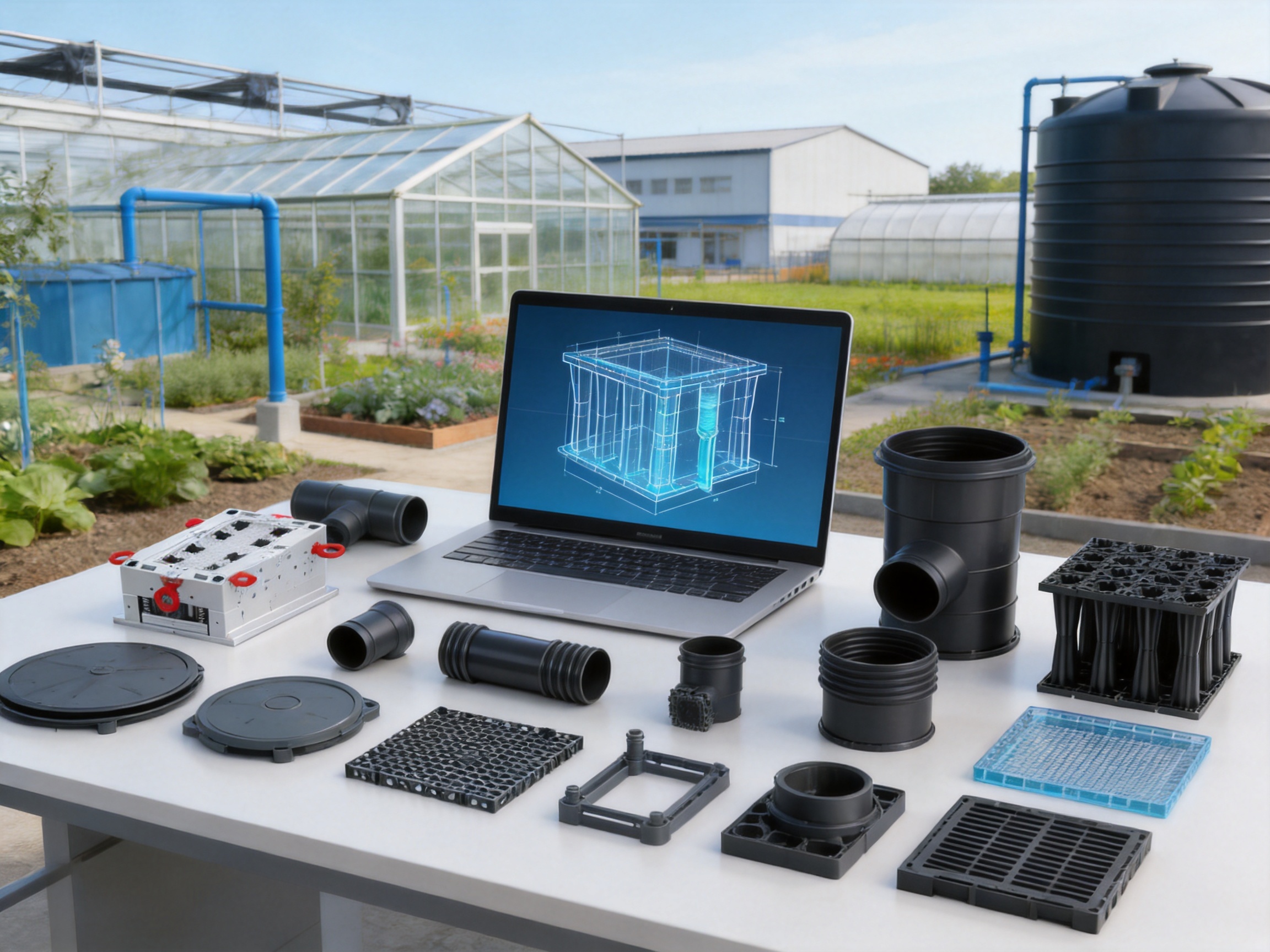
References
1. Injection Molding Design Principles, technical reference material on draft angles, gates, cooling, ejection, shrinkage, and mold construction.
2. Polymer Processing Guidelines for Polypropylene, reference information on PP material behavior, molding conditions, shrinkage, and outdoor product design.
3. Polymer Processing Guidelines for High-Density Polyethylene, reference information on HDPE toughness, chemical resistance, moisture resistance, and injection molding performance.
4. Mold Steel Selection Guide, reference material concerning P20, 718, pre-hardened mold steels, machinability, wear resistance, and polishing performance.
5. Rainwater Harvesting System Design Practices, reference information on collectors, roof drainage, storage tanks, overflow management, connectors, and non-potable water applications.
6. Injection Mold Maintenance and Preventive Service Guidelines, reference information on cleaning, lubrication, cooling systems, ejection systems, corrosion prevention, and production records.
7. Product and manufacturing information supplied for the Rainwater Collector and Components Plastic Mould.
Product: Rainwater Collector and Components Plastic Mould
For exclusive deals and latest offers, sign up by entering your email address below.
 +86-18657672567
 sales@tzhqmould.com
celin@tzhqmould.com
 No. 17 Houshi Road, Beicheng Industrial Zone, Huangyan District, Taizhou City, Zhejiang Province, China
Copyright © Taizhou Huangyan Haiquan Plastic Mold Co., Ltd. All Rights Reserved
Injection Plastic Mould Maker

