

Round Airtight Plastic Lunch Bowl Injection Mould for Reliable Food Container Production
Admin 2026-09-28The Round Airtight Plastic Lunch Bowl Injection Mould is developed for manufacturers producing reusable food containers, meal preparation bowls, takeaway packaging, and kitchen storage products. It is designed around one of the most important requirements in modern food container production: dependable sealing between the bowl and its lid. A bowl may have an attractive appearance, but its commercial value depends heavily on whether it can protect food, resist leakage, remain dimensionally stable, and perform consistently throughout repeated production cycles.
This mould provides a practical solution for manufacturers seeking efficient mass production of round plastic lunch bowls. Its design combines precision machining, optimized cooling, hot runner technology, suitable mould steels, and flexible customization options. The result is a tooling platform capable of supporting multiple bowl capacities, lid locking structures, surface finishes, materials, and cavity configurations.
For food packaging and household product manufacturers, the mould is more than a forming tool. It is a production system that influences product quality, cycle efficiency, material consumption, assembly performance, and long-term manufacturing costs. A carefully engineered bowl mould can reduce common problems such as uneven wall thickness, lid mismatch, deformation, flash, poor surface appearance, and unstable dimensions.
Manufactured by Taizhou Huangyan Haiquan Plastic Mold Co., Ltd., this mould reflects the company’s experience in precision injection tooling for daily necessities, home appliances, automotive components, and industrial equipment. The company provides integrated support covering product development, mould design, machining, assembly, testing, delivery, and after-sales service.

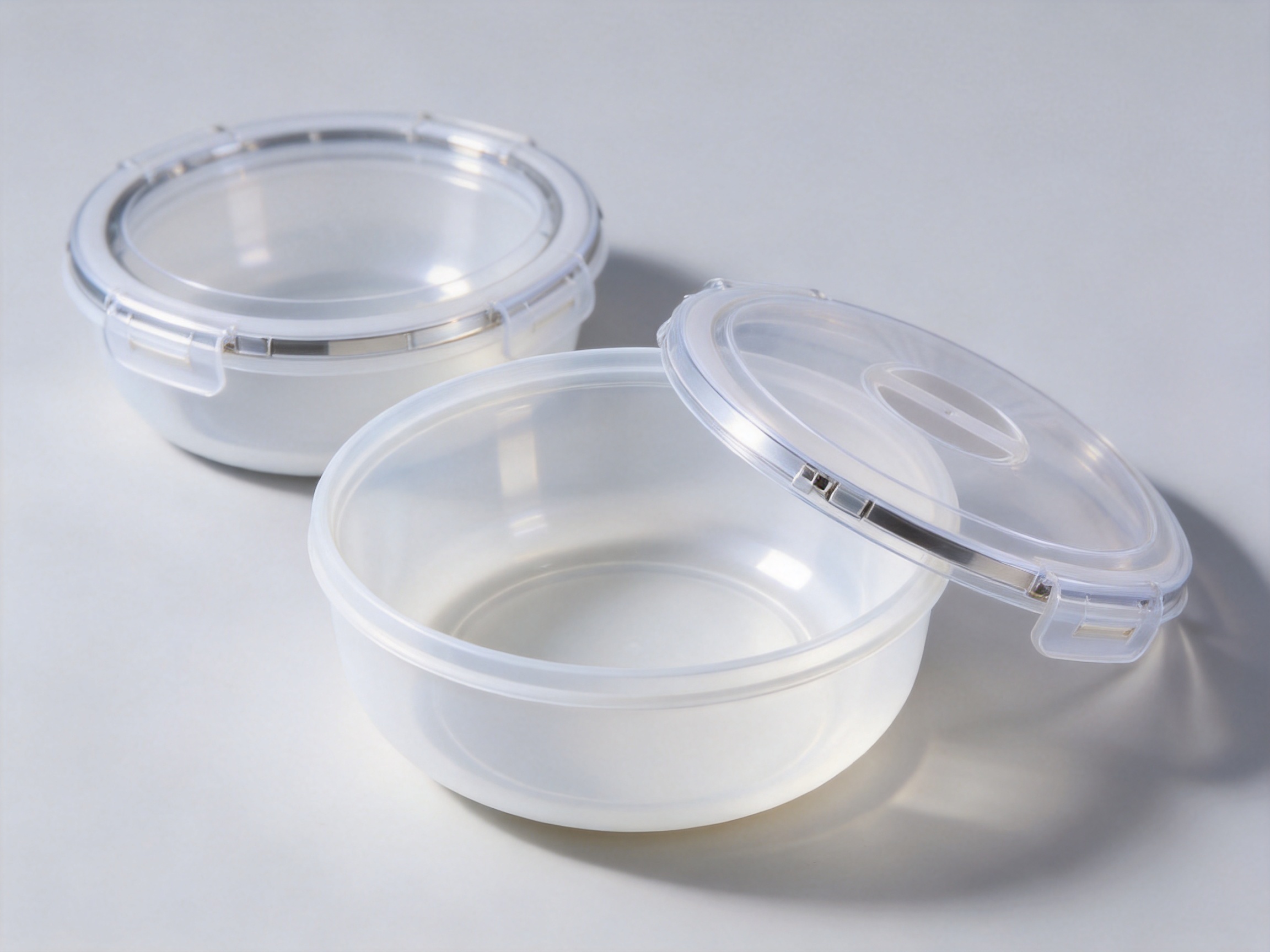
Round Airtight Plastic Lunch Bowl Injection Mould
Why Airtight Lunch Bowl Mould Design Matters
Food containers are subject to demanding functional expectations. Consumers want bowls that close securely, carry food without leaking, and remain convenient to open. Catering businesses require containers that can be produced quickly and assembled efficiently. Retail brands need stable quality, attractive appearance, and consistent dimensions across large production batches.
The mould directly affects each of these requirements. If the sealing edge of the bowl is not accurately formed, the lid may sit unevenly or require excessive force to close. If the cooling system is poorly balanced, the bowl may warp after ejection, leading to a gap between the lid and the container. If the mould surface is not finished correctly, the product may show visible defects that reduce its retail appeal.
The Round Airtight Plastic Lunch Bowl Injection Mould focuses on the interaction between the bowl and its lid. The sealing area is machined with close attention to edge dimensions, parting-line accuracy, and repeated alignment. This helps the finished container achieve a more stable fit during assembly and use.
Round products also require careful control of concentricity and cooling balance. A small dimensional variation around the circumference can affect the lid’s locking action. For this reason, the mould structure and cooling layout are designed to support uniform forming conditions. Better dimensional consistency helps manufacturers produce bowls that are easier to inspect, pack, stack, and distribute.
Main Product Advantages
Accurate Bowl and Lid Matching
The central advantage of this mould is its focus on sealing accuracy. The bowl rim and lid engagement area must work together as a complete system. The mould is engineered to maintain consistent edge dimensions, allowing the lid to close with a reliable fit.
Accurate matching is especially important for takeaway packaging and meal preparation containers. A lid that is too loose can permit spills during transport. A lid that is too tight can reduce user convenience and increase assembly time. By supporting controlled dimensions, the mould helps manufacturers achieve a practical balance between sealing security and ease of use.
The mould can also be adapted to different locking structures. Depending on the product concept, the lid may use a snap-fit edge, a recessed sealing area, a raised rim, or another customized engagement design. During the design stage, the mould structure can be developed around the intended opening force, sealing requirement, product material, and production equipment.
Improved Roundness and Reduced Warping
Warping is one of the most common challenges in the production of thin-wall plastic containers. Uneven cooling causes different areas of the product to shrink at different rates. On a round bowl, this can result in an oval shape, uneven rim height, or distortion around the lid contact area.
The mould uses optimized cooling channels to promote a more balanced cooling process. Effective cooling helps the plastic solidify in a controlled manner and reduces the risk of excessive deformation after ejection. Better roundness contributes directly to improved lid matching and more stable product stacking.
Balanced cooling can also help manufacturers maintain consistent cycle times. When cooling is uneven, operators may need to extend the cycle to reduce deformation. An optimized cooling layout supports more predictable production and can contribute to improved output efficiency.
Support for Thin-Wall Container Designs
Modern food packaging increasingly requires lightweight products that use less material while maintaining sufficient strength. Thin-wall bowls can reduce product weight, transportation costs, and material consumption. However, thin-wall injection moulding requires accurate filling, controlled cooling, and suitable gate design.
This mould supports the production of thin-wall bowls when the selected plastic material, injection machine, and processing parameters are properly matched. The mould structure can be developed to support stable filling and reduce the risk of incomplete areas, weld-line weakness, sink marks, or excessive deformation.
Thin-wall production also places higher demands on mould machining accuracy. Small variations in cavity dimensions may become visible in the finished product. Precision processing and careful mould assembly therefore play an important role in achieving uniform wall thickness and attractive appearance.
Suitable for Multiple Food Container Applications
The mould is suitable for producing a variety of round food containers. Depending on the final design, applications may include meal preparation bowls, lunch storage containers, food takeaway packaging, microwave-safe bowls, kitchen organization products, and reusable household storage containers.
Manufacturers can use the same general tooling concept for different market segments. A compact bowl may be developed for snacks or side dishes, while a larger version may be used for meal preparation or family food storage. By modifying the cavity dimensions, lid structure, and product details, the mould platform can be adapted to different product lines.
Product applications should always be evaluated according to the selected plastic material, food-contact requirements, temperature conditions, and intended use. The mould manufacturer can assist with design considerations, but the final product must be validated by the customer according to applicable market regulations and performance standards.
Engineering and Manufacturing Process
A reliable injection mould begins with a clear understanding of the product. Before steel is cut, the design team must review the bowl shape, lid structure, sealing method, wall thickness, draft angles, undercuts, logo requirements, material selection, and production volume.
Product Design Review
The initial design review evaluates whether the proposed bowl can be moulded efficiently. Engineers examine the parting line, gate position, ejection method, cooling requirements, and possible areas of deformation. The goal is to identify problems before mould manufacturing begins.
For an airtight lunch bowl, special attention is given to the rim, sealing edge, lid connection, and any locking features. These areas must be designed with sufficient draft for ejection while preserving the functional geometry of the final product. The design must also allow the mould to open and close without damaging the finished part.
A design review may recommend changes to wall thickness, corner radii, rib positions, or locking details. Such modifications can improve filling balance, reduce stress concentration, and support longer product life. Early design optimization is generally more economical than correcting a mould after production has started.
Three-Dimensional Mould Development
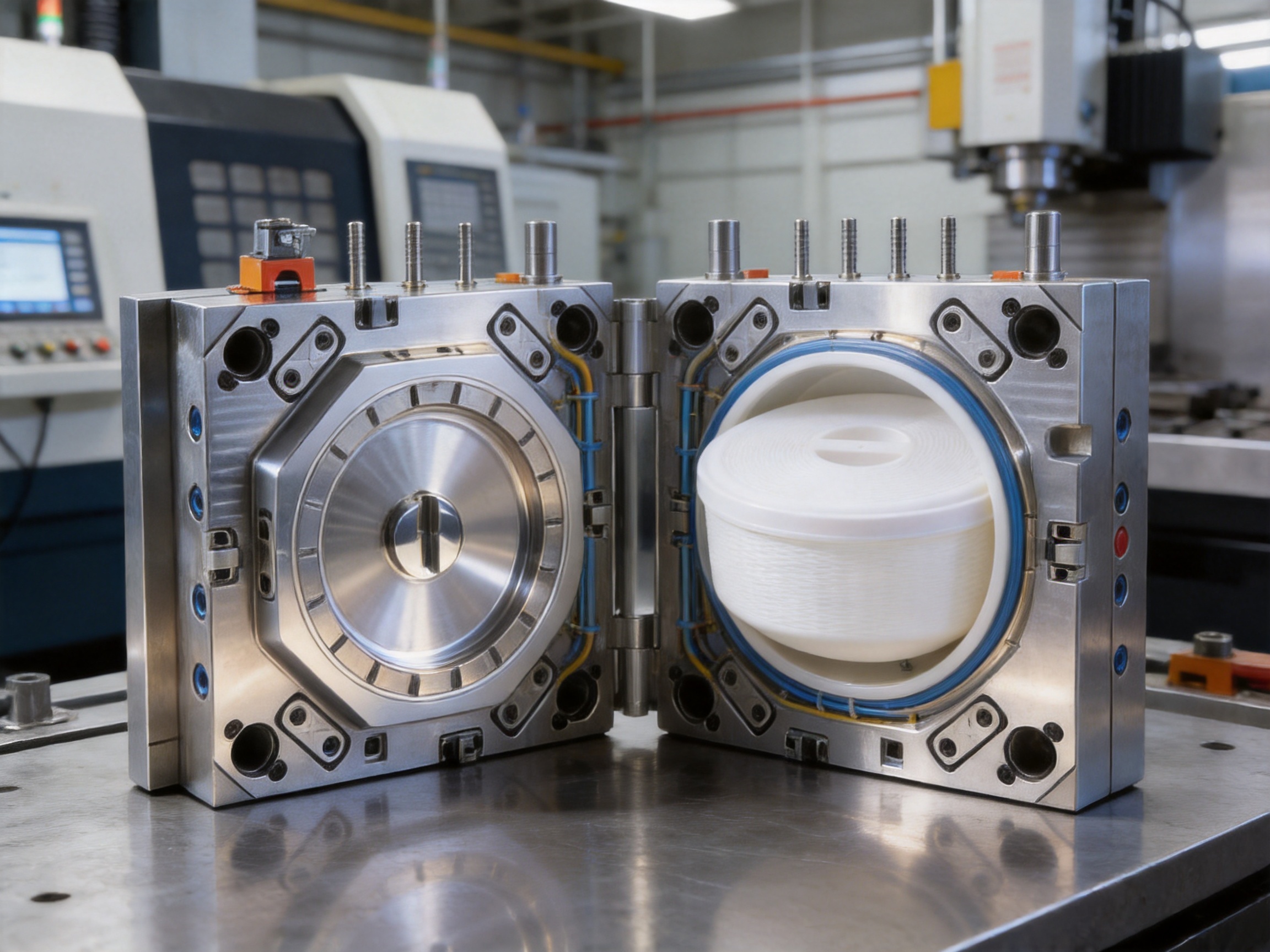
After product approval, the mould structure is developed using three-dimensional design methods. The design process defines the core, cavity, inserts, sliders if required, ejector components, cooling circuits, hot runner components, guide systems, and mould base.
Three-dimensional development allows engineers to inspect the relationship between the product and the mould. It also supports interference checks, cooling analysis, assembly review, and manufacturability evaluation. For a round bowl, the design team can check concentricity, rim continuity, cavity balance, and the position of the ejection system.
Computer-aided analysis may also be used to evaluate filling behavior and potential air-trap areas. Although actual results depend on the selected resin and machine conditions, early simulation can help guide gate placement and reduce trial-and-error during mould testing.
Steel Selection
The standard mould steel options for this product include 718 and S136. These steels are widely used in injection mould manufacturing because they can provide a suitable combination of strength, machinability, polishability, and durability when correctly processed and maintained.
718 steel is commonly selected for mould components that require dependable mechanical performance and a good surface finish. S136 is often considered when corrosion resistance and high-quality polishing are important. The final steel selection should be based on the product material, surface requirements, expected production volume, cooling conditions, and customer specifications.
For food container moulds, surface quality is particularly important because the product often has large visible areas. A polished cavity can support a clean and attractive appearance. The mould steel must also be processed correctly so that the cavity surface remains stable during repeated heating, cooling, filling, and ejection cycles.
Precision Machining
Precision machining forms the dimensional foundation of the mould. CNC milling, precision grinding, drilling, electrical discharge machining, and other manufacturing operations may be used according to the geometry of each component.
The rim and sealing surfaces require careful machining because small deviations can influence lid performance. The cavity and core must also maintain accurate alignment to avoid uneven wall thickness or visible parting-line mismatch. Mould components are inspected throughout the machining process rather than only after final assembly.
For complex locking features, inserts may be used to make future maintenance or modification more convenient. Replaceable inserts can also help protect important areas from wear and simplify the repair process if a sealing edge is damaged after long-term production.
Cooling System Optimization
Cooling is one of the most important factors in plastic bowl mould performance. The cooling system must remove heat from the cavity and core without creating significant temperature differences across the product.
The mould’s cooling channels are arranged to support even heat transfer around the bowl. The exact layout depends on product size, wall thickness, material, and mould structure. Proper spacing and flow balance can help reduce hot spots and improve dimensional stability.
Efficient cooling may shorten the time required for the product to reach a stable ejection temperature. This can support a more efficient production cycle, although actual cycle time depends on the injection machine, resin, mould temperature, injection speed, holding pressure, and other processing conditions.
Hot Runner Integration
The mould is specified with a hot runner system. Hot runner technology keeps the plastic melt in a heated flow path until it reaches the cavity. This can reduce or eliminate cold runner waste and help deliver material more directly to the product.
For high-volume food container production, lower runner waste can contribute to better material utilization. A hot runner system may also support consistent filling and a cleaner production process. The design must be matched to the chosen material and product geometry to achieve reliable performance.
Hot runner components require proper temperature control and maintenance. Operators should follow recommended start-up, shutdown, cleaning, and inspection procedures. The hot runner supplier, mould manufacturer, and production team should coordinate on nozzle selection, gate design, heater control, and processing conditions.
Mould Assembly and Testing
After individual components are completed, the mould is assembled and checked for alignment, movement, cooling flow, ejection operation, and surface quality. The core and cavity are inspected to confirm that the bowl geometry and lid-matching areas have been manufactured according to the approved design.
Trial production is then performed on a suitable injection moulding machine. During the trial, engineers evaluate filling behavior, product weight, dimensions, appearance, ejection, cooling, cycle stability, and lid fit. Samples may be measured using gauges, calipers, coordinate measuring equipment, or customer-approved inspection methods.
If a sample shows minor flash, short filling, warping, or an adjustment requirement, the mould and process are reviewed systematically. Corrections may involve steel modification, venting improvement, cooling adjustment, processing parameter changes, or product design refinement.
The goal of mould testing is not only to produce one acceptable sample. It is to establish a repeatable production condition that can be transferred to the customer’s manufacturing site. Trial documentation and sample approval help reduce uncertainty during mass production.
Technical Specifications
The following specifications represent the standard configuration described for the Round Airtight Plastic Lunch Bowl Injection Mould. Final specifications may be adjusted according to product size, customer requirements, machine conditions, and intended production volume.
| Mould Steel | 718 / S136 |
| Cavity Configuration | 2–4 cavities |
| Product Material | PP / Tritan / PET |
| Runner Type | Hot runner system |
| Expected Mould Life | 800,000+ shots |
| Surface Finish | Mirror polishing |
| Primary Product | Round airtight plastic lunch bowl |
| Customization Options | Capacity, locking structure, cavity count, logo engraving |
The stated mould life is an engineering reference and depends on material selection, injection pressure, operating conditions, maintenance, cooling-water quality, mould handling, and replacement of wear components. Regular preventive maintenance is essential for achieving long service life.
Material Compatibility and Product Performance
Polypropylene
Polypropylene, commonly known as PP, is widely used for food containers because it is lightweight, practical, and suitable for many household and packaging applications. It can provide a useful balance of toughness, chemical resistance, and processability.
PP is also compatible with thin-wall product designs when the mould and injection process are correctly configured. Product developers should consider shrinkage, flow behavior, transparency requirements, impact performance, and temperature exposure when selecting a PP grade.
Tritan
Tritan is a clear copolyester material often selected when a manufacturer wants a transparent or premium-looking container. It can offer an attractive appearance and may be used for products where visual inspection of the contents is important.
Processing conditions for Tritan differ from those for PP. Drying requirements, mould temperature, filling speed, and cooling settings must be managed according to the material supplier’s recommendations. The mould design should be validated with the specific grade intended for production.
PET
PET may be considered for products requiring particular clarity and stiffness characteristics. Its processing behavior is different from that of PP and Tritan, so material preparation and moisture control are important.
When using PET or another moisture-sensitive resin, the production team should maintain proper drying conditions and monitor the material throughout the process. Material handling can influence product clarity, strength, and dimensional performance.
Food-Contact Considerations
The suitability of a finished bowl for food contact depends on the complete product system, including resin grade, additives, colorants, processing conditions, cleaning procedures, and the regulations of the target market. The mould itself must be manufactured and maintained to the required quality, but regulatory compliance must be confirmed for the final product.
Manufacturers should obtain appropriate material documentation and perform the necessary testing before commercial release. The intended application, such as hot food, refrigerated storage, microwave use, or repeated washing, should be clearly defined during product development.
Customization Services for Different Market Requirements
Bowl Capacity Customization
Different users require different bowl capacities. A small bowl may be suitable for children’s meals, snacks, sauces, or side dishes. Medium and large bowls may be designed for lunch storage, meal preparation, family portions, or catering applications.
Capacity customization involves more than increasing or reducing the overall diameter. Engineers must consider bowl height, wall angle, base thickness, lid geometry, stacking behavior, and the available injection machine. A change in capacity may also influence cooling requirements and filling balance.
Lid Locking Structure Design
The lid is an essential part of an airtight container system. The locking design can be adapted according to the desired user experience and sealing performance. Possible concepts include snap-fit edges, press-on lids, recessed rims, flexible locking tabs, and other customer-specific structures.
Each design must be evaluated for opening force, closing force, repeated use, dimensional tolerance, material flexibility, and resistance to accidental release. A locking structure that performs well in a sample may require further adjustment when the product is produced in different materials or at different temperatures.
Multi-Cavity Production
The standard configuration supports two to four cavities. Multi-cavity moulds can increase output by producing several bowls during each injection cycle. This is particularly valuable for manufacturers with stable, high-volume orders.
However, cavity count should be selected carefully. More cavities may require a larger injection machine, higher clamping force, a more complex runner balance, and greater investment. A properly balanced mould is essential so that each cavity receives consistent filling and produces parts with similar weight and dimensions.
For businesses entering a new market, a two-cavity mould may provide a practical starting point. For established manufacturers with strong demand, a four-cavity configuration may provide higher productivity. The appropriate choice depends on forecast volume, available equipment, product price, and investment planning.
Brand Logo Engraving
Custom logo engraving can help manufacturers create a recognizable product identity. Logos may be placed on the lid, bowl base, side wall, or another approved area. The engraving method and depth should be selected according to product appearance, moulding direction, and cleaning requirements.
Logo details must be reviewed for readability after moulding. Very fine lettering or complex graphics may not reproduce clearly on all materials or surface finishes. The design team can recommend suitable dimensions and engraving styles for reliable production.
Advantages Over Less Specialized Mould Solutions
A general-purpose bowl mould may produce a basic container, but it may not address the specific requirements of airtight food packaging. The advantages of this specialized mould are related to its focus on sealing accuracy, roundness, cooling balance, material flexibility, and production reliability.
Better Attention to Sealing Geometry
Some lower-cost mould solutions focus mainly on exterior appearance and overlook the detailed interaction between the bowl rim and lid. For an airtight container, this approach can result in leakage, unstable assembly, or inconsistent opening force.
This mould gives the sealing area a central role in product development. The edge dimensions, lid engagement, and concentricity are reviewed as functional features rather than secondary details. This approach can help reduce the risk of producing attractive bowls that fail during practical use.
More Stable Dimensional Performance
Inadequate cooling and poor machining can lead to changing dimensions from cavity to cavity or from one production cycle to another. Such variation creates difficulties for automated lid assembly, inspection, packaging, and customer acceptance.
The combination of precision machining, balanced cooling, and controlled mould assembly supports more stable product dimensions. Consistency is especially valuable for brands selling containers in sets, because customers expect every bowl and lid to work in the same way.
Greater Production Flexibility
The ability to work with PP, Tritan, and PET gives manufacturers more options when developing product lines. They can select a material based on appearance, weight, strength, transparency, cost, and market positioning.
Capacity options, cavity configurations, and logo engraving further increase flexibility. Instead of purchasing a one-purpose tool with limited adaptation, customers can develop a mould around their specific commercial requirements.
Reduced Material Waste with Hot Runner Technology
A cold runner system can create runner material that must be recycled, discarded, or managed separately. A hot runner system can reduce this waste by delivering molten plastic directly to the cavity through heated components.
Material savings depend on the product, runner design, resin, processing conditions, and recycling policy. Nevertheless, hot runner technology is often a practical choice for high-volume production where material efficiency and cycle consistency are important.
Long-Term Production Value
A mould designed for more than 800,000 shots can provide substantial value over its operating life when properly maintained. High mould durability helps manufacturers spread tooling investment across a large number of products and reduces the need for frequent replacement.
Long-term value also depends on serviceability. Wear parts, hot runner components, cooling circuits, ejector systems, and sealing inserts should be accessible for inspection and replacement. A maintainable mould can remain productive for longer and reduce unexpected downtime.
Quality Management and Manufacturing Strengths
Taizhou Huangyan Haiquan Plastic Mold Co., Ltd. operates as a high-tech enterprise specializing in the research, development, and manufacture of precision injection moulds. Its production experience covers daily necessities, home appliances, automotive parts, and industrial equipment.
This broad sector experience is valuable because different industries place different demands on tooling. Daily-use products require attractive surfaces and practical cycle performance. Automotive parts require dimensional accuracy and durability. Industrial components may require complex structures and high mechanical reliability. Knowledge from these fields can support a disciplined approach to lunch bowl mould production.
The company emphasizes quality-first manufacturing and sustainable development. Its professional design team and scientific production management system support an integrated workflow from product design and mould engineering to manufacturing, testing, delivery, and after-sales service.
Design Team Coordination
Successful mould production requires cooperation between product designers, mould engineers, machinists, quality personnel, and the customer’s production team. Design decisions made without considering manufacturing conditions can create avoidable problems later.
Coordinated review helps ensure that the bowl design, lid structure, cavity layout, hot runner system, cooling circuits, and injection machine requirements are compatible. It also provides an opportunity to discuss inspection standards, spare parts, packaging, installation, and maintenance before delivery.
Scientific Production Management
Production management influences the consistency of every mould component. Scheduling, process documentation, material control, inspection records, and assembly procedures all contribute to the final result.
A structured production system helps the manufacturer track the progress of the mould from raw steel preparation through machining and final testing. It also makes it easier to identify and correct deviations before they affect delivery or product performance.
International Service Experience
The company exports moulds to Europe, the Middle East, Southeast Asia, and South America. Serving customers in different regions requires attention to communication, technical documentation, packaging, delivery coordination, and local production requirements.
International experience can help customers receive clearer support during project development and mould installation. It also encourages the manufacturer to maintain consistent quality and documentation standards for different markets.
Production Efficiency and Cost Considerations
Tooling cost should not be evaluated only by the initial quotation. The full economic value of a bowl mould includes cycle time, material consumption, cavity output, maintenance requirements, product rejection rate, service life, and the cost of production interruptions.
A mould with a low initial price may become expensive if it creates frequent flash, unstable dimensions, long cooling cycles, or high scrap rates. Conversely, a carefully engineered mould may provide a better return through higher productivity and fewer quality problems.
The hot runner system can help manage material use, while multi-cavity production can increase output per cycle. Optimized cooling may reduce the time required before ejection. Accurate sealing geometry can lower the risk of rejecting bowls and lids because of poor fit.
Manufacturers should calculate tooling economics according to expected annual volume. A high-cavity mould may be justified for large orders but unnecessary for small or seasonal production. The mould supplier can compare different cavity configurations and recommend a solution based on the customer’s machine capacity and production plan.
Recommended Maintenance Practices
Regular maintenance is essential for protecting mould accuracy and service life. After production, the mould should be cleaned of residual plastic, dust, grease contamination, and moisture. The cavity and core surfaces should be inspected for scratches, corrosion, or deposits.
Cooling channels should be monitored because scale or contamination can reduce heat transfer and create temperature imbalance. Water quality management, periodic flushing, and appropriate cooling-system maintenance can help preserve stable mould temperatures.
The hot runner system should be inspected according to the component supplier’s recommendations. Temperature controllers, heaters, thermocouples, nozzles, and gates should be checked when processing problems appear. Sudden changes in pressure, filling behavior, or product weight may indicate a hot runner or material issue.
Ejector pins, guide components, slides, and moving inserts should be lubricated with suitable products at appropriate intervals. Excessive grease should be avoided because it can migrate into product areas or attract contamination.
At the end of a production run, the mould should be stored in a dry environment with protective measures against corrosion. Proper handling during removal, transportation, and installation is equally important. Dropping or misaligning a mould can damage precision surfaces even when the original tooling was manufactured correctly.
Application Examples
Meal Preparation Bowls
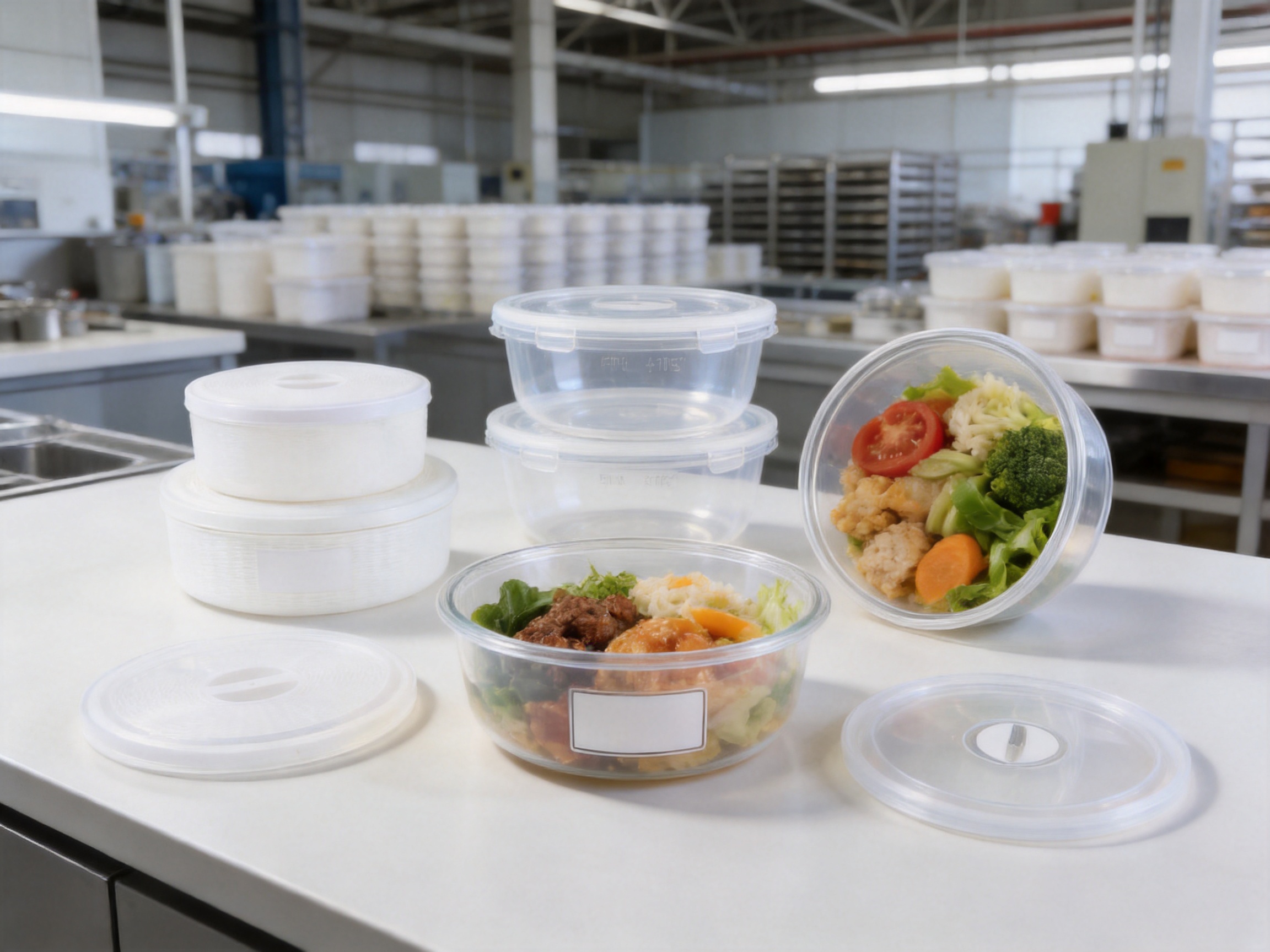
Meal preparation users often need containers that can be filled, stacked, transported, and stored in refrigerators. A stable lid fit helps protect prepared food, while consistent dimensions make multiple containers easier to organize.
The mould can be adapted to capacities suitable for individual meals, side dishes, or larger portions. Product developers may also add volume markings, brand logos, or stacking features according to the intended market.
Lunch Storage Containers
Lunch storage products require a balance between portability and sealing performance. The bowl should be light enough for daily use while maintaining sufficient rigidity and dimensional stability.
PP may be selected for a practical reusable container, while a clear material may be used when visibility of the contents is a key selling point. The locking structure can be adjusted to suit children, office workers, catering users, or general household applications.
Takeaway Food Packaging
Takeaway packaging must support fast filling, secure closing, stacking, and transport. For restaurants and food service providers, consistent lid engagement is important because containers may be handled quickly and moved through delivery systems.
Multi-cavity moulds can support larger production volumes, while hot runner technology may help reduce runner waste. The final product design should take into account food temperature, transportation time, disposable or reusable positioning, and local packaging regulations.
Microwave-Safe Bowl Concepts
Some food containers are designed for reheating. In such cases, the product material, lid venting, wall thickness, and sealing structure must be carefully evaluated. A fully airtight lid may not be suitable for every heating condition because pressure can build inside the container.
The mould can be customized for a lid with controlled venting or a different sealing arrangement when required. The finished product must be tested under the intended microwave and temperature conditions before being marketed as microwave-safe.
Project Development Workflow
A typical project begins with the customer providing product drawings, three-dimensional data, samples, or a concept description. The engineering team reviews the available information and identifies the key requirements for the bowl, lid, material, capacity, cavity number, and production volume.
The next stage is design optimization. Engineers review draft angles, wall thickness, parting lines, gates, cooling circuits, ejection, logo placement, and assembly tolerances. Any recommended changes are discussed with the customer before detailed mould design is finalized.
After design approval, mould steel and standard components are prepared. Machining is carried out according to the approved drawings and process plan. Important dimensions and surface areas are inspected during production to maintain control over the mould quality.
The assembled mould is tested using the selected or an equivalent plastic material. Samples are produced and evaluated for appearance, dimensions, weight, roundness, lid fit, sealing behavior, and ejection performance. The customer may review samples and provide approval or adjustment comments.
After final corrections, the mould is cleaned, protected, documented, and prepared for shipment. Technical files may include mould drawings, operating recommendations, spare parts information, inspection records, and trial data. Installation and production support can then continue after the mould reaches the customer’s facility.
How to Select the Right Configuration
Before ordering a lunch bowl mould, manufacturers should define the required product capacity and external dimensions. These details influence the mould base, cavity arrangement, machine size, cooling layout, and packaging method.
The intended plastic should be selected early. PP, Tritan, and PET have different flow, shrinkage, drying, and cooling characteristics. Changing material after mould completion may require processing adjustments or, in some cases, design modifications.
Production volume is another important factor. Customers should estimate daily, monthly, and annual output rather than selecting cavity count only by the lowest tooling price. A two-cavity mould may be suitable for moderate demand, while a four-cavity mould can support higher output if the injection machine is capable of handling it.
The lid structure must also be clearly defined. Customers should decide whether they want a snap-fit lid, press-fit lid, locking rim, vented design, or another arrangement. Opening force, sealing performance, repeated use, and user convenience should all be considered.
Finally, manufacturers should discuss surface requirements. Mirror polishing can support a smooth, attractive product appearance, but different areas may require different textures or gloss levels. Logo engraving, measurement marks, ribs, and stacking features should be included in the mould design from the beginning.
Frequently Asked Questions
What products can be made with this mould?
The mould is designed for round airtight plastic lunch bowls and related food containers. It can support meal preparation bowls, lunch storage containers, takeaway packaging, reusable kitchen bowls, and selected microwave-safe bowl concepts, subject to material and product validation.
How many cavities does the mould support?
The standard specification supports two to four cavities. The final cavity number depends on the required output, bowl size, product material, injection machine, mould investment, and customer production plan.
Which plastic materials can be used?
The listed material options are PP, Tritan, and PET. The customer should select a specific grade based on food-contact requirements, transparency, toughness, temperature exposure, dimensional performance, and intended use. Processing conditions must be adjusted for each material.
Why is a hot runner system used?
A hot runner system delivers molten plastic to the cavity through heated flow channels. It can reduce cold runner waste, support stable filling, and improve material utilization in high-volume production. Proper temperature control and maintenance are necessary for reliable operation.
Can the bowl capacity be customized?
Yes. Bowl capacity, height, diameter, wall thickness, lid dimensions, and stacking features can be developed according to the customer’s requirements. Any capacity change should be reviewed for cooling, filling, ejection, and machine compatibility.
Can a custom brand logo be added?
Yes. Custom brand logo engraving can be incorporated into the mould. The logo location, size, depth, and style should be reviewed to ensure that it reproduces clearly and does not interfere with sealing, ejection, cleaning, or product appearance.
What does 800,000+ shots mean?
This figure is an expected reference for mould service life under suitable operating and maintenance conditions. Actual service life depends on the resin, processing pressure, cycle frequency, cooling-water quality, maintenance schedule, mould handling, and replacement of wear components.
How does the mould reduce bowl deformation?
Optimized cooling channels help distribute heat removal more evenly around the bowl. Accurate machining and stable mould assembly also support consistent geometry. Final deformation depends on the material and injection process, so production parameters must be optimized during trial moulding.
Is the finished bowl automatically certified for food contact?
No. Food-contact compliance applies to the complete finished product and depends on the selected resin, additives, colorants, processing conditions, and target-market regulations. The manufacturer must arrange the appropriate documentation and testing before commercial release.
What information should be provided for a quotation?
Useful information includes product drawings or samples, bowl and lid dimensions, capacity, material, cavity requirement, annual output, injection machine details, surface finish, logo requirements, sealing structure, target market, and expected delivery schedule.
Conclusion
The Round Airtight Plastic Lunch Bowl Injection Mould is engineered for manufacturers that require more than a basic round container tool. Its primary focus is the accurate relationship between the bowl and lid, supported by precision machining, optimized cooling, thin-wall capability, hot runner technology, and flexible customization.
With 718 or S136 steel options, two- to four-cavity configurations, compatibility with PP, Tritan, and PET, mirror polishing, and an expected service life of more than 800,000 shots under suitable conditions, the mould can support both medium-scale and high-volume production programs.
Its advantages over less specialized tooling include better attention to sealing geometry, improved roundness, more stable dimensions, lower runner waste, broad material flexibility, and stronger potential for long-term production value. These benefits can help manufacturers improve product quality while managing output, material use, and operating costs.
Taizhou Huangyan Haiquan Plastic Mold Co., Ltd. combines mould design, precision manufacturing, quality management, trial testing, and after-sales support in one integrated service. With experience serving daily necessities and several other demanding industries, the company is positioned to assist customers from initial product concept through mass production.
For food container manufacturers, a well-designed mould is an important investment in the entire product line. By defining the sealing structure, material, capacity, cavity number, surface finish, and production goals at the start of the project, customers can develop a dependable tool for producing attractive, functional, and consistent round airtight plastic lunch bowls.
References
1. Injection Molding Handbook, principles of mould design, polymer processing, cooling, and production control.
2. Plastics Engineering Fundamentals, guidance on thermoplastic flow, shrinkage, warpage, and dimensional stability.
3. Polymer Processing Reference Materials, technical considerations for polypropylene, copolyester, and polyethylene terephthalate.
4. Food Packaging Design Principles, product sealing, material selection, transport performance, and food-contact evaluation.
5. Industrial Mould Maintenance Practices, recommendations for cooling systems, hot runners, ejector components, lubrication, and corrosion prevention.
Product: Round Airtight Plastic Lunch Bowl Injection Mould

For exclusive deals and latest offers, sign up by entering your email address below.












 +86-18657672567
 sales@tzhqmould.com
celin@tzhqmould.com
 No. 17 Houshi Road, Beicheng Industrial Zone, Huangyan District, Taizhou City, Zhejiang Province, China
Copyright © Taizhou Huangyan Haiquan Plastic Mold Co., Ltd. All Rights Reserved
Injection Plastic Mould Maker

