

Top-Lid Household Plastic Trash Bin Injection Mould: Durable, Efficient, and Production-Ready Tooling
Admin 2026-09-18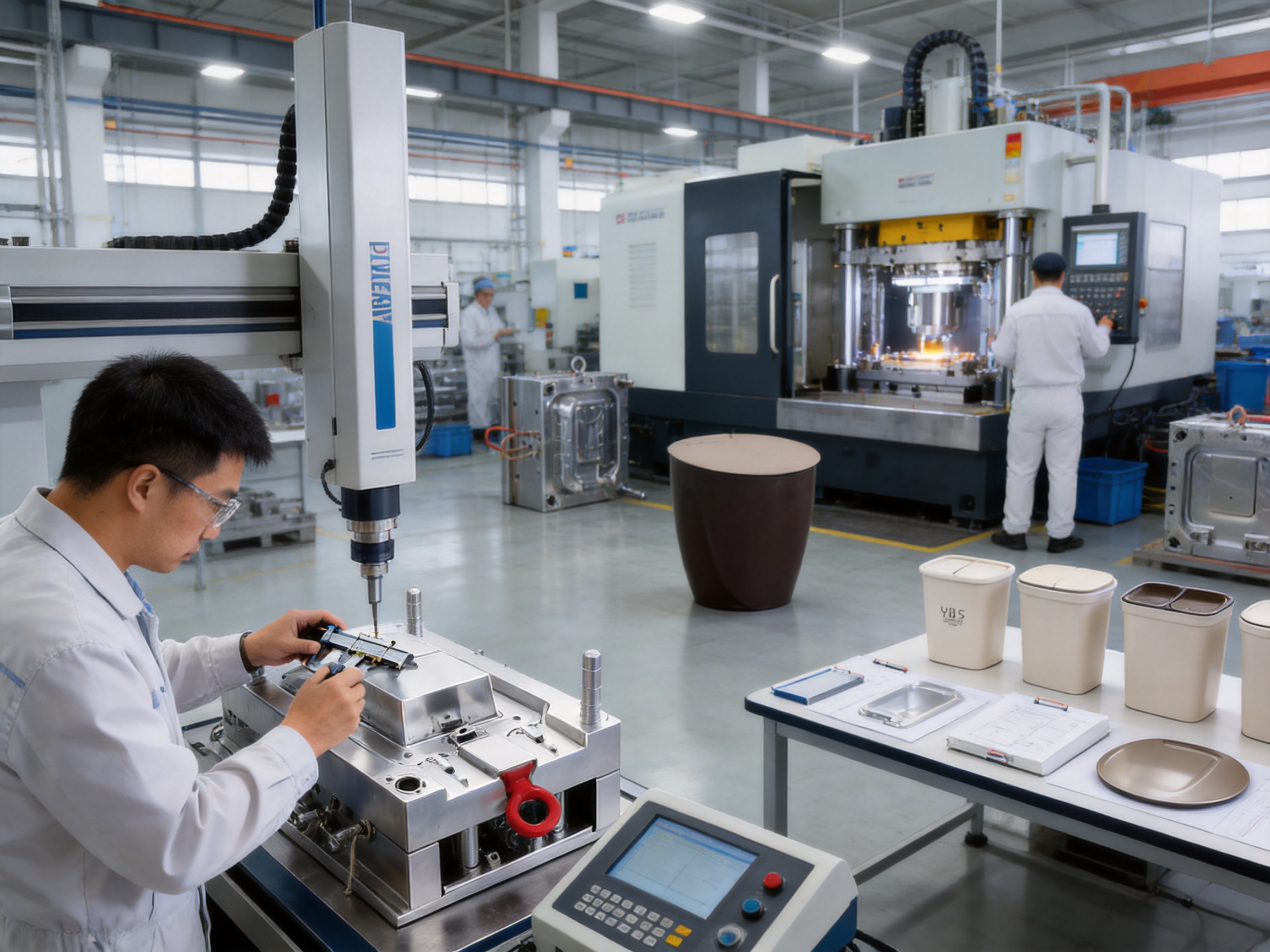
Modern waste containers must combine practical capacity, clean appearance, reliable operation, and long service life. Although a trash bin may appear to be a simple household product, manufacturing a high-quality plastic bin requires carefully engineered tooling. Large thin-wall surfaces, integrated lids, reinforced corners, moving hinges, visible exterior panels, and dimensional stability all place demanding requirements on the injection mould.
The Top-Lid Household Plastic Trash Bin Injection Mould is developed for the efficient production of practical plastic waste bins used in homes, offices, bathrooms, commercial facilities, and public areas. Designed for polypropylene or high-density polyethylene, the mould supports a strong bucket body, a functional top lid, and a consistent surface finish. Its one-cavity configuration, hot runner system, optimized gate design, and controlled cooling arrangement provide a balanced solution for manufacturers seeking dependable quality and repeatable production.
This mould is supplied by Taizhou Huangyan Haiquan Plastic Mold Co., Ltd., a high-tech enterprise specializing in the research, development, and manufacturing of precision injection moulds. The company serves daily necessities, home appliances, automotive parts, and industrial equipment sectors. Its capabilities extend from product and mould design through production, inspection, delivery, and after-sales service, allowing customers to manage a complete tooling project through one experienced manufacturing partner.
Product Overview
The Top-Lid Household Plastic Trash Bin Injection Mould is intended to produce waste bins with a practical upper lid and a reinforced container body. The design is suitable for a variety of household and light commercial applications where cleanliness, convenience, and appearance are important. The product can be configured for different capacities and lid structures, allowing it to support a range of market requirements without changing the fundamental manufacturing concept.
A top-lid bin is expected to withstand repeated opening and closing, daily handling, movement across floors, and exposure to common household conditions. The mould therefore needs to create more than an attractive external shell. It must form a body with appropriate wall distribution, robust corners, stable base geometry, and reliable interfaces for the lid and related components. The mould also needs to support efficient filling and cooling so that production can remain stable over extended operating periods.
This tooling solution is designed around those requirements. The integrated lid structure helps create a coordinated product assembly, while reinforced bucket areas improve resistance to deformation during use. The mould’s cooling system is arranged to support dimensional control in a relatively large plastic product. This is especially important because large surfaces can be affected by uneven shrinkage, warpage, residual stress, or inconsistent cooling if the mould is not properly engineered.
The mould uses P20 or 718 mould steel, a hot runner system, and a one-cavity layout. It is suitable for PP and HDPE materials and is designed for a mould life of approximately 600,000 shots under appropriate operating, maintenance, and processing conditions. These specifications provide a practical balance between initial tooling investment, product quality, production reliability, and expected service life.

Top-Lid Household Plastic Trash Bin Injection Mould
Functional Design of the Top-Lid Bin
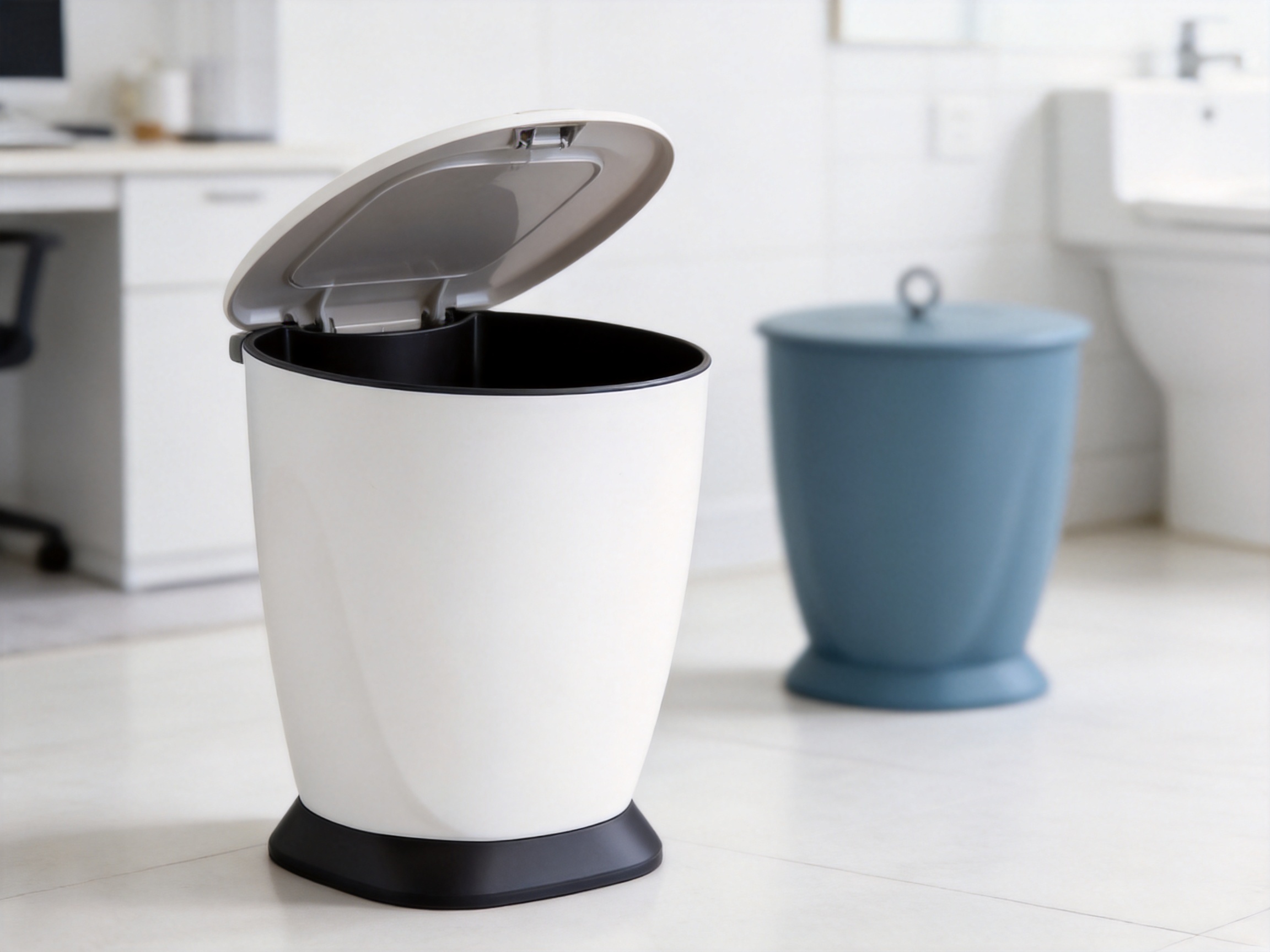
The top-lid configuration gives the finished bin a clean and functional appearance. A lid helps contain odours, conceal waste, reduce the visual exposure of discarded materials, and limit the entry of dust or foreign objects. In household and office environments, a covered bin also contributes to a more organized and hygienic appearance than an open container.
From a moulding perspective, the top lid must be produced with accurate geometry so that it aligns properly with the bin body. Misalignment can lead to uneven gaps, interference during opening, poor seating, or a weak visual impression. The mould is designed to support consistent lid dimensions and a stable interface between the lid and the container. This allows the finished product to operate smoothly while maintaining a neat exterior.
The reinforced bucket body is another important feature. Waste bins are frequently lifted, pushed, emptied, or placed against other objects. A body with carefully designed ribs, corners, and support areas can resist deformation more effectively than a basic unsupported shell. Reinforcement also helps the product retain its shape when filled with waste or exposed to repeated handling.
Reinforcement must be designed carefully because excessive material concentration can create sink marks, uneven shrinkage, or longer cooling times. The mould’s optimized gate design and cooling arrangement help manage these risks. Instead of relying simply on thicker walls, the product structure can use appropriately positioned strengthening features to improve performance while maintaining reasonable material efficiency.
The product geometry is suitable for practical daily use. Household trash bins may be placed in kitchens, bedrooms, bathrooms, utility rooms, garages, or shared areas. Office waste containers may be positioned under desks, beside workstations, or in meeting areas. The mould can also support product variations for different capacities, lid forms, and styling requirements, enabling manufacturers to serve more than one market segment.
Material Compatibility
The mould supports polypropylene and high-density polyethylene, two widely used materials for plastic waste containers. Both materials offer useful combinations of toughness, chemical resistance, low moisture absorption, and processing flexibility. The choice between PP and HDPE depends on the desired product feel, rigidity, impact resistance, temperature performance, cost target, and customer preference.
Polypropylene is commonly selected when a lightweight product with good stiffness and a clean appearance is required. It can provide a practical balance between strength and weight, helping reduce handling effort and transportation cost. PP is also suitable for many household products because it has good resistance to a broad range of chemicals and can be processed in a variety of colours.
High-density polyethylene is valued for toughness, impact resistance, and durability. It can be appropriate for bins that may experience rough handling, repeated movement, or contact with heavier waste. HDPE also provides good resistance to moisture and many common chemicals, making it suitable for bathroom, utility, and outdoor-adjacent applications.
Material selection affects moulding conditions. Melt temperature, injection speed, holding pressure, cooling time, and shrinkage behaviour vary between PP and HDPE grades. A properly manufactured mould gives the processor a stable foundation, but the final result still depends on using an appropriate material grade and establishing a validated processing window.
The cavity surfaces, runner arrangement, cooling channels, and ejection system must work together with the selected polymer. A mould that fills effectively with one material may require process adjustments when another grade is used. For this reason, material compatibility should be evaluated during product development rather than only after mould completion.
Optimized Gate Design and Surface Quality
Visible household products require a consistent external appearance. Users typically notice sink marks, flow lines, weld lines, colour variation, scratches, and uneven gloss immediately. For a large trash bin, the visible side panels and lid are particularly important because they occupy a broad area and often determine the perceived quality of the product.
The Top-Lid Household Plastic Trash Bin Injection Mould uses an optimized gate design to help reduce sink marks on visible surfaces. Gate location influences melt flow, packing efficiency, weld-line position, filling balance, and the appearance of the finished part. A well-planned gate arrangement helps direct material into the cavity in a controlled manner and supports adequate packing of important structural areas.
Sink marks are commonly associated with localized thick sections, ribs, bosses, or areas that cool more slowly than surrounding walls. As the internal material contracts, the external surface can be pulled inward. Gate positioning, packing pressure, cooling conditions, wall design, and material selection all influence this phenomenon. The mould cannot eliminate every process-related defect by itself, but optimized tooling substantially improves the manufacturer’s ability to control them.
A good gate design also supports a more predictable filling pattern. Predictability is valuable during process setup because it reduces trial-and-error adjustments. Operators can more easily establish suitable injection speed, pressure, and holding parameters when the cavity fills consistently from cycle to cycle.
For coloured bins, surface consistency is equally important. A stable filling and cooling process helps reduce visible variation between production batches. When the mould is combined with suitable resin, masterbatch, processing conditions, and quality controls, it can support an attractive product suitable for retail and institutional markets.
Cooling System for Dimensional Stability
Large plastic products require careful thermal management. During injection moulding, molten plastic enters the cavity at an elevated temperature and must cool sufficiently before ejection. If cooling is uneven, one area may contract more quickly than another. This can result in warpage, twisting, uneven edges, lid misalignment, or dimensional drift.
The mould incorporates cooling designed to improve dimensional stability for large products. Cooling channels are positioned to remove heat from the cavity and core in a controlled way. The objective is not simply to cool the part as quickly as possible. The goal is to create a balanced thermal condition that supports consistent shrinkage and acceptable cycle time.
Dimensional stability is especially important for a bin with a lid. The body must retain its intended opening dimensions, while the lid must maintain the correct shape for smooth operation and proper seating. If either component warps excessively, the completed product may look uneven or operate poorly. Stable cooling reduces the risk of these problems and supports more predictable assembly.
Cooling also influences productivity. A cycle that is unnecessarily long increases manufacturing cost and limits machine output. On the other hand, reducing cooling time too aggressively can cause premature ejection, distortion, or residual stress. Effective mould cooling helps manufacturers find a more productive balance between cycle time and product quality.
Water temperature, flow rate, pressure, channel cleanliness, and chiller performance all influence the effectiveness of the cooling system. Regular maintenance is therefore essential. Scale, corrosion, or restricted water passages can gradually reduce cooling performance even when the mould itself remains mechanically sound. Manufacturers should include cooling-circuit inspection in their normal mould maintenance program.
Hot Runner System Advantages
The mould is equipped with a hot runner system. Hot runners keep the plastic melt in a heated state as it travels through the runner system to the cavity. Compared with a conventional cold runner, this arrangement can reduce or eliminate the amount of solidified runner waste generated during each cycle.
Reduced runner waste may improve material utilization, particularly in high-volume production. It can also reduce the need to collect, regrind, and reprocess runner material. Depending on the material grade and product requirements, minimizing regrind can help support more consistent material performance and colour control.
A hot runner can also contribute to a more direct and controlled filling process. Proper temperature control helps maintain melt flow through the runner system, while the gate design determines how the melt enters the cavity. Together, these features can support a stable process for a large household product.
Hot runner tooling requires appropriate temperature control and maintenance. The processor must ensure that heaters, thermocouples, controllers, nozzles, and gate areas are operating correctly. Start-up procedures should allow the system to reach a stable temperature before injection begins. Sudden temperature changes, contaminated material, or poor shut-down practices may cause drooling, blockage, or inconsistent filling.
When properly operated, the hot runner system is a strong advantage for manufacturers seeking efficient production and improved material utilization. It is particularly suitable for products where surface quality, filling consistency, and repeated production are important.
One-Cavity Configuration
The Top-Lid Household Plastic Trash Bin Injection Mould uses a one-cavity configuration. A one-cavity mould produces one primary product set during each injection cycle. This configuration can be advantageous for large products because it simplifies filling balance, cooling management, ejection, and process control.
For a large bin body, a one-cavity arrangement can provide a practical solution without the complexity of balancing multiple large cavities. Multi-cavity tooling may offer higher output, but it normally requires greater machine capacity, more extensive balancing analysis, higher tooling investment, and more complex maintenance. A one-cavity design can therefore be appropriate for manufacturers whose production volume, product size, or market strategy does not require multiple cavities.
One-cavity tooling is also suitable for product development and staged market entry. A manufacturer can begin with one dependable mould, validate the product, build customer demand, and later consider additional moulds if production volume grows. This approach can help manage investment risk while maintaining a clear path toward expansion.
Although output per cycle is lower than that of a multi-cavity mould, overall production performance depends on many factors, including cycle time, machine availability, reject rate, changeover time, maintenance, and product demand. A stable one-cavity mould can deliver more useful production than a theoretically faster mould that experiences frequent quality problems or lengthy adjustments.
Mould Steel Selection
The specified mould steel options are P20 and 718. Both are widely recognized mould steels used in plastic injection tooling. The final selection may depend on production volume, product geometry, surface requirements, processing conditions, maintenance expectations, and the customer’s budget.
P20 is commonly used for general-purpose injection mould components. It offers a practical combination of machinability, strength, polishability, and cost effectiveness. For many household product moulds, P20 provides a suitable foundation when the expected production demand and operating conditions are properly defined.
718 steel is often selected when improved mechanical performance, polishability, or durability is desired. It can be appropriate for moulds that require a higher level of reliability or more demanding surface results. The choice of steel should be made together with the intended production plan rather than based solely on material name.
Steel quality is only one part of mould durability. Heat treatment, machining accuracy, surface finishing, alignment, cooling design, ejection design, and maintenance all influence actual mould life. A high-grade steel cannot compensate for poor workmanship or unsuitable operating conditions. Conversely, correctly processed general-purpose steel can provide reliable service when the mould is appropriately engineered and maintained.
The stated mould life is approximately 600,000 shots. Actual service life may vary according to resin type, additives, injection pressure, cycle conditions, production environment, maintenance quality, and the definition of a completed shot. Regular cleaning, lubrication, inspection, and timely replacement of wear components help protect the tooling investment.
Manufacturing Process and Engineering Capability
Haiquan Mould operates as a complete plastic injection mould manufacturing company rather than only a machining supplier. Its activities cover research and development, product analysis, mould design, manufacturing, inspection, delivery, and after-sales support. This integrated approach is valuable because each stage affects the performance of the final tooling.
The process begins with understanding the product application and production objectives. Engineers consider the bin’s capacity, lid structure, wall thickness, appearance requirements, material, expected output, machine capability, and assembly needs. These factors guide decisions about parting lines, gates, runners, cooling channels, ejectors, inserts, sliders, draft angles, and mould base dimensions.
Product design review is particularly important for a large plastic bin. The engineer must evaluate whether the geometry can be filled smoothly, whether the wall structure is suitable for the selected material, and whether the product can be removed from the mould without damage. Adequate draft angles support ejection, while properly positioned ribs can improve strength without creating unnecessary thick sections.
During mould design, the parting line should be positioned to balance appearance, manufacturability, and ejection. A poorly selected parting line may create visible witness marks or complicate tooling construction. A carefully planned parting line can protect important surfaces and simplify mould maintenance.
Gate and runner planning is developed around the product shape and material flow. Engineers seek to fill the cavity with controlled pressure while limiting visible defects. For the top-lid bin, this includes attention to large exterior surfaces, reinforced body sections, corners, and areas that must remain dimensionally stable.
Cooling design is developed alongside the cavity and core design. This prevents thermal management from becoming an afterthought. The location and accessibility of cooling channels influence both production performance and maintenance. A well-integrated cooling layout supports stable cycle conditions and helps reduce deformation.
Ejection design must remove the large moulded product without damaging its appearance or distorting its shape. Ejector placement, force distribution, stroke, and timing are considered during engineering. Large flat surfaces may require balanced ejection to prevent local stress or sticking.
After design approval, machining and mould assembly are carried out according to the approved technical requirements. Precision machining establishes the cavity geometry, core geometry, parting surfaces, runner elements, cooling passages, and ejection components. Assembly then brings these elements together with attention to alignment, fit, movement, and repeatability.
Inspection is an important part of the manufacturing process. Dimensional checks, visual inspection, component fitting, movement tests, cooling tests, and trial moulding help identify issues before shipment. Trial production also allows engineers to review filling, surface appearance, parting-line quality, ejection performance, and dimensional consistency.
This structured process helps reduce the risk of transferring unresolved tooling problems to the customer’s factory. It also creates a technical record that can be used for future modifications, maintenance, and product variations.
Advantages Compared with Basic or Poorly Engineered Moulds
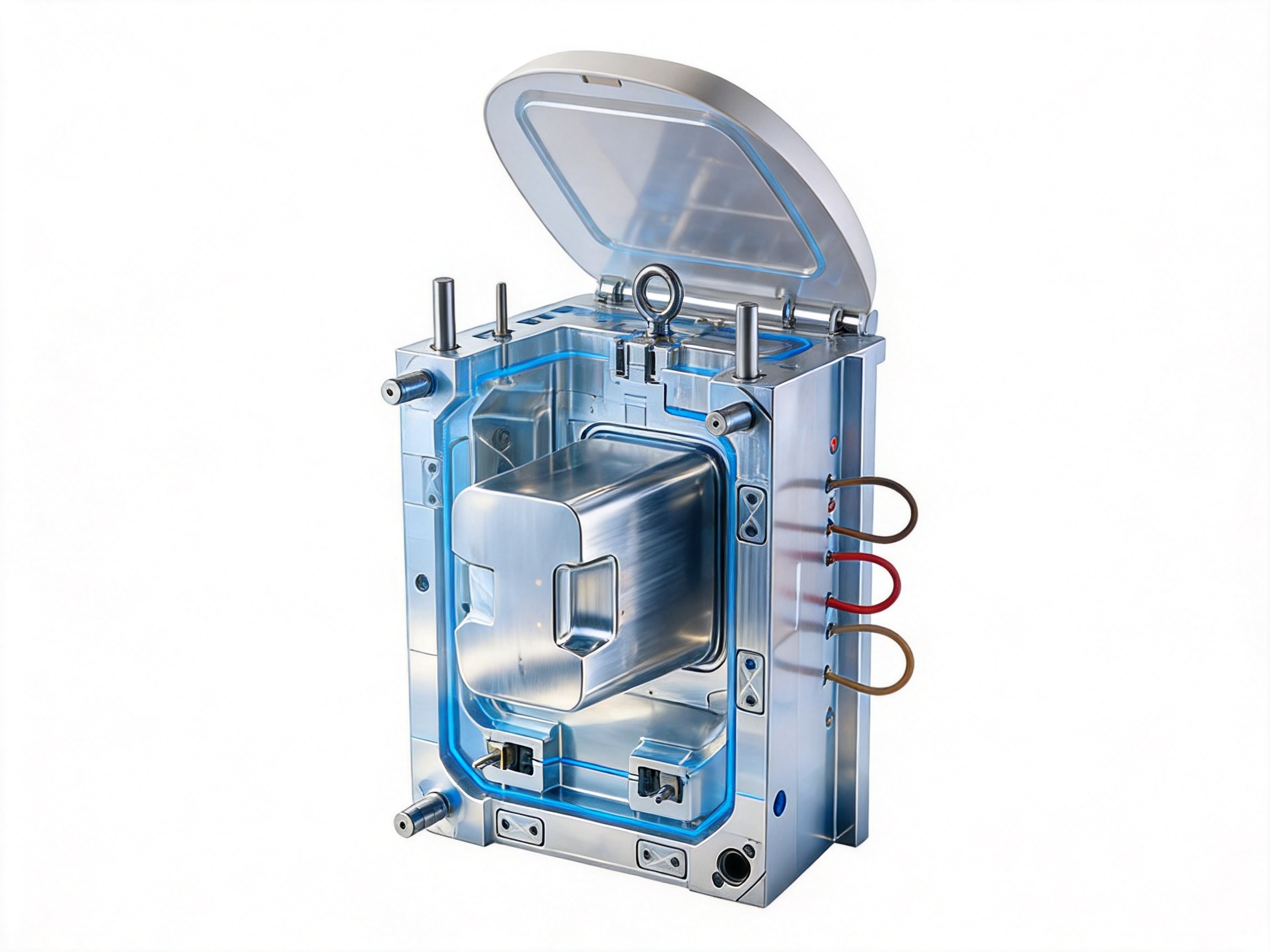
The main advantage of this mould is that it is engineered as a complete production system rather than as a simple cavity and core. A basic mould may produce an initial sample, but it can struggle with long-term stability, surface quality, cycle time, or maintenance. The Top-Lid Household Plastic Trash Bin Injection Mould addresses these concerns through coordinated gate, runner, cooling, steel, and structural design.
First, the optimized gate design helps improve visible surface quality. This is important for consumer products, where appearance influences purchase decisions and brand perception. Reducing the risk of sink marks and uncontrolled flow patterns gives the manufacturer a stronger starting point for achieving a clean finish.
Second, the cooling arrangement is designed with the size and geometry of the bin in mind. Poorly cooled large moulds may produce parts with inconsistent dimensions and frequent warpage. Controlled cooling improves the likelihood that the body and lid will remain stable during production.
Third, the hot runner system supports better material utilization and a more direct melt delivery method. Compared with a cold runner system, it can reduce runner waste and simplify material handling. This may be particularly valuable when the product is produced in large quantities or when material cost is a major consideration.
Fourth, the reinforced body concept improves the practical performance of the finished bin. A product that retains its shape during daily use is more valuable than one that only looks acceptable immediately after moulding. Structural reinforcement can improve resistance to handling, loading, and repeated movement.
Fifth, the one-cavity arrangement provides a controlled and manageable tooling structure. It avoids the complexity of balancing several large cavities while still supporting reliable production of a substantial product. This can be a sensible option for manufacturers with moderate output requirements or multiple product models.
Sixth, the available P20 and 718 steel options allow the tooling specification to be matched to the customer’s production plan. A customer can select a cost-effective general-purpose solution or a more performance-oriented option according to expected volume and service requirements.
Seventh, customization of capacity and lid structure allows the mould concept to be adapted to different markets. Customers do not have to accept a completely fixed product format. They can discuss the required volume, overall proportions, lid operation, surface style, and application environment before the final tooling design is approved.
Applications and Market Suitability
The mould is suitable for household trash bins used in kitchens, bedrooms, bathrooms, living rooms, utility spaces, and other domestic areas. The covered design helps maintain a cleaner appearance and can make waste management more convenient in daily life.
Office waste containers are another important application. Offices often require products that look professional, occupy limited floor space, and are easy to empty and clean. A consistent surface finish and accurately fitted lid can help the finished container meet these expectations.
Bathroom garbage bins benefit from plastic construction because plastic is lightweight, moisture resistant, and relatively easy to clean. The top lid can help conceal waste and support a more hygienic appearance. The use of PP or HDPE provides flexibility in selecting a suitable material for the expected environment.
The mould can also support bins for schools, clinics, retail shops, hotels, workshops, and other light commercial settings. The exact application depends on the selected product size, material grade, lid configuration, colour, and performance requirements.
Manufacturers may use the tooling for private-label products, distributor brands, institutional supply programs, or standardized product lines. Since capacity and lid structure can be customized, the same basic mould development approach can be adapted for different customer groups.
Customization Possibilities
Basic customization includes bin capacity and lid structure. Capacity affects the overall height, width, depth, internal volume, handling characteristics, and target application. A compact bin may be suitable for bathrooms or individual workstations, while a larger version may be selected for kitchens, offices, or shared public spaces.
Lid customization may involve the lid profile, opening method, seating arrangement, hinge concept, handle area, or visual styling. The appropriate structure depends on whether the customer prioritizes simple opening, concealed waste, compact operation, or a particular appearance.
Other product details may also be discussed during the engineering stage. These can include wall thickness, rib arrangement, draft angles, surface texture, logo areas, colour, handle features, base geometry, and compatibility with additional components. Any modification should be evaluated for mouldability, strength, cost, and production impact before approval.
Surface texture is often used to improve appearance and reduce the visibility of minor handling marks. A textured finish may also create a more practical grip or a less reflective appearance. Smooth polished areas can provide a cleaner visual effect but may require greater control of mould surfaces and processing conditions.
Logo and identification areas should be integrated into the product design early. Adding branding after mould construction may be more expensive or may require an insert modification. Planning these details at the start helps avoid unnecessary rework and ensures that the location is suitable for moulding and product visibility.
Customization should always be balanced against production efficiency. A highly complex lid or heavily reinforced structure may increase mould cost, cycle time, or maintenance requirements. Haiquan’s design and manufacturing experience can help customers compare options and select a practical solution for their intended market.
Quality Control Considerations
Quality control begins before machining. The product drawing, three-dimensional model, material requirements, mould steel, tolerance expectations, and production targets should be reviewed carefully. Clear technical information reduces misunderstandings and creates measurable acceptance criteria.
During mould manufacturing, component dimensions and fits should be checked at appropriate stages. Critical areas include cavity and core dimensions, parting surfaces, guide systems, ejector movement, hot runner interfaces, cooling channels, and replaceable wear components.
Trial moulding provides practical evidence of tooling performance. The trial should examine filling behaviour, short shots, flash, sink marks, weld lines, surface appearance, ejection, lid alignment, product weight, and important dimensions. If adjustments are needed, they should be recorded and verified through subsequent trials.
Product inspection should be based on the customer’s agreed requirements. Dimensional checks may include overall length, width, height, opening size, lid fit, base flatness, wall thickness, and key assembly points. Functional testing may involve repeated lid movement, loading, stacking, handling, or cleaning simulations, depending on the intended application.
Appearance inspection is also important because a trash bin is a visible consumer product. Inspectors should assess colour consistency, gloss or texture uniformity, gate marks, ejector marks, parting-line flash, scratches, warpage, and contamination. Appropriate lighting and consistent inspection standards help improve reliability.
A clear quality process supports customer confidence and reduces the likelihood of unexpected modifications after delivery. It also helps establish a repeatable standard for future orders or additional moulds.
Production and Maintenance Recommendations
Correct mould operation is essential for achieving the intended service life of approximately 600,000 shots. The injection machine should have suitable clamping force, injection capacity, platen dimensions, and control capability for the mould and product size. Operating beyond the appropriate range can increase wear or create quality problems.
The selected PP or HDPE grade should be dried or conditioned according to the resin supplier’s instructions. Although these materials generally have low moisture sensitivity compared with some engineering plastics, contamination, incorrect storage, or excessive moisture can still affect appearance and processing stability.
Hot runner temperatures should be monitored carefully. All zones should reach their required operating condition before production begins. Temperature controllers, thermocouples, and heaters should be checked periodically. If a gate becomes blocked or a zone shows abnormal readings, the issue should be addressed promptly rather than allowing repeated defective cycles.
Cooling water should be clean and adequately controlled. Flow restrictions, scale, rust, or leaks can reduce cooling performance and increase cycle variation. Cooling connections should be inspected during routine maintenance, and channels should be cleaned according to the factory’s water-management practices.
After production, the mould should be cleaned of residual plastic, dust, and processing deposits. Parting surfaces, ejector areas, guide components, and exposed steel surfaces should receive suitable protection. Lubrication should be applied using products compatible with the mould and the production environment.
Before storage, the mould should be dried, protected against corrosion, and kept in a controlled location. The cavity and core surfaces should not be exposed to unnecessary humidity or abrasive contamination. A maintenance record should include production shots, repairs, component replacements, cleaning dates, and any process observations.
Early detection of wear can prevent larger failures. Signs such as increasing flash, difficult ejection, inconsistent lid fit, unusual mould noise, cooling-temperature changes, or repeated surface defects should be investigated. Preventive maintenance is generally less disruptive and less costly than emergency repair during a production order.
Why Work with an Experienced Mould Manufacturing Company?
Injection mould quality influences every stage of plastic product production. A mould that is difficult to set up, frequently requires adjustment, or produces unstable parts can increase labour, material waste, machine downtime, and delivery risk. An experienced mould manufacturing company helps reduce these risks by combining design knowledge with practical manufacturing experience.
Haiquan Mould’s focus on precision injection moulds allows it to serve several demanding industries. Experience across daily necessities, home appliances, automotive parts, and industrial equipment can contribute to a broader understanding of materials, structural design, surface requirements, and production challenges.
The company’s professional design team supports the transition from product concept to manufacturing-ready tooling. A scientific production management system helps coordinate engineering, machining, assembly, inspection, and delivery activities. This is particularly valuable for overseas customers who need clear communication and dependable project progress.
Integrated service also improves accountability. When product analysis, mould design, processing, trial production, and after-sales support are handled within one organization, technical information can move more efficiently between departments. The customer receives a more coordinated response when a design question or production issue arises.
Haiquan serves customers in Europe, the Middle East, Southeast Asia, South America, and other international markets. Export experience requires attention to communication, packaging, documentation, delivery coordination, and different customer expectations. Consistent quality and reliable delivery are essential for maintaining long-term international business relationships.
The company follows a “Quality First, Sustainable Development” philosophy. For a mould manufacturer, this principle can be reflected in careful engineering, responsible material selection, process control, durable tooling, repairable components, and support throughout the mould’s working life.
Economic and Environmental Considerations
Manufacturing efficiency is connected to both cost and resource use. The hot runner system can reduce runner waste, while stable processing can reduce scrap caused by short shots, flash, warpage, and inconsistent appearance. A durable mould also reduces the need for frequent replacement and supports longer-term production planning.
PP and HDPE are widely used thermoplastics that can be selected according to the required product performance. At the end of a product’s service life, recycling options may be available depending on local collection systems, contamination levels, additives, colour, and material identification. Manufacturers should consider material communication and responsible product management when developing a new bin.
Cooling efficiency can influence factory energy consumption. A mould with properly designed cooling channels and stable heat transfer can help reduce unnecessary cycle time. The actual energy benefit depends on the injection machine, chiller, water system, ambient conditions, and process settings, but tooling design remains an important part of the overall production system.
Product durability also has an environmental value. A bin that remains functional for a longer period may reduce the frequency of replacement. Reinforced geometry, suitable material choice, reliable lid operation, and consistent moulding quality all contribute to the useful life of the finished product.
Environmental performance should not be considered separately from manufacturing practicality. The best solution is usually one that provides sufficient durability and appearance while avoiding unnecessary material thickness, excessive processing waste, and premature product failure.
Technical Specification Table
| Product | Top-Lid Household Plastic Trash Bin Injection Mould |
| Primary Category | Cleaning Products Mold |
| Typical Applications | Household trash bins, office waste containers, bathroom garbage bins |
| Compatible Product Materials | PP / HDPE |
| Mould Steel | P20 / 718 |
| Runner System | Hot Runner |
| Cavity Configuration | 1 Cavity |
| Expected Mould Life | Approximately 600,000 shots under suitable conditions |
| Basic Customization | Bin capacity and lid structure |
| Manufacturing Scope | Design, precision mould manufacturing, trial production, inspection, delivery, and after-sales support |
Purchasing and Project Planning Guidance
Customers evaluating this mould should define the intended product before final tooling approval. Important information includes the target capacity, overall dimensions, preferred material, product weight, lid operation, surface finish, colour, expected annual volume, and injection machine model.
Production volume helps determine whether the one-cavity configuration is suitable. Customers with moderate or staged demand may benefit from the manageable investment and stable process of one cavity. Customers with very high demand may later evaluate additional moulds or a revised multi-cavity strategy.
The product’s operating environment should also be explained. A bathroom bin, office bin, kitchen bin, and commercial waste container may require different priorities. For example, a bathroom product may emphasize compactness and appearance, while a commercial product may require greater impact resistance and a stronger lid interface.
Material information should include the specific PP or HDPE grade whenever possible. Different grades may have different melt-flow rates, shrinkage values, impact performance, and colour requirements. Providing this information during mould design helps engineers develop a more appropriate gate, cooling, and processing strategy.
The customer should also confirm quality expectations. These may include allowable flash, acceptable parting-line marks, dimensional tolerances, surface texture, colour standards, lid movement, and product weight. Clear expectations make trial approval more objective and reduce the chance of disagreement later.
Packaging and delivery requirements should be discussed before shipment. The mould should be protected against moisture, impact, and movement during transportation. International projects may also require specific documentation, labelling, lifting points, and installation information.
Q&A
What product is this mould designed to manufacture?
It is designed to manufacture top-lid household plastic trash bins. The finished products can be used in homes, offices, bathrooms, commercial facilities, and other environments requiring covered waste containers.
Which plastics are compatible with the mould?
The mould supports polypropylene and high-density polyethylene. The final material grade should be selected according to the required rigidity, impact resistance, weight, appearance, chemical resistance, and processing conditions.
What does the top-lid structure offer?
The top lid helps conceal waste, improve appearance, reduce exposure to dust and odours, and provide a more hygienic visual solution. The mould supports accurate lid geometry so that the lid can align with and sit correctly on the bin body.
How does the mould help reduce sink marks?
Its optimized gate design supports more controlled filling and packing, particularly around visible product surfaces. Sink marks are also influenced by wall thickness, ribs, material grade, holding pressure, and cooling conditions, so proper processing remains necessary.
Why is a hot runner system used?
A hot runner keeps the melt heated as it travels toward the cavity. This can reduce cold runner waste, improve material utilization, and support more consistent filling when the system is correctly heated and maintained.
Why is the mould configured with one cavity?
A one-cavity configuration is practical for a large product because it simplifies filling balance, cooling control, ejection, and maintenance. It can also reduce initial tooling complexity for customers with moderate or staged production requirements.
What mould steel options are available?
The specified options are P20 and 718 steel. The best choice depends on production volume, surface requirements, budget, expected wear, and the customer’s long-term production plan.
What mould life can be expected?
The stated mould life is approximately 600,000 shots under suitable production and maintenance conditions. Actual life depends on material, additives, processing pressure, cycle conditions, cleaning, lubrication, and preventive maintenance.
Can the bin capacity be customized?
Yes. Basic customization includes bin capacity. Changes to capacity may affect the product’s overall dimensions, wall structure, cooling requirements, ejection system, and mould size, so they should be confirmed during the design stage.
Can the lid structure be changed?
Yes. The lid structure can be customized according to the desired opening method, appearance, seating arrangement, and application. More complex lid designs may affect tooling cost, cycle time, assembly, and maintenance.
What manufacturing services does the supplier provide?
The supplier provides integrated services covering mould research and development, design, precision manufacturing, production management, trial moulding, inspection, delivery, and after-sales support.
What should be prepared before requesting a quotation?
The customer should provide the product drawing or three-dimensional model, target capacity, material, expected production volume, surface requirements, lid concept, machine information, and any dimensional or functional standards. The more complete the information, the more accurate the tooling proposal can be.
Is this mould suitable for export projects?
Yes. The manufacturer serves customers in Europe, the Middle East, Southeast Asia, South America, and other international markets. Export projects should include clear communication about technical approval, packaging, documentation, delivery, installation, and after-sales requirements.
How can the mould be maintained?
Recommended practices include cleaning the cavity and core, checking parting surfaces, lubricating moving components, inspecting ejectors and guide systems, monitoring hot runner zones, maintaining cooling-water flow, protecting steel surfaces against corrosion, and recording production shots and repairs.
What makes this mould different from a basic trash-bin mould?
It combines an integrated top-lid concept, reinforced bucket-body design, optimized gating, hot runner technology, cooling for large-product dimensional stability, suitable P20 or 718 steel, and a production-oriented one-cavity layout. These features support appearance, functionality, process stability, and long-term service.
Conclusion
The Top-Lid Household Plastic Trash Bin Injection Mould provides a practical tooling solution for manufacturers producing durable and attractive plastic waste bins. Its design addresses the main challenges associated with large household products: visible surface quality, structural reinforcement, lid alignment, filling control, cooling balance, material efficiency, and repeatable production.
The combination of PP and HDPE compatibility, P20 or 718 steel options, a hot runner system, one-cavity construction, optimized gate design, and controlled cooling gives manufacturers a balanced platform for household, office, bathroom, and light commercial waste containers. Basic customization of capacity and lid structure also enables the tooling to support different product strategies and customer requirements.
Behind the product is an integrated manufacturing process that includes engineering analysis, mould design, precision machining, assembly, testing, inspection, delivery, and after-sales support. Taizhou Huangyan Haiquan Plastic Mold Co., Ltd. brings experience from daily necessities, home appliances, automotive parts, and industrial equipment, helping customers develop moulds with both technical performance and commercial practicality in mind.
For companies seeking a dependable plastic moulding die maker and mould manufacturing partner, this tooling solution offers a strong combination of product functionality, manufacturing efficiency, customization flexibility, and long-term production support.
References
1. Internal product specification for the Top-Lid Household Plastic Trash Bin Injection Mould, including material, steel, runner, cavity, and mould-life information.
2. General principles of thermoplastic injection mould design, including gate selection, cooling design, ejection, draft, and shrinkage control.
3. Technical guidance for polypropylene injection moulding and product design.
4. Technical guidance for high-density polyethylene injection moulding and product design.
5. General practices for P20 and 718 mould steel selection, machining, finishing, and maintenance.
6. General industrial guidance on hot runner operation, temperature control, preventive maintenance, and material utilization.
Product: Top-Lid Household Plastic Trash Bin Injection Mould

For exclusive deals and latest offers, sign up by entering your email address below.











 +86-18657672567
 sales@tzhqmould.com
celin@tzhqmould.com
 No. 17 Houshi Road, Beicheng Industrial Zone, Huangyan District, Taizhou City, Zhejiang Province, China
Copyright © Taizhou Huangyan Haiquan Plastic Mold Co., Ltd. All Rights Reserved
Injection Plastic Mould Maker

