

Top-Lid Household Plastic Trash Bin Injection Mould: Precision Tooling for Durable Waste Containers
Admin 2026-09-26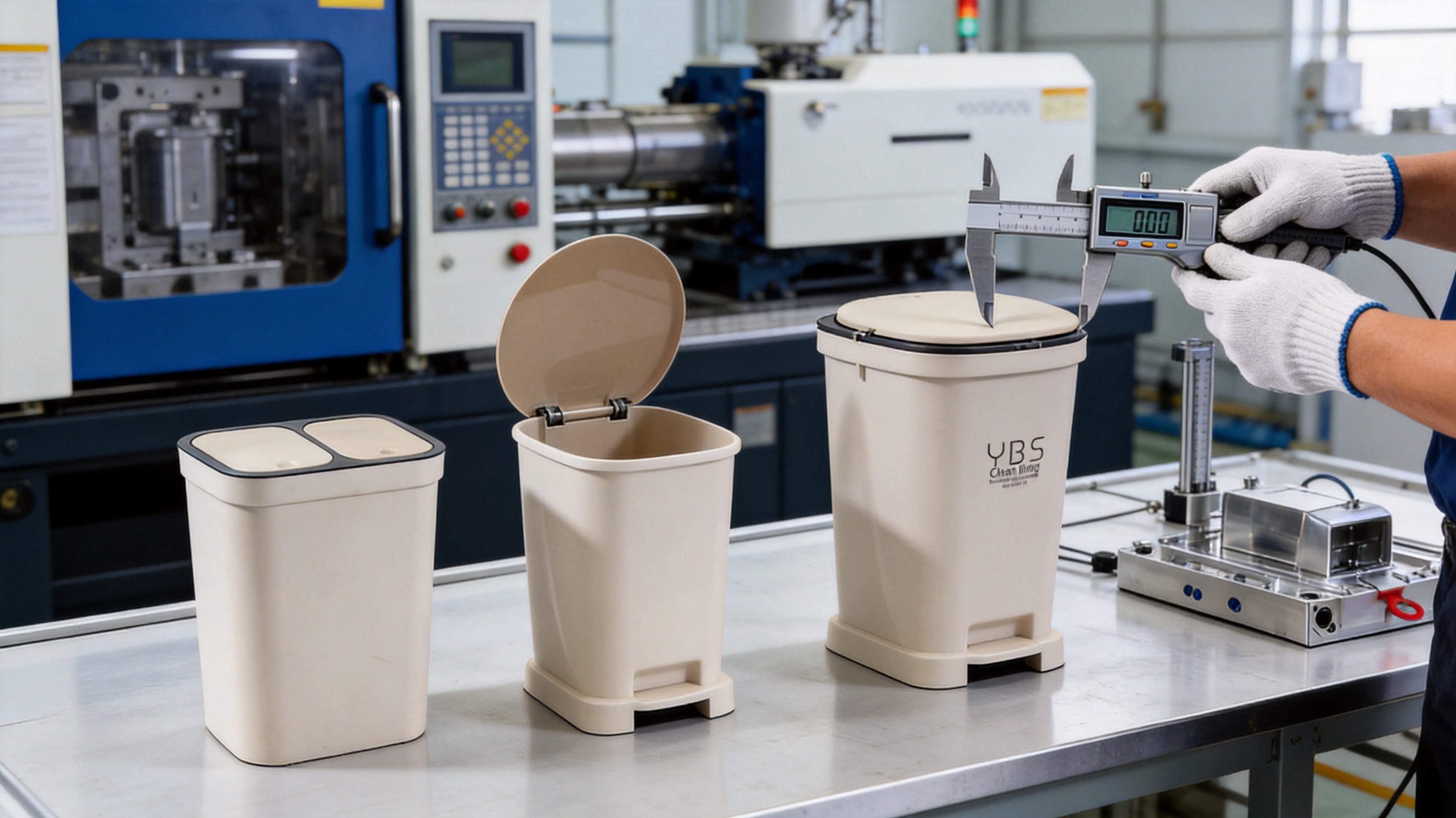
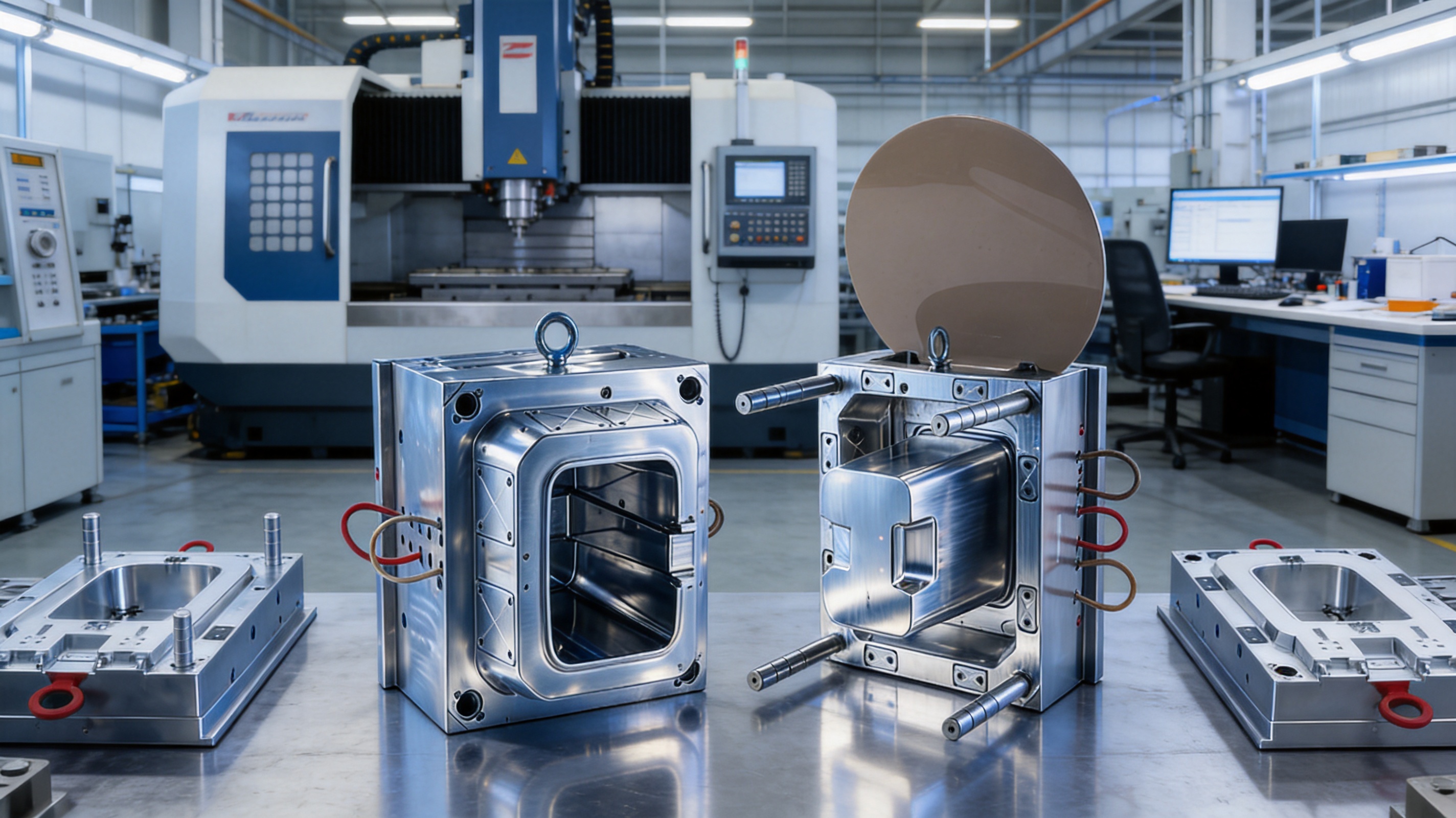
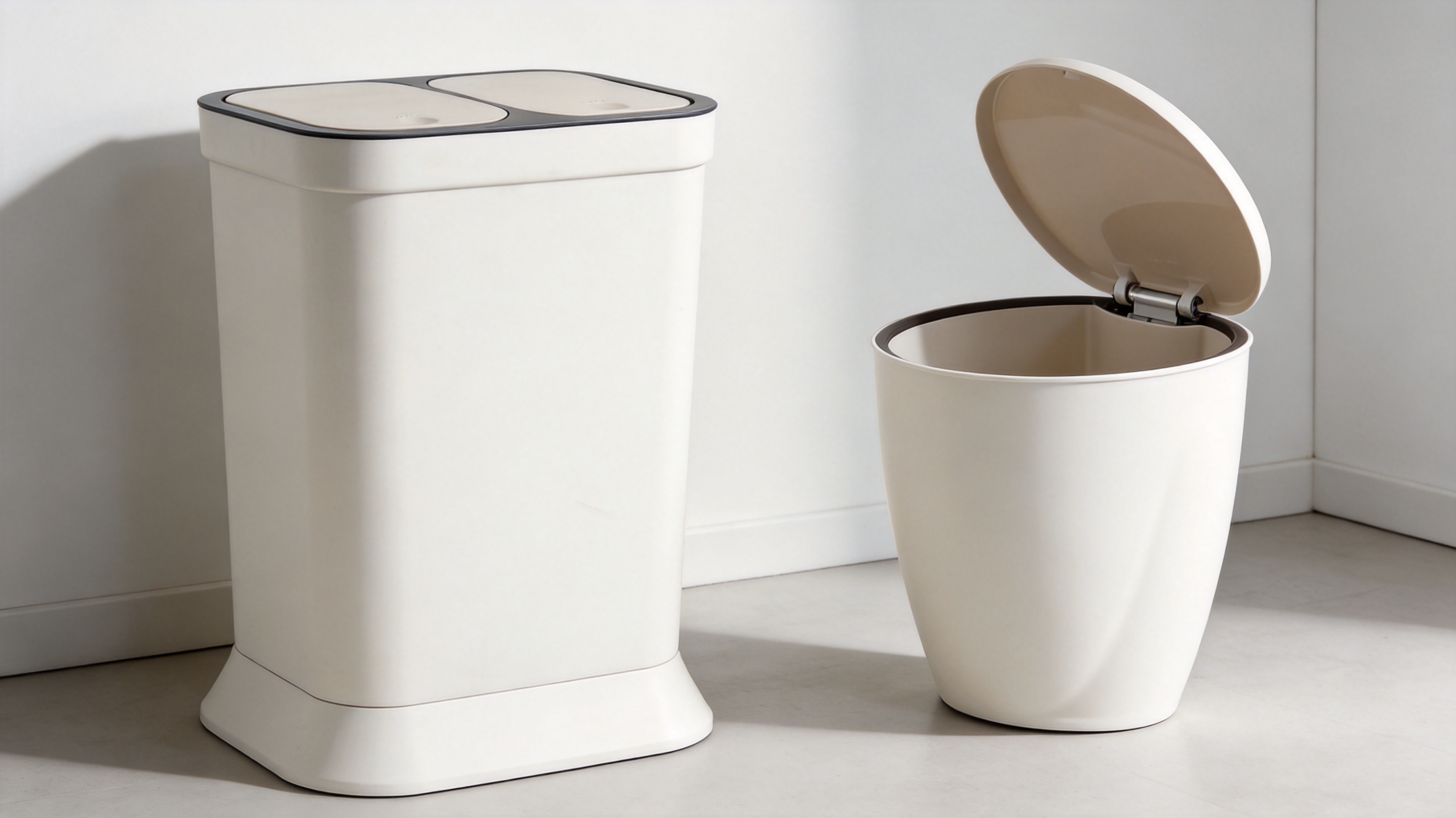
Household waste bins may appear simple, but producing a high-quality plastic trash bin requires careful product engineering, reliable mould construction, controlled injection processing, and consistent quality inspection. A bin must be attractive enough for household and office environments, strong enough to withstand repeated use, stable enough to remain upright, and accurate enough for its lid to open, close, and align correctly. These requirements become even more demanding when the product has a large body, a visible exterior surface, an integrated top lid, and thin-wall sections that must be filled evenly during injection moulding.
The Top-Lid Household Plastic Trash Bin Injection Mould is developed to address these production requirements. It is designed for manufacturing practical waste containers used in homes, offices, bathrooms, public areas, and other everyday environments. The mould supports a reinforced bucket body and an integrated lid structure, while its gate arrangement, cooling layout, and structural design help improve product appearance and dimensional stability.
Manufactured by Taizhou Huangyan Haiquan Plastic Mold Co., Ltd., the tooling reflects the company’s experience in precision injection moulds for daily necessities, home appliances, automotive components, and industrial equipment. The company combines product design support, mould engineering, steel processing, assembly, trial moulding, and after-sales service into an integrated manufacturing process. This approach helps customers move from an initial product concept to stable mass production with fewer communication gaps and better control of critical details.
For buyers searching for a Plastic Molding Die Maker, Plastic Moulding Die Maker, or experienced Molding Manufacturers, the value of this project lies not only in the finished steel tool. It also lies in the engineering decisions behind the mould: how the lid is formed, where the gate is positioned, how the cooling channels are distributed, how shrinkage is managed, and how the mould is prepared for repeated production.
1. Product Overview
The Top-Lid Household Plastic Trash Bin Injection Mould is a single-cavity mould intended for producing a household plastic waste bin with a top-mounted lid. The basic design can be adapted to different product capacities, lid structures, surface textures, and functional details according to customer requirements.
The bin body is generally produced from polypropylene or high-density polyethylene. Both materials are widely used in daily-use plastic products because they offer a useful balance of impact resistance, chemical resistance, processability, and cost efficiency. The appropriate material selection depends on the desired stiffness, wall thickness, hinge design, surface appearance, and expected service environment.
The product is suitable for several common applications:
- Household trash bins for kitchens, bedrooms, living rooms, and utility areas.
- Office waste containers for workstations, meeting rooms, corridors, and reception areas.
- Bathroom garbage bins requiring compact dimensions and easy cleaning.
- Small commercial and institutional waste containers.
- General-purpose indoor waste bins for hotels, schools, retail areas, and service facilities.
A top lid provides several practical benefits. It can conceal waste from view, reduce the spread of unpleasant odours, improve the visual cleanliness of an interior space, and help prevent lightweight waste from escaping. Depending on the final design, the lid may be opened manually, connected through a hinge, or combined with a simple push, swing, or lift mechanism.
The mould is engineered around the actual product geometry rather than relying on a generic tool structure. This is important because large household products are sensitive to uneven filling, warpage, sink marks, ejection stress, and cooling differences. A well-designed mould must therefore support both functional performance and exterior appearance.
2. Main Technical Specifications
The following specifications describe the basic configuration of the supplied tooling. They can be reviewed and adjusted during the design stage when the customer provides a different product drawing, capacity, material, or production target.
| Product | Top-Lid Household Plastic Trash Bin |
| Product Category | Cleaning Products Mold |
| Mould Steel | P20 / 718 |
| Product Material | PP / HDPE |
| Runner System | Hot Runner |
| Cavity | 1 Cavity |
| Expected Mould Life | 600,000 Shots |
| Primary Customization | Bin Capacity and Lid Structure |
| Typical Application | Households, Offices, Bathrooms, and Public Indoor Areas |
The one-cavity configuration is suitable for producing a relatively large household container while maintaining practical control over filling, cooling, and ejection. A single-cavity layout can also be advantageous during early production because it simplifies mould balancing and allows the manufacturer to focus on consistent quality for one product at a time.
The use of P20 or 718 mould steel provides a practical combination of machinability, strength, wear resistance, and service life for this class of product. The final steel selection may depend on the customer’s production volume, resin type, surface requirements, expected maintenance conditions, and target mould life. For products containing aggressive additives, abrasive fillers, or special appearance requirements, alternative steel grades may be evaluated during technical review.
3. Engineering Challenges in Trash Bin Mould Manufacturing
3.1 Large Visible Surfaces
Trash bins often have broad exterior surfaces that are highly visible to the end user. Any sink mark, weld line, flow mark, ejector witness, or polishing inconsistency can affect perceived quality. Unlike small hidden components, a waste bin is usually displayed in open areas, so its side walls and lid must maintain a clean and uniform appearance.
Large surfaces also tend to show differences in cooling and shrinkage more clearly. If one area cools much faster than another, the part may warp or develop uneven surfaces. Mould designers must consider wall thickness, rib placement, material flow, gate location, cooling channel spacing, and ejection timing as one integrated system.
3.2 Lid Alignment and Functional Movement
The lid is not merely a decorative cover. It must align with the bin body, close correctly, and maintain a suitable gap around the perimeter. If the lid is distorted or the mating area is not dimensionally stable, the finished product may look uneven or fail to operate smoothly.
Where the lid uses a hinge, the hinge region requires special attention. The hinge geometry must be strong enough for repeated movement, while still allowing reliable mould release and avoiding excessive stress concentration. The mould may incorporate suitable inserts, parting-line arrangements, sliders, or lifters depending on the actual lid design.
3.3 Wall Thickness and Structural Reinforcement
A household bin needs sufficient strength without unnecessary material consumption. Excessive wall thickness increases cycle time, product weight, and material cost. Insufficient thickness may lead to deformation, cracking, or poor impact resistance.
Reinforcing ribs can improve stiffness, but ribs that are too thick may create sink marks on visible surfaces. The mould design must therefore balance the position and thickness of ribs with the exterior appearance. Proper transitions, draft angles, and material flow paths help produce a stronger bin while limiting cosmetic defects.
3.4 Filling and Cooling of Large Products
Large plastic products require a carefully planned filling process. The melt must travel through a relatively large flow path while retaining enough heat to fill the cavity completely. If the flow is poorly balanced, the part may show hesitation marks, weld lines, short shots, or inconsistent packing.
After filling, the part must cool evenly before ejection. Cooling is especially important for a trash bin because the body may have tall side walls and a relatively large opening. Uneven cooling can produce distortion that affects the bin’s ability to stand upright or accept the lid correctly.
4. Advantages of the Top-Lid Mould Design
4.1 Integrated Lid Structure
The mould supports an integrated top-lid design, allowing the bin body and lid-related features to be developed as part of a coordinated product system. This helps improve the fit between the two components and provides a more consistent appearance across the finished assembly.
Customers can request different lid configurations according to market requirements. Options may include a flat lid, raised lid, hinged lid, overlapping lid, removable lid, or other practical variations. The mould structure can be reviewed based on the opening method, hinge position, assembly process, and required product functionality.
4.2 Reinforced Bucket Body
The bin body is designed with reinforcement in areas that require additional stiffness. These areas may include the upper rim, base, side walls, handle zones, or hinge mounting positions. Reinforcement helps the container resist deformation during handling and daily use.
A properly engineered reinforcement layout is more effective than simply increasing the overall wall thickness. It can deliver suitable strength while maintaining a reasonable product weight and reducing unnecessary material consumption. The design team can review the relationship between ribs, corners, draft angles, and the mould parting line before steel processing begins.
4.3 Optimized Gate Design
The gate is one of the most important elements in an injection mould. Its location and type affect filling behaviour, packing pressure, weld lines, appearance, cycle time, and ease of gate removal. For this trash bin mould, the gate design is optimized to reduce the risk of sink marks on visible surfaces.
A suitable hot runner arrangement can deliver molten plastic closer to the appropriate filling region while reducing material waste associated with cold runners. It may also support more stable processing for a large product. The final gate solution depends on the resin, product geometry, wall thickness, surface requirements, and injection machine conditions.
Gate optimization does not eliminate every possible moulding defect because actual results also depend on machine settings, resin drying, material batch consistency, mould temperature, holding pressure, and cycle control. However, a well-planned gate system gives the production team a stronger foundation for stable processing.
4.4 Effective Mould Cooling
Cooling channels are arranged to help remove heat from the cavity and core areas. For large products, cooling is directly connected with productivity and quality. Efficient cooling can reduce cycle time, improve dimensional consistency, and reduce the risk of warpage.
The design team evaluates the product shape, wall thickness, deep areas, rib locations, and mould steel conditions when planning cooling. Areas that retain heat for longer periods may require additional cooling attention. The goal is not simply to place as many channels as possible, but to establish a balanced heat-removal system that supports consistent results.
4.5 Durable Mould Construction
With a stated mould life of approximately 600,000 shots, the tooling is intended for long-term production of household waste containers. A durable mould reduces the likelihood of frequent replacement and supports more predictable manufacturing planning.
Long service life depends on more than steel grade alone. It also requires appropriate hardness, accurate machining, reliable guide components, suitable wear protection, careful assembly, proper lubrication, controlled processing, and routine maintenance. The manufacturer’s production system is designed to address these factors throughout the mould life cycle.
5. Why a Single-Cavity Configuration Can Be Practical
A one-cavity mould may not always deliver the highest theoretical output, but it can offer valuable advantages for large household products. The cavity is easier to balance because there is no need to distribute the melt between multiple identical cavities. This can simplify the filling analysis and reduce the risk of cavity-to-cavity variation.
For a large trash bin, a single cavity can also reduce the overall mould footprint compared with a multi-cavity design. This may make machine selection, mould handling, installation, and maintenance more manageable. The arrangement can be particularly suitable when the product has a large projected area or when production demand does not justify a higher-cavity tool.
Single-cavity tooling also allows the manufacturer to focus inspection and process development on one product cavity. During mould trials, the team can study filling, packing, cooling, ejection, and dimensional performance in a direct and controlled manner.
For customers with high annual volumes, a multi-cavity version may be considered in a future project. The existing product design and moulding data can provide useful input for evaluating whether additional cavities, parallel machines, or a second production mould would be economically appropriate.
6. Material Compatibility: PP and HDPE
6.1 Polypropylene
Polypropylene is widely used for household products because of its low density, good chemical resistance, and suitable impact performance. It can provide a useful balance between product weight and structural strength. PP is also available in many grades and colours, allowing manufacturers to develop bins for different market segments.
When PP is selected, the moulding process must account for its shrinkage behaviour. Cooling conditions and packing pressure influence the final dimensions, particularly around the lid, rim, base, and reinforced sections. Trial moulding helps establish appropriate process parameters for the selected grade.
6.2 High-Density Polyethylene
HDPE is valued for its toughness, chemical resistance, and durability. It is suitable for waste containers that may encounter cleaning chemicals, moisture, or repeated impact. HDPE can also provide a slightly different surface character and stiffness profile compared with PP.
Because HDPE and PP have different flow and shrinkage characteristics, the mould should be evaluated according to the actual material grade rather than treating them as interchangeable. The gate, cooling strategy, processing temperature, and dimensional compensation may need to be adjusted to achieve the desired final result.
6.3 Material Selection Support
Material selection should consider more than purchase price. Important factors include expected load, impact conditions, lid operation, surface finish, colour, odour requirements, recycled content, temperature exposure, chemical contact, and local regulations.
As an experienced Injection Plastic Parts and tooling supplier, the manufacturer can discuss the relationship between product design and resin performance. This early discussion helps prevent situations in which a mould is completed before an unsuitable material choice becomes apparent.
7. Advanced Manufacturing Process
7.1 Product Design Review
Every successful mould project begins with a clear understanding of the product. The engineering team reviews the three-dimensional model or technical drawing, product dimensions, wall thickness, lid mechanism, surface texture, material, tolerance requirements, production volume, and injection machine limitations.
During this stage, potential problems such as insufficient draft, undercuts, sharp transitions, difficult ejection areas, thin sections, and uneven wall thickness are identified. Design for manufacturing recommendations can then be provided before the mould structure is finalized.
7.2 Mould Flow and Filling Analysis
For a large trash bin, flow analysis can help evaluate the proposed gate location, filling sequence, pressure requirements, weld line position, air traps, and potential shrinkage patterns. The results support decisions regarding the hot runner, venting, cooling, and parting line.
Simulation does not replace practical moulding experience, but it provides valuable information during the design phase. It can help identify risks before steel is cut, when changes are generally easier and less expensive to implement.
7.3 Three-Dimensional Mould Design
The mould design team develops the core, cavity, mould base, guide system, ejection system, cooling circuits, hot runner layout, inserts, sliders, lifters, and other functional elements. The design must account for product release, maintenance access, machining feasibility, assembly sequence, and future repair requirements.
Parting lines are positioned to balance product appearance with moulding practicality. Where possible, visible areas are protected from unnecessary parting marks or ejector traces. The design also incorporates appropriate draft angles to allow the large bin body to release smoothly without scuffing or distortion.
7.4 CNC Machining and Precision Processing
After design approval, mould components are processed using appropriate machining methods. CNC milling is used for many cavity, core, insert, and structural surfaces. Precision drilling is applied to cooling channels, ejector holes, and other functional passages. Additional processes such as wire cutting, electrical discharge machining, grinding, and polishing may be used where required by the geometry.
Machining accuracy is especially important at the lid interface, rim, base, hinge area, and other mating regions. Dimensional errors in these areas can affect assembly, movement, sealing, or overall appearance.
7.5 Surface Finishing and Texture Control
The surface finish of a trash bin can influence both appearance and practical use. A textured finish may help hide minor handling marks and create a more durable visual effect. A smooth finish may be selected for easier cleaning or a more modern appearance.
Surface finishing is performed according to the approved product standard. Polishing, texture, EDM finish, and transitions between different surface treatments must be controlled carefully so that the final product has a consistent visual quality.
7.6 Mould Assembly
During assembly, the individual mould components are fitted and checked as a complete system. Guide pillars, guide bushes, ejector plates, return pins, hot runner elements, cooling connectors, sliders, lifters, and inserts are installed according to the approved design.
Movable elements are checked for smooth travel and correct positioning. The mould is inspected for interference, mismatched surfaces, inadequate clearance, cooling leakage, and other conditions that could affect production. Assembly quality has a direct influence on mould reliability and maintenance requirements.
7.7 Trial Moulding and Correction
Before shipment, the mould undergoes trial moulding on a suitable injection machine. The trial process is used to evaluate filling, packing, cooling, ejection, product dimensions, surface appearance, lid fit, and cycle performance.
Samples are inspected against the agreed requirements. If adjustments are required, the mould can be corrected through polishing, fitting, venting improvement, process optimization, or controlled steel modification. Trial moulding is an essential stage because it confirms how the tool performs under actual production conditions rather than only in a computer model.
7.8 Final Inspection and Documentation
Final inspection may include dimensional checking, mould opening and closing tests, ejection verification, cooling circuit inspection, hot runner testing, surface inspection, and sample approval. The customer can also receive relevant mould documentation, maintenance recommendations, spare part information, and trial samples according to the project arrangement.
8. Company Manufacturing Strengths
Taizhou Huangyan Haiquan Plastic Mold Co., Ltd. is a high-tech enterprise specializing in the research, development, and manufacture of precision injection moulds. Its product range covers daily necessities, home appliances, automotive parts, and industrial equipment. This sector coverage gives the company experience with different product sizes, materials, functional requirements, surface standards, and production environments.
The company maintains a professional design team and a scientific production management system. This combination helps connect product development with practical mould manufacturing. Instead of treating design, machining, assembly, and service as isolated activities, the company provides integrated support from initial design review through production and after-sales assistance.
For a household trash bin project, integrated support is especially useful because the product may involve several coordinated elements: the main body, the lid, the hinge or opening mechanism, visible surfaces, reinforcement ribs, and material-specific shrinkage. A team that understands the complete moulding process can identify interactions between these features more effectively.
The company’s export experience includes customers in Europe, the Middle East, Southeast Asia, and South America. Working with customers from different markets requires attention to product standards, communication, packaging, delivery coordination, documentation, and technical service. Its international customer base reflects experience in managing mould projects beyond the local market.
The company’s stated philosophy of “Quality First, Sustainable Development” is reflected in the emphasis on consistent production, reliable delivery, and long-term customer support. For mould buyers, sustainable development can include longer tool life, reduced material waste, repairable mould construction, efficient cooling, and designs that support stable production over many years.
9. Competitive Advantages Compared with Basic Mould Solutions
9.1 Engineering Before Machining
Some low-cost tooling approaches begin machining before all product risks have been evaluated. This can lead to late changes, additional costs, and delays. A more controlled engineering process reviews the product model, material, machine conditions, gate location, cooling requirements, and ejection method before the mould enters full production.
The Top-Lid Household Plastic Trash Bin Injection Mould benefits from this design-led approach. Potential issues can be discussed at the beginning, when modifications to ribs, wall thickness, lid geometry, or draft angles are easier to complete.
9.2 Appearance and Function Considered Together
A basic mould may produce a part that is technically complete but visually inconsistent or difficult to assemble. The featured tooling is designed around both appearance and function. Gate placement, parting lines, ejector positions, lid alignment, and surface finishing are considered together rather than separately.
9.3 Cooling for Dimensional Stability
Inadequate cooling can result in long cycles and unstable dimensions. The mould’s cooling design is intended to support better heat removal and more consistent product geometry. This is especially valuable for large bins, where distortion can affect standing stability and lid fit.
9.4 Longer Production Service
A stated life of 600,000 shots gives buyers a clear reference for production planning. While actual life depends on material, processing, maintenance, and operating conditions, the target demonstrates that the tool is intended for repeated manufacturing rather than short-term sampling only.
9.5 Customization Without Losing Standardization
Customers can customize the bin capacity and lid structure while still benefiting from a standardized professional mould-making process. This balance allows the product to respond to market needs without sacrificing the control offered by established engineering and inspection procedures.
10. Customization Options
Basic customization includes bin capacity and lid structure, but the product may also be developed around a broader set of customer requirements.
- Overall bin height, width, and depth.
- Internal volume and usable capacity.
- Top opening dimensions.
- Flat, curved, raised, hinged, removable, or overlapping lid styles.
- Hinge location and movement range.
- Handle or grip provisions.
- Base reinforcement and anti-slip features.
- Surface texture, polishing level, or decorative finish.
- Logo recesses, embossed markings, or label areas.
- Colour and resin grade.
- Wall thickness and rib arrangement.
- Compatibility with a liner bag or internal bucket.
Customization should be completed before final mould design approval. Changes made after steel processing may require additional machining, welding, insert replacement, or other corrections. Providing accurate product data at the beginning helps control cost and shorten the development schedule.
Customers should ideally provide a three-dimensional product model, two-dimensional drawings, material information, colour requirements, annual volume, injection machine details, and any applicable quality standards. If the product concept is still at an early stage, the engineering team can help convert general requirements into a mouldable design.
11. Quality Control for the Finished Trash Bin
Quality control should cover both the mould and the injection-moulded product. A visual inspection can identify flash, sink marks, flow marks, burn marks, weld lines, scratches, colour variation, and incomplete filling. Functional inspection can verify lid opening, closing, alignment, hinge movement, standing stability, and compatibility with liners or internal components.
Dimensional inspection may include overall height, body width, opening size, wall thickness, base flatness, lid dimensions, hinge positions, and critical mating gaps. The inspection method should be agreed according to the product’s intended application and customer requirements.
Product performance testing may include impact testing, load testing, repeated lid operation, chemical exposure, temperature exposure, and cleaning trials. The appropriate tests depend on the target market and the conditions in which the bin will be used.
Consistent quality also depends on injection process control. Important parameters include melt temperature, mould temperature, injection speed, holding pressure, holding time, cooling time, screw recovery, back pressure, and ejection timing. A well-built mould makes these parameters easier to control, but stable production still requires disciplined machine operation.
12. Production and Maintenance Recommendations
12.1 Follow the Approved Processing Window
Operators should establish a stable processing window for the selected PP or HDPE grade. Repeatedly changing temperatures and pressures without recording the results can make it difficult to identify the cause of defects. Process parameters should be documented and adjusted systematically.
12.2 Keep Cooling Channels Clean
Cooling performance may decline if water channels accumulate rust, scale, sediment, or other deposits. Regular inspection and cleaning help maintain heat transfer and reduce cycle variation. Cooling water quality should be managed according to the plant’s equipment and local conditions.
12.3 Inspect the Hot Runner System
The hot runner system should be checked for stable temperature control, leakage, heater performance, and nozzle condition. Abnormal temperature differences can affect filling and may increase the risk of material degradation or inconsistent gate quality.
12.4 Lubricate Moving Components
Guide pillars, guide bushes, sliders, lifters, ejector components, and other moving elements require suitable lubrication and inspection. Lubrication intervals should be based on production frequency, mould design, material contamination, and the manufacturer’s recommendations.
12.5 Protect the Parting Surfaces
Parting surfaces should be kept clean and protected from scratches, impact, and trapped foreign material. Even a small particle can cause flash or prevent the mould from closing correctly. Operators should avoid using unsuitable tools that may damage precision surfaces.
12.6 Record Mould Service History
Recording shot counts, maintenance activities, repairs, component replacement, and observed defects helps predict future service needs. A maintenance history is particularly valuable for a mould intended to reach hundreds of thousands of production shots.
13. Sustainability and Operating Efficiency
Sustainability in plastic product manufacturing involves product design, material utilization, energy consumption, mould life, repairability, and production efficiency. A durable mould with a long service life can reduce the need to manufacture replacement tools. Efficient cooling can reduce cycle time and energy use when the injection process is properly optimized.
Material efficiency is also important. A well-designed wall structure and reinforcement layout can provide required strength without excessive plastic consumption. Hot runner technology may reduce runner scrap compared with a conventional cold runner system, although the total environmental and economic result depends on the complete moulding operation.
PP and HDPE products may be suitable for recycling streams in markets where collection and processing infrastructure is available. The final product design should consider colour, additives, labels, hinges, mixed materials, and assembly methods if recyclability is an important customer objective.
Using recycled resin may be possible for some trash bin applications, but the material must be evaluated for flow, odour, colour consistency, contamination, impact performance, and shrinkage. The mould itself may be compatible with different grades, but process parameters and product expectations must be reviewed whenever the material changes.
14. From Prototype to Mass Production
A new trash bin project often begins with a product concept, sketch, sample, or preliminary three-dimensional model. At this stage, the most important objective is to confirm that the design can be moulded consistently and assembled economically.
Once the design is approved, the manufacturer prepares the mould structure and confirms the technical details with the customer. This includes product material, cavity quantity, hot runner arrangement, steel selection, expected tool life, surface finish, cooling requirements, and inspection standards.
After mould assembly and trial moulding, samples are evaluated. The customer may request dimensional corrections, surface improvements, lid adjustments, or process changes. Once the samples meet the agreed requirements, the mould is prepared for shipment or transferred to the production site.
After installation, the customer’s production team may need support with machine setup, material preparation, mould mounting, water connections, hot runner control, and initial process optimization. Clear technical communication at this stage helps reduce start-up time and ensures that the tool is operated correctly.
15. Frequently Asked Questions
Q1: What products can be made with this mould?
The mould is designed for household plastic trash bins with a top-lid structure. Depending on the customized design, it can support products for homes, offices, bathrooms, hotels, schools, retail spaces, and other indoor environments.
Q2: Which materials are recommended?
The stated material options are polypropylene and high-density polyethylene. The final choice should be based on the desired strength, stiffness, impact resistance, chemical resistance, appearance, cost, and local material availability.
Q3: Why is the mould designed as a single-cavity tool?
A single-cavity design provides direct control over the filling, cooling, and ejection of a relatively large product. It can reduce cavity-balancing complexity and may be practical for production volumes that do not require a multi-cavity system.
Q4: Can the bin capacity be changed?
Yes. Basic customization includes bin capacity. However, changing the capacity normally affects the product dimensions, mould size, cooling layout, filling behaviour, and possibly the injection machine requirements. The design must therefore be reviewed before mould construction.
Q5: Can the lid structure be customized?
Yes. The lid structure can be adapted to the customer’s requirements. Possible variations include different lid shapes, hinge arrangements, opening methods, overlap relationships, and surface designs. The final structure must provide suitable draft, movement clearance, strength, and mould release.
Q6: What is the purpose of the hot runner system?
A hot runner system delivers molten plastic through heated flow channels and can reduce cold runner waste. It may also support a more suitable gate position and stable filling for a large product. The actual benefits depend on material, gate design, process settings, and machine conditions.
Q7: How does the mould help reduce sink marks?
The mould uses product reinforcement, gate placement, packing considerations, and cooling design to reduce the risk of sink marks on visible surfaces. Final results also depend on wall thickness, material grade, holding pressure, cooling time, and injection parameters.
Q8: What mould life can be expected?
The stated expected service life is 600,000 shots. Actual performance depends on mould maintenance, production frequency, resin type, additives, operating conditions, injection pressure, cooling water quality, and correct handling.
Q9: Does the manufacturer provide design assistance?
Yes. The company specializes in injection mould research, development, and manufacturing and provides integrated support from design and production to after-sales service. Customers can discuss product geometry, material selection, gate design, cooling, ejection, and customization requirements during the development process.
Q10: What information should be supplied for a quotation?
Useful information includes the product drawing or three-dimensional model, target capacity, lid structure, product material, annual quantity, surface finish, colour, injection machine details, desired mould life, delivery expectations, and destination. The more complete the initial information, the more accurately the mould structure and cost can be evaluated.
Q11: Can the mould produce different colours?
Yes. PP and HDPE can generally be supplied in different colours, provided that the selected resin and colourant are suitable for the intended application. Colour changes require appropriate purging and process control to prevent contamination and shade variation.
Q12: How should the mould be maintained after production?
The mould should be cleaned, dried, lubricated, and stored in a protected condition after production. Cooling channels, moving components, ejector elements, hot runner parts, and parting surfaces should be inspected regularly. Shot counts and maintenance records should be retained for future planning.
16. Selecting a Reliable Plastic Mould Maker
Choosing a supplier for a household trash bin mould should involve more than comparing the initial quotation. Buyers should examine the supplier’s experience with large plastic products, material knowledge, design capability, machining resources, inspection methods, trial moulding process, communication quality, and after-sales support.
A reliable Plastic Molding Die Maker should be able to explain how the product will be filled, cooled, released, inspected, and maintained. The supplier should also identify potential risks before production rather than waiting until the first trial to discover basic design problems.
For international customers, export experience is another important consideration. Clear documentation, production updates, packaging, delivery coordination, spare parts planning, and technical communication can have a major effect on the total project result.
Taizhou Huangyan Haiquan Plastic Mold Co., Ltd. offers an integrated approach covering mould design, manufacturing, trial production, and after-sales service. Its focus on daily necessities and other precision injection mould sectors makes it suitable for customers seeking practical tooling for household plastic products.
17. Conclusion
The Top-Lid Household Plastic Trash Bin Injection Mould is designed to support reliable production of durable and attractive waste containers. Its key features include an integrated lid structure, a reinforced bin body, an optimized hot runner gate system, mould cooling for dimensional stability, P20 or 718 steel options, a single-cavity layout, and an expected service life of approximately 600,000 shots.
Compared with a basic mould solution, the tooling places greater emphasis on the relationship between product design, material behaviour, filling, cooling, ejection, surface quality, and long-term maintenance. This comprehensive approach is important for large visible products where small dimensional or cosmetic problems can affect customer acceptance.
The manufacturing strength behind the mould is equally important. Through professional design, scientific production management, precision machining, assembly, trial moulding, inspection, and after-sales assistance, the supplier helps customers develop tooling that is better prepared for stable mass production.
For household, office, and bathroom waste bin applications, this mould provides a practical platform that can be customized according to capacity, lid design, material, surface finish, and market requirements. With proper product engineering and disciplined mould maintenance, it can support efficient production and consistent quality over an extended service life.

Top-Lid Household Plastic Trash Bin Injection Mould
References
1. Injection Molding Handbook, principles of thermoplastic processing, mould design, and process control.
2. Plastics Design Guide, recommendations for wall thickness, ribs, draft angles, shrinkage, and product manufacturability.
3. Practical Guide to Injection Mould Engineering, including gate selection, runner systems, cooling design, and ejection methods.
4. Polypropylene Processing Reference, material characteristics, shrinkage behaviour, and common moulding considerations.
5. High-Density Polyethylene Processing Reference, material performance, chemical resistance, and injection moulding conditions.
6. Industrial Mould Maintenance Manual, guidance on lubrication, cooling channels, hot runner systems, inspection, and service records.
7. General Principles of Sustainable Plastic Product Design, including material efficiency, mould life, energy reduction, and recyclability considerations.
Product: Top-Lid Household Plastic Trash Bin Injection Mould

For exclusive deals and latest offers, sign up by entering your email address below.











 +86-18657672567
 sales@tzhqmould.com
celin@tzhqmould.com
 No. 17 Houshi Road, Beicheng Industrial Zone, Huangyan District, Taizhou City, Zhejiang Province, China
Copyright © Taizhou Huangyan Haiquan Plastic Mold Co., Ltd. All Rights Reserved
Injection Plastic Mould Maker

