

Can Your Plastic Pot Mould Handle Recycled Materials Without Compromising Product Quality?
Admin 2026-11-20Sustainability is becoming an increasingly important consideration in the horticultural products industry. Plastic pot manufacturers are exploring recycled polypropylene (PP), recycled polyethylene (PE), and other alternative materials to reduce reliance on virgin plastics. However, switching raw materials can introduce new challenges during injection moulding, including inconsistent material flow, surface defects, and dimensional variations. For manufacturers planning to produce more sustainable plant containers, choosing a suitable Plastic Pot Mould requires careful consideration of both product geometry and material characteristics. The goal is to make recycled materials workable without sacrificing production consistency or finished-pot performance.
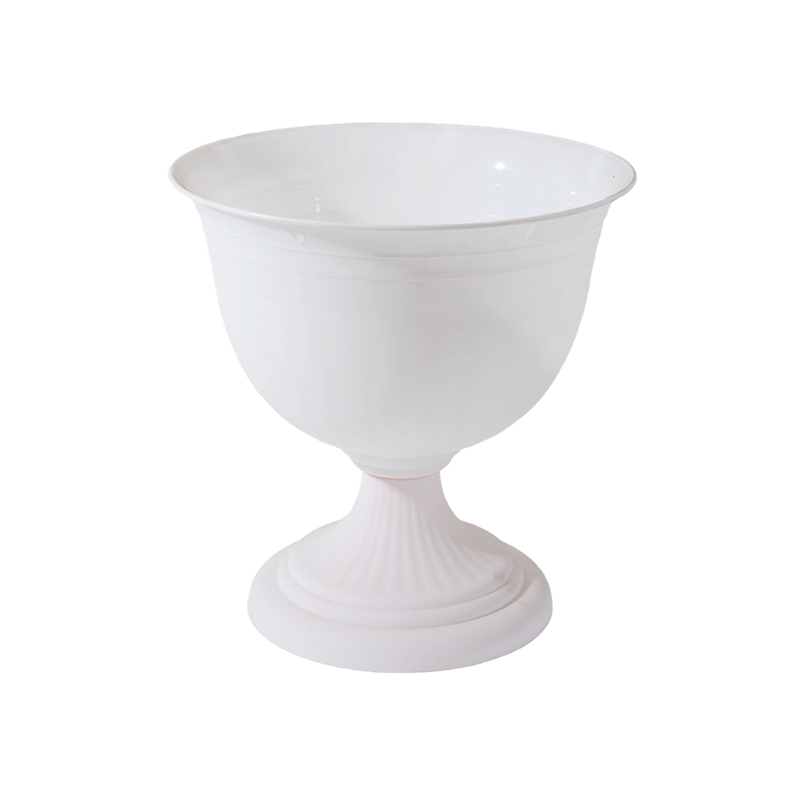
Why Are Recycled Plastics Attracting Attention in Pot Manufacturing?
Commercial nurseries, garden centers, and horticultural product distributors are paying closer attention to the materials used in growing containers. Recycled plastics offer manufacturers an opportunity to incorporate recovered resources into products such as nursery pots, propagation containers, and decorative planters.
Recycled PP and PE are particularly relevant because these materials are already widely used in plastic container manufacturing. However, their properties can vary depending on the recycling source, sorting process, contamination level, and previous processing history.
For mould manufacturers, this means that material selection should be discussed early in the tooling project rather than treated as a production adjustment after the mould has been completed.
How Can Recycled Resin Affect Injection Moulding Results?
Unlike virgin resin with controlled material specifications, recycled plastic may show differences in melt flow behavior, color, mechanical properties, and processing stability.
These variations can influence how molten plastic travels through the mould cavity and how the finished pot behaves during cooling.
Common production concerns include:
- Incomplete filling: Changes in melt flow characteristics may affect material distribution, particularly in thin-wall sections.
- Surface inconsistency: Contamination or mixed material sources can result in visible spots and uneven appearance.
- Dimensional variation: Differences in shrinkage behavior may influence the final pot dimensions.
- Mechanical performance: Some recycled materials may have reduced impact resistance or stiffness compared with the original resin.
Understanding these potential issues helps manufacturers establish realistic material requirements before mass production.
Why Should Mould Design Consider Material Flow?
Material flow is a critical factor in injection moulding, especially for plastic pots with relatively thin walls and large circumferential structures.
The gate position, runner layout, cavity geometry, and venting arrangement all influence how evenly molten plastic fills the mould. Poor flow balance may contribute to short shots, weld lines, or uneven wall thickness.
When developing a custom mould, engineers should evaluate the intended resin grade and product geometry together. Mould flow analysis can help identify potential filling problems before machining begins, while trial moulding provides practical feedback under actual processing conditions.
For manufacturers using recycled materials, testing representative resin batches is particularly important because one successful trial does not necessarily guarantee consistent results across different material lots.
Can Cooling and Ejection Design Reduce Product Defects?
Cooling and ejection are two important stages that influence the quality of injection-moulded plastic pots.
Uneven cooling can create differences in shrinkage across the product, potentially causing warpage or dimensional instability. This is particularly relevant for containers with deeper sidewalls, reinforced rims, or relatively thin bottom sections.
A properly designed cooling system helps manage temperature distribution throughout the mould. Meanwhile, suitable draft angles and ejection arrangements help the finished pot separate without excessive deformation.
During mould development, manufacturers should pay attention to:
- Cooling channel placement and temperature distribution.
- Product wall thickness and structural transitions.
- Draft angles for reliable demoulding.
- Ejector positioning and force distribution.
These details should be evaluated according to the actual product design and resin specifications.
What Should Buyers Test Before Approving a Recycled Plastic Pot Mould?
Before moving into mass production, buyers should request trial moulding using the material intended for commercial manufacturing.
A practical evaluation should cover several areas:
- Material consistency: Confirm that recycled resin comes with clear material specifications and acceptable batch variation.
- Product dimensions: Measure important areas such as the pot diameter, height, rim, and bottom structure.
- Visual quality: Check for contamination marks, surface defects, incomplete filling, and color differences.
- Mechanical performance: Evaluate stiffness, impact resistance, and handling suitability according to the intended application.
- Production stability: Observe whether the mould can maintain acceptable product quality under repeated production conditions.
This approach helps buyers identify potential issues before committing to larger production orders.
How Can Custom Mould Manufacturing Support Sustainable Production?
A successful recycled-plastic project requires cooperation between the resin supplier, mould manufacturer, and injection moulding factory. Each party contributes information that affects the final production result.
As a manufacturer, we believe that mould development should begin with a clear understanding of the customer's material selection, product specifications, and production equipment. For custom plastic pot projects, factors such as cavity design, gate location, cooling arrangements, and ejection structure should be reviewed together.
We also recommend that customers communicate any planned changes in resin grade or recycled content before production. This allows the tooling and processing requirements to be evaluated rather than assuming that every material can run under identical conditions.
Preparing Plastic Pot Production for Changing Material Requirements
Recycled plastics create opportunities for horticultural container manufacturers, but successful adoption depends on more than changing the raw material. Material qualification, mould engineering, process adjustment, and product testing must work together to achieve consistent results.
When selecting a Plastic Pot Mould manufacturer, overseas buyers should look for a supplier that understands injection moulding behavior, can review material requirements, and can support practical mould trials. With appropriate engineering preparation, manufacturers can develop plastic plant pots that balance material efficiency, production stability, and the functional requirements of commercial horticulture.
For exclusive deals and latest offers, sign up by entering your email address below.
 +86-18657672567
 sales@tzhqmould.com
celin@tzhqmould.com
 No. 17 Houshi Road, Beicheng Industrial Zone, Huangyan District, Taizhou City, Zhejiang Province, China
Copyright © Taizhou Huangyan Haiquan Plastic Mold Co., Ltd. All Rights Reserved
Injection Plastic Mould Maker

