

How Can Better Mould Design Help Plastic Plant Pots Meet Changing Horticultural Market Demands?
Admin 2026-11-13The horticultural industry is placing greater emphasis on product durability, material efficiency, and sustainable manufacturing. Commercial nurseries, greenhouse operators, and garden product suppliers are looking for plastic pots that are lightweight, easy to handle, and suitable for large-scale production. At the same time, manufacturers face pressure to control material consumption without compromising product strength. These changing requirements make mould engineering an important part of production planning. Choosing a well-designed Plastic Pot Mould helps manufacturers improve dimensional consistency, optimize production processes, and develop containers that meet different market requirements.
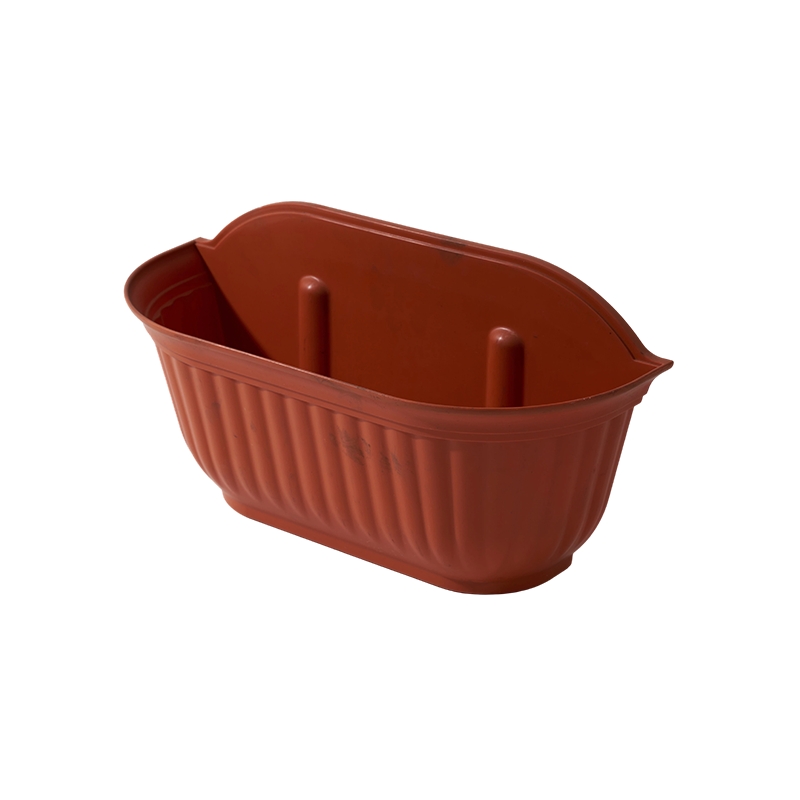
Why Are Plastic Pot Manufacturers Rethinking Traditional Mould Designs?
Plastic plant pots are no longer judged by appearance and basic functionality alone. Buyers increasingly consider drainage performance, stacking convenience, transportation efficiency, and compatibility with automated nursery operations.
Traditional mould designs may not fully address these requirements, particularly when manufacturers introduce new pot sizes or lightweight product ranges. Poorly positioned ribs, inconsistent wall thickness, or unsuitable rim structures can affect product stability and handling.
Modern mould development should therefore consider the complete product lifecycle, from injection moulding and demoulding to stacking, transportation, and use in commercial growing environments.
How Can Wall Thickness Optimization Reduce Material Waste?
Raw material consumption is an important cost consideration for plastic pot manufacturers. Reducing unnecessary material usage can improve production economics, but making every section thinner is not always a suitable solution.
The key is to distribute material according to structural requirements. The pot rim may need additional stiffness to support handling, while the sidewall and bottom should maintain sufficient strength under normal loading conditions.
During mould development, engineers should evaluate:
- Wall thickness distribution across different sections.
- Reinforcing ribs and their structural positions.
- Bottom geometry and load-bearing characteristics.
- Material flow and potential shrinkage during cooling.
A balanced design can help manufacturers control resin consumption while maintaining the required product performance.
Can Mould Structure Improve Demoulding and Production Efficiency?
Demoulding is an important stage in injection moulding. If a plastic pot sticks to the mould or experiences excessive resistance during ejection, the product may become deformed or develop surface marks.
Taper angles, surface finishes, cooling layouts, and ejection arrangements all influence how smoothly a finished pot separates from the mould.
For deeper containers or designs with reinforced structures, engineers need to pay particular attention to the relationship between product geometry and mould release. Proper cooling design also helps manage temperature differences across the product, reducing the risk of uneven shrinkage.
When evaluating a mould, manufacturers should consider not only whether it can produce the required shape, but also whether it can maintain consistent results during repeated production cycles.
Why Are Stackability and Drainage Important for Nursery Pots?
Commercial growers handle large quantities of containers every day. Pots that cannot be stacked efficiently may occupy unnecessary storage space and increase transportation complexity.
Well-designed rims, tapered sidewalls, and appropriate spacing structures can help containers nest together while reducing the risk of becoming difficult to separate.
Drainage is another essential design consideration. Water accumulation can affect growing conditions, so drainage holes should be positioned according to the pot's dimensions and intended application.
Mould designers should coordinate these features with the product's overall geometry to ensure that functional improvements do not create unnecessary manufacturing difficulties.
What Changes When Using Recycled Plastic Materials?
Sustainability is influencing material selection across the horticultural supply chain. Some growers and container suppliers are introducing post-consumer recycled and post-industrial recycled plastics into their product ranges.
However, recycled resin may show variations in color, melt flow, and processing behavior depending on its source and quality. These differences can influence filling conditions, surface appearance, and dimensional consistency.
Manufacturers should evaluate material characteristics before finalizing mould and processing parameters. Trial production can help identify suitable temperature settings, injection conditions, and cooling requirements.
A mould designed for a particular material and product specification should be assessed under realistic production conditions rather than relying entirely on theoretical design assumptions.
What Should Buyers Check Before Ordering a Custom Plastic Pot Mould?
For overseas buyers, choosing a mould supplier involves more than comparing tooling quotations. Technical communication and manufacturing capabilities can directly influence project development.
Before confirming an order, buyers should prepare clear requirements covering:
- Pot diameter, height, shape, and wall thickness.
- Plastic material and expected product weight.
- Drainage hole positions and structural details.
- Required production output and machine compatibility.
- Surface finish, texture, and product appearance.
- Expected mould service conditions and maintenance arrangements.
Providing product drawings or samples allows the mould manufacturer to review the design and identify potential issues before tooling production begins.
Building Better Plastic Pot Products Through Professional Mould Engineering
As horticultural products evolve, manufacturers need mould solutions that balance structural performance, material efficiency, and production practicality. A suitable mould design can support consistent product dimensions, smoother demoulding, efficient stacking, and flexible product development.
As a Plastic Pot Mould manufacturer, we understand that every project involves different product specifications, material choices, and production requirements. By focusing on mould structure, cooling arrangements, ejection design, and application details, we aim to help customers develop plastic plant pots that meet their manufacturing objectives and changing market demands.
For exclusive deals and latest offers, sign up by entering your email address below.
 +86-18657672567
 sales@tzhqmould.com
celin@tzhqmould.com
 No. 17 Houshi Road, Beicheng Industrial Zone, Huangyan District, Taizhou City, Zhejiang Province, China
Copyright © Taizhou Huangyan Haiquan Plastic Mold Co., Ltd. All Rights Reserved
Injection Plastic Mould Maker

