

Thickened Plastic Mop Bucket Cleaning Tool Mould for Reliable High-Load Production
Admin 2026-09-16Modern cleaning equipment must combine practical design, durability, user convenience, and efficient manufacturing. The thickened plastic mop bucket cleaning tool mould is developed for producing robust mop buckets used in households, commercial facilities, janitorial services, hotels, offices, schools, hospitals, and industrial workplaces. It is designed around the structural requirements of a heavy-duty cleaning bucket, including reinforced walls, dependable load-bearing performance, practical handle slots, and the possible integration of wringer components.
Unlike a simple container mould intended for light domestic use, this injection mould is focused on producing a stronger and more functional cleaning product. A mop bucket must withstand repeated filling, lifting, emptying, movement across floors, contact with cleaning chemicals, and regular impact during daily use. The mould must therefore support an appropriately thickened product structure while maintaining dimensional stability, smooth mould release, efficient cooling, and consistent surface quality.
This product is manufactured by Taizhou Huangyan Haiquan Plastic Mold Co., Ltd., a high-tech enterprise specializing in precision injection moulds for daily necessities, home appliances, automotive parts, and industrial equipment. The company provides services covering design, mould manufacturing, production coordination, and after-sales support. Its experience in different plastic product sectors supports a practical approach to mould engineering, material selection, tooling accuracy, and production reliability.
The mould is configured for PP product material, a widely used thermoplastic for cleaning buckets because of its balance of toughness, chemical resistance, processability, and cost efficiency. The supplied configuration uses one cavity and is specified with P20 / H13 mould steel options. The stated mould life is up to 700,000 shots, providing a suitable production foundation for businesses requiring repeatable output over an extended operating period.
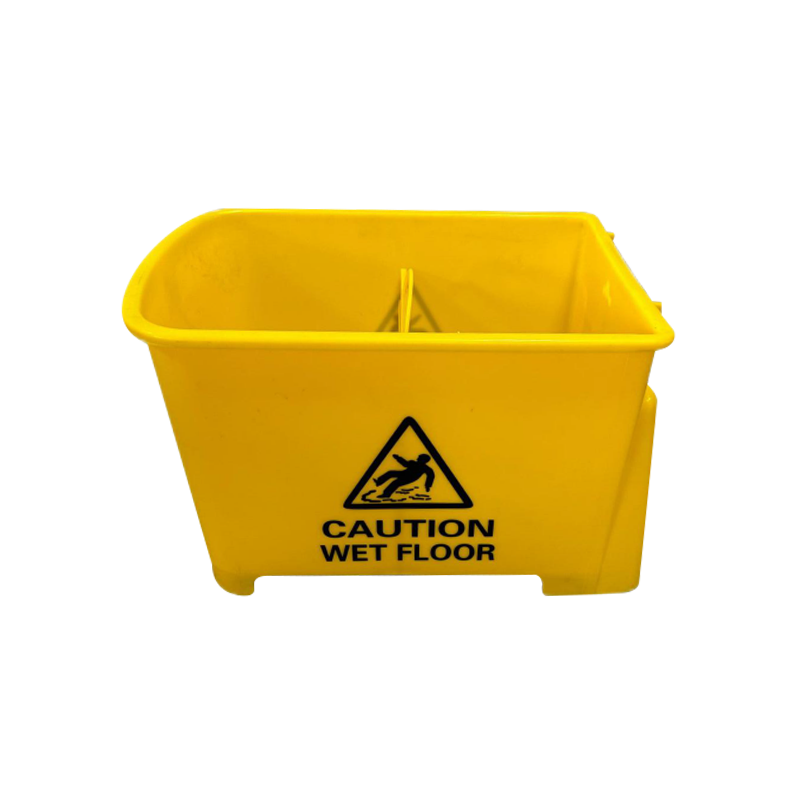
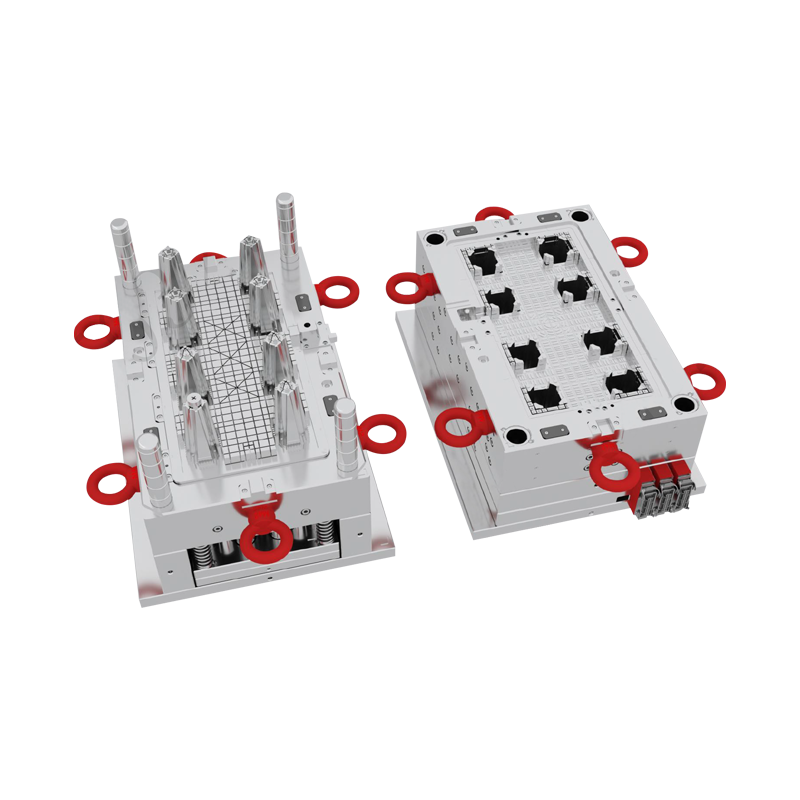
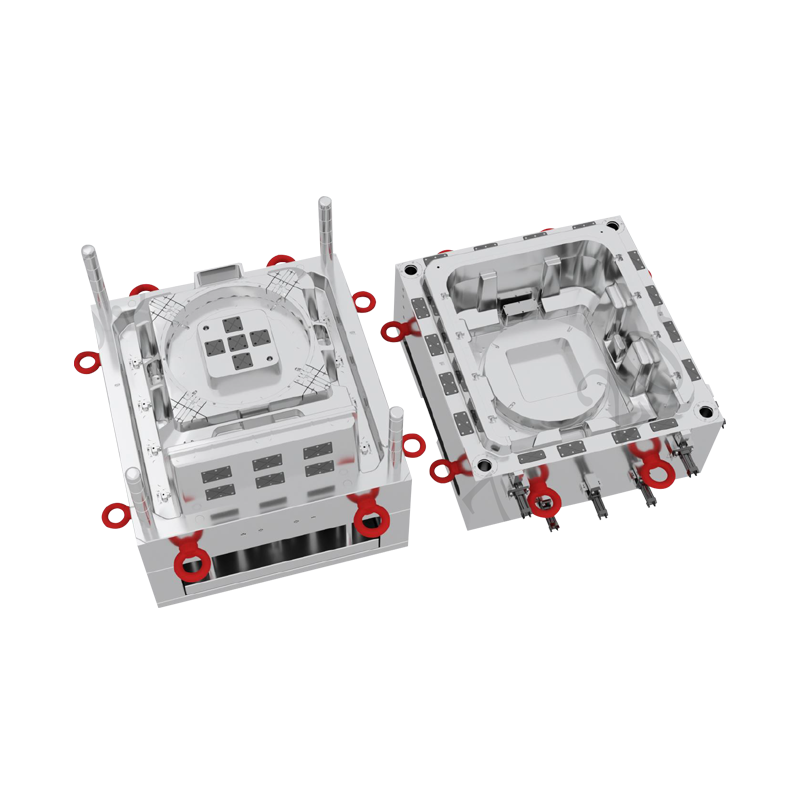
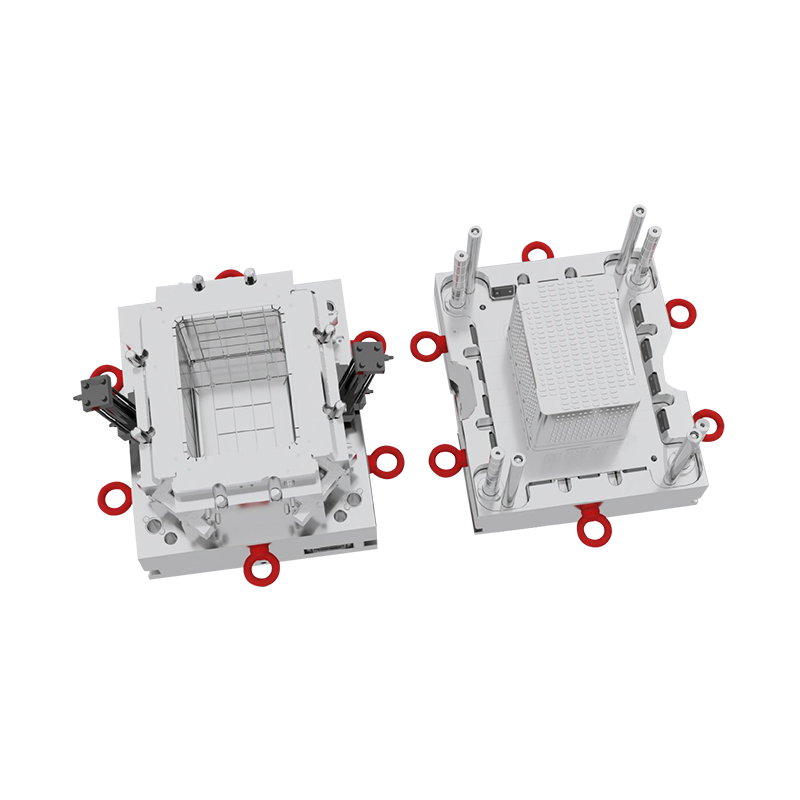
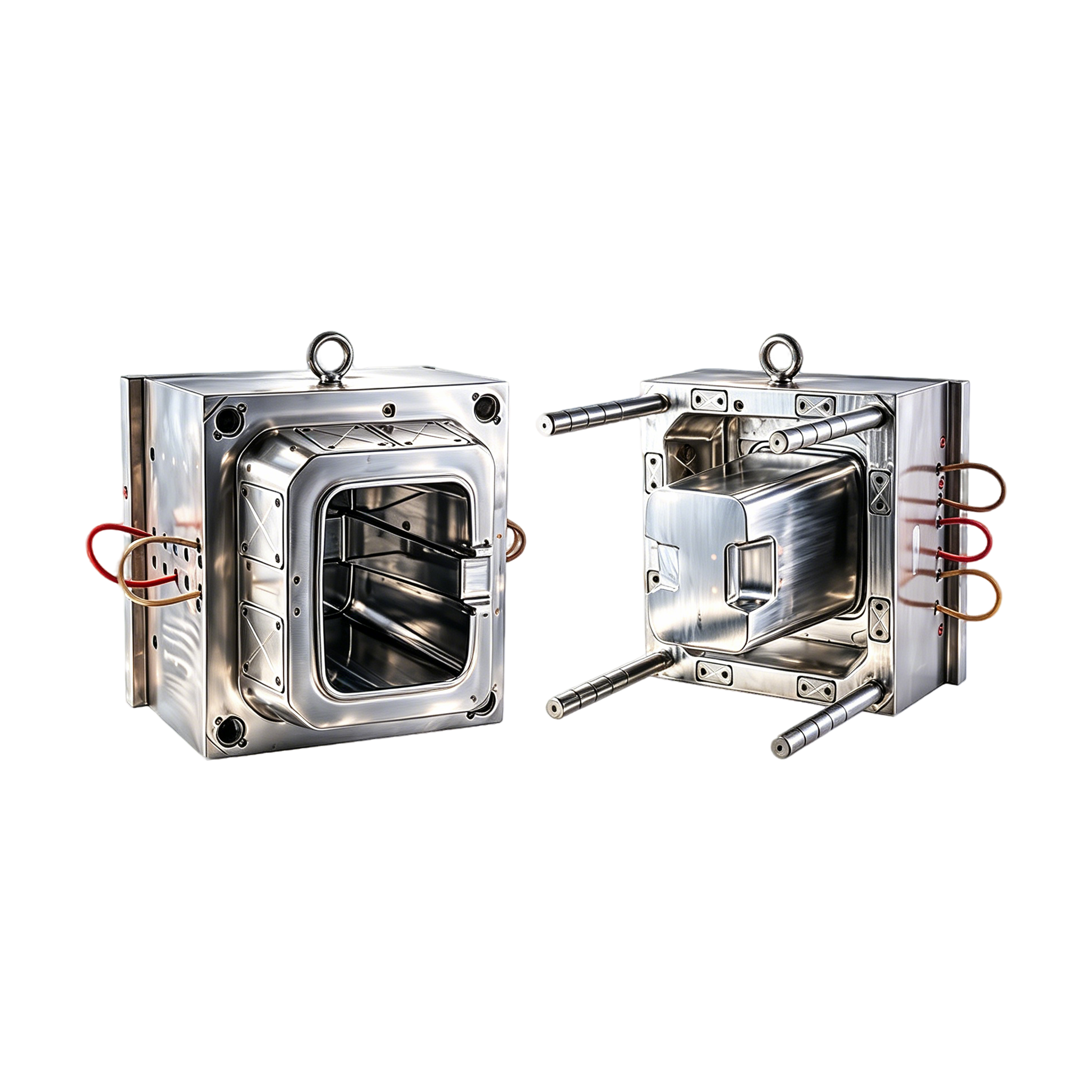
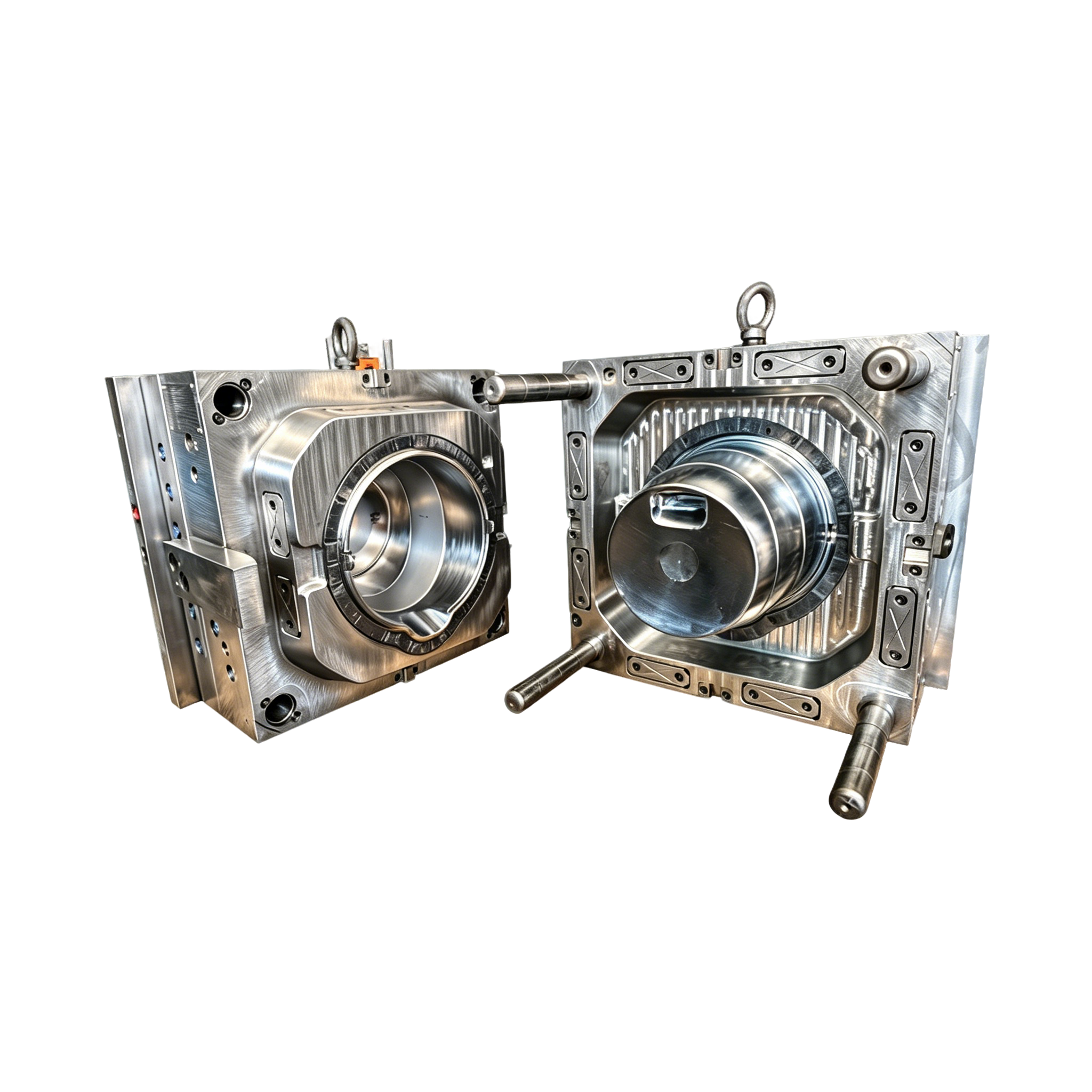
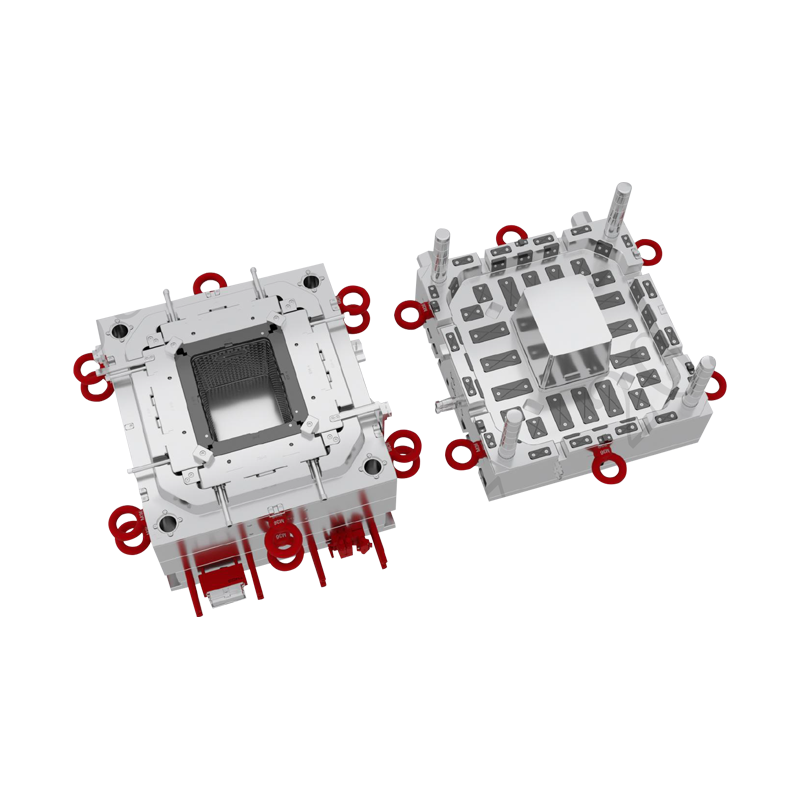
Thickened Plastic Mop Bucket Cleaning Tool Mould
Product Overview
The plastic mop bucket injection mould is intended to produce heavy-duty cleaning buckets with a reinforced body structure. Its design can be adapted to different bucket capacities, exterior profiles, handle arrangements, and wringer configurations. This flexibility allows buyers to develop cleaning products for different market segments rather than relying on one fixed bucket format.
A typical product manufactured with this mould may include a deep container body, a reinforced upper rim, a carrying handle, side support areas, a stable base, and a dedicated wringer section. Depending on the final product concept, the wringer may be designed as an integrated part of the bucket or as a separately assembled component. Handle slots can also be incorporated into the mould design to support convenient carrying and improved product ergonomics.
The thickened construction is especially important for buckets exposed to heavy water loads. When a bucket is full, the water creates significant pressure on the side walls and adds weight to the handles, rim, and base. A thin, poorly supported structure may deform, crack, or become unstable during lifting. The mould is therefore developed to support reinforced areas where strength is most important while still allowing the product to be manufactured efficiently using injection moulding.
The mould can be used for household cleaning buckets, commercial janitorial equipment, floor cleaning tools, and related cleaning systems. Its application is not limited to one customer category. Manufacturers may use the tooling to produce economical products for mass retail, durable products for professional cleaning companies, or customized buckets for equipment brands and distributors.
Why a Heavy-Duty Mop Bucket Requires Specialized Tooling
A mop bucket is a deceptively complex plastic product. Although its general shape may appear simple, the product must meet multiple performance requirements simultaneously. It must hold liquid without leakage, retain its shape when filled, remain stable on the floor, withstand repeated lifting, and provide a useful interface for wringing or rinsing a mop.
These requirements create several challenges for mould design. The product wall must be sufficiently strong without creating unnecessary material consumption. Corners must be designed to reduce stress concentration. Reinforcing ribs must support the body without interfering with filling, cooling, or demoulding. The handle connection must be strong enough to carry a full bucket. The base must maintain stability and resist wear caused by dragging or repeated contact with hard floors.
In addition, the product should have a clean and professional appearance. Visible sink marks, excessive weld lines, distortion, uneven gloss, or flash can reduce customer confidence and create assembly or cleaning problems. Accurate tooling is therefore essential for maintaining the relationship between product appearance and functional performance.
The thickened plastic mop bucket cleaning tool mould addresses these requirements through a structure-oriented approach. The cavity and core are designed to form a reinforced bucket body, while the moulding system can be adjusted to accommodate product capacity and wringer structure. This provides more design freedom than a basic container mould and allows the finished bucket to be adapted to the intended use environment.
Key Product Advantages
Reinforced Structure for Heavy Water Loads
The principal advantage of this mould is its suitability for reinforced bucket structures. A heavy-duty mop bucket must remain stable and functional when it is filled with water or cleaning solution. The product should not easily buckle at the side walls or deform around the handle attachments. A mould designed for a thickened product can support stronger sections in critical areas, helping the finished bucket handle demanding cleaning tasks.
Reinforcement can be applied through controlled wall thickness, strengthening ribs, a stronger rim, and improved support around the handle and base. These features can be developed according to the target capacity and expected working conditions. The result is a product better suited to repeated commercial use than a lightweight bucket designed only for occasional household cleaning.
Integration of Wringer Components
The mould can support the integration of wringer components into the mop bucket design. A wringer is important because it helps users remove excess water from a mop without manually twisting or squeezing it. For household and commercial users, an effective wringer can improve cleaning efficiency, reduce hand contact with dirty water, and make the product more convenient to use.
Depending on the product concept, the wringer area may be developed as part of the bucket body or designed for later assembly. Integration can reduce the number of loose parts and help create a unified product appearance. A separate or modular wringer structure may provide more flexibility for replacement, maintenance, or product differentiation. The tooling can be discussed and adjusted according to the customer’s preferred configuration.
Adaptable Handle Slot Design
Handle slots and handle connection points can be incorporated into the mould design. These areas are critical because they transfer the weight of the filled bucket to the user’s hand. A poorly designed handle connection can cause deformation, cracking, or discomfort. A properly supported connection improves carrying confidence and contributes to the overall durability of the bucket.
The handle arrangement may be customized according to the bucket’s capacity, shape, and intended market. Possible considerations include the distance between connection points, handle clearance, grip shape, support thickness, and the relationship between the handle and the bucket rim. These factors can be reviewed during product design and mould engineering before steel cutting begins.
PP Compatibility
Polypropylene is specified as the product material for the supplied mould configuration. PP is widely used in cleaning products because it offers a practical combination of low density, impact resistance, chemical resistance, and processability. It can be used for products exposed to water, detergents, diluted cleaning agents, and normal household or commercial handling.
PP also supports efficient injection moulding. When the mould is properly designed for the selected grade, the manufacturer can achieve repeatable filling, consistent wall formation, and good cycle performance. The exact grade, melt flow characteristics, additives, colorants, and processing conditions should be confirmed with the customer and injection moulding plant because these factors influence shrinkage, appearance, and final performance.
Long-Term Production Potential
The stated mould life is 700,000 shots. This production life is suitable for manufacturers that expect sustained demand rather than short-term sampling only. A mould with a substantial service life can distribute tooling cost over a larger number of products and support stable supply for distributors, retailers, cleaning equipment brands, and institutional customers.
Actual service life depends on material selection, processing conditions, maintenance practices, moulding pressure, cycle frequency, cooling water quality, product geometry, and the use of abrasive additives. Nevertheless, the specified life demonstrates that the mould is intended as a production tool rather than a temporary prototype solution.
Single-Cavity Production Control
The supplied configuration uses one cavity. A single-cavity mould can provide several practical benefits, especially for large products such as mop buckets. It can reduce initial tooling complexity, simplify filling balance, make process adjustment more direct, and allow the moulding team to focus on consistent production of one part per cycle.
For large cleaning products, a single-cavity configuration may also help control mould size, machine requirements, and maintenance access. It is suitable for customers whose production volume does not require a multi-cavity system or who prioritize straightforward quality control. If future demand increases, the product and tooling strategy can be reviewed for additional cavities or complementary product models.
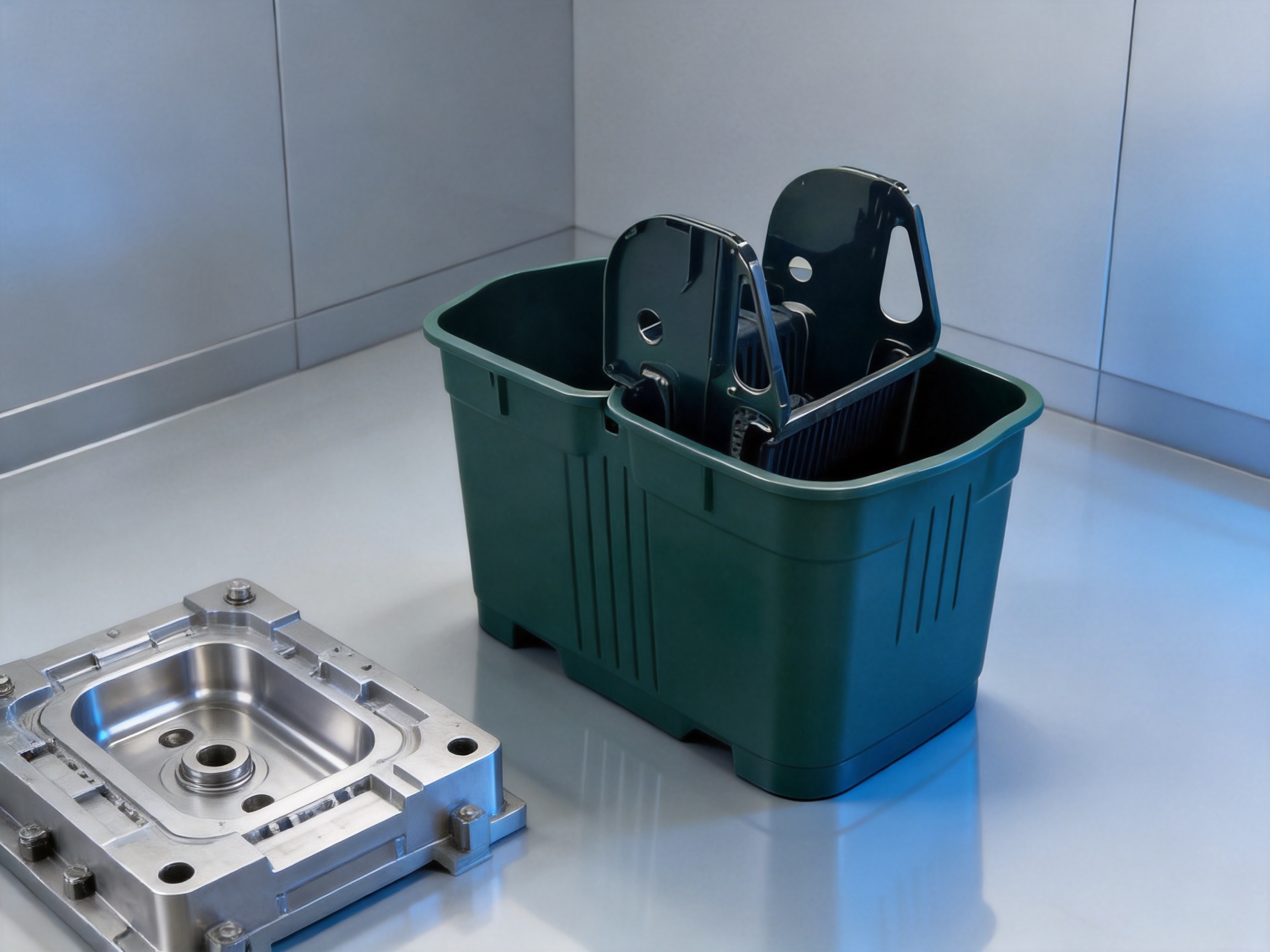
Engineering Considerations in Mould Development
Product Wall Thickness
Wall thickness is one of the most important design variables in a plastic mop bucket. A thicker wall can improve stiffness and impact resistance, but excessive thickness may increase material consumption, extend cooling time, and create sink marks or internal stress. The objective is not simply to make every area as thick as possible. Instead, the structure should be reinforced where loads are concentrated and balanced where material can be reduced.
During design development, engineers may evaluate the side walls, base, upper rim, handle connections, wringer support, and transition areas. A balanced thickness design helps the product fill more evenly and cool with less distortion. It also supports more predictable shrinkage and dimensional consistency.
Ribs and Reinforcing Features
Ribs can improve stiffness without requiring the entire product wall to be excessively thick. They may be positioned on the external or internal surfaces of the bucket, depending on appearance, cleaning requirements, and moulding feasibility. The shape and height of each rib must be carefully considered because ribs that are too thick may create sink marks, while ribs that are too narrow or shallow may offer insufficient structural support.
For a mop bucket, reinforcement is often valuable around the bottom perimeter, side panels, handle mounts, and wringer area. The final arrangement should balance strength, ease of cleaning, visual appearance, and mould release. Engineers must also ensure that reinforcement does not create unnecessary undercuts or complicate the opening direction of the mould.
Base Stability
A bucket used with a wet mop should sit securely on the floor. A poorly supported base may wobble, tilt, or slide during use. The mould design can incorporate a stable base profile with appropriate support zones. The base may also require sufficient thickness to withstand impact when the bucket is set down or dragged across a hard surface.
Base geometry must be coordinated with cooling and ejection. Uneven cooling or insufficient support can cause warpage, which may affect stability even if the overall dimensions appear correct. A properly designed mould uses cooling and ejection arrangements that help preserve the intended base form.
Handle and Load Transfer
The handle area must be treated as a load-bearing region rather than a decorative feature. When the bucket is full, force is transferred from the handle into the slots or mounting points and then through the upper rim and side walls. The mould should support adequate material distribution and smooth transitions around these areas.
Sharp internal corners can create stress concentration and increase the possibility of cracking. Carefully designed radii and gradual transitions help distribute force more effectively. The handle itself may be moulded as an integral component or designed as a separate part, depending on the product concept and assembly requirements.
Wringer Geometry
The wringer must provide enough support to compress or squeeze the mop head while remaining comfortable and safe for the user. Its geometry can include drainage openings, sloped surfaces, support ribs, and connection features. The mould design should consider how dirty water returns to the bucket and whether the wringer can be cleaned easily after use.
A well-designed wringer can improve product differentiation. Cleaning equipment companies may choose a compact wringer for household use, a stronger press structure for commercial applications, or a specialized configuration for particular mop heads. Because the wringer structure can be adjusted, the mould offers a foundation for different product versions.
Material Selection: Why PP Is Suitable for Mop Buckets
Polypropylene is a common choice for injection-moulded cleaning products. Its relatively low density helps reduce product weight, while its toughness supports repeated handling. A PP bucket can be designed to be light enough for practical use while still retaining a reinforced structure suitable for water loads.
PP also provides useful resistance to moisture and many commonly used cleaning substances. This makes it appropriate for a product that may remain wet, be rinsed frequently, or contact diluted detergents. The final chemical resistance depends on the selected PP grade, additives, chemical concentration, temperature, and exposure duration, so users should validate the material against their specific cleaning environment.
The material is also compatible with a broad range of color options. Manufacturers may produce different colors for retail branding, institutional identification, product segmentation, or color-coded cleaning systems. For example, cleaning companies may use separate bucket colors for bathrooms, kitchens, general areas, or healthcare spaces. Consistent color production requires suitable masterbatch selection and stable processing conditions.
Recycled content or regrind may be considered in some product programs, but such decisions should be made carefully. The use of recycled material can influence impact strength, color consistency, odor, shrinkage, and long-term durability. For heavy-duty buckets, material validation is important before changing the resin specification.
Mould Steel and Durability
The supplied mould specification identifies P20 / H13 as mould steel options. These steels are widely recognized in plastic mould manufacturing, although the appropriate grade depends on the mould’s working conditions, expected production life, product material, surface requirements, and budget.
P20 is commonly used for mould bases, core components, cavity components, and general production tooling. It offers a practical balance of machinability, strength, and cost. It is often selected for applications where the material and operating environment do not require the specialized properties of a hardened premium steel.
H13 is a hot-work tool steel known for its toughness, thermal fatigue resistance, and ability to withstand demanding temperature cycles. It may be considered for components exposed to higher stress, repeated thermal changes, or more demanding production conditions. The final steel arrangement can be determined through technical review of the product geometry, production quantity, injection material, and customer expectations.
Steel selection affects more than initial mould price. It also influences polishing behavior, wear resistance, repairability, machining requirements, and expected maintenance intervals. A professional mould manufacturer evaluates these factors together rather than selecting steel only according to a nominal specification.
| Item | Supplied Specification | Production Significance |
|---|---|---|
| Product | Thickened plastic mop bucket cleaning tool | Supports heavy-duty cleaning applications and reinforced bucket construction |
| Product material | PP | Suitable for lightweight, durable, moisture-resistant injection-moulded products |
| Mould steel | P20 / H13 | Provides configurable tooling options for general and demanding production conditions |
| Cavity | 1 cavity | Supports direct process control for a large plastic product |
| Mould life | 700,000 shots | Suitable for extended production programs and repeat orders |
| Customization | Capacity and wringer structure adjustable | Allows adaptation to different markets, users, and cleaning applications |
Manufacturing Process and Quality Control
Design Review and Product Feasibility
The mould manufacturing process begins with an evaluation of the product concept. Engineers review the bucket’s overall dimensions, capacity, wall thickness, handle arrangement, wringer structure, surface finish, draft angles, assembly features, and intended PP grade. This stage is important because changes made before machining are generally easier and less costly than changes made after the mould has been completed.
A feasibility review can identify areas that may create filling problems, excessive shrinkage, difficult ejection, undercuts, or weak product sections. It can also confirm whether the selected injection moulding machine will provide enough shot capacity, clamping force, mould opening space, and ejection stroke.
Three-Dimensional Mould Design
Computer-aided design is used to develop the cavity, core, mould base, cooling channels, ejection system, guide components, and other tooling details. The design should reflect the actual product function. For example, the handle area requires structural support, while the wringer area may require specific drainage and demoulding solutions.
Digital design also enables engineers to examine parting lines, draft angles, wall transitions, and possible interference between moving components. A clear mould structure contributes to reliable operation and simplifies later maintenance.
Flow and Shrinkage Analysis
For a relatively large PP product, resin flow and cooling behavior are important. Engineers may use mould flow analysis to evaluate filling patterns, gate positions, weld line locations, air traps, pressure requirements, and predicted shrinkage. This type of analysis can help identify potential risks before steel is machined.
The aim is not merely to fill the cavity. The objective is to fill it consistently while maintaining an acceptable appearance and minimizing distortion. Gate design, runner dimensions, venting, and cooling layout must work together to support stable moulding conditions.
Precision Machining
Once the design is approved, steel components are prepared through machining operations such as milling, drilling, turning, wire cutting, electrical discharge machining, and grinding. The exact combination depends on the component geometry and required tolerance.
Precision machining is particularly important around the handle slots, wringer features, ribs, parting surfaces, and sealing areas. Inaccurate machining can cause flash, mismatch, difficult ejection, uneven product thickness, or poor assembly fit. A controlled manufacturing process helps preserve the intended product geometry.
Polishing and Surface Treatment
The final surface of the bucket may be smooth, textured, matte, or customized with specific visual effects. Mould polishing and texturing should be selected according to the product’s appearance, cleaning requirements, and branding strategy. A smooth internal surface may make the bucket easier to rinse, while a controlled exterior texture can improve grip and reduce the visibility of minor handling marks.
Surface treatment also affects demoulding and maintenance. The selected finish should be compatible with the PP material and the expected production cycle. Careful polishing around the cavity and core can improve product appearance and reduce surface defects.
Assembly and Trial Moulding
After individual parts are completed, the mould is assembled and checked for alignment, movement, cooling connections, ejection operation, and parting accuracy. Trial moulding is then used to evaluate the actual product. Engineers inspect filling, dimensions, surface appearance, wall formation, warpage, handle strength, wringer fit, and demoulding behavior.
Trial results may lead to adjustments in processing conditions or minor mould refinements. These can include vent improvements, polishing changes, gate modifications, ejection adjustments, or localized dimensional corrections. Trial moulding is an essential step because it connects the theoretical design with actual production performance.
Final Inspection and Delivery Support
Before delivery, the mould can be checked for component completeness, cooling passage condition, ejection movement, surface quality, and identification of replacement parts. Production documentation and maintenance recommendations help the customer operate the tooling correctly.
After-sales support is also important for a mould intended for long-term production. Customers may need assistance with processing conditions, maintenance schedules, spare parts, product modifications, or future tooling versions. A manufacturer capable of supporting the full tooling lifecycle provides greater value than a supplier focused only on initial mould delivery.
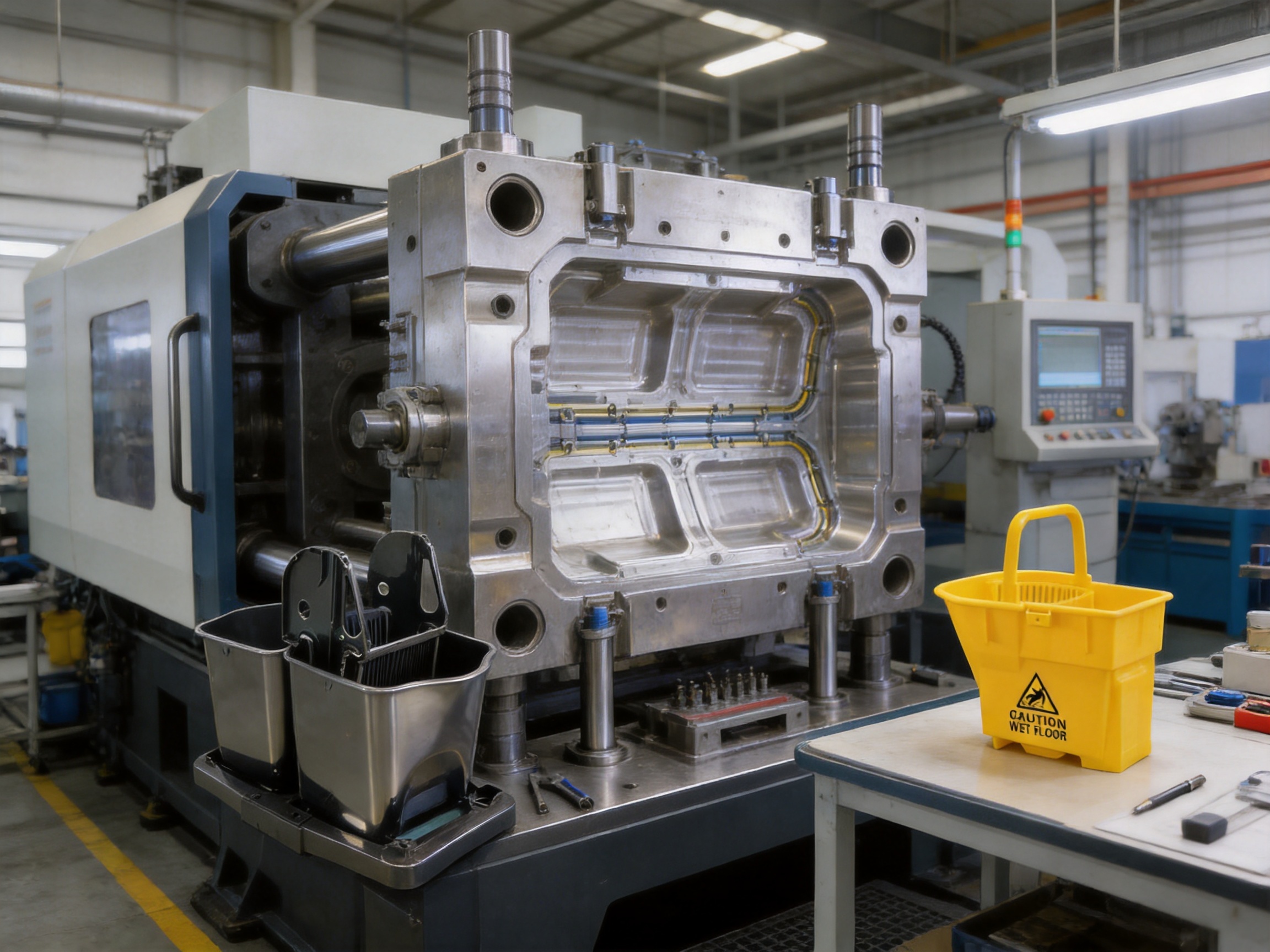
Advantages Compared with Basic or Low-Cost Competitor Moulds
Function-Oriented Product Development
One important advantage is the focus on the actual use of the bucket. Low-cost tooling may reproduce a basic container shape without sufficient attention to handle loading, wringer performance, base stability, or heavy water capacity. A function-oriented mould begins with the working environment and translates those requirements into product geometry.
This approach helps manufacturers avoid problems that may only become visible after products reach the market. A bucket that deforms when full, develops cracks around the handle, or does not drain effectively can generate returns and damage customer confidence. Investing in a suitable mould design supports more reliable product performance.
Better Balance Between Strength and Material Use
Competitor moulds may rely on excessive material thickness as a substitute for engineering. Although a very thick product can appear strong, it may be heavy, expensive, slow to cool, and vulnerable to sink marks or uneven shrinkage. The present mould concept supports controlled reinforcement, allowing strength to be concentrated where it produces the greatest benefit.
This balance can help manufacturers manage resin consumption without sacrificing durability. It may also contribute to a more efficient production cycle when cooling channels and product geometry are correctly coordinated.
Adaptability for Different Market Requirements
A fixed mould with no practical customization options can limit a manufacturer’s ability to serve different customers. The capacity and wringer structure of this mould can be adjusted, allowing product development for household, commercial, and professional cleaning markets.
Manufacturers can consider different bucket sizes, handle arrangements, wringer concepts, color programs, surface textures, and product markings. This flexibility supports private-label production and helps brands create product families based on one engineering platform.
Suitable Steel Options
The availability of P20 and H13 steel options allows the tooling solution to be matched to production objectives. A customer seeking a practical production mould may select a suitable P20 configuration, while a more demanding project may require H13 for selected components or working surfaces. This is more flexible than a one-grade approach that ignores production conditions.
Production Life for Commercial Programs
A stated life of 700,000 shots gives the mould a clear production target. This is valuable for companies planning supply contracts, retail distribution, institutional procurement, or recurring export orders. Tooling life should always be verified through appropriate maintenance and process control, but a defined production-life expectation helps buyers compare mould options more objectively.
Professional Engineering and Manufacturing Support
Another advantage is access to an integrated service approach. The manufacturer specializes in research and development, precision injection mould manufacturing, and support across multiple product sectors. Experience with daily necessities, appliances, automotive parts, and industrial equipment can contribute to stronger process discipline and a broader understanding of plastic product engineering.
Cross-sector experience may be especially useful when a mop bucket includes complex functional features. Techniques used for dimensional control, surface quality, moving mechanisms, or long-life tooling in other industries can inform the development of a robust cleaning product mould.
Applications of the Finished Mop Bucket
Household Cleaning
For household use, the bucket should be easy to carry, simple to empty, and convenient to store. A suitable wringer can help users control mop moisture, while a stable base reduces spills during cleaning. The PP construction allows manufacturers to produce practical products in different colors, sizes, and styles.
Commercial Janitorial Equipment
Commercial cleaning teams often use equipment for long periods and across large floor areas. Their buckets may be filled and emptied repeatedly during a shift. A reinforced product with strong handle support and a durable base is better suited to these conditions than a light-duty household container.
Hotels, Schools, and Offices
Institutional users often require reliable cleaning tools that can be used by multiple workers. The bucket may need to withstand frequent movement, storage, washing, and contact with cleaning agents. Color-coded product options can also support organizational cleaning procedures.
Healthcare and Specialized Cleaning
Healthcare and specialized cleaning environments may require clear separation between cleaning tasks. Manufacturers can use different colors or product markings to distinguish equipment. The final resin and cleaning chemical compatibility should be validated for the intended environment, but the injection mould provides a platform for producing consistent bucket bodies.
Retail and Private-Label Products
Retailers and brands may use the mould to develop private-label mop buckets. The product can be customized in capacity, wringer design, color, surface finish, and packaging configuration. A reliable mould helps private-label customers maintain consistent quality across production batches.
Customization Options
Customization begins with the bucket capacity. Different users may require compact buckets for apartments, medium-size buckets for general household work, or larger units for commercial cleaning. Capacity affects the product’s height, width, handle load, base footprint, and mould dimensions.
The wringer structure is another important customization area. A basic wringer may be suitable for conventional string mops, while a more specialized design may support sponge mops, flat mops, or other cleaning systems. The wringer can be reviewed for water drainage, user comfort, structural strength, and ease of cleaning.
Handle design can also be adjusted. Possible changes include a wider grip, a reinforced pivot area, a different handle clearance, or a fixed versus movable handle. These details influence ergonomics and the appearance of the finished product.
Exterior design features may include logos, measurement marks, product identification, decorative textures, and branding surfaces. Any marking or texture should be considered during mould design because it affects machining, polishing, draft, and product release.
Manufacturers may also request product changes after initial testing. A capable tooling partner can evaluate whether the change requires a minor insert modification, a new component, or a complete cavity revision. Early communication helps keep the change practical and controls development cost.
Production and Maintenance Recommendations
Correct injection moulding conditions are essential for achieving the expected service life and product quality. The moulding machine should be appropriate for the bucket’s projected shot weight, projected area, mould dimensions, and clamping requirements. The PP grade should be processed within the resin supplier’s recommended temperature range.
Cooling water should be clean and properly managed. Contaminated or poorly controlled cooling systems can reduce heat transfer, increase cycle time, and create uneven product shrinkage. Regular inspection of cooling channels and connectors helps maintain stable production.
The mould should be cleaned at suitable intervals, particularly around parting surfaces, vents, ejector pins, slides, and wringer-related details. Accumulated residue can affect mould closure, venting, product appearance, and ejection. Lubrication should be applied according to the requirements of the mould components and the production environment.
Operators should monitor flash, short shots, burn marks, unusual ejection force, dimensional changes, and changes in cycle time. These signs may indicate wear, blocked vents, cooling problems, incorrect processing conditions, or alignment issues. Early detection can prevent damage and reduce unplanned downtime.
When the mould is stored, it should be cleaned, dried, protected against corrosion, and left in a safe position. Water should be removed from cooling passages where appropriate. Moving components should be protected, and the mould should be inspected before the next production run.
Why Choose an Experienced Mould Manufacturing Partner
The quality of a plastic product depends on more than the material and the injection machine. Tool design, steel preparation, machining accuracy, assembly, trial moulding, inspection, and after-sales support all influence the final result. An experienced mould manufacturing partner coordinates these activities as one process.
Taizhou Huangyan Haiquan Plastic Mold Co., Ltd. operates as a high-tech enterprise focused on precision injection mould research, development, and manufacturing. Its stated product sectors include daily necessities, home appliances, automotive parts, and industrial equipment. This range indicates experience with different levels of product complexity, performance requirements, and production planning.
The company emphasizes quality-first and sustainable-development principles. Its professional design team and scientific production management system are intended to support an integrated workflow from design and manufacturing to after-sales service. For an international buyer, this type of organization can simplify communication and help coordinate technical decisions before production begins.
The company exports to Europe, the Middle East, Southeast Asia, and South America. Experience with international customers can support discussions about product specifications, packaging, production expectations, documentation, and delivery coordination. Global customer service also requires attention to consistent quality and reliable lead-time management.
For buyers comparing mould suppliers, the most important questions should include how the supplier reviews product design, how it controls steel and machining quality, how it performs trial moulding, how it documents changes, and how it supports maintenance after delivery. These factors often have a greater effect on total project value than the initial quotation alone.
Recommended Buyer Evaluation Checklist
Before ordering the mould, the buyer should confirm the final bucket drawings, three-dimensional product data, capacity, handle type, wringer structure, material grade, color requirements, surface finish, and expected annual production volume.
The buyer should also clarify the injection machine model or technical parameters, including maximum mould dimensions, clamping force, injection volume, nozzle position, and ejection arrangement. These details help ensure that the mould can be installed and operated correctly at the production site.
Steel specifications should be documented for the mould base, cavity, core, inserts, slides, and other important components. If the customer requires H13 in specific areas rather than throughout the mould, this should be agreed during the design stage.
Trial moulding requirements should be discussed in advance. The buyer may request sample quantities, dimensional inspection, product weight records, appearance review, and functional testing of the handle and wringer. These records provide a useful reference for later production.
Finally, the buyer should confirm the maintenance plan, spare parts list, warranty terms, packaging method, delivery conditions, and technical support process. A clear agreement helps prevent misunderstandings and supports a smoother transition from mould completion to mass production.

Frequently Asked Questions
What product is this mould designed to produce?
It is designed to produce thickened plastic mop buckets and related cleaning tools. The bucket can be used in homes, commercial janitorial operations, offices, schools, hotels, and other cleaning environments.
What material is specified for the finished product?
The supplied specification identifies polypropylene, or PP, as the product material. The precise PP grade should be selected according to impact requirements, chemical exposure, color, processing conditions, and the intended service environment.
Can the bucket capacity be changed?
Yes. Capacity can be adjusted during product and mould development. Any capacity change may affect the bucket dimensions, handle load, base stability, wall thickness, cooling layout, and mould size, so it should be reviewed before final design approval.
Can the wringer structure be customized?
Yes. The wringer structure can be adjusted according to the intended mop type, user group, drainage requirements, and product positioning. It may be integrated into the bucket design or developed as a component for later assembly.
Why is a reinforced bucket structure important?
A reinforced structure helps the bucket withstand heavy water loads, repeated lifting, movement, impact, and daily cleaning operations. It can also improve the durability of the handle area, upper rim, side walls, and base.
What does the one-cavity configuration mean?
A one-cavity mould produces one bucket component per injection cycle. For a large product, this arrangement can simplify filling control, mould operation, maintenance, and process adjustment. It may be appropriate for customers whose production volume does not require multiple cavities.
What mould steel options are listed?
The listed options are P20 and H13. The final steel selection should be based on production quantity, product material, moulding conditions, surface requirements, wear expectations, and the customer’s budget.
What is the stated mould life?
The stated mould life is 700,000 shots. Actual service life depends on maintenance, processing conditions, material selection, mould design, production frequency, and operating practices.
Can the mould include handle slots?
Yes. Handle slots and related support features can be integrated into the mould design. Their dimensions and reinforcement should be coordinated with the bucket capacity and expected load.
Is the mould suitable for commercial cleaning equipment?
Yes. The mould is intended for household cleaning buckets, commercial janitorial equipment, and floor cleaning tools. A commercial version should be validated for its expected frequency of use, load conditions, cleaning chemicals, and handling method.
What should be confirmed before mould production begins?
The buyer should confirm the product drawings, capacity, material grade, handle and wringer design, surface finish, color requirements, injection machine information, production volume, steel specification, trial requirements, and maintenance expectations.
How can product quality be maintained during mass production?
Quality can be maintained through stable PP material, controlled processing temperatures, suitable injection pressure, consistent cooling, regular mould cleaning, proper lubrication, dimensional checks, and monitoring for flash, warpage, short shots, and ejection problems.
Conclusion
The thickened plastic mop bucket cleaning tool mould provides a practical tooling solution for manufacturers seeking durable, functional, and customizable cleaning products. Its design supports reinforced bucket structures capable of handling heavy water loads, while handle slots and wringer components can be integrated according to the product concept.
The use of PP provides a suitable foundation for lightweight, durable, and moisture-resistant products. P20 / H13 steel options give buyers flexibility in matching tooling construction to production requirements, and the one-cavity configuration supports direct process control for a large plastic component. With a stated mould life of 700,000 shots, the tooling is positioned for sustained production rather than short-term sampling.
Its advantages over basic competitor moulds include a stronger focus on actual cleaning applications, adaptable capacity and wringer design, controlled reinforcement, professional engineering review, and support from a company experienced in precision injection mould manufacturing across several industrial sectors.
By combining product-oriented design, suitable material selection, careful machining, trial moulding, and lifecycle support, the mould can help manufacturers produce mop buckets that are more reliable, easier to use, and better suited to both household and commercial markets.
References
1. Injection Molding Handbook, general principles of thermoplastic mould design, cooling, ejection, and process control.
2. Plastics Materials Engineering References, polypropylene properties, processing behavior, chemical resistance, and product-design considerations.
3. Tool and Die Manufacturing Practice Guides, P20 and H13 steel selection, machining, polishing, heat-treatment considerations, and mould maintenance.
4. Industrial Product Design References, ergonomic handle development, load transfer, structural reinforcement, and cleaning-equipment usability.
5. Quality Management Guidance for Plastic Injection Moulding, trial production, dimensional inspection, process monitoring, preventive maintenance, and corrective action.
6. Commercial Cleaning Equipment Design Standards and Technical Literature, mop bucket stability, wringer functionality, drainage, user safety, and operational durability.
Product: Thickened Plastic Mop Bucket Cleaning Tool Mould

For exclusive deals and latest offers, sign up by entering your email address below.
 +86-18657672567
 sales@tzhqmould.com
celin@tzhqmould.com
 No. 17 Houshi Road, Beicheng Industrial Zone, Huangyan District, Taizhou City, Zhejiang Province, China
Copyright © Taizhou Huangyan Haiquan Plastic Mold Co., Ltd. All Rights Reserved
Injection Plastic Mould Maker

